Korean cuisine often asks more than Are you hungry? It asks, How is your body doing? On a recent long weekend in May 2026, I found the answer in a steaming clay pot of Samgyetang (Ginseng Chicken Soup).
The holiday began with an unexpected challenge. What was supposed to be a relaxing five-day family break—starting from Labor Day on May 1st to Children’s Day on May 5th—turned into a massive traffic deadlock. After five hours of staring at a highway that had turned into a giant parking lot, the tough call was made to turn back. Exhausted and defeated, refuge was sought in a local specialty house called Hwangje Neungi Baeksuk.
It was a discovery backed by a popular TV show. This restaurant, previously featured on Ssaeng Ssaeng Jeongbo-tong (Live Info Show), serves a version of Samgyetang enriched with Neungi mushrooms (Sarcodon aspratus). Known as the King of Mushrooms, the Neungi added a deep, woody complexity to the broth that revived the spirit of the entire family.
What’s Inside the Pot?
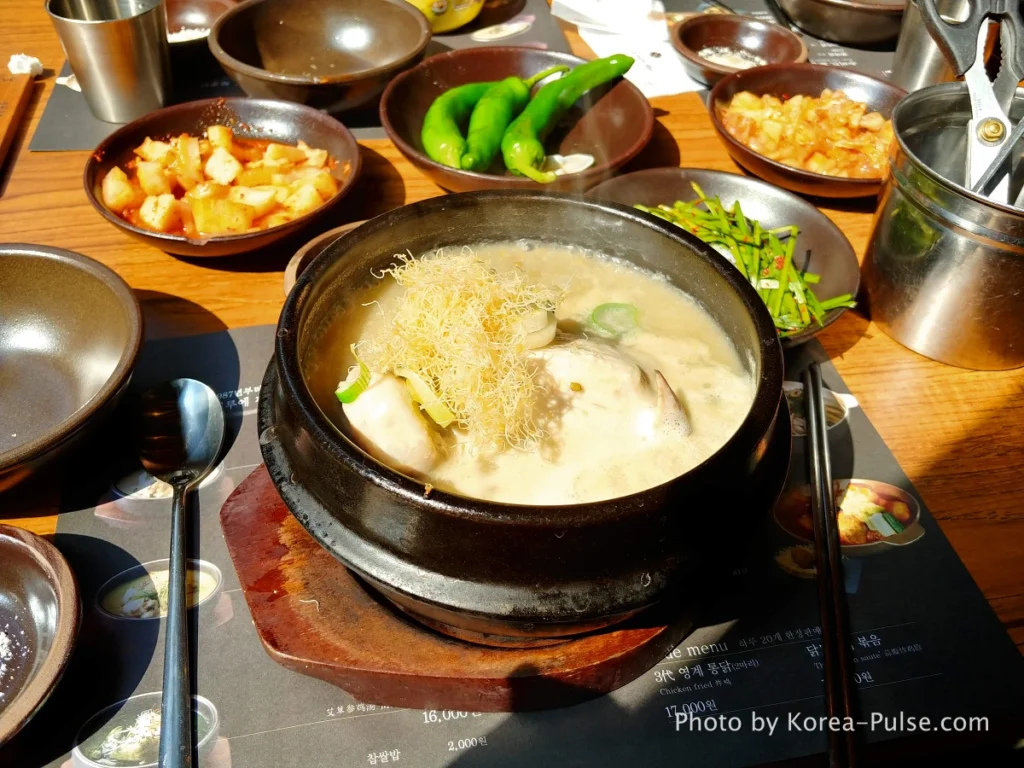
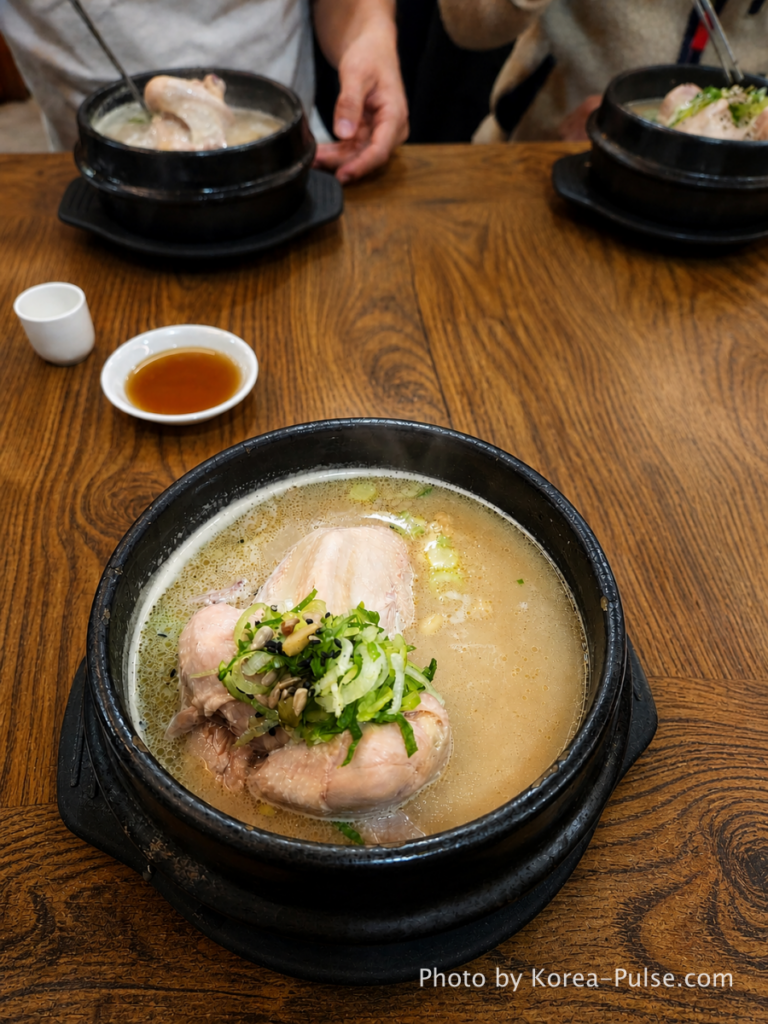
When you lift the lid of the heavy stone bowl, you are greeted by a whole young chicken nestled in a milky-white, bubbling broth. Inside the chicken lies the treasure: glutinous rice that has softened to a porridge-like consistency, whole cloves of garlic, and a thick root of ginseng.
The broth is a masterclass in balance—silky yet light, mild yet deeply flavorful, with the earthy lingering note of ginseng.
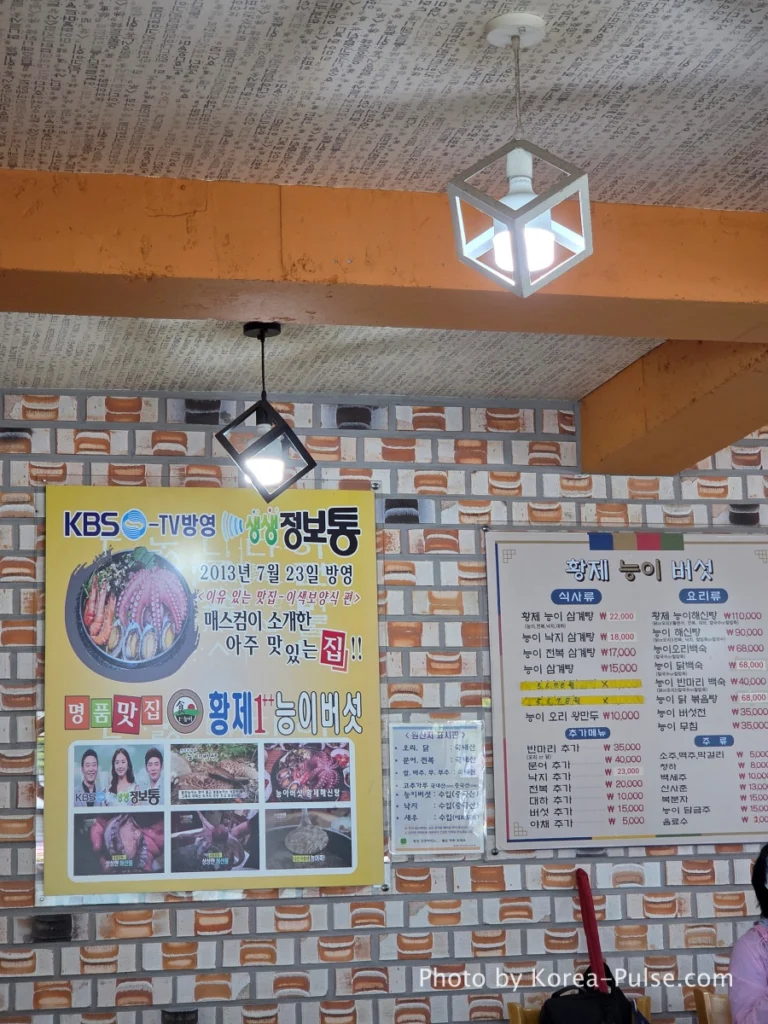
Authenticity verified: A local favorite featured on national TV. | © kpulse

The perfect bowl of comfort after a long day of travel. – Samgyetang
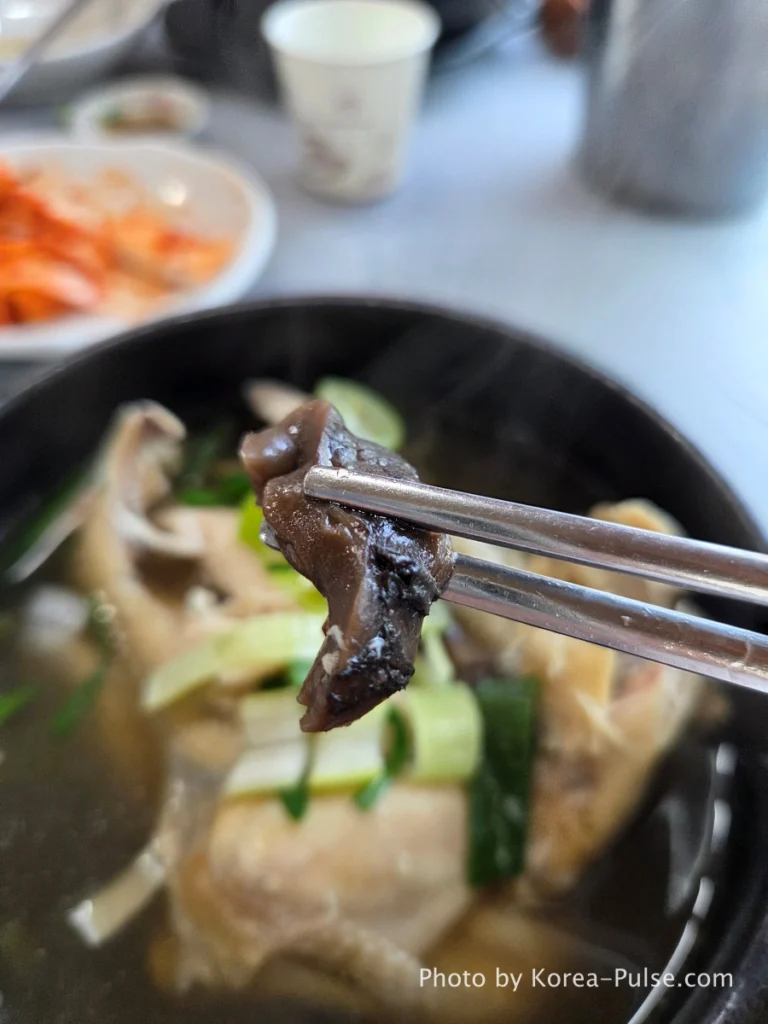
The rare Neungi mushroom, prized for its intense flavor and health benefits. | © kpulse
[Google Maps Placeholder: Hwangje Neungi Baeksuk]
History and Philosophy: Fighting Fire with Fire
Samgyetang is a dish with a legacy spanning over 600 years, with roots stretching back to the Joseon Dynasty. It is built on the traditional medicinal principle of I-yeol-chi-yeol (이열치열), which translates to fighting fire with fire.
The Craft: A young chicken is stuffed with glutinous rice, garlic, and ginseng, then simmered until the meat is exceptionally tender
The Ritual: Koreans traditionally consume this piping hot soup on Sambok, the three hottest days of the lunar calendar.
The Logic: The belief is that consuming hot, nutrient-dense broth warms the internal organs, helping the body maintain thermal balance when external temperatures are extreme.
Personal Memories: The Eternal Warmth of Home
This recent meal brought back warm memories from a few years ago when I shared this same dish with my family. There is a particular kind of care that goes into this food; it is grandmother food and sick-day food all in one. It is a way for Korean parents to say I love you without saying it out loud.
One of my most vivid memories is a visit to Tosokchon Samgyetang near Gyeongbokgung Station. After a rigorous hike up Inwangsan, a 338.2-meter peak offering panoramic views of Seoul, the thick and nutty broth of Tosokchon felt like a well-earned reward.
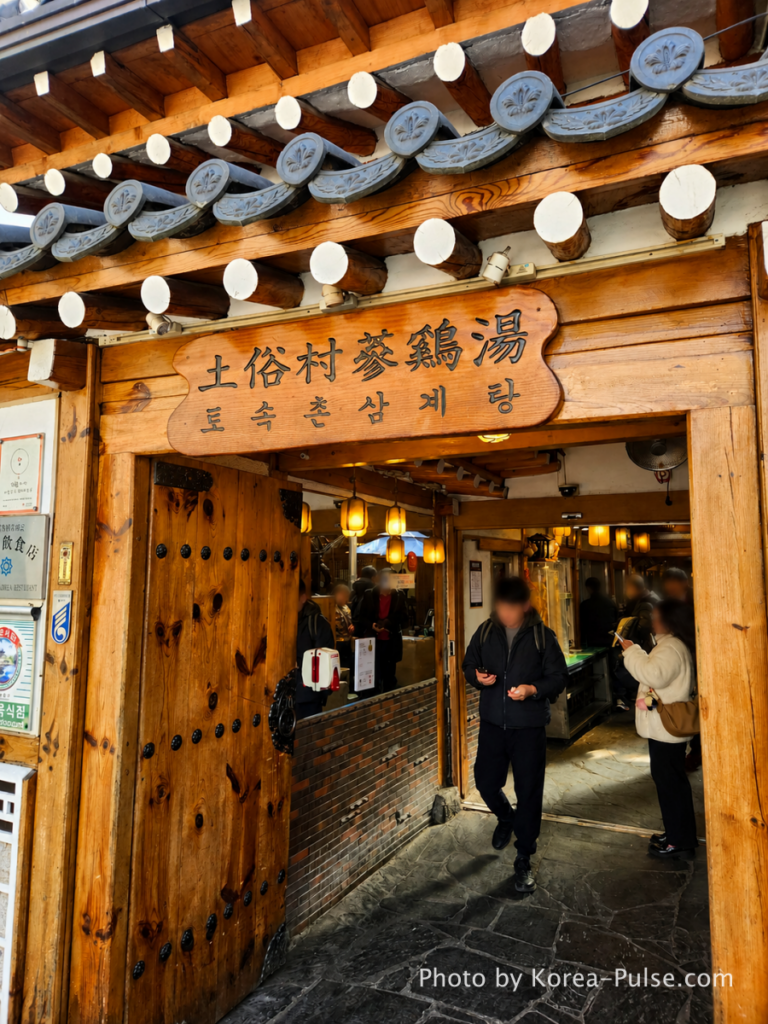
Stepping into tradition Samgyetang restaurant near Gyeongbokgung Palace
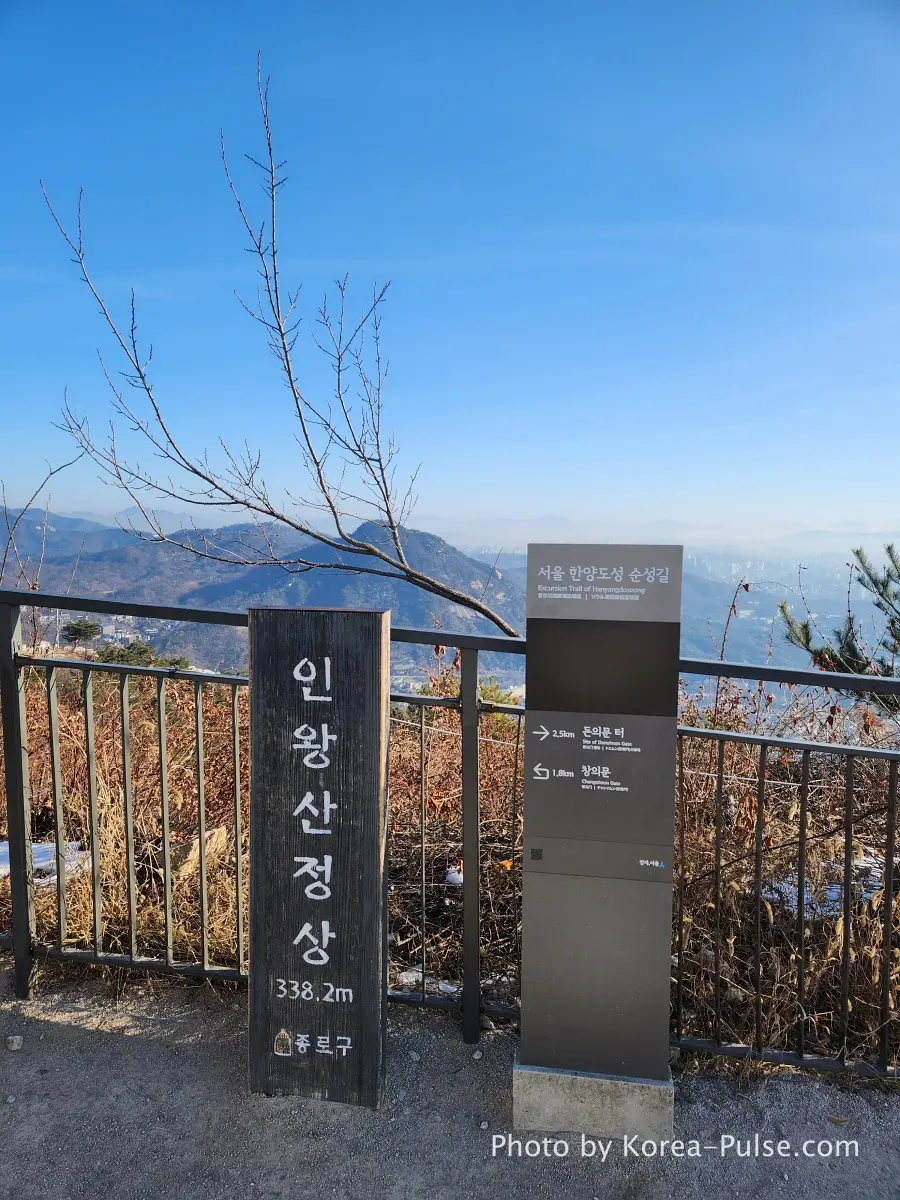
The reward for a successful hike: A bird’s eye view of Seoul.
[Google Maps Placeholder: Tosokchon Samgyetang / Inwangsan]
Guide for First-Time Eaters
To enjoy Samgyetang like a local, follow these essential steps:
- Use the Tools: The pot is served with scissors and tongs. Use them to snip the chicken into manageable pieces rather than struggling with chopsticks.
- The Side Dish – Kkakdugi: You will be served Kkakdugi, which is a type of kimchi made from diced radishes. Its sharp, fermented acidity and crunchy texture are designed to cut through the richness of the chicken broth.
- Seasoning: Dip the tender meat into a small dish of coarse sea salt provided on the side. Avoid salting the entire pot at once to preserve the delicate balance of the broth.
- Discover the Rice: Break open the chicken to find the glutinous rice inside, which has absorbed the essence of the ginseng and garlic during the long simmer.
Conclusion
At a price point of $10 to $14, Samgyetang is an accessible luxury that offers a deep connection to Korean culture. It transformed a stressful day of traffic into a moment of family bonding and restoration.
What is your go-to “soul food” when traveling or facing a difficult day? Have you ever had a travel plan completely derailed by unexpected circumstances? Share your stories in the comments below.
If you’re exploring Seoul, don’t miss the latest trends in Seongsu-dong! Check out our guide to Seongsu-dong’s Fashion Evolution.