
K-TRAVEL · MAY 2026
How to Buy a Seoul Subway Ticket
Step-by-Step Guide for Foreigners
Machine walkthrough · fare breakdown · deposit refund · smarter options for longer stays.
Already comfortable reading the platform signage and riding through rush hour? Good, that’s covered in our guide to Seoul subway rush hour and what to expect. But if you’re standing in front of a ticket machine right now and just need to know what to press, you’re in exactly the right place.
If you want to buy a Seoul subway ticket without the fuss, this guide is for you. Single-use, from machine to platform, with every screen photographed.
It’s 6:00 AM. The alarm goes off. Somewhere in Ilsan, a planned city northwest of Seoul, a man puts on his shoes, walks to Juyeop station, and taps his phone at 6:32. Mobile transit card, no fumbling, no ticket machine, no deposit to remember. He hasn’t touched a ticket machine in years.
This post is not for him. This post is for you: the complete, no-panic guide to buy a Seoul subway ticket on your first try.
first 10km
per ticket
machine to platform
Seoul Subway Ticket Machine: Two Types, One Logic
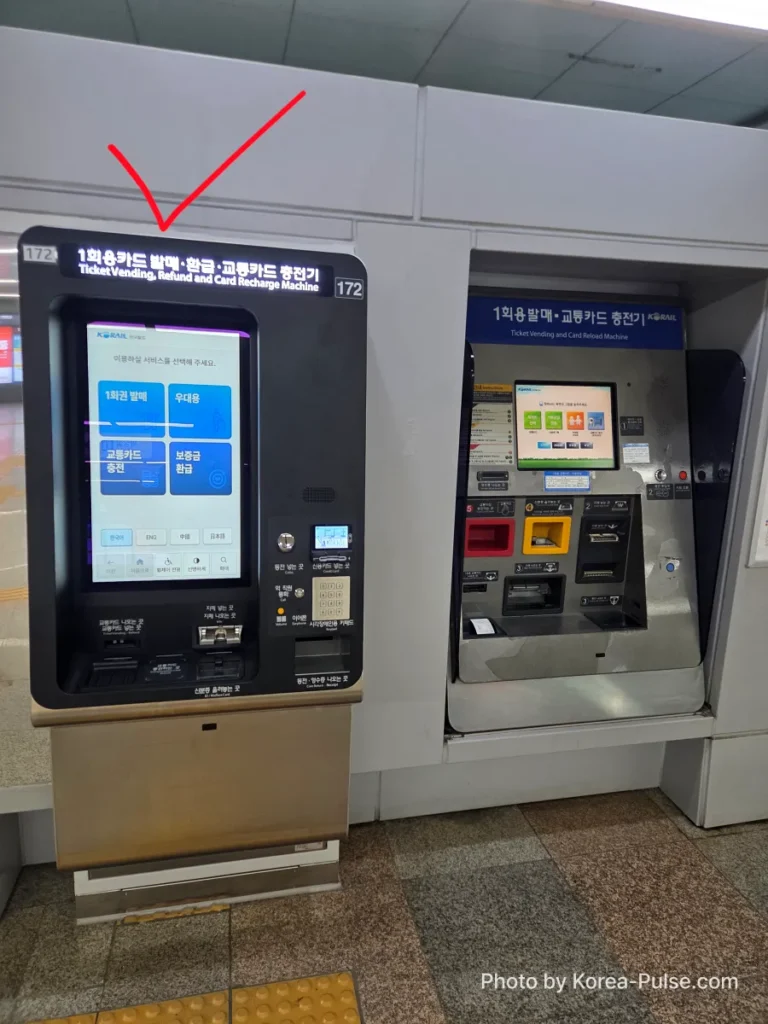
Every Seoul subway ticket machine on the Seoul Metropolitan Subway comes in one of two flavours. There’s the vertical screen model, tall, slightly older, more common on Lines 3 and 4. And there’s the wide horizontal screen model, sleeker, newer, more common on Line 2. They look different enough to cause a moment of doubt. Don’t let them. The logic inside is identical: same buttons, same order, same questions. Both accept cash (bills and coins), credit cards, and debit cards. Both give change. Both speak English. Pick whichever one has the shorter queue.
How to Buy a Seoul Subway Ticket: 6 Steps, Every Screen
Step 1 — Switch to English and Select Single Journey Ticket
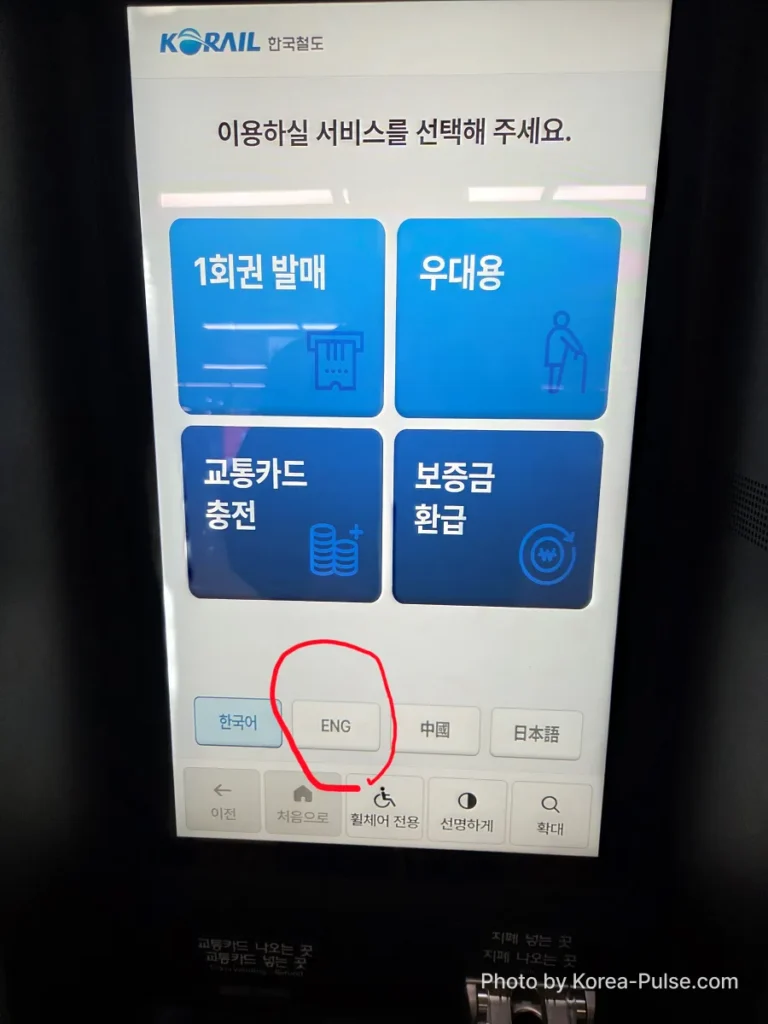
The first screen you’ll see is in Korean. Look for the language options at the bottom: 한국어 / ENGLISH / 日本語 / 中文. Tap ENGLISH and everything switches. From this point forward, the machine is yours.
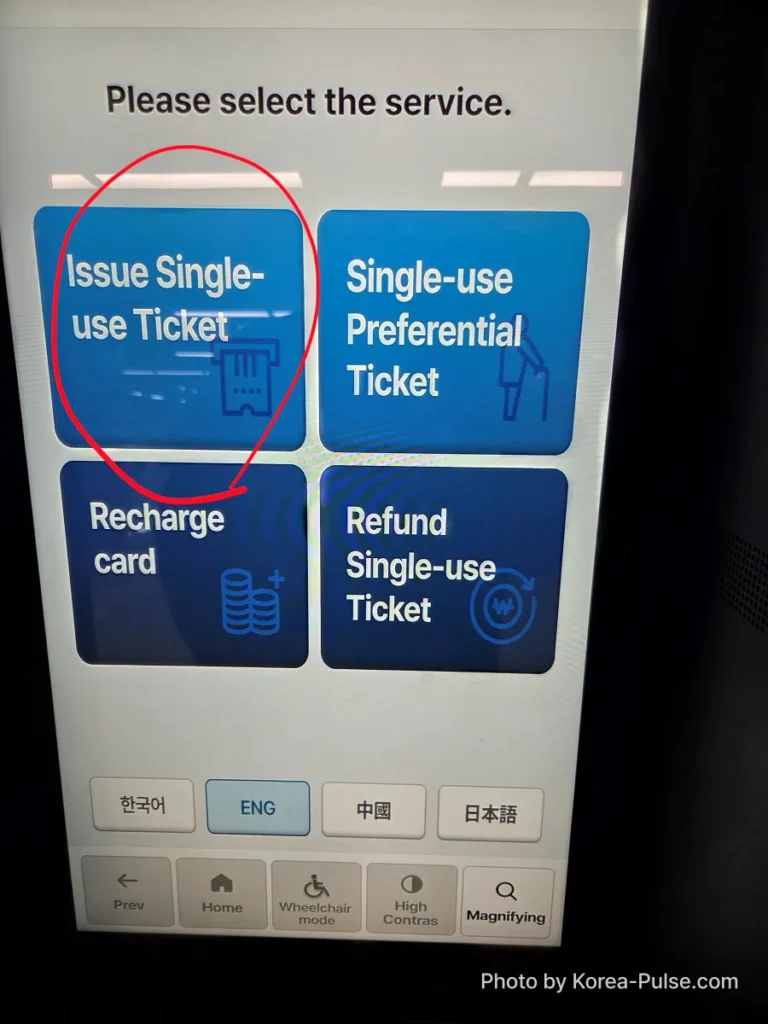
| Button Option | What it’s for |
|---|---|
| Single Journey Ticket | This is what you want |
| Free Ticket (Special status) | Seniors 65+ and people with disabilities |
| Reloading the transit card | Top up your T-money card |
| Purchase transportation card | Buy a new T-money card |
| Refund / Ticket type change / Reuse | Returns and card management |
The “Free Ticket (Special status)” button is for seniors aged 65 and over — they ride Seoul Metro completely free with a Korean ID or welfare card. The machine walks them through it separately.
Step 2 — Search for Your Destination Station
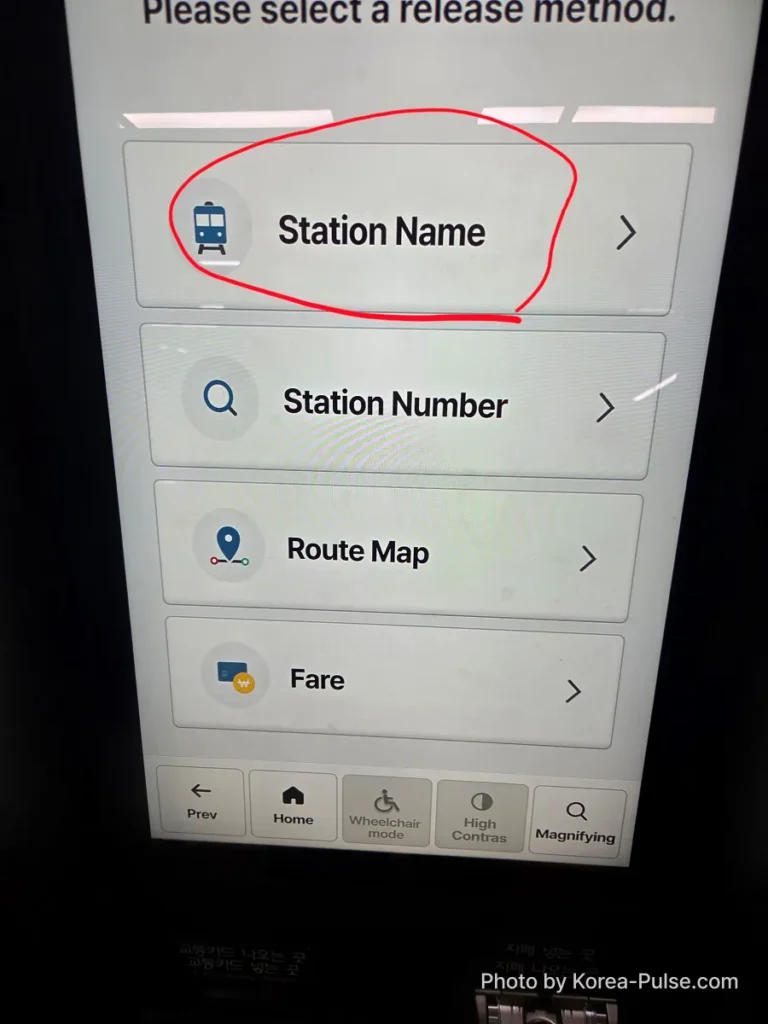
The machine offers three search methods: Station Name (type or browse alphabetically), Station Number (every station has one — e.g. Euljiro 3-ga is 329 on Line 3), or Route Map (visual browse). Station Name is fastest for most people. Tap it, start typing, and the machine suggests matches.
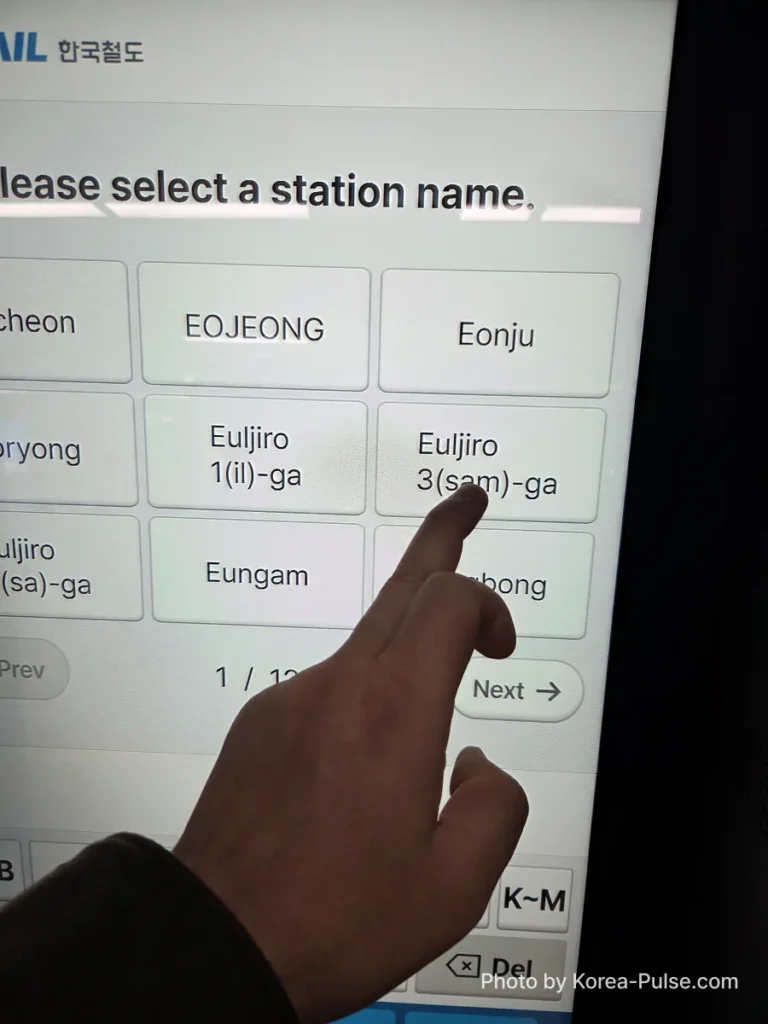
Seoul station names are romanised consistently across maps, apps, and machines. What you see on Naver Map is exactly what you type here — no guessing.
Step 3 — Choose Number of Tickets and Check the Seoul Metro Fare
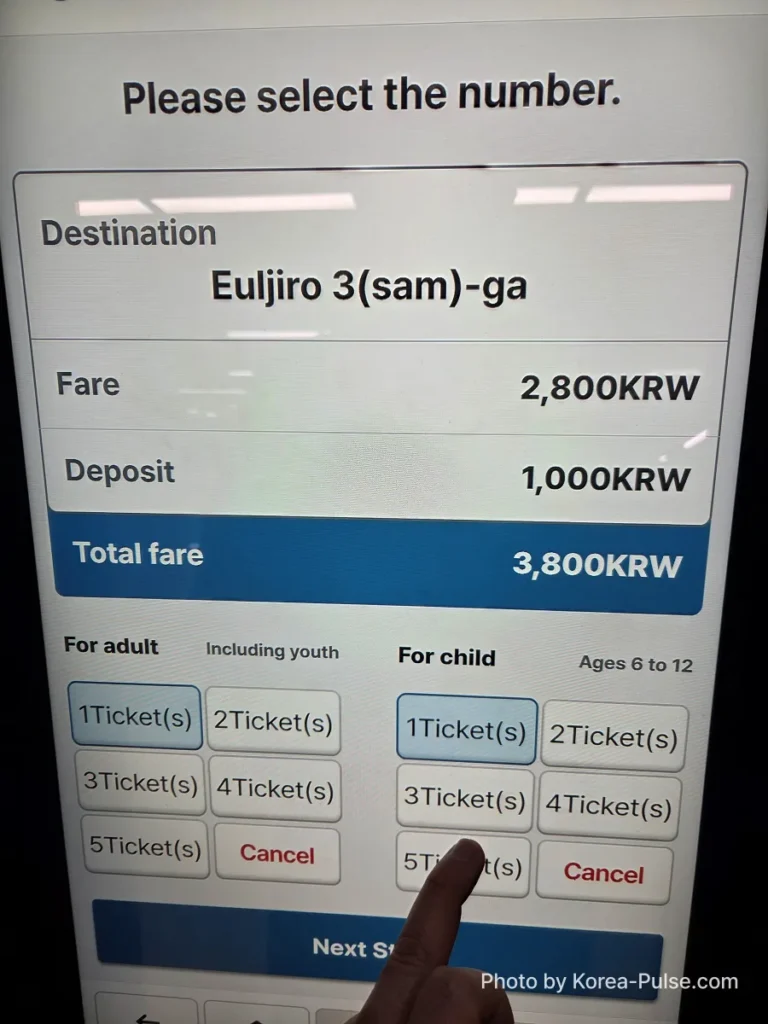
Seoul Metro uses a distance-based fare system. The base fare for a Single Journey Ticket (first 10km) is ₩1,650 for adults, which includes a ₩100 surcharge versus reusable transit cards. Beyond 10km, it adds ₩100 for every 5km. Children aged 6–12 pay a reduced base fare of ₩550, and their distance surcharge is also cheaper: ₩50 per 5km instead of ₩100. Under 6 rides free.
| Description | Adult (19+) | Child (6–12) |
|---|---|---|
| Base fare (first 10km) | ₩1,650 | ₩550 |
| Extra distance (10–50km) | +₩100 per 5km | +₩50 per 5km |
| Deposit per ticket | ₩500 | ₩500 |
Adult: ₩1,650 base + ₩400 extra = ₩2,050 · Child: ₩550 base + ₩200 extra = ₩750 · Total for 1 adult + 1 child (with 2 deposits): ₩3,800. Less than a cup of coffee each, even with the deposit — and exactly what the fare screen above shows.
Step 4 — Confirm Destination
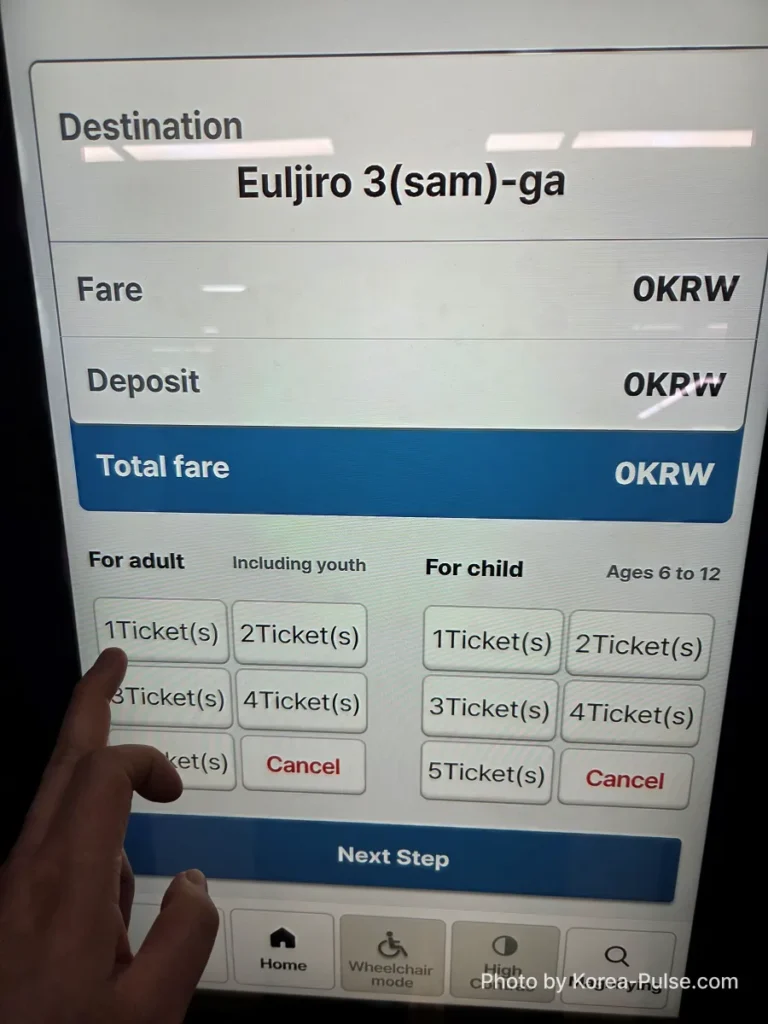
A summary screen shows destination, fare, deposit, and total. Last chance to check everything. If it’s correct, tap Next Step.
Step 5 — Pay by Cash or Card
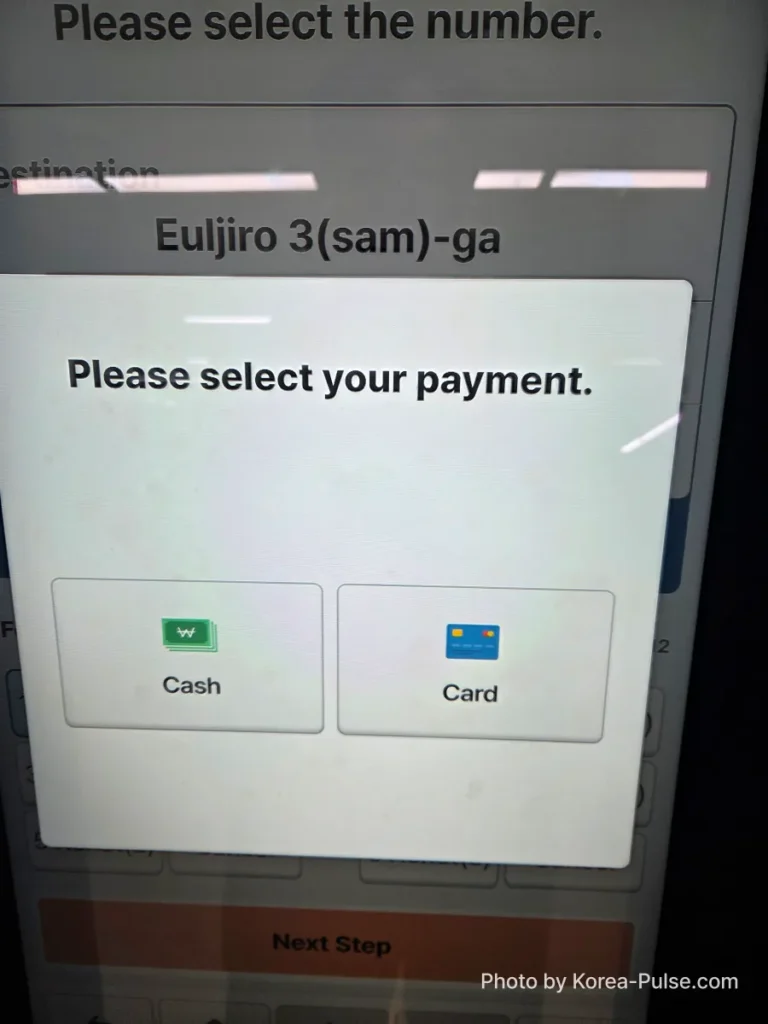
| Payment Method | Works? | Notes |
|---|---|---|
| Korean credit/debit card | ✅ | Always accepted smoothly |
| International Visa/Mastercard | ✅ | Contactless + chip both work |
| Cash (bills) | ✅ | Up to 15 bills per transaction |
| Cash (coins) | ✅ | Up to 20 coins per transaction |
| Mobile payment (Samsung/Apple Pay) | ✅ | At newer machines and gates |
The ticket comes out of the slot at the bottom — small, flat, easy to overlook. Don’t throw it away. It’s your exit key, and the ₩500 deposit inside it is quietly waiting.
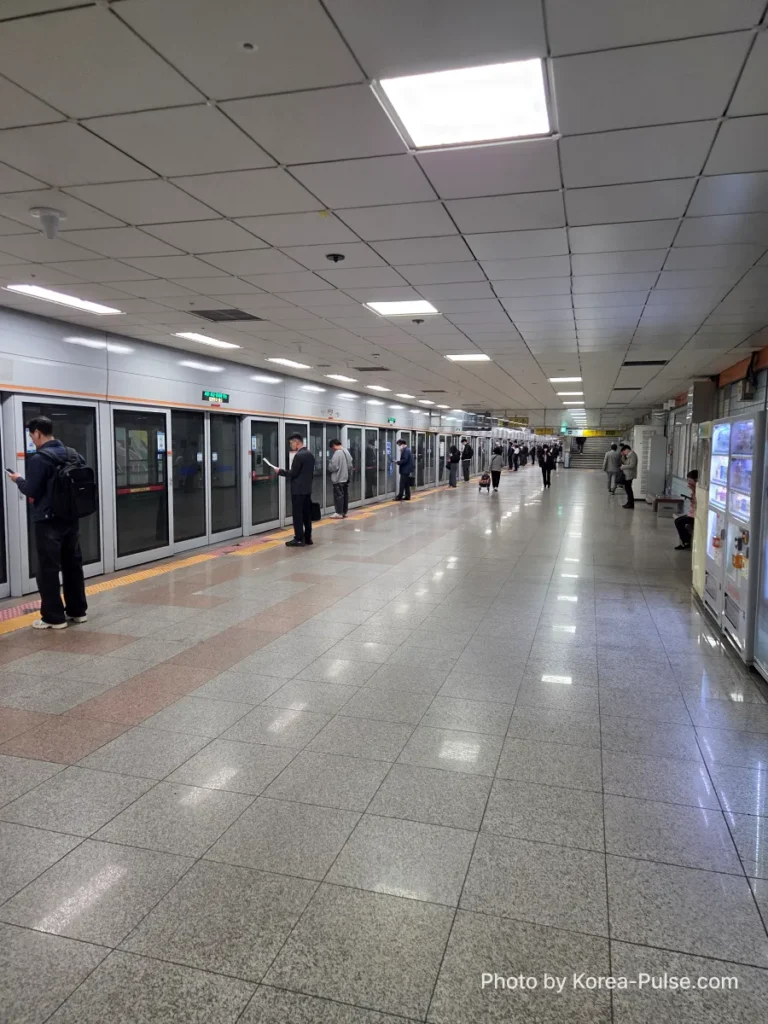
Step 6 — Tap Your Ticket at the Gate and Head to the Platform
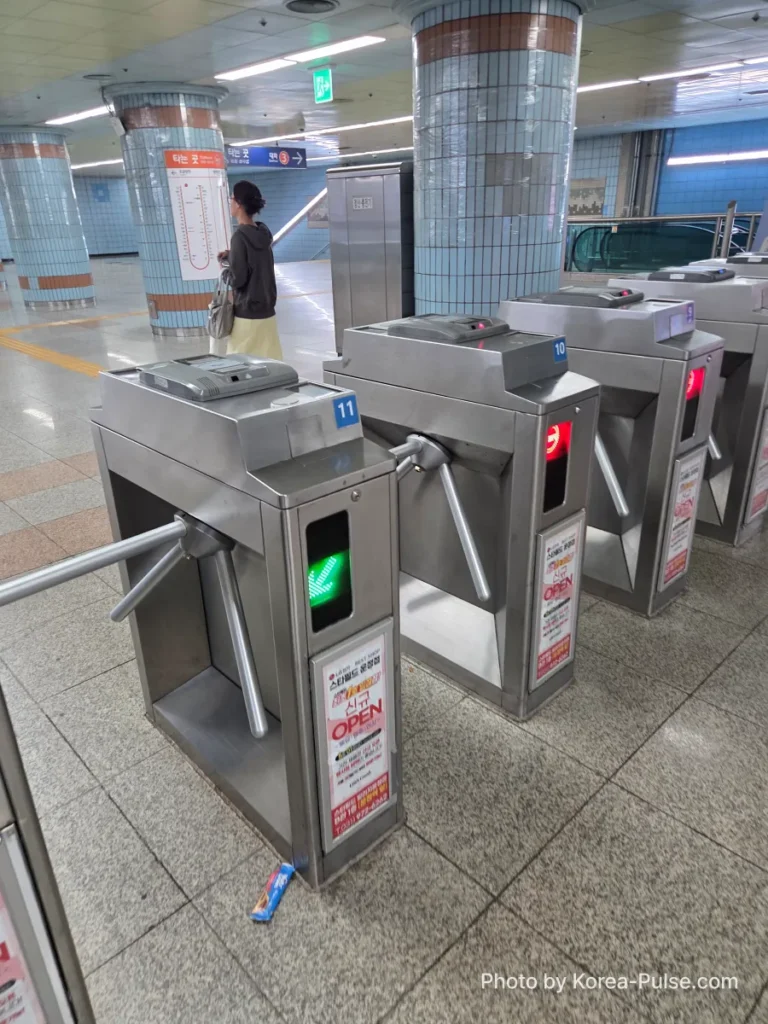
Tap the ticket on the reader at the gate — green light, gate opens, you’re in. Follow the signage for your line and direction.
Seoul Metro Deposit Refund: How to Get Your ₩500 Back
Every station has a Deposit Refund Device (보증금 환급기) — blue sign, usually right next to the exit gates. Insert your used single journey ticket, out comes a ₩500 coin. Takes five seconds. Please do it — the deposit system exists to keep single-use cards in circulation.
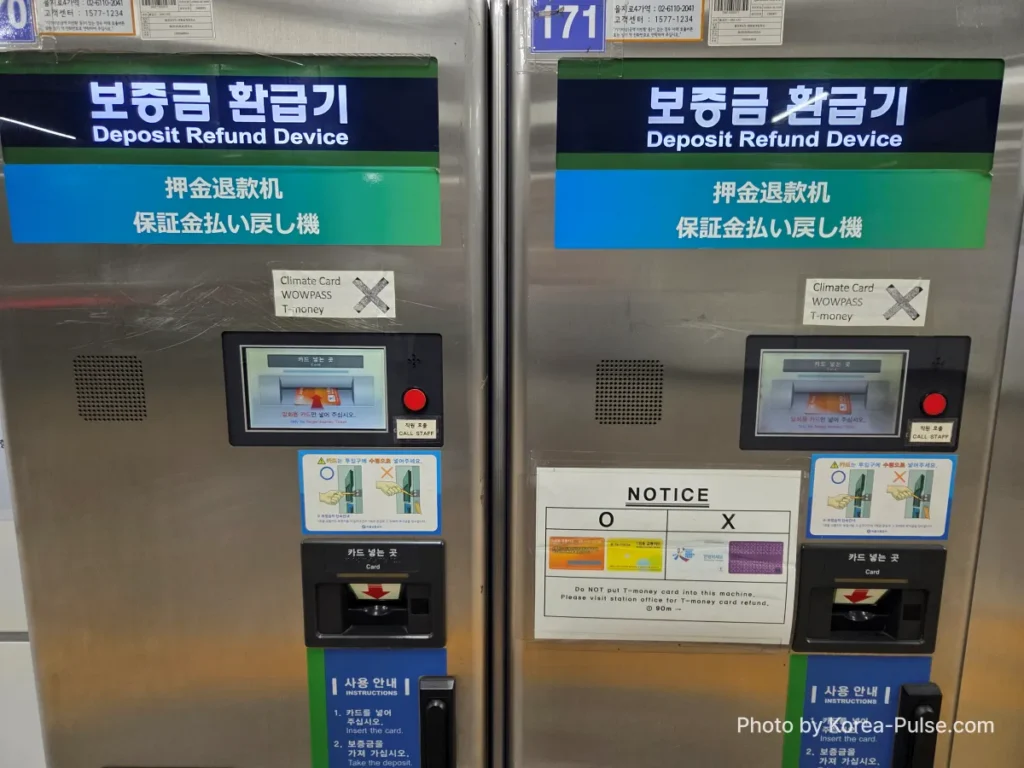
There are often two refund machines side by side — one for single journey tickets, one for the Climate Card. They are not interchangeable. Check the “NOTICE” sticker on the front panel (O/X diagram) before inserting your ticket.
Vertical vs Horizontal: Two Machines, Same Process
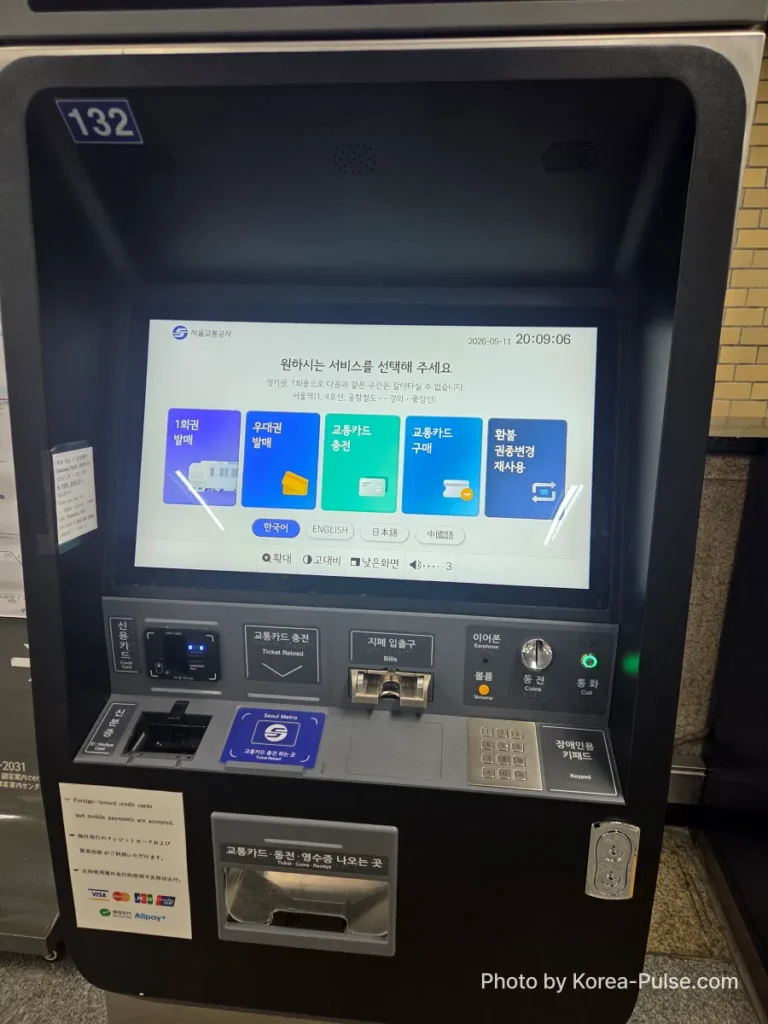
The machines look different. They are not different. Same destination search, same fare calculation, same deposit, same ticket out the bottom. This is a comforting fact about Seoul Metro.
Beyond the Single Journey Ticket: Smarter Options for Longer Stays
If you’re staying longer than a day — and honestly, you should be — the single journey ticket has done its job. Time to graduate.
Seoul Metro Official English Website · T-money English Guide · VisitKorea Public Transport Overview · Naver Map Transit Routing
FAQ: Buy a Seoul Subway Ticket
The questions I get asked most — answered straight.
Yes. Visa and Mastercard work reliably — both chip and contactless. American Express has less consistent support. If your card fails, cash is always accepted.
Every single journey ticket includes a refundable ₩500 deposit. After your journey, insert the used ticket into the blue Deposit Refund Device (보증금 환급기) near the exit gates and a ₩500 coin comes out. Always do this before leaving the station.
Yes — tap ENGLISH at the bottom of the first screen. Japanese and Chinese are also available. After switching languages, every subsequent screen is in English including fares, confirmation, and payment instructions.
T-money card is ₩100 cheaper per ride (base fare ₩1,550 vs ₩1,650 for single journey). If you’re taking more than 3–4 subway trips, buy a T-money card at the nearest convenience store. The machine even lets you purchase one directly.
Children under 6 ride free — no ticket needed, just walk through with an adult. Ages 6–12 pay the child fare (₩550 base, with a reduced ₩50-per-5km distance surcharge). Ages 13–18 pay the youth fare. Select the appropriate ticket type on the fare selection screen.
Seoul Metro is intimidating only until your first transaction. Once you shift that screen to English, it becomes one of the safest, cheapest, and most efficient subway systems on the planet.
Six steps. Less than two minutes. A ticket that costs less than a coffee and takes you across one of the world’s great cities. Now that you know how to buy a Seoul subway ticket, where will your first stop be?