
K-TRAVEL · May 2026
KTX Korea: A 600km Day Trip
That Turned Distance into Family Time
A father in a Daegu hospital bed, 325km away. Here’s what it actually takes to get there and back in one day.
There are exactly two things that can make a grown man leave his warm bed at 6am without complaint: a flight to catch, and a parent in a hospital bed 300 kilometers away.
My father had just come out of knee replacement surgery at a hospital in Daegu. We were in Ilsan, just northwest of Seoul. The distance between us: 325 kilometers, a recovering patient, and one very worried family.
In most countries, this is the kind of situation that requires a plane ticket, a hotel booking, and two days off work. In Korea, it requires a train ticket and a packed lunch. We were home by midnight. This is the story of what happened in between, and why Korea’s KTX bullet train is quietly one of the most underrated pieces of infrastructure I’ve ever used.
Act One: The Journey Begins in Ilsan
The Pink Carpet Nobody Talks About
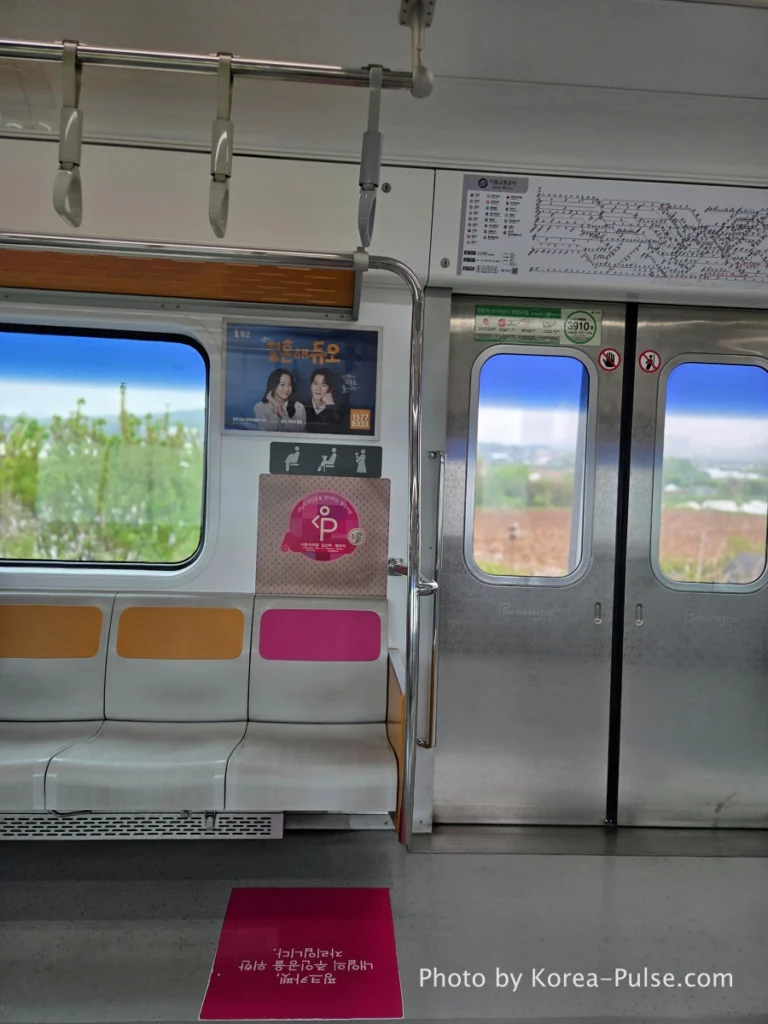
The journey started the way most great Korean adventures do: on the subway. Ilsan to Seoul Station is about an hour on the metro, unremarkable by most measures, until you notice the details. Korean public transit has a habit of hiding its best ideas in plain sight. Case in point: the pink carpet.
Stretching from the platform entrance to a designated priority seat, a strip of soft pink flooring guides pregnant passengers directly to their reserved space. No signage needed, no announcements required, the floor itself does the talking. It’s the kind of quiet, thoughtful design that makes you realize infrastructure isn’t just about moving people, it’s about seeing them. I’ve ridden subways in Tokyo, London, New York, and Paris. None of them had a pink carpet. Korea does.
If you’re new to navigating Seoul’s subway system, I’ve laid out the entire ticket-buying process step by step in How to Buy a Seoul Subway Ticket, worth a quick read before your first ride.
The Bike Car: Infrastructure That Adapts to Life
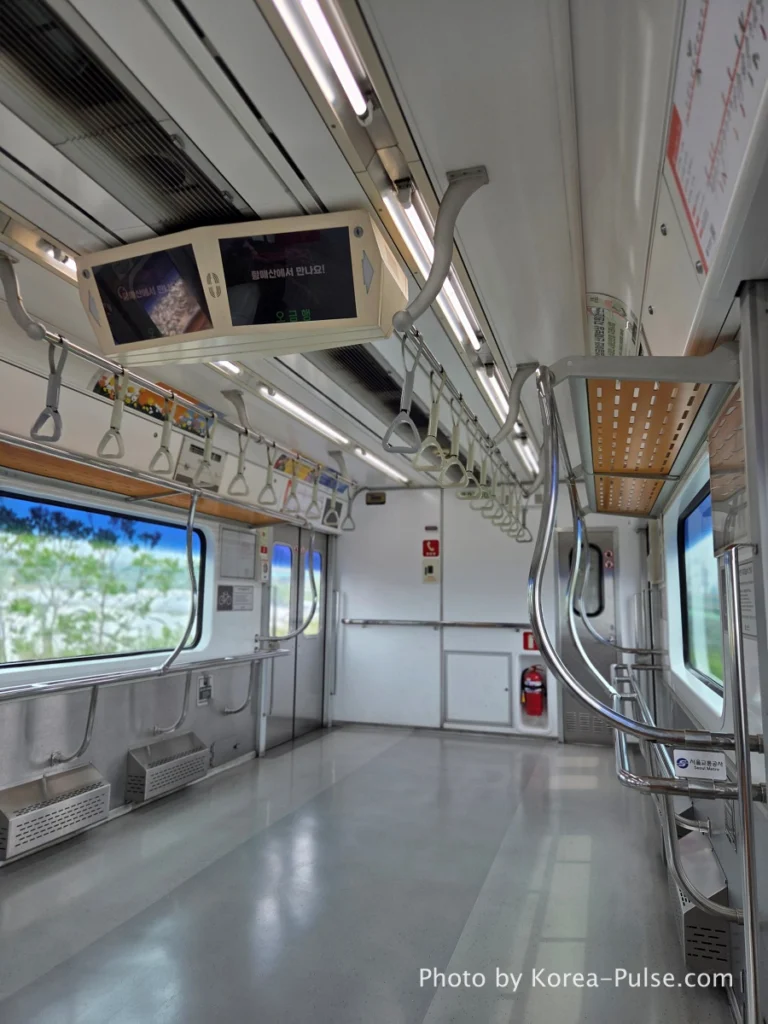
Further down the train, another quiet surprise: the last car of certain Seoul Metro lines is configured without seats, just open, wide floor space, designed for cyclists who want to bring their bikes aboard on weekends and holidays. It’s the kind of detail that separates good public transit from great public transit. It’s not just about getting from A to B. It’s about building a system around how people actually want to live: active, mobile, and free.
Act Two: Seoul Station, the Nerve Center
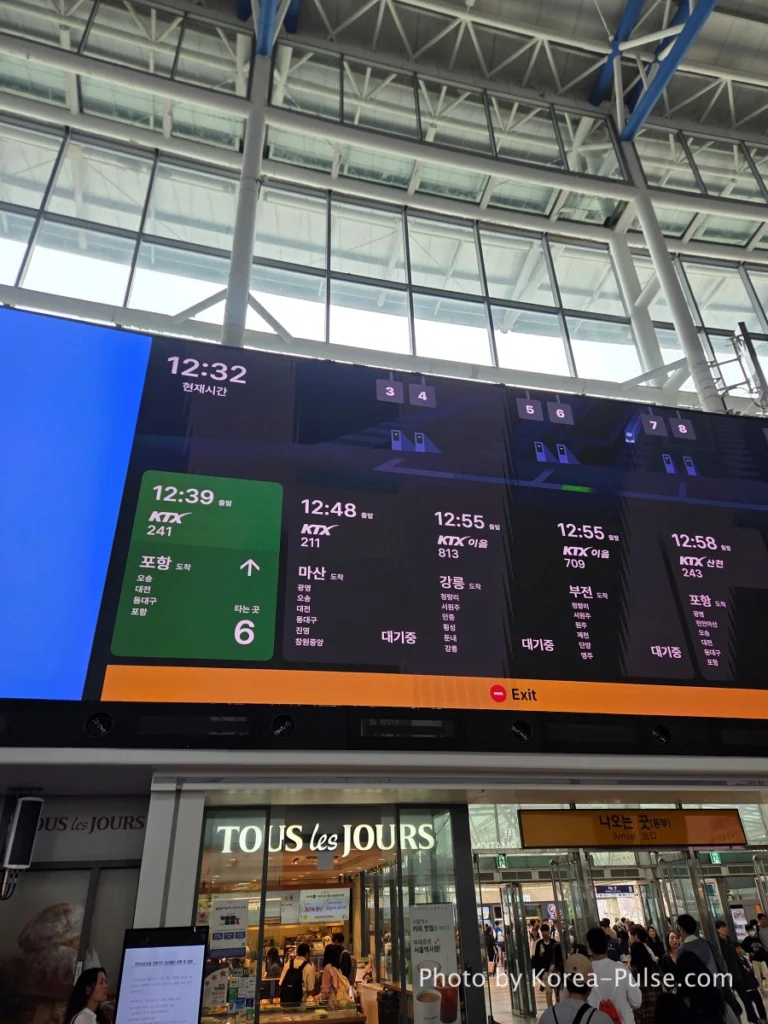
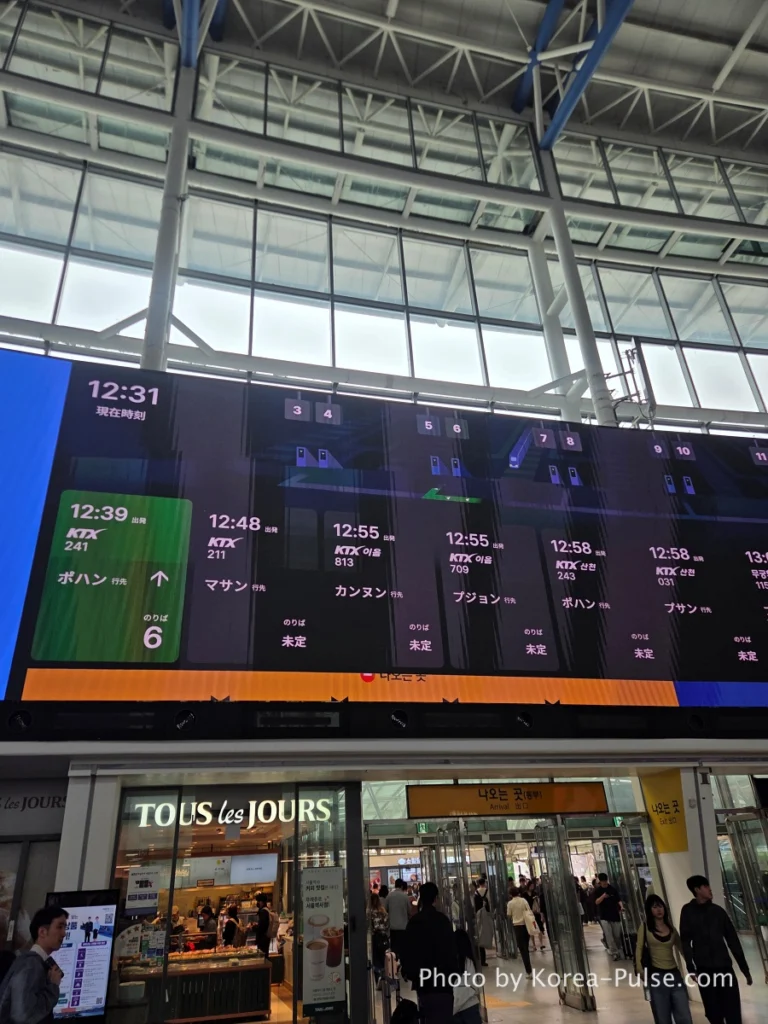
Seoul Station’s massive digital LED screens, showing Korea’s technological pulse. | @kpulse
Seoul Station hits you like a wave. Towering LED screens, the smell of fresh pastries from Tous les Jours, hundreds of people moving in every direction with the coordinated energy of a well-rehearsed performance. And yet it never feels chaotic. There’s a rhythm to it. Everyone knows where they’re going, and the infrastructure knows how to get them there.
I grabbed a coffee, checked my ticket on my phone, and found my platform without asking a single person for directions. In a station this size, that’s not a small thing.
“Seoul Station doesn’t feel like a transit hub. It feels like the lobby of a country that takes movement seriously.”
For first-time visitors: Seoul Station connects to virtually everything, Airport Railroad (AREX) to Incheon Airport, metro lines, KTX to the whole country, and enough food options to keep you fed for a week. It is, in the most literal sense, the center of the Korean transit universe.
Act Three: KTX Korea at 300km/h, Perfectly Silent
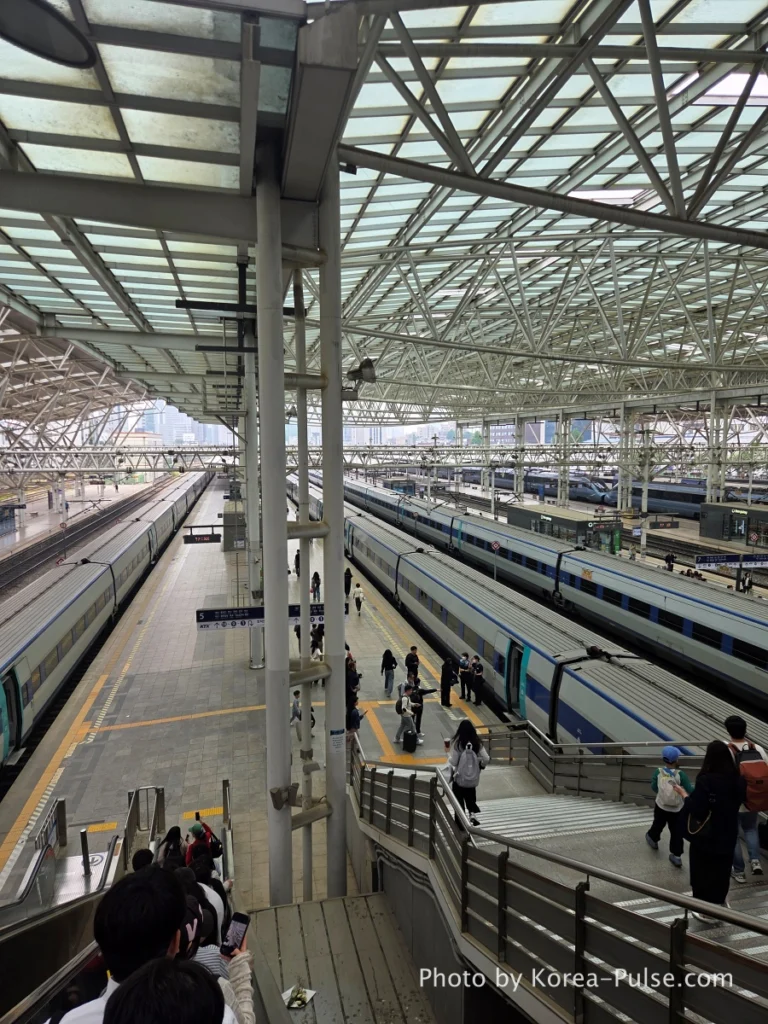
If Seoul Station is the nerve center, KTX Korea is the heartbeat. Standing on the platform watching those long, sleek blue trains lined up in formation, each one bound for a different corner of the peninsula, is one of those quietly cinematic moments that Korea specializes in.
I boarded, found my seat, and then, without drama or fanfare, we were moving. The KTX from Seoul to Daegu takes approximately 1 hour 40 minutes. At peak speed, you’re travelling at around 300km/h. And here’s the thing nobody warns you about: you can barely tell. The ride is startlingly smooth, no rattling, no swaying, just the countryside sliding past your window like a high-definition screensaver.
Planning to explore Korea by train, subway, and bus? My complete guide covers everything from airport transfers to city transportation: Korea Transit Guide.
The Engineering Behind the Silence
The secret to the KTX’s uncanny smoothness lies beneath the tracks. Korea’s high-speed rail network uses Continuous Welded Rail, a technique where individual rail segments are welded into seamless, uninterrupted lengths stretching for kilometers. The result: no joints, no gaps, none of the “clunk-clunk” rhythm that defines ordinary train travel. Just silence, and speed.
And Korea isn’t stopping there. The KTX-Cheongryong (EMU-320), a domestically developed next-generation bullet train capable of 320km/h, represents Korea’s bid to become not just a user of high-speed rail technology, but an exporter of it. A country that once imported the technology is now writing the next chapter.
What KTX Actually Means for Travelers
The practical implication for travelers is this: Korea has no “far.” Gyeongju, Busan, Daegu, Gwangju: cities that would require overnight stays in almost any other country are comfortable day trips from Seoul. You can have breakfast in your Seoul hotel, lunch in Busan, and be back for a late dinner.
Act Four: Daegu, the Visit That Made It All Worthwhile
I won’t linger here. Some moments don’t need infrastructure analysis or travel tips, they just need to be acknowledged. He looked tired. He also looked relieved to see us. We sat with him for a few hours, ate hospital cafeteria food without complaint, and talked about nothing important and everything that mattered.
That’s the thing about the KTX that the brochures don’t mention. It doesn’t just move your body across the peninsula. It gives you back something far more valuable: the time to show up.
Act Five: Dong-Daegu Station and the Ritual of the Return
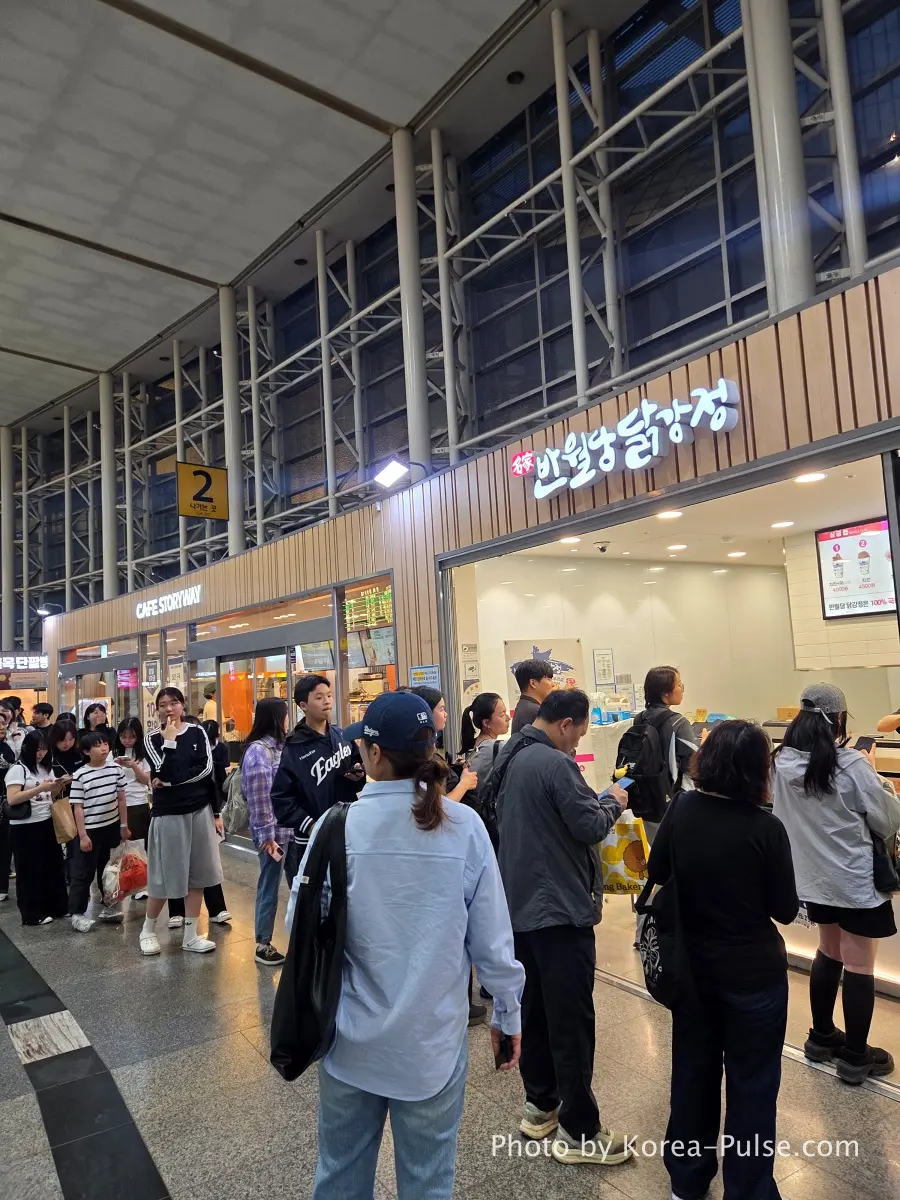
There is an unwritten rule of Korean KTX travel that no guidebook has yet codified but every local understands instinctively: you do not leave a city without bringing something back. At Dong-Daegu Station, that something is Banwoldang Dakgangjeong, crispy fried chicken glazed in a sweet-spicy sauce with a local cult status that only comes from decades of getting it exactly right. The queue was long. We joined it without hesitation.
KTX stations across Korea have evolved into something more than transit hubs. They are curated gateways to regional culture, places where you can pick up Jeonju bibimbap, Gyeongju bread, Busan fish cake, or Daegu’s finest fried chicken, all within walking distance of your platform. The train gets you there. The station sends you home with a story.
Act Six: Seoul at Night, the City That Waited
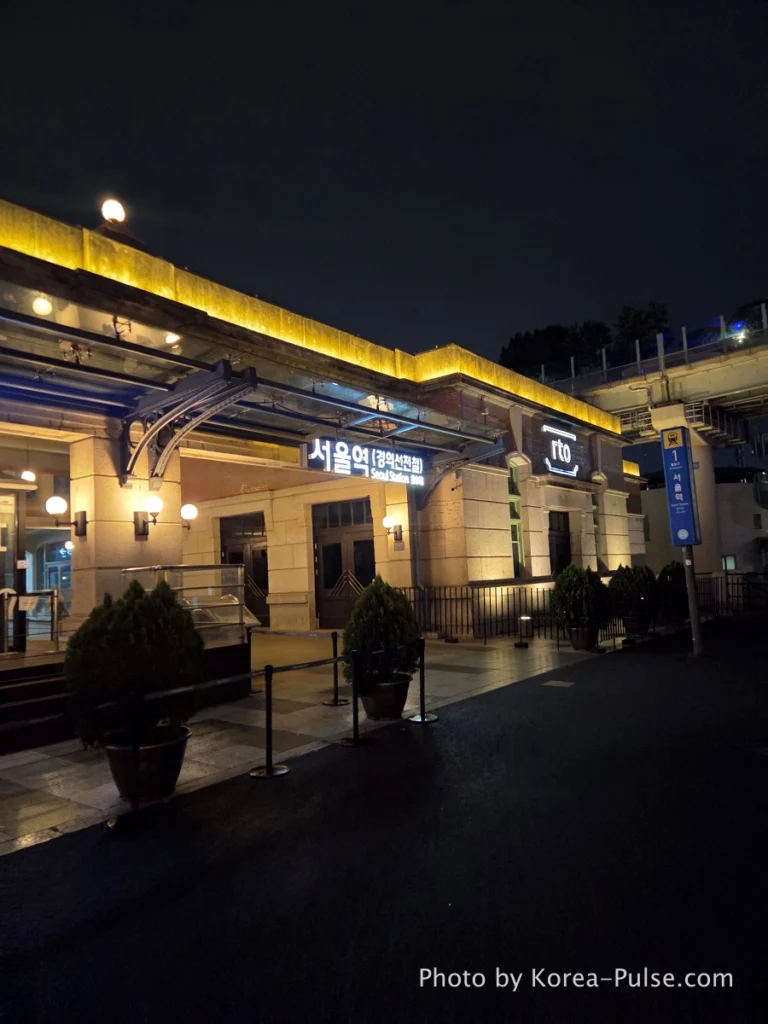
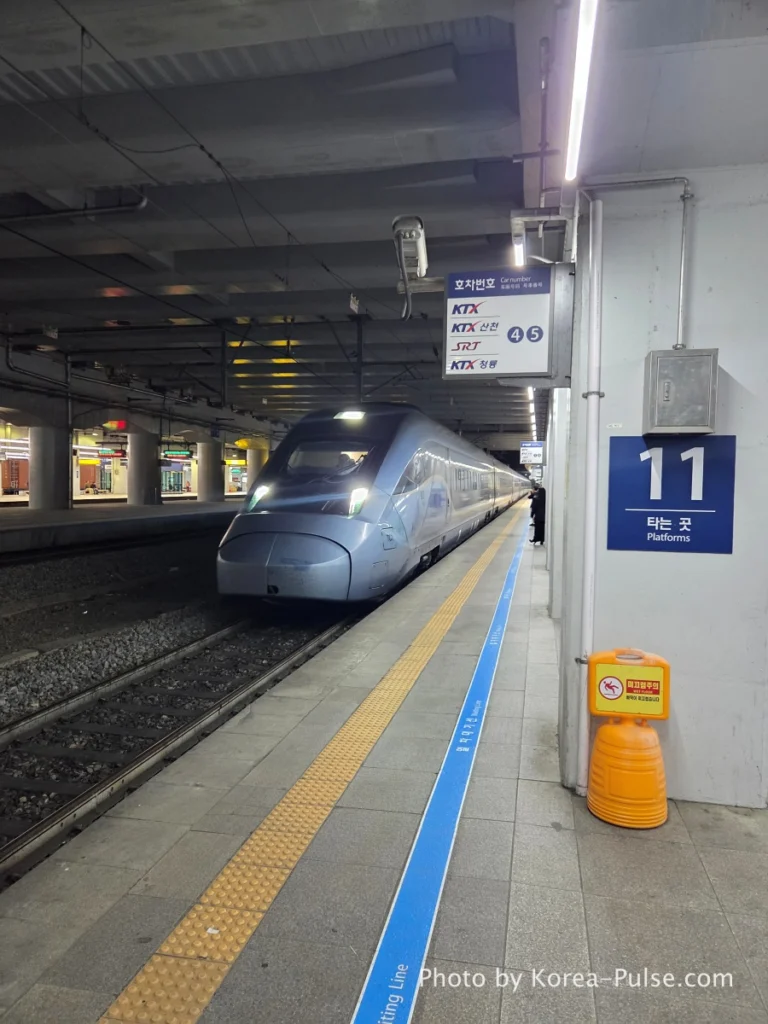
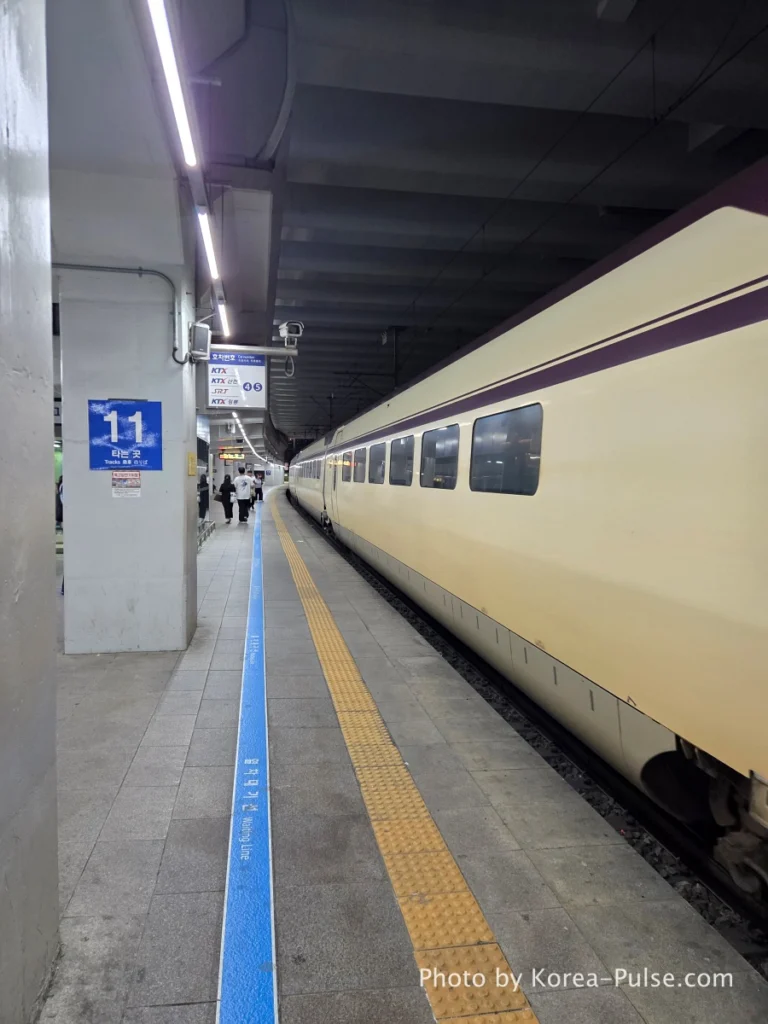
We pulled into Seoul Station a little after 10pm. The modern terminal was still humming, Korea’s cities don’t really believe in early bedtimes, but it was the old station building that stopped me in my tracks. Built in 1925 during the Japanese colonial period and now repurposed as a cultural space connected to the Gyeongui Line, it glowed warmly against the night sky: Renaissance-influenced stone facade, arched windows, the quiet dignity of a building that has outlasted empires and still has somewhere to be.
“Korea has a talent for holding past and future simultaneously, and Seoul Station at midnight is perhaps the clearest expression of that gift.”
Practical Guide: Riding KTX as a Visitor
One more thing worth knowing: Olive Young branches sit inside both Seoul Station and Dongdaegu Station, a convenient stop for anyone who rushed out without packing everything. If your train isn’t leaving for another hour, Myeongdong (home to Olive Young’s actual flagship store) is just one stop away, covered in full in Olive Young Myeongdong Town.
FAQ: Riding KTX Korea
Tickets open one month ahead and can be booked same-day if seats remain. For popular routes like Seoul to Busan on weekends or holidays, book at least a few days ahead. Seoul to Daegu on weekdays is usually easy to find same-day.
Not usually. The KR Pass is priced for multi-city, multi-day itineraries. For a single round trip like Seoul to Daegu, booking individual tickets through Korail’s site is cheaper.
Yes. Changes and cancellations are available through the Korail Talk app or at the station, with a small fee that increases closer to departure time. Cancel or rebook as early as possible to minimize the fee.
There’s no strict weight limit, but overhead and between-seat space is limited. Large suitcases fit best in the racks near the train doors. For a Seoul-to-Daegu day trip, a light bag is far easier to manage.
KTX Korea is not just infrastructure. It’s a statement about what a society values: that your time matters, and that distance shouldn’t be a reason to stay away from the people you love.
My father is recovering well. The dakgangjeong was spectacular. And I was home in time to put the kids to bed. That’s what 300km/h looks like when it really counts.