
K-POP · April 2026
BTS Is Back
A Global Dad’s Perspective from the Heart of Seoul
A song that got me through a construction site in Ethiopia just came home to my own neighborhood.
Annyeong! The long-awaited BTS Comeback 2026 Seoul is finally here, and I can feel the ground shaking in my own neighborhood. This is the story of how one BTS song followed me from a construction site in Ethiopia all the way to my own doorstep in Ilsan — and why this comeback means more to my family than most fans would guess.
A Connection Born in Ethiopia
My journey as a silent supporter of the BTS Comeback 2026 Seoul didn’t start in a trendy cafe. It began years ago while I was working on a construction project in Ethiopia. In that distant land, “Dynamite” was more than a song — it was the energy that kept me going through tough days far from my family, on projects that ran long past the hours anyone back home would have guessed.
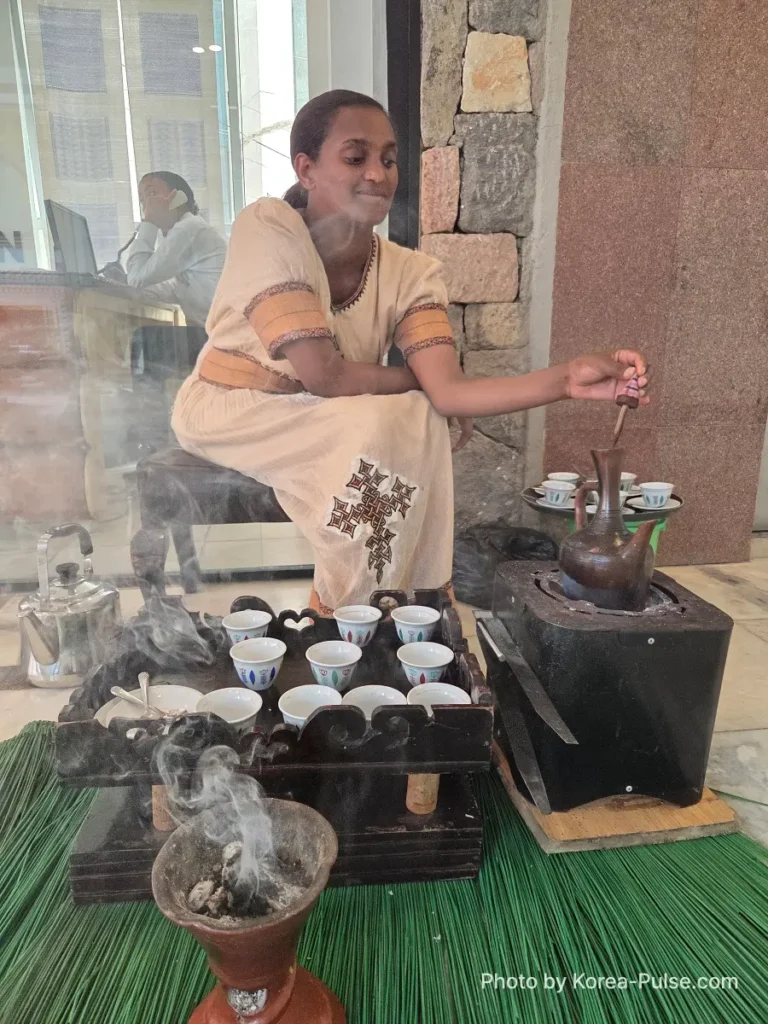
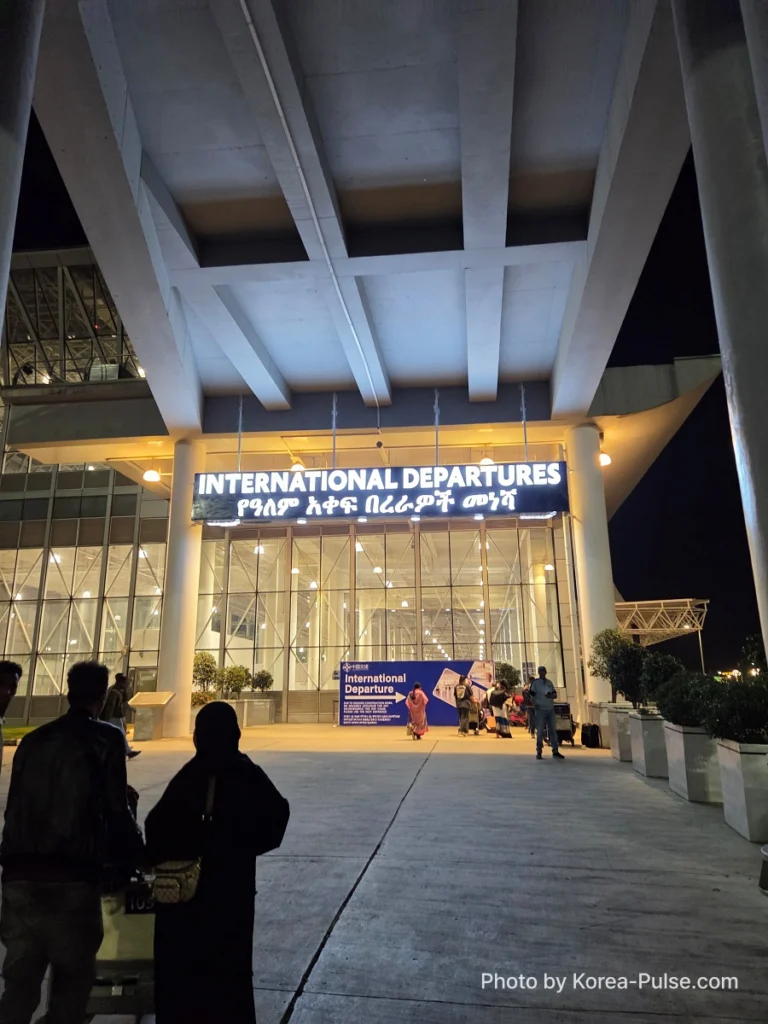
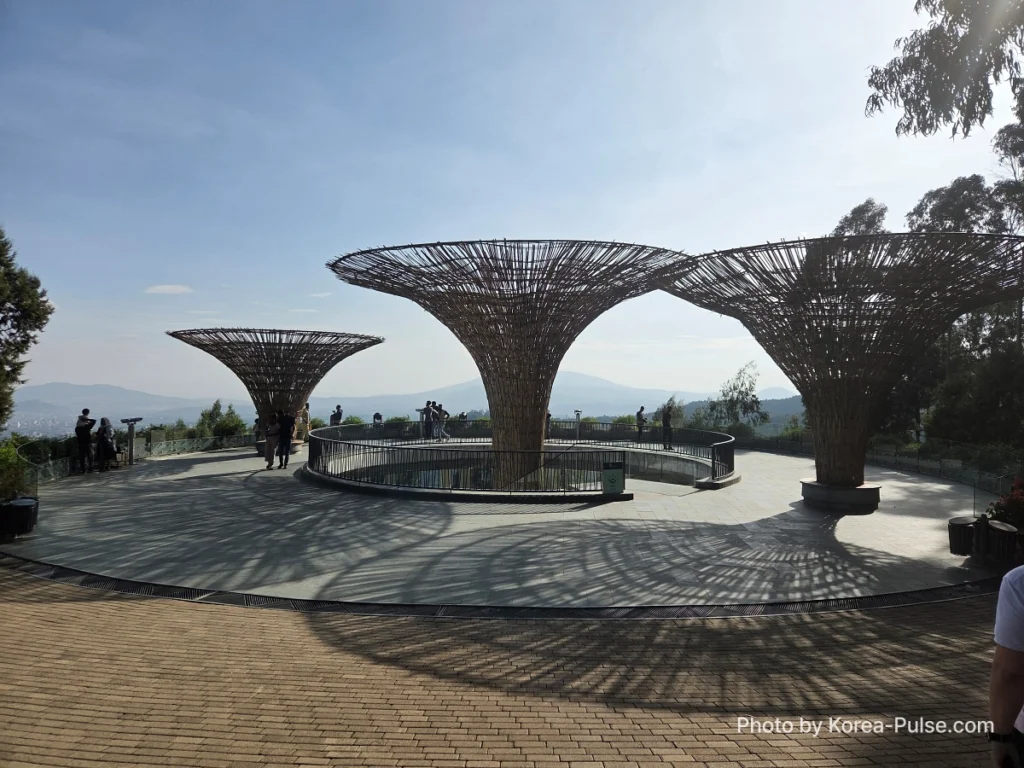
Finding strength in BTS’s music during my professional journey in Ethiopia. That’s the honest, unglamorous origin of this whole story.
Construction work overseas has a particular kind of quiet that’s hard to explain to people who haven’t lived it. The days are long, the phone calls home are short and delayed by time zones, and the evenings can feel emptier than you’d expect for someone surrounded by colleagues.
Music filled that gap in a way conversation couldn’t always manage. A song that had nothing to do with my job, my country, or my circumstances still managed to feel like a message from home — proof that somewhere, people I’d never met were putting effort into something joyful, and that joy was exportable. I didn’t know it then, but that habit of leaning on BTS during the harder stretches of a posting abroad would end up circling all the way back to my own street in Ilsan, years before I imagined a comeback like this one landing so close to home.
Gwanghwamun: The Heart of the BTS Comeback 2026 Seoul
My office is near Gwanghwamun, the historic center of Seoul. Last month, the atmosphere was electric. Walking to work, I saw subway banners everywhere guiding fans to the official comeback showcase.
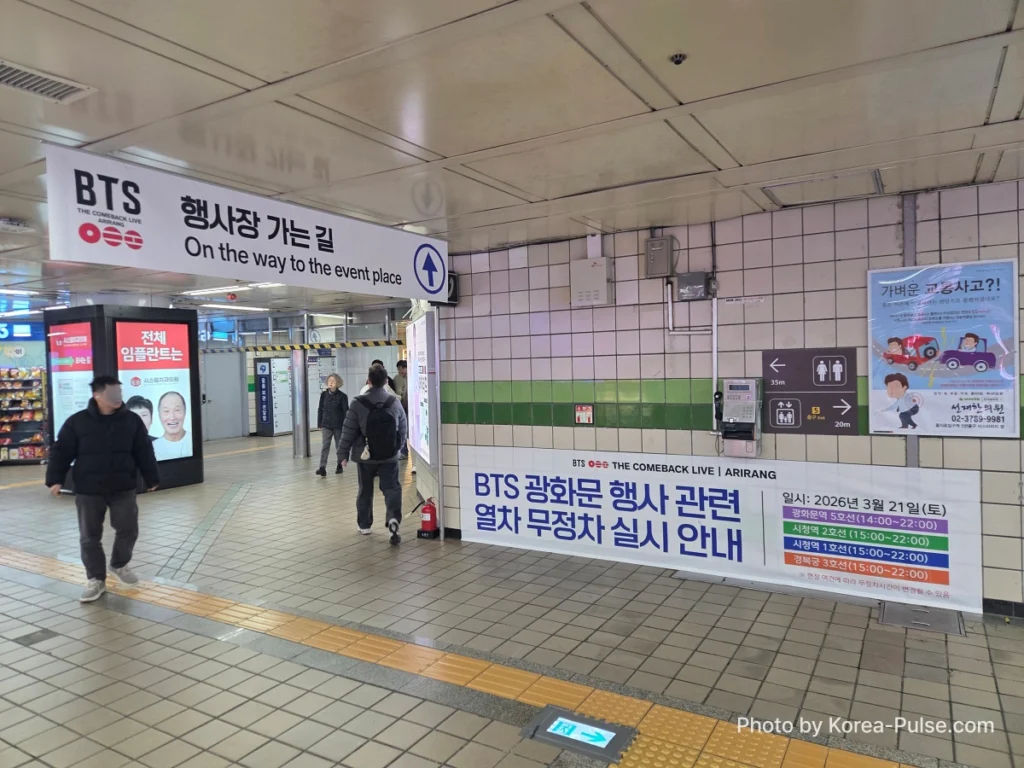
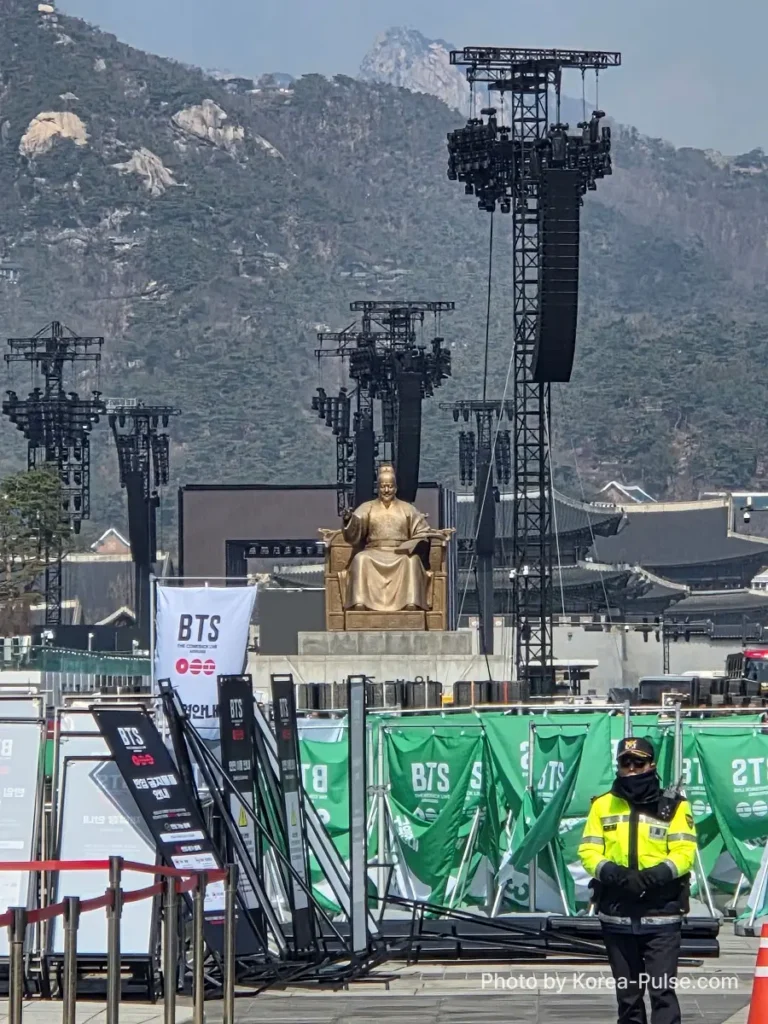
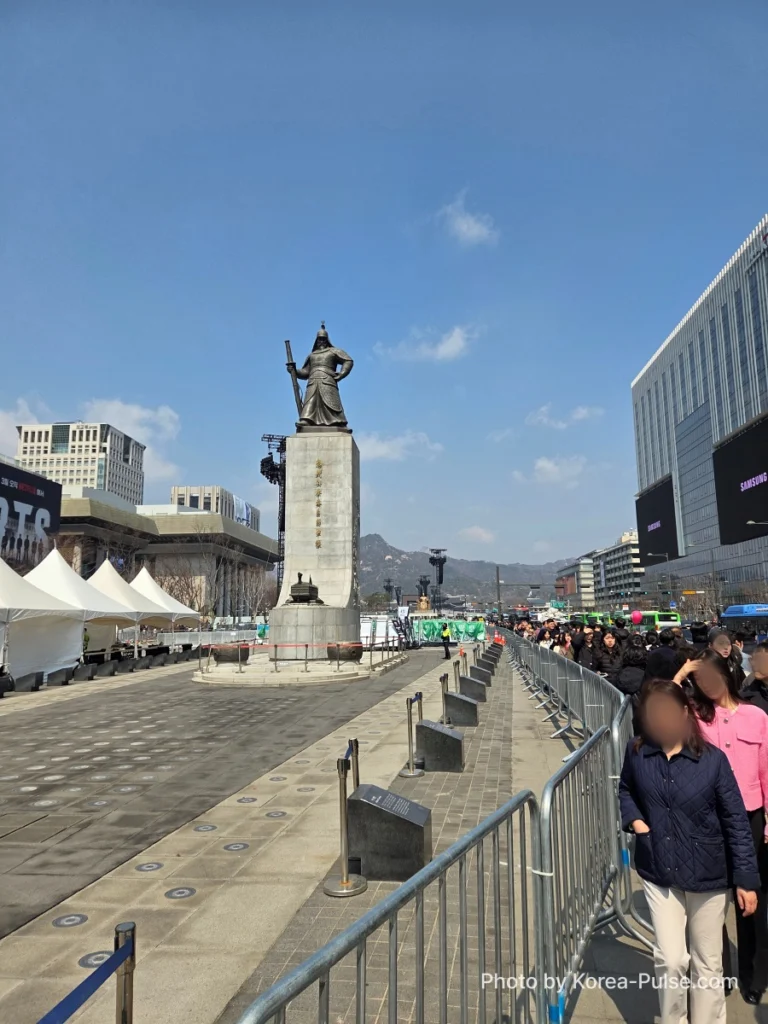
What struck me most wasn’t the scale of it, though the scale was real — it was how ordinary the whole build-up felt to the people around me. Office workers on their lunch break walked past the barricades without slowing down. Ajummas running errands squeezed past camera crews like they were just another obstacle on the sidewalk. Only the ARMY fans, some clearly having flown in for exactly this moment, stopped to take it all in. For a government-district neighborhood that usually runs on quiet efficiency, the BTS Comeback 2026 Seoul turned one ordinary Tuesday into something the whole block could feel, whether they were fans or not.
The Sound of Ilsan
Shortly after, BTS held their first full-group concert in Ilsan, where I currently live. Standing in my neighborhood, I could feel the vibrations of the performance. It was a surreal moment — the songs I once listened to in Ethiopia were now echoing through my own backyard.
My neighbors noticed too. The convenience store owner near my apartment had the concert livestream running quietly on a small screen behind the counter. A group of teenagers I usually only see hunched over their phones on the bus were, for one evening, actually talking to each other about which member’s part they were most looking forward to. Ilsan is not usually the epicenter of anything — it’s a planned city known for its lake park and its commuters, not its concert venues. Having the BTS Comeback 2026 Seoul land, quite literally, on my own doorstep was the kind of thing that made even a tired Tuesday feel a little bit special.
View this post on Instagram — @bts.bighitofficial
The Oma-dong Connection
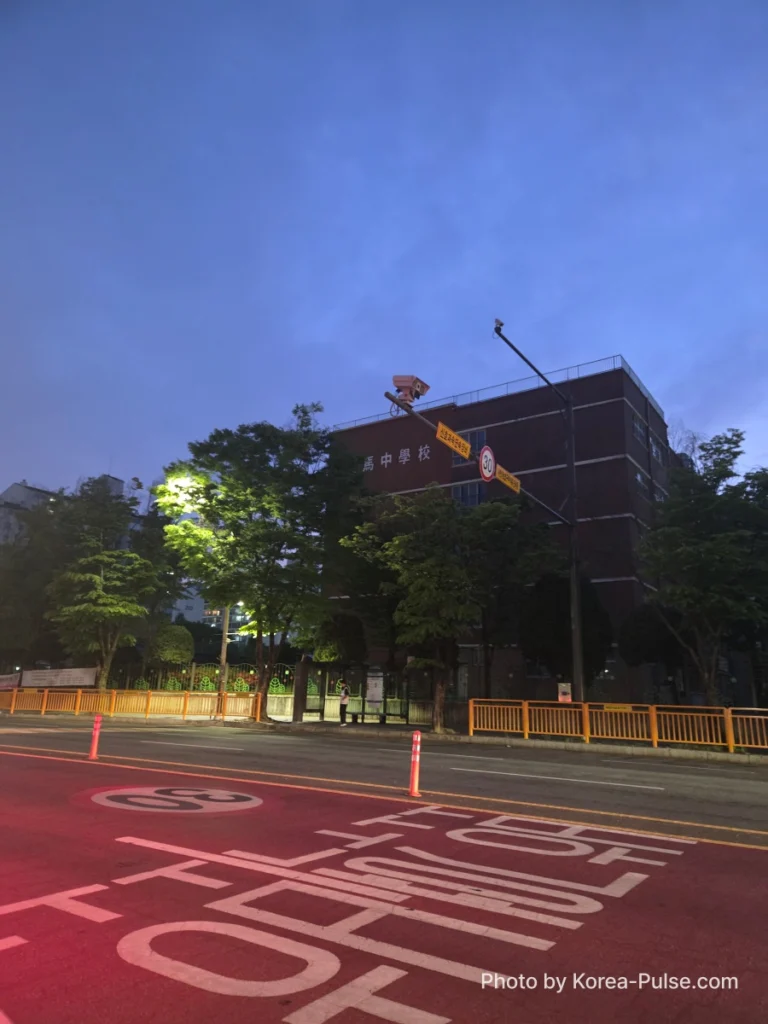
At home, my middle-school-aged daughter caught me humming their new tracks. She asked with a smile, “Dad, are you an ARMY now?” I told her that her Appa has always known what’s good. Interestingly, our family lives in the same Oma-dong neighborhood where RM, the leader of BTS, spent his youth. RM graduated from Oma Elementary School; my daughter attended the neighboring Munhwa Elementary School before moving on to Oma Middle School — different elementary schools, same middle school — and the same parks and local streets in between.
Growing up in the same Ilsan school district that shaped a global icon gives our family a proud, local connection to this comeback. Even attending different elementary schools, being part of the same educational community in Gyeonggi-do makes the story feel deeply personal.
I don’t think my daughter fully understood why this mattered to me until I explained it plainly: someone who once walked the same route to school she walks now went on to write songs that reach every corner of the world. That’s not a small thing to hand a kid, the idea that the ordinary streets of her own neighborhood aren’t a limitation on what’s possible. She’s since started pointing out landmarks near Oma Middle School to her friends with a kind of local-celebrity pride that, frankly, I find more endearing than anything BTS has released this year.
View this post on Instagram — @bts.bighitofficial
Musical Reflections: Body to Body & SWIM
Listening to their latest tracks from the BTS Comeback 2026 Seoul has been a profound experience.
“Body to Body” leans on the traditional Korean melody Arirang (아리랑), and their Netflix documentary shows the band debating the length of that section themselves. As a local, I felt the Arirang part ran a touch long for a pop song, but the cultural pride behind it was undeniable. “SWIM” is my personal favorite — its rhythm is oddly perfect for a daily 10,000-step walking routine.
What I appreciate most about this stretch of BTS’s catalog is how unafraid it is to sound distinctly Korean while still landing on global charts. Arirang isn’t a folk tune most international listeners would recognize on first listen, and putting it front and center in a comeback single is a small act of confidence — betting that the world will meet the music halfway rather than asking it to sand down every local edge. That’s roughly the same bet Korea Pulse makes with every post: that a story rooted in one specific neighborhood, one specific commute, one specific family, travels further than a story that tries to sound like it could be about anywhere.
Practical Tips for the BTS Comeback 2026 Seoul
- Use public transport: Gwanghwamun and Ilsan are both best reached by subway — traffic around showcase dates gets unpredictable fast.
- Explore RM’s Ilsan: walking around Oma-dong and Lake Park is worth it if you want to feel the local atmosphere that shaped his early years.
- Refuel afterward: try some samgyetang (삼계탕) — a whole chicken stuffed with ginseng and rice — to restore your energy after a long day of standing.
- Check official channels before you travel: showcase schedules, train non-stop notices, and venue access around Gwanghwamun can shift on short notice during a comeback week, so confirm details the day before rather than the week before.
View this post on Instagram — @bts.bighitofficial
A song that got me through Ethiopia now shakes the windows of my own neighborhood.
This comeback isn’t just a global music event to me — it’s a soundtrack that followed me from a construction site abroad to my own front door in Ilsan, in the same school district that raised one of the band’s own. As an Insider Uncle and a proud dad, I’ll keep sharing these stories as they come, one ordinary Tuesday at a time.