K-TREND · July 2026
Inside Korea’s 2-Hour Health Checkup Machine
Wristbands, Yellow Floor Lines, and a Bowl of Porridge at the End
One RFID wristband, twenty-some checkpoints, zero paper forms — this is what a Korean health checkup actually looks like from the inside.
A Korean health checkup is the one piece of daily life here that reliably makes my foreign friends do a double take when I describe it — not because it’s exotic, but because it’s fast. Last Friday, my wife and I walked into a screening center in Jung-gu, central Seoul, at 8:34 AM, tapped a plastic wristband at every single station, and I was done with my entire checkup by 10:14 AM. This is what that morning actually looked like, timestamp by timestamp, plus how it compares to the multi-week referral chains many Western readers are used to.
As I mentioned in my very first post, my family has bounced between the UK, a multi-year posting in Africa, and a fair bit of Europe before we settled back in Ilsan. I’ve sat in enough overseas waiting rooms — clutching enough referral letters — to know exactly how rare what you’re about to read is.
1. Two Tiers of Screening: What “Korean Health Checkup” Actually Means
When foreigners hear “Korean health checkup,” they’re usually talking about two completely different systems without realizing it — and the one in this post isn’t the free one. Every insured adult here is entitled to a basic biennial checkup through the National Health Insurance Service — a no-cost, government-run screening covering blood work, blood pressure, and a handful of baseline tests. What I did last Friday is the other tier: a premium, comprehensive package (종합검진), arranged through my employer’s contract with a private screening platform.
Companies pay into these platforms, and each employee books their own slot at whichever partner clinic suits them, in Seoul or Gyeonggi-do. Here’s the part that surprises people: the package price already includes a menu of optional tests — you typically pick three or four from a list (endoscopy, CT scans, specialized ultrasounds and so on) at no extra charge, and fees only kick in if you request tests beyond that menu. My low-dose chest CT was one of those included picks, not a paid upgrade.
| Free NHIS Checkup | Premium Comprehensive (This Post) | |
|---|---|---|
| COST | Free for insured adults | ~₩220,000 — includes a menu of optional-test picks |
| SCOPE | Baseline blood work, blood pressure, basic screening | 20+ stations: CT, ultrasound, endoscopy, bone density, and more |
| WHERE | Any designated local clinic | Specialized high-volume screening centers |
| WHO BOOKS IT | You, every two years by birth-year cycle | Often your employer’s welfare platform — you pick the clinic |
In short: the free tier keeps the nation screened; the premium tier is the one with the wristbands, the CT scanners, and the porridge.
And the ceiling goes far higher than my modest package. Just this week, a colleague took a half day off to escort his mother to her checkup — a ₩5,000,000 (~$3,300) VVIP course. Another colleague once treated his parents to a ₩1.8 million course as a gift; here, booking your parents a premium health checkup is a classic filial-piety gesture, right up there with sending them on a nice trip. For someone like me who gets screened every single year, though, the ₩220,000 tier is honestly all you need.
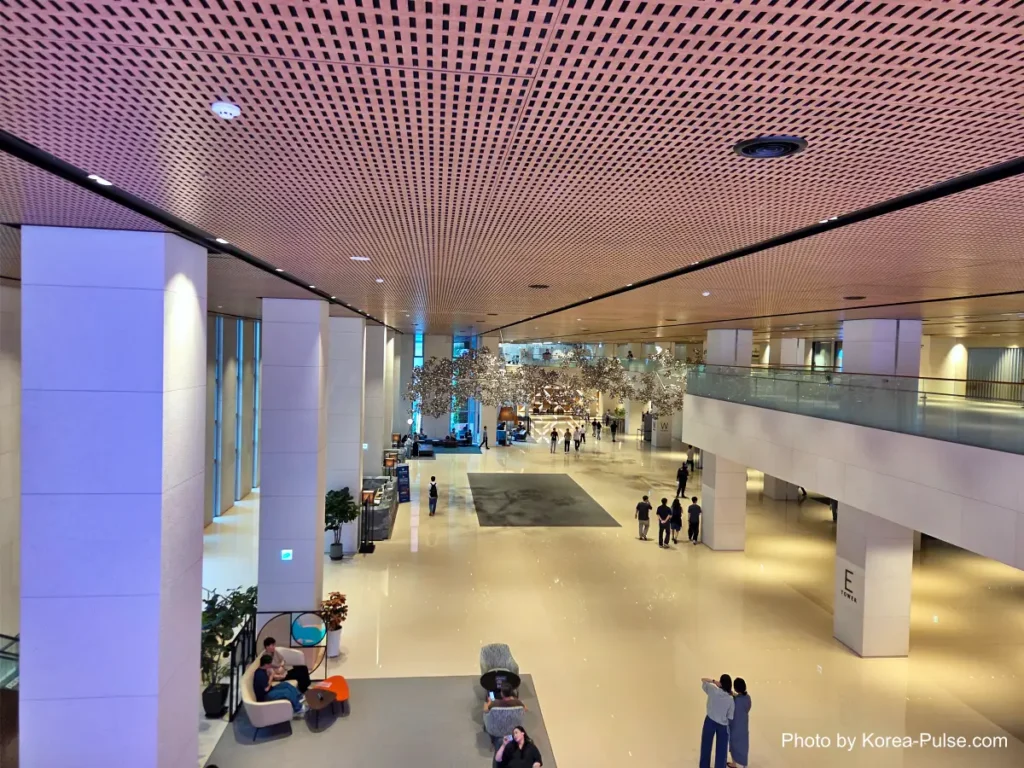
I went to a middling clinic in Ilsan last year and honestly wasn’t impressed, so for this year’s Korean health checkup, I went back to an old favorite: GC i-Med Gangbuk (녹십자 아이메드 강북의원), a health screening center on the 9th and 10th floors of Euljiro Twin Tower’s east wing, right by Euljiro 4(sa)-ga Station (을지로4가역). The clinic’s own site isn’t in English, so if you’re a non-Korean-speaking reader considering it, go in with a translation app ready — the layout is visual enough that you can follow it without much Korean.
2. 8:34 AM: The Wristband Takes Over
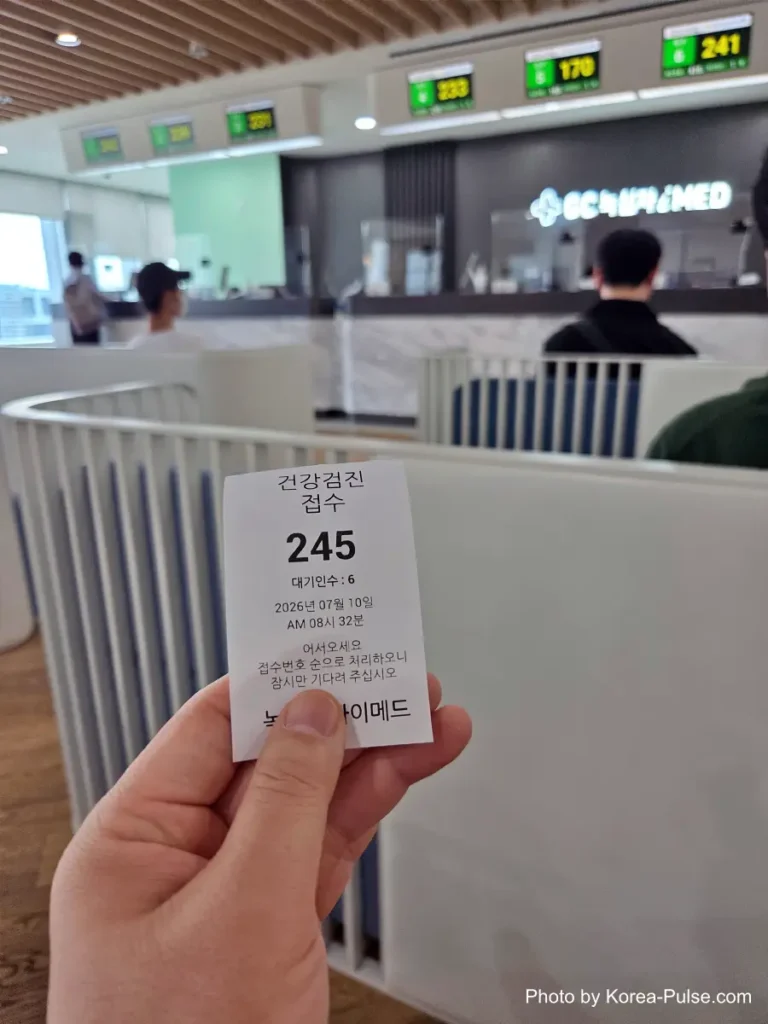
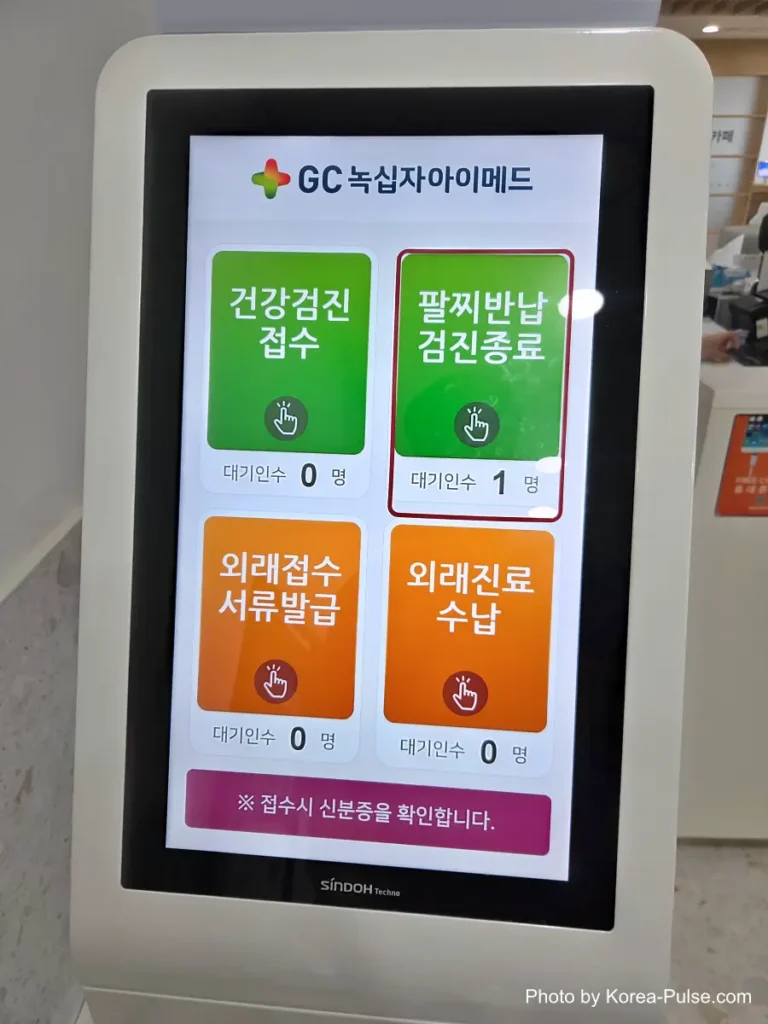
The morning slots run roughly 7:00 to 9:00 AM check-in, and arriving at 8:34 AM meant we caught the tail end of the rush — five people ahead of us at the kiosk instead of the crowd that shows up right at 7:00. I tapped “Registration” on the green touchscreen, pulled ticket 245, and watched the overhead monitor call numbers up from the low 240s.
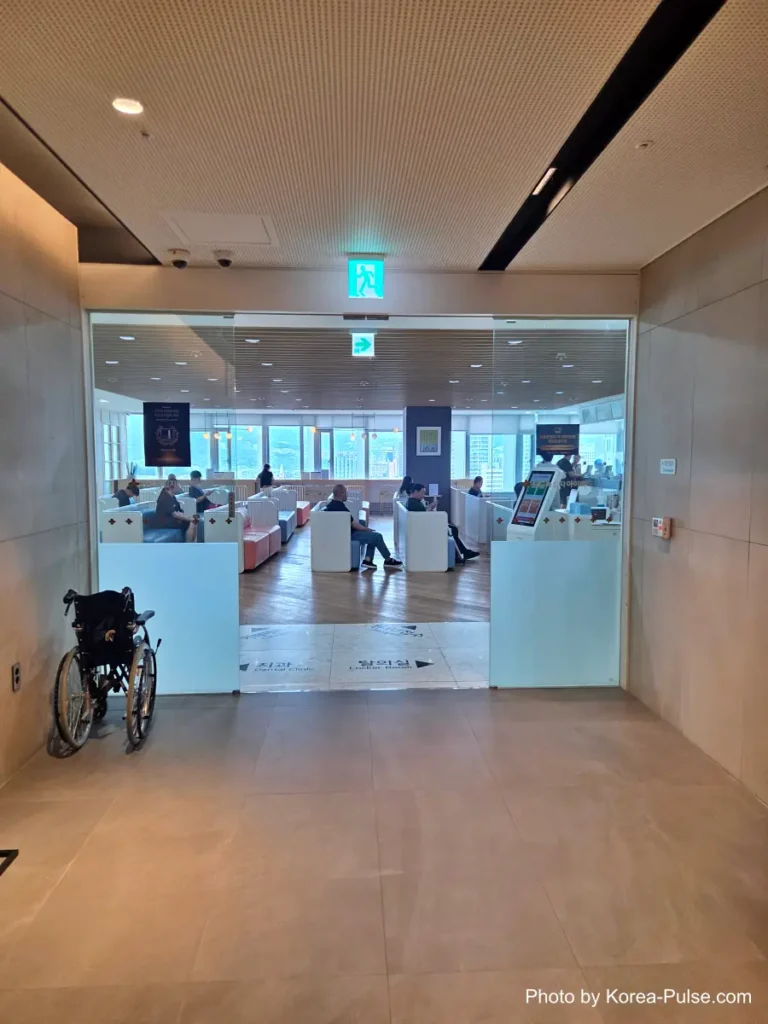
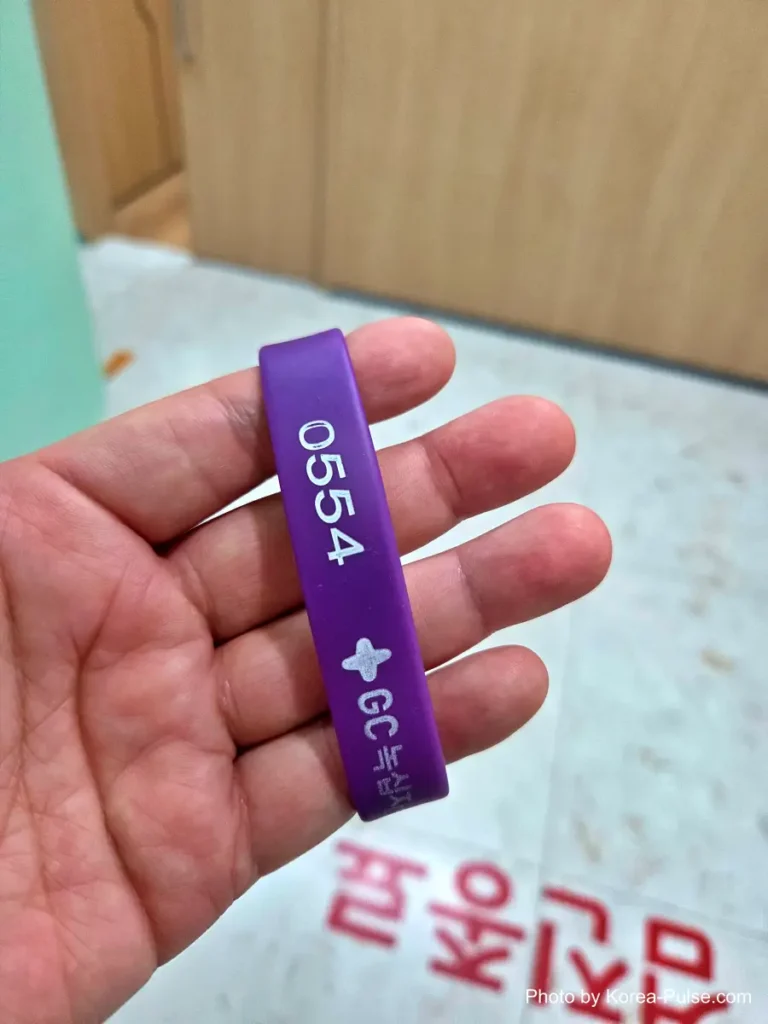
After a quick ID check, I got the wristband, walked into the changing room, tapped it against a locker, and swapped my clothes for the checkup uniform. From that point on, I never spoke to a receptionist again. That one design choice, more than anything, is where the speed comes from. Every room has a wall-mounted scanner: tap the wristband, your name and place in line pop up on a screen, and a staff member routes you to whichever station currently has the shortest wait. No paper chart, no re-explaining your ID at every door.
3. The 9th-Floor Assembly Line
The 10th floor handles check-in, changing rooms, and dental care; the real churn happens one floor down. My first stop was the doctor consultation room — the one and only time I spoke face-to-face with a physician all morning, who checks you over visually and asks a short set of questions before you’re routed onward.
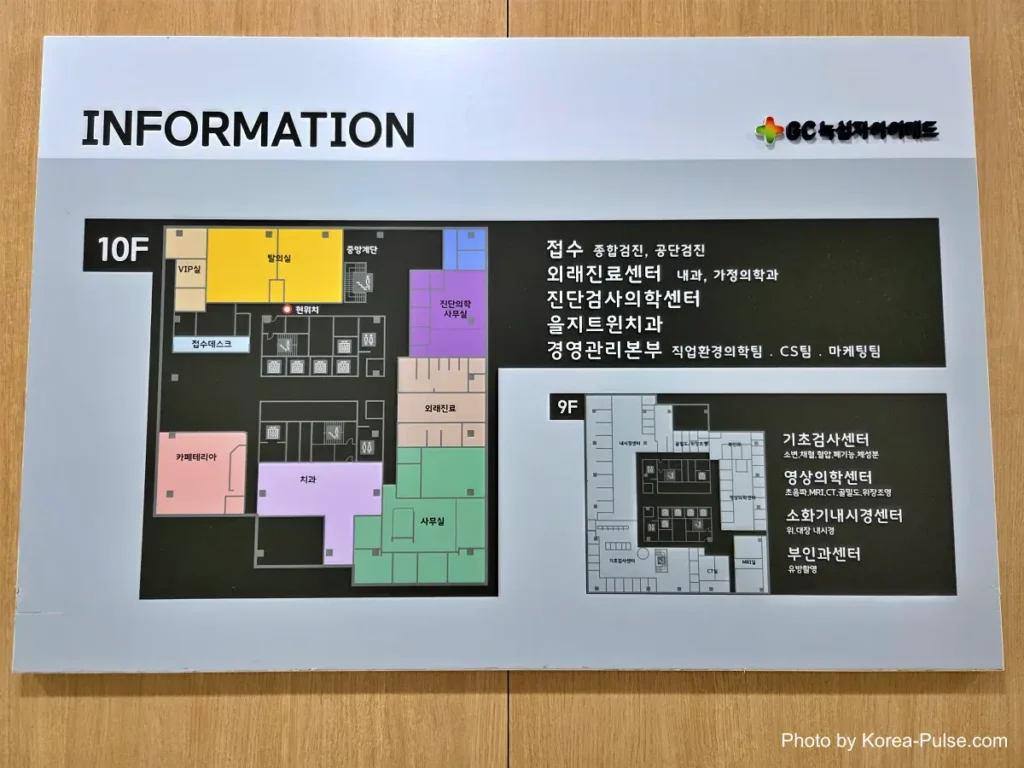
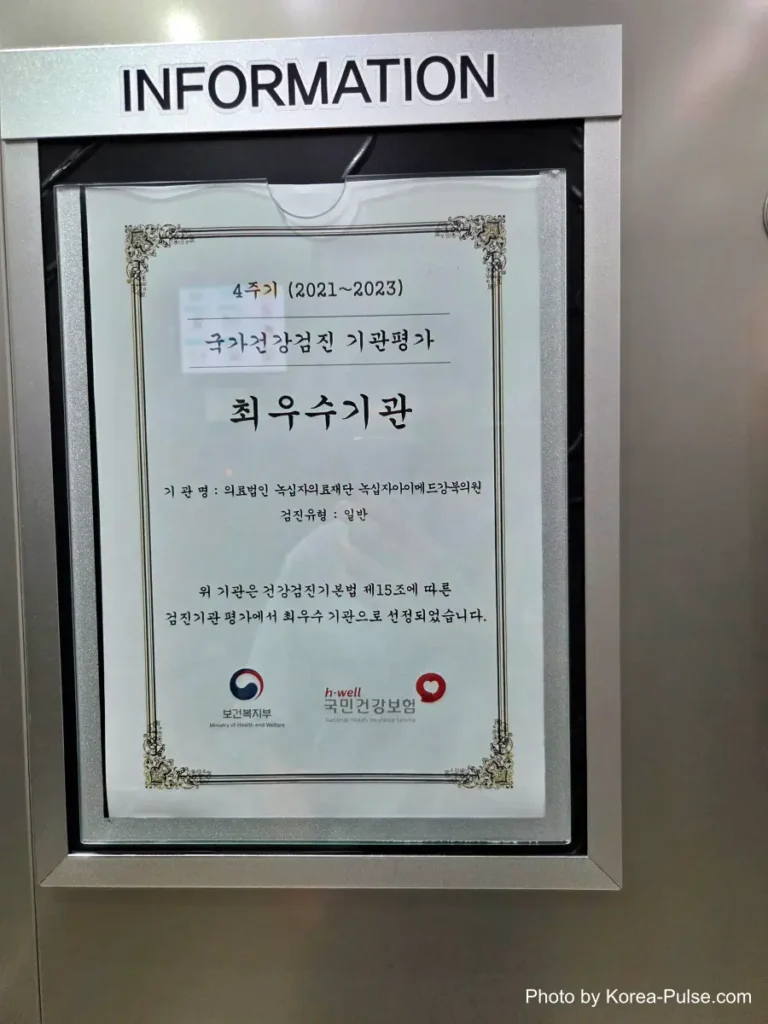
One honest heads-up: nearly every sign, kiosk button, and queue monitor in this building is Korean-only. You’ll notice it in my photos throughout this post. So before we go further, here’s a decoder for the words you’ll actually meet on the walls — screenshot this if you’re ever doing a checkup here yourself.
| On the Sign | Romanized | What It Means |
|---|---|---|
| 건강검진 접수 | geongang-geomjin jeopsu | Checkup registration |
| 문진 | munjin | Doctor consultation / medical interview |
| 흉부촬영 | hyungbu-chwaryeong | Chest X-ray |
| 골밀도 | golmildo | Bone density |
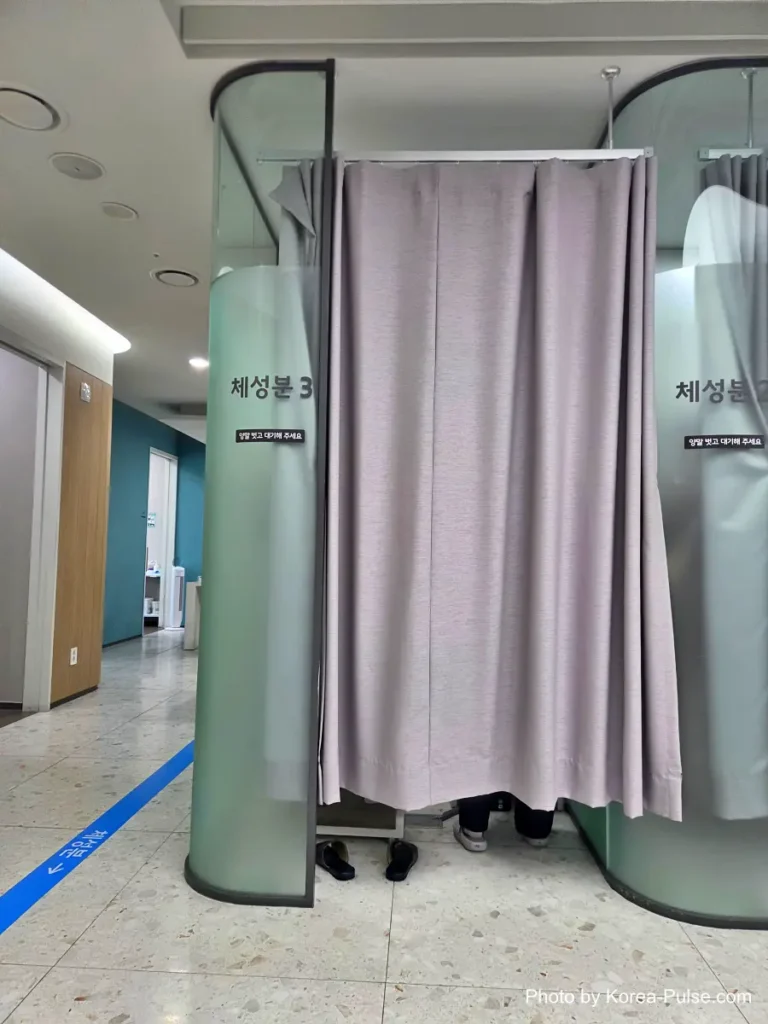
| 체성분 | cheseongbun | Body composition (InBody) |
| 내시경 | naesigyeong | Endoscopy |
| 탈의실 | taruisil | Changing room |
| 팔찌반납 · 검진종료 | paljji-bannap · geomjin-jongnyo | Wristband return · checkup complete |
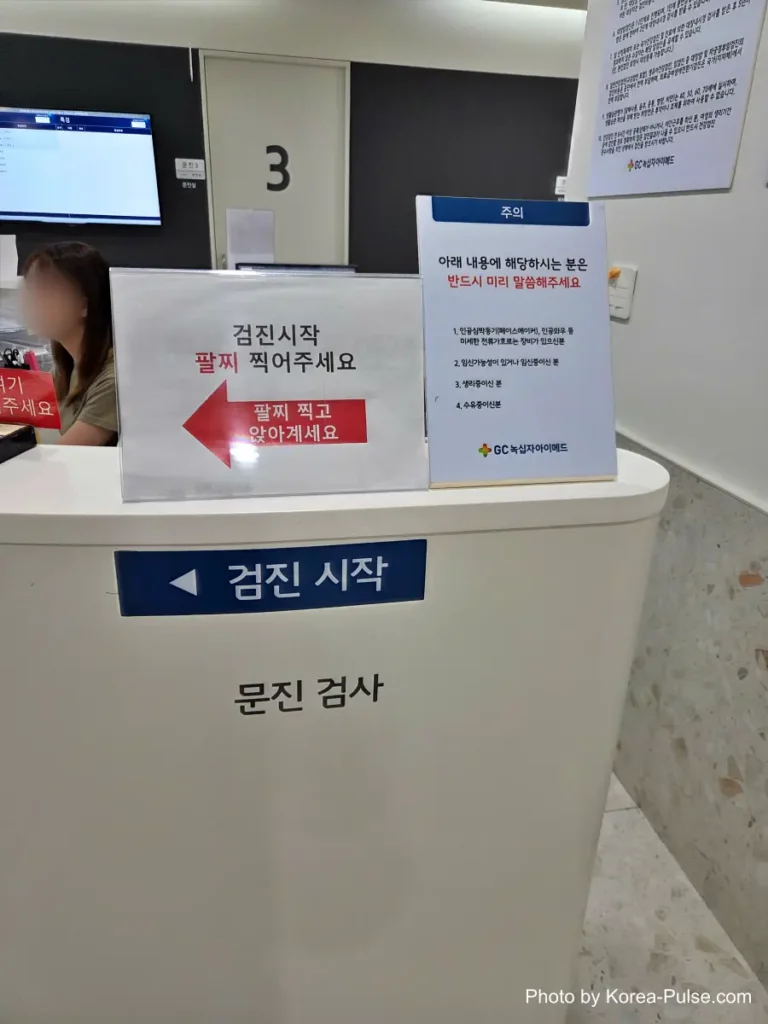
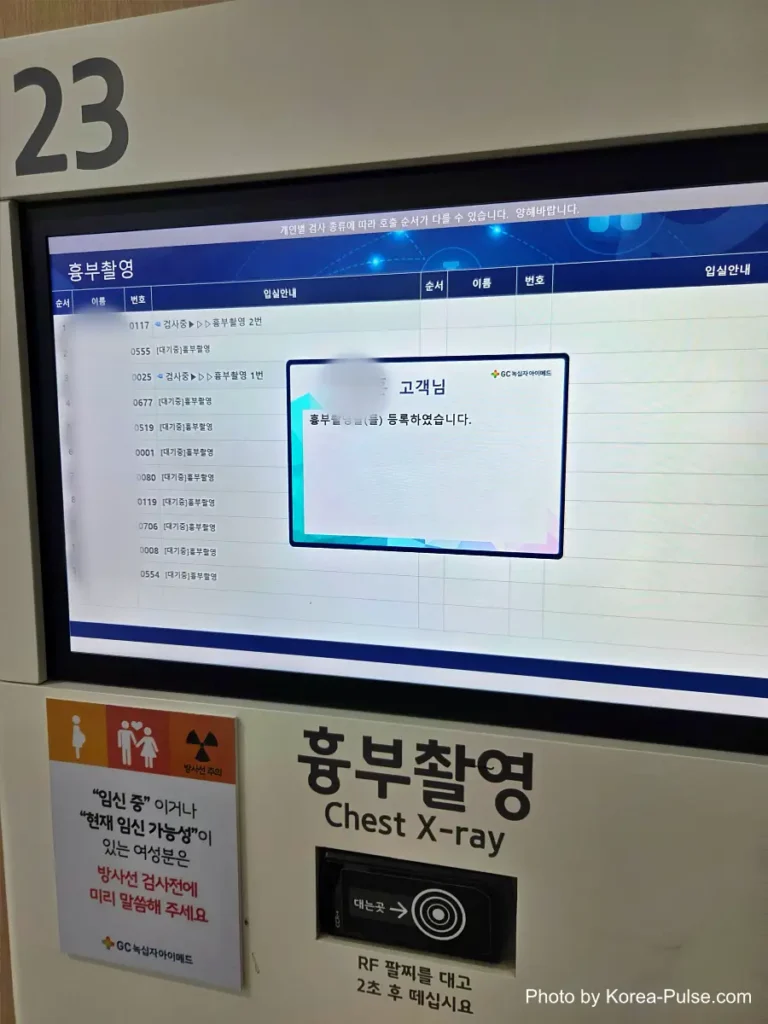
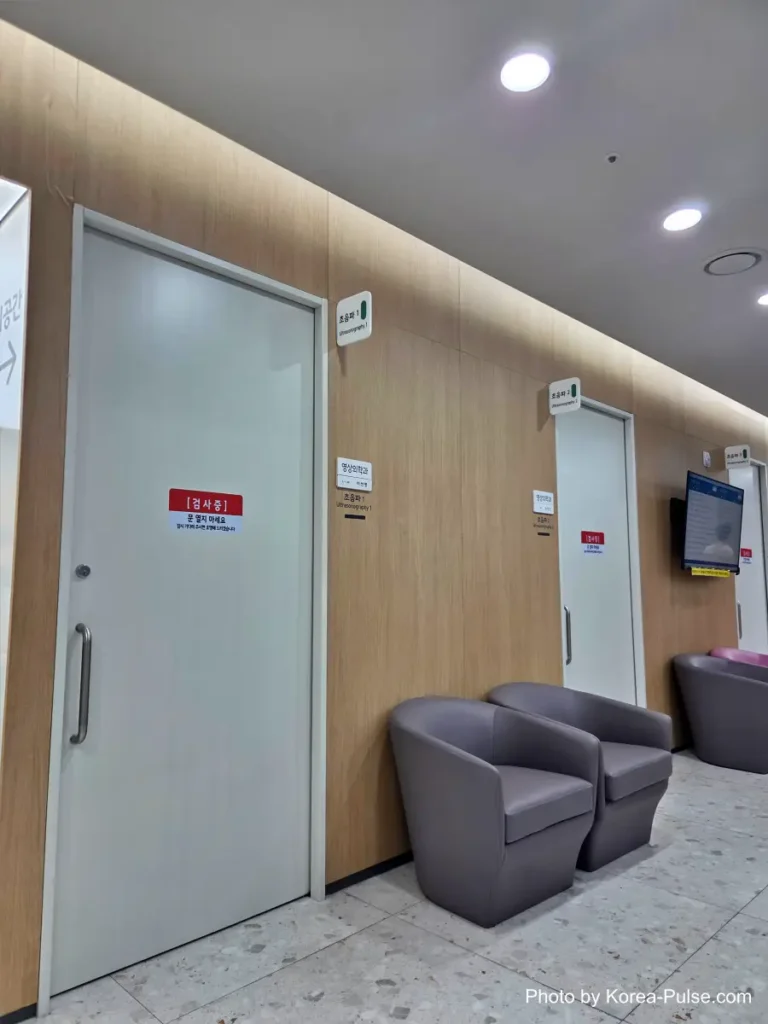
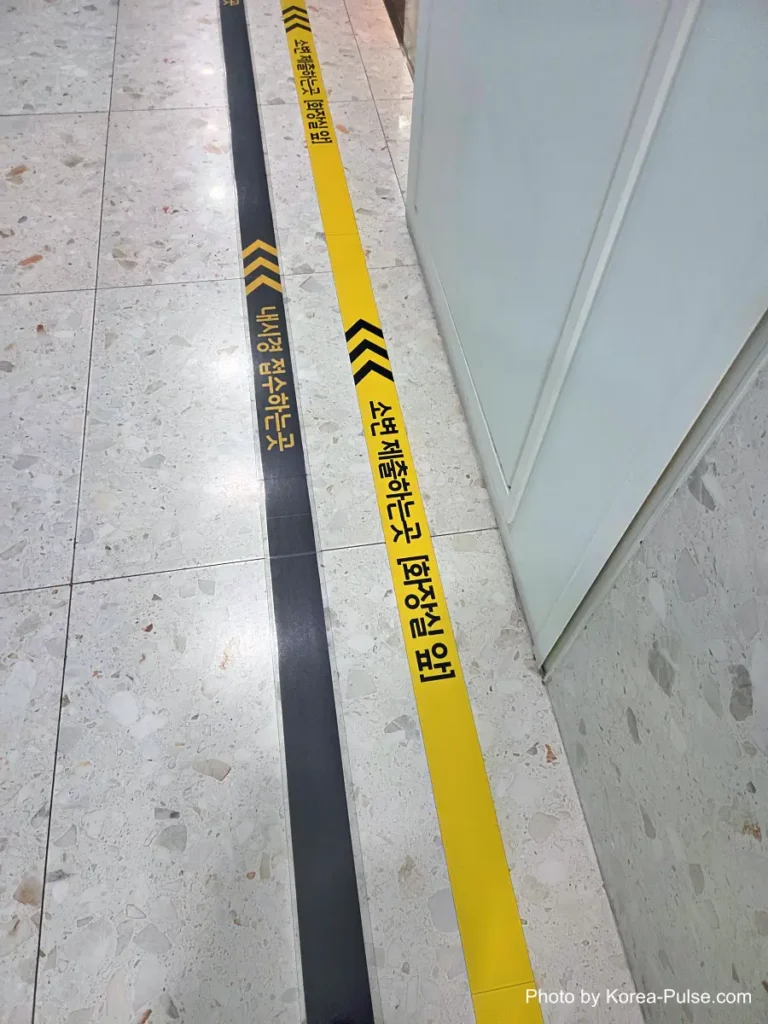
From there it was a steady loop: chest X-ray, an ultrasound in the imaging department, a bone-density scan where I had the entire room to myself, a urine sample collected by following a literal yellow line taped to the floor, body-composition analysis (height, weight, and an InBody scan for fat and muscle mass), blood pressure, and an automated vision test — no more squinting at a wall chart with one eye covered; you just look into a machine and indicate which direction a number faces.
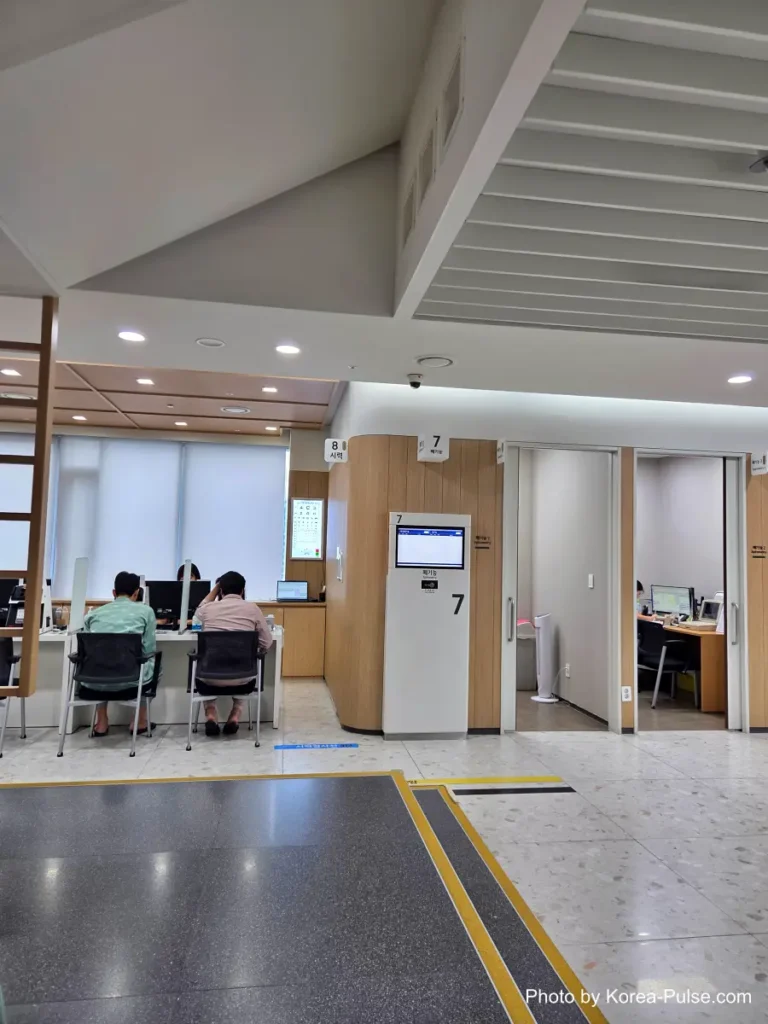
The vision test made me laugh, actually. There’s still a classic eye chart mounted on the wall — and for a second I braced myself for the old routine of covering one eye while a nurse points at letters. Turns out the chart is pure decoration. You press your face into a machine, a number appears, and you tap which direction it’s facing. Even the nostalgia in this building has been automated. An ECG (심전도) — tracking the heart’s rhythm to catch things like arrhythmia early — rounded out the loop.
The routing genuinely adapts in real time. Finish one test, and a staff member glances at their screen and sends you straight to whichever room is empty — my bone-density scan had zero wait, purely because the system knew it was clear at that exact minute.
4. The One Bottleneck: CT Scans and the Endoscopy Wait
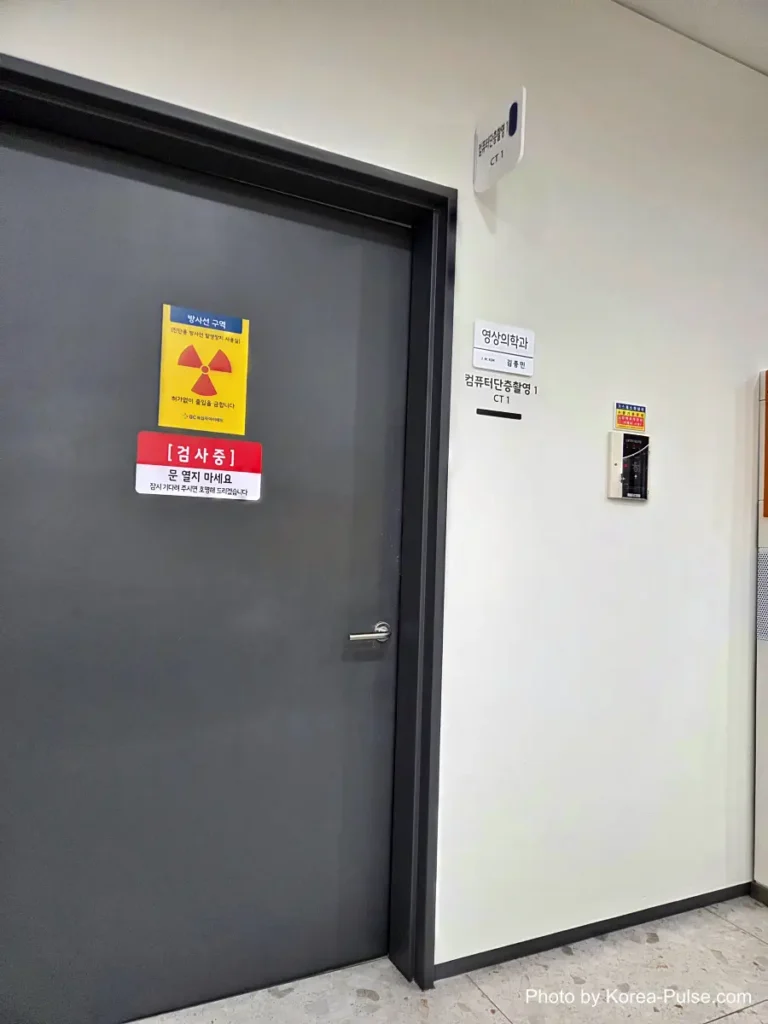
Everything up to this point moved fast enough that the CT scan area, around 10:02 AM, was the first place I saw an actual line form — advanced imaging just takes longer to process than a blood-pressure cuff. I’d chosen a low-dose chest CT as one of my optional picks from the package menu; even with the extra precision it required, I was in and out in minutes. By 10:14 AM — one hour and forty minutes after walking in — my part of the checkup was completely finished.
My wife, meanwhile, was heading into the real bottleneck of the entire building: the endoscopy department. A sedated endoscopy (수면내시경) was right there on our optional-test menu — not a paid upgrade — and judging by the packed waiting room, it’s what almost everyone picks these days. An awake version technically still exists (years ago, some people chose it to spend their optional picks elsewhere), but I barely see anyone brave enough anymore. The catch, at least at this center, isn’t cost. It’s time: sedation means a supervised recovery ward afterward, and that’s exactly what turns this department into the building’s one traffic jam.
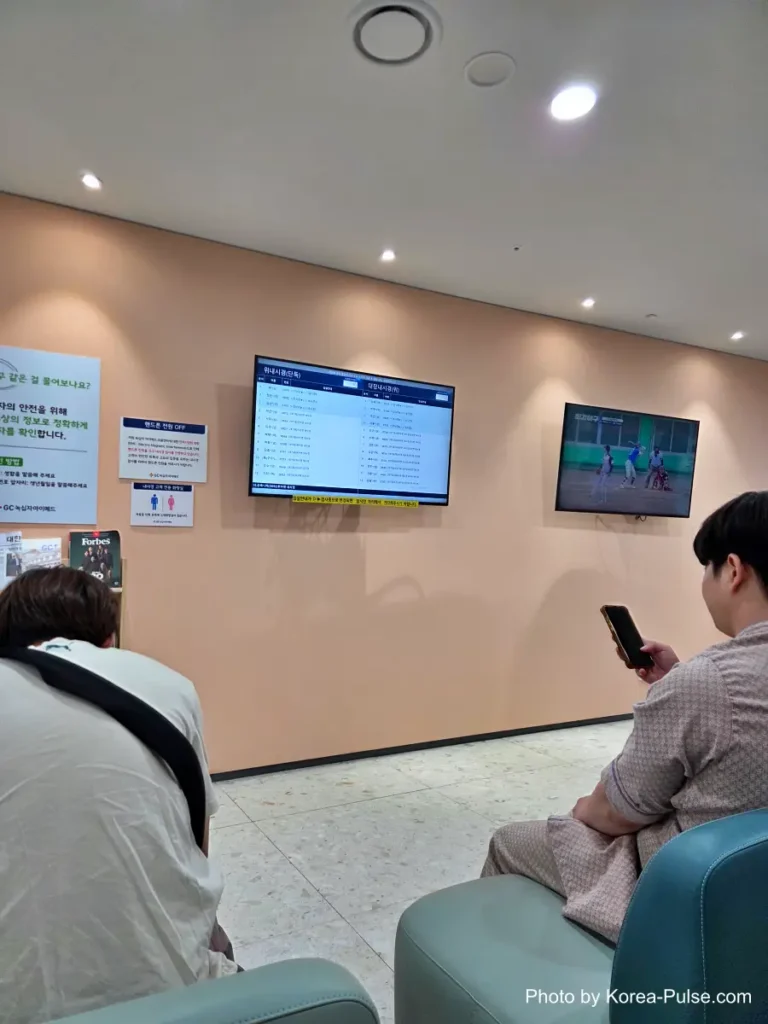
The sedated-endoscopy backlog is the one predictable delay in an otherwise fast system. If your schedule is tight, plan an extra hour of buffer around this stage specifically — nothing else in the building will slow you down.
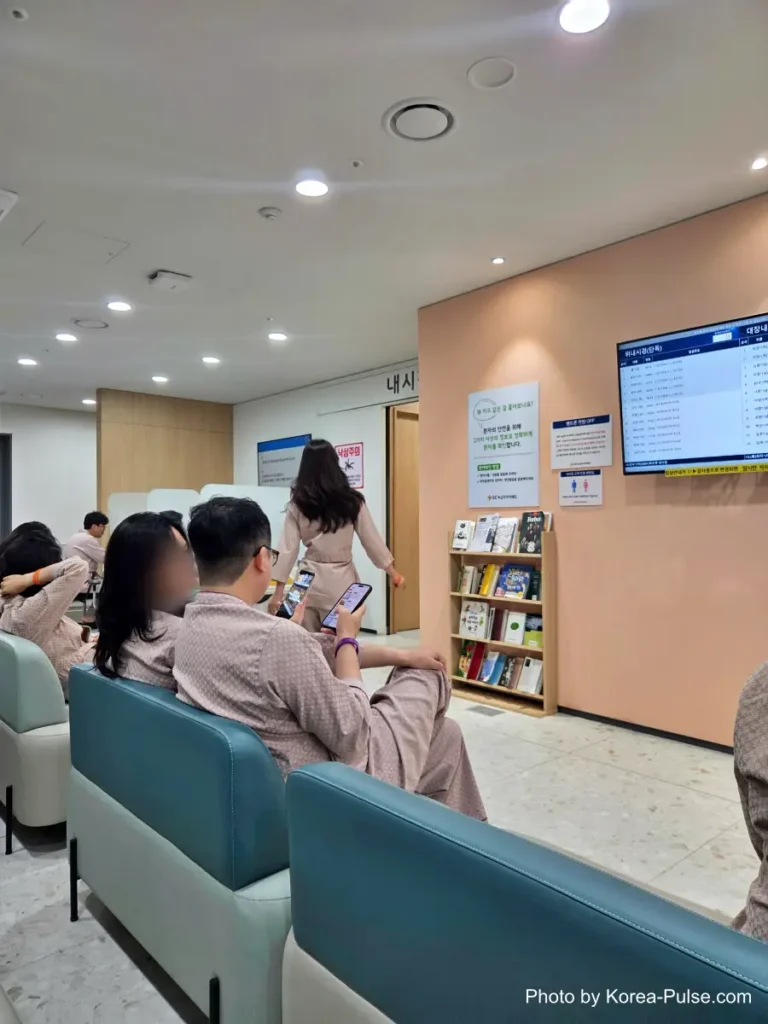
After a full hour of waiting, she went in at 11:12 AM and walked back out, groggy but perfectly fine, at 11:31 AM — nineteen minutes for a procedure that would have needed its own separate appointment, its own separate building, and its own separate week back in the UK.
5. How This Actually Compares to Other Countries
During our years in the UK, a single X-ray meant a GP visit, a referral letter, a separate booking at another facility, and weeks of waiting before anyone told me anything. That’s roughly the pattern across the US and much of Western Europe too: each test is its own appointment, its own building, its own wait — sometimes stretched over a month before you have the full picture. Walking out of this building before lunch with everything done, what struck me is that the gap isn’t really about medical technology. From what I saw on that floor, Korea isn’t running fancier machines — it’s running similar machines with almost zero idle time between them, stitched together by that wristband.
Japan is probably the closest cousin here — its “ningen dock” (人間ドック, literally “human dock”) comprehensive screening culture is built on the same one-stop-shop logic, though from what I’ve read, it generally runs pricier and hasn’t leaned as hard into wristband-style automation as this place has. Germany’s statutory system, by contrast, sits closer to Korea’s free NHIS tier: a basic biennial checkup, not the all-in-one premium sweep. None of this is Korea being uniquely advanced medically — it’s Korea applying its ppalli-ppalli (빨리빨리) — “hurry, hurry” — culture to a system where speed usually helps rather than hurts.
6. The Reward: $12 Dental Scaling and a Bowl of Juk
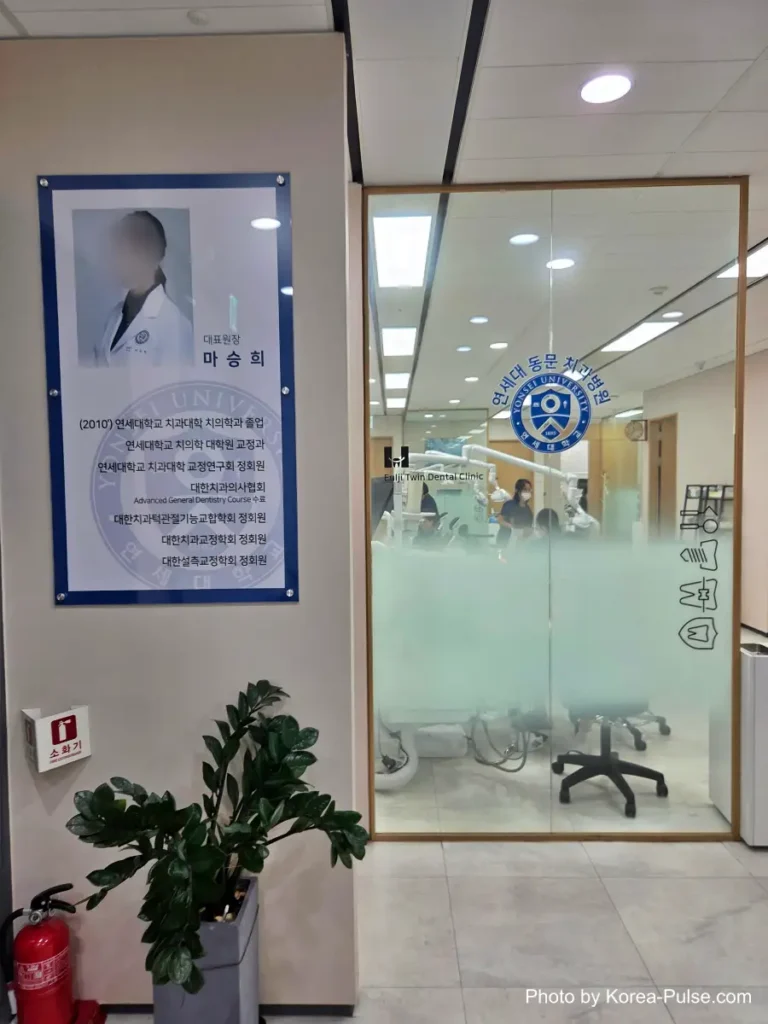
Dental checkups are optional here, and there was no way I was skipping mine — especially with Korea’s national insurance making scaling (tartar removal) absurdly affordable. We both got it done for roughly ₩18,000 each, about $12 at the current exchange rate.
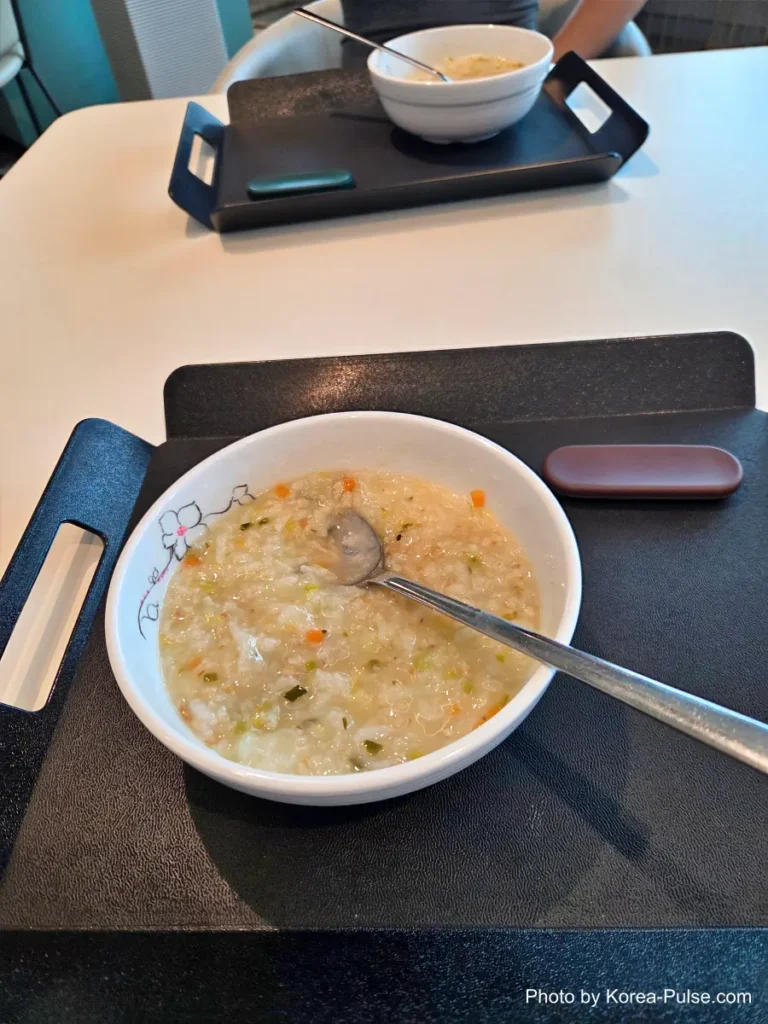
By 12:10 PM, after roughly 17 hours of fasting (no food or water since the previous night), the whole thing wrapped up the way every checkup I’ve done here does: with a meal voucher for a warm bowl of juk (죽), Korean rice porridge, served in the clinic’s own cafe. It’s a genuinely thoughtful touch — soft food is exactly what an empty stomach needs after an endoscopy, and after half a day of needles and radiation, it tasted like the best thing I’d eaten all year.
For anyone who wants the whole morning at a glance, here’s the timeline exactly as it happened:
| Time | What Happened |
|---|---|
| 08:34 | Arrived, pulled ticket 245 — five people ahead |
| 08:42 | ID check, wristband on, changed into uniform |
| 08:47–10:02 | Consultation, X-ray, ultrasound, bone density, urine, InBody, blood pressure, vision, ECG |
| 10:02 | Chest CT (my optional pick) |
| 10:14 | My entire checkup finished — 1h 40m total |
| 11:12–11:31 | Wife’s sedated endoscopy (after a 1-hour wait) |
| 11:38 | Dental checkup + ₩18,000 scaling |
| 12:10 | Porridge, wristbands returned, done |
FAQ: Korean Health Checkup
Q. How much does a Korean health checkup cost in 2026?
A basic screening through the National Health Insurance Service is free for insured residents. A premium, comprehensive package like the one in this post — arranged through an employer or booked privately — runs around ₩220,000 (roughly $147 in 2026), and that price typically already includes a menu of three to four optional tests — like an endoscopy or a CT scan — with extra fees only for tests requested beyond that menu.
Q. Is Korea’s national health checkup actually free?
Yes, for the basic biennial version. Every insured adult is entitled to a no-cost general checkup through the National Health Insurance Service; the fast, all-in-one experience described in this post is a separate, private premium tier that most people pay for on top of that.
Q. How does the RFID wristband work at a Korean health checkup?
The wristband replaces your entire paper trail: it’s linked to your ID at check-in, opens your locker, and adds you to each test’s queue when you tap it on a wall scanner outside the room. You return it at a kiosk when everything is finished — no forms, no chart to carry between rooms.
Q. Can a foreign visitor book a health checkup like this in Korea?
Yes — several major screening networks run dedicated programs for international visitors. KMI (Korea Medical Institute), one of the largest checkup networks in the country, offers a global program with English, Chinese, and Japanese support, foreigner packages in three tiers starting from around ₩480,000 (~$320) as of July 2026, and — yes — the post-checkup meal voucher is included in every package. It’s pricier than what locals pay through insurance-linked employer plans, but the basic idea is the same: show up once, get everything done. At Korean-only centers like the one in this post, a translation app gets you through the visual, wristband-driven layout, though calling ahead makes everything smoother.
Ppalli-ppalli culture gets blamed for a lot of Korea’s stress — but pointed at a health checkup, it turns into the most efficient two hours of preventative medicine I’ve ever experienced.
Bring a translation app, budget extra time for the endoscopy line if you’re going the sedated route, and don’t skip the porridge at the end.