
K-FOOD · July 2026
The 120-Dish Question
Inside QooQoo, Korea’s Sushi Buffet Phenomenon
Beef sushi, free tuna sashimi, and a very full dad — a complete zone-by-zone tour with real 2026 prices.
A QooQoo Korean buffet is what happens when someone asks: what if sushi, Korean BBQ, fried chicken, tuna sashimi and shaved-ice desserts were all unlimited, under one roof, for less than a single main course in most European capitals? I took my daughter on a weekend afternoon and we gave it an honest, plate-by-plate attempt. This is the full zone-by-zone tour, with verified July 2026 prices and the timing tricks I wish someone had told me.
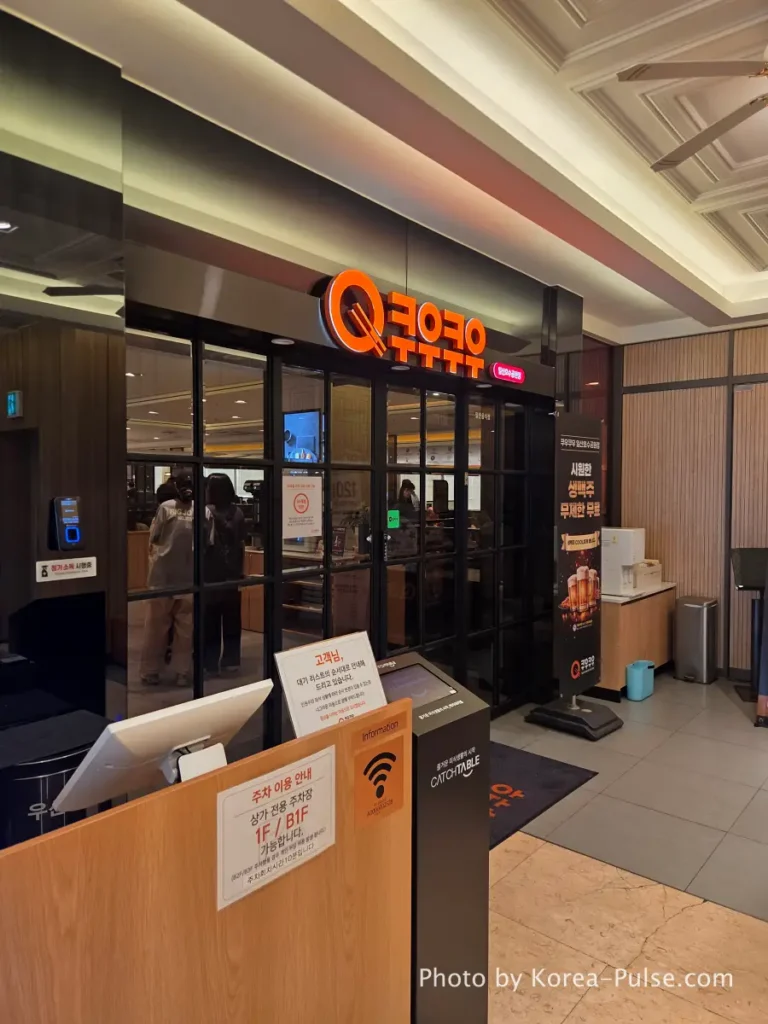
The ₩35,900 Question: Where QooQoo Fits
Korea runs on all-you-can-eat. Our family has cycled through most of the big buffet chains over the years, including Ashley Queens, the one many visitors hear about first, which usually lands in the mid-to-high ₩20,000s. QooQoo (쿠우쿠우) sits one price step above that, and the reason people happily pay the difference fits in one word: sushi.
QooQoo is one of the biggest names in the Korean sushi buffet category, with branches across most major Korean cities. The QooQoo Korean buffet formula is spelled out on a banner at the entrance — 120 premium menu items, in all-you-can-eat form — with the sushi, gunkan and roll counters doing the heavy lifting. The name, if you’re curious, comes from the Japanese verb kuu (食う), “to eat.” Said twice, apparently, for commitment.
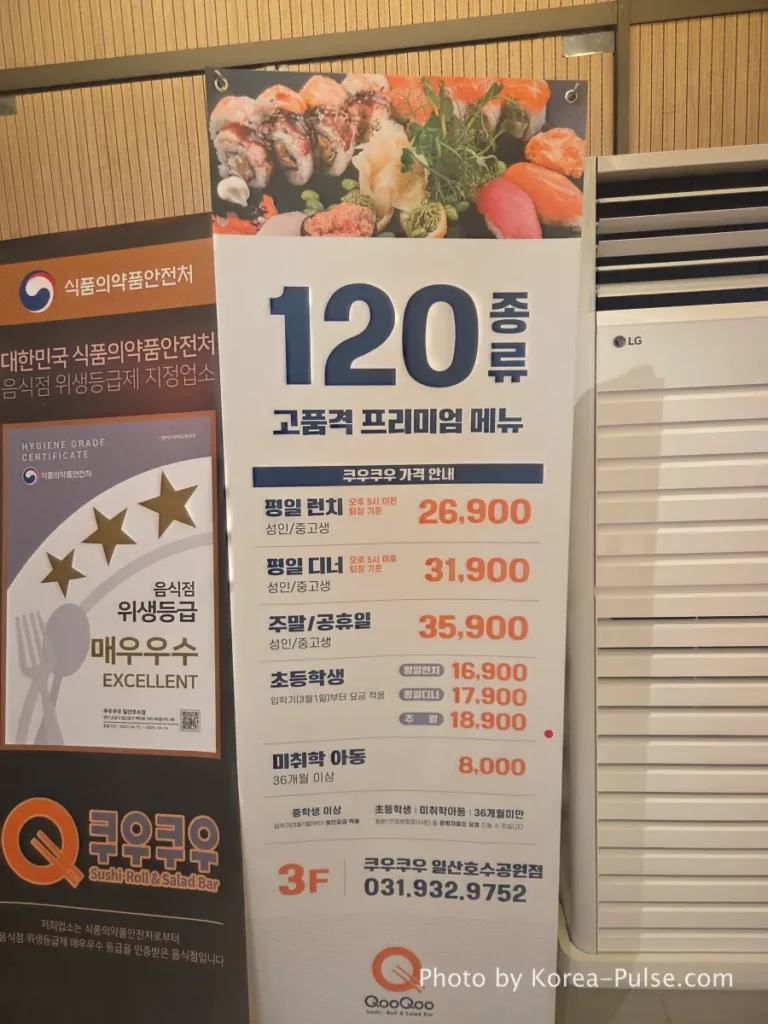
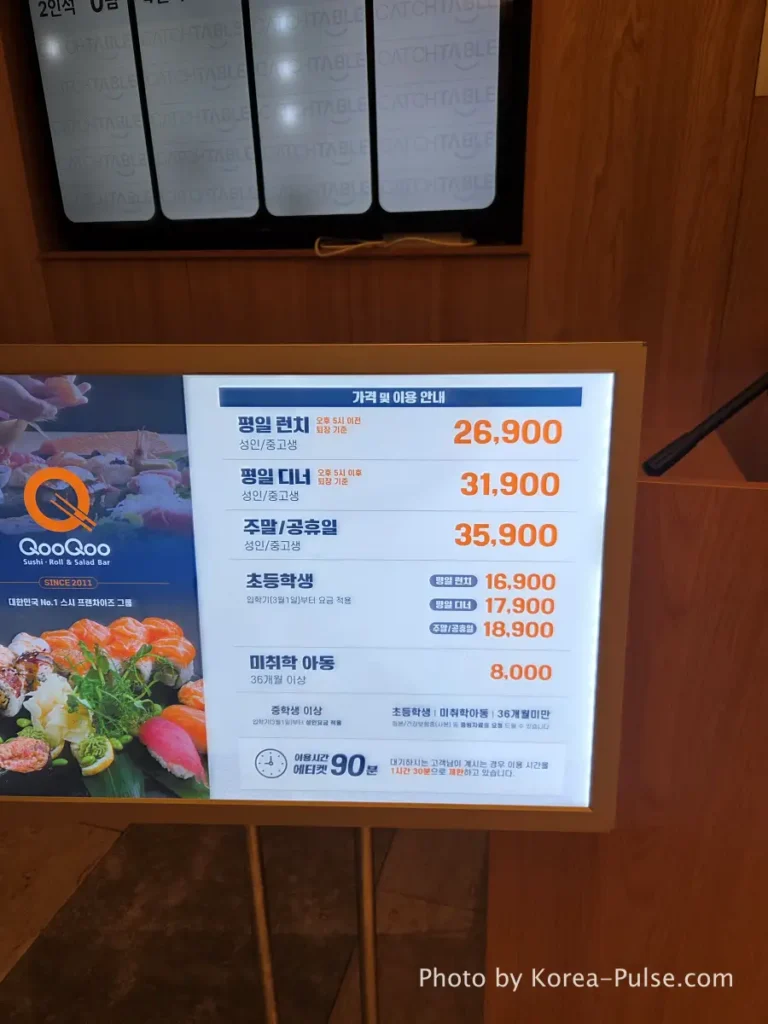
That entrance banner also displays the restaurant’s government hygiene grade — “Excellent,” the top tier — and it matched my impression: for a place moving this much raw fish, everything felt genuinely clean. Here’s the full price picture, cross-checked against the official store page.
| Who | Price (KRW) | Notes |
|---|---|---|
| Adult · weekday lunch | ₩26,900 | Rate judged by exit time, not entry |
| Adult · weekday dinner | ₩31,900 | After 5 PM |
| Adult · weekend & holiday | ₩35,900 | All day |
| Elementary school | ₩16,900–18,900 | By day and time slot |
| Preschool | ₩8,000 | 36 months and up |
Now, the line on that board that got me. A few months ago my daughter still counted as an elementary schooler, so the two of us ate here on a weekend for ₩54,800. She has since started middle school, and in QooQoo’s rulebook middle school students pay the full adult rate from March of their entry year. This time the bill read ₩71,800 — about $48, or roughly €42, for two people.
For context: on our Europe trip late last year, three of us ordering one main course and one drink each rarely escaped a restaurant under €60–70. Here, €42 buys two people unlimited access to sushi, Korean BBQ, tuna sashimi and a dessert bar. I did that math twice between plates, just to be sure.
QooQoo is a franchise and menus vary noticeably by branch — locals debate their favorites the way people argue about pizza places. This whole review is based on the Ilsan Lake Park branch, where prices were verified in July 2026; check the official store list before committing to a trek. And remember the lunch-rate quirk: it’s judged by when you leave, not when you arrive.
Before the photo tour, here are a few seconds of scale from my own camera:
Zone by Zone: Inside the QooQoo Korean Buffet
Walk in, grab a plate, and the first thing that greets you is a pizza, BBQ and noodle corner — a merciful runway for any kid (or adult) who wants familiar territory before the raw fish. Around the corner sits what I mentally filed as the chicken zone, though it’s really a fried-everything zone: shrimp, doughnuts, corn dogs, fries and yangnyeom chicken sharing one long counter.
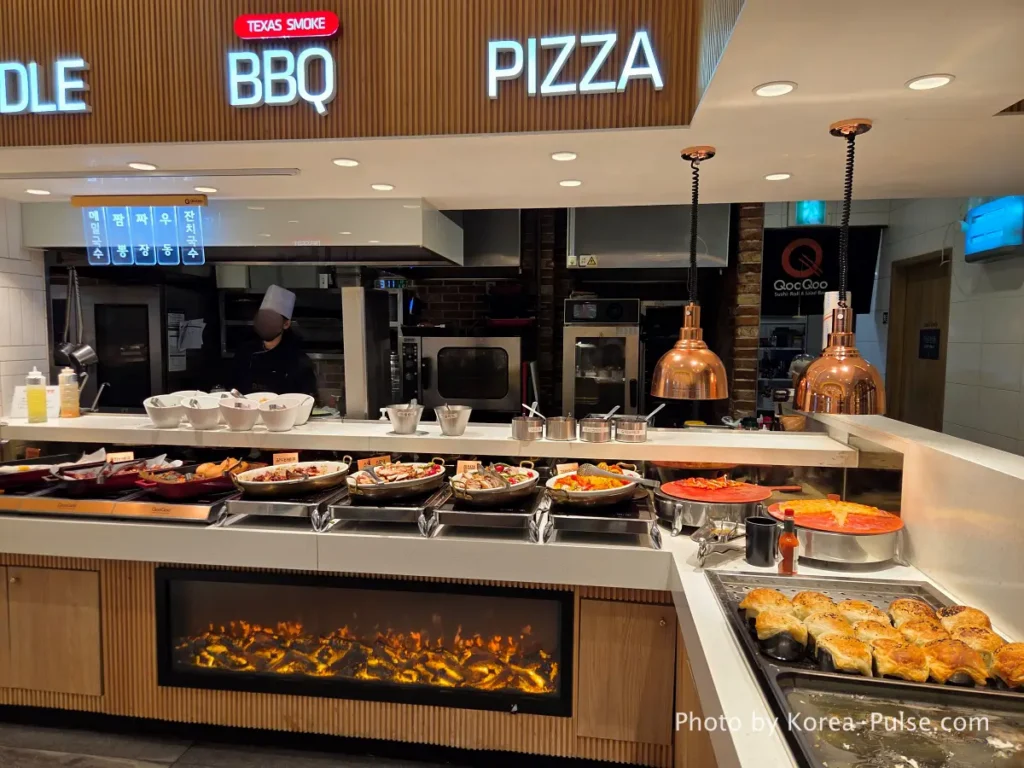
The center island handles most of what isn’t sushi. On the right: tangsuyuk, pasta and their crispy relatives. On the left: palbochae, fried rice, and tteokgalbi (떡갈비) — grilled short-rib patties that Korean kids consider a birthright.
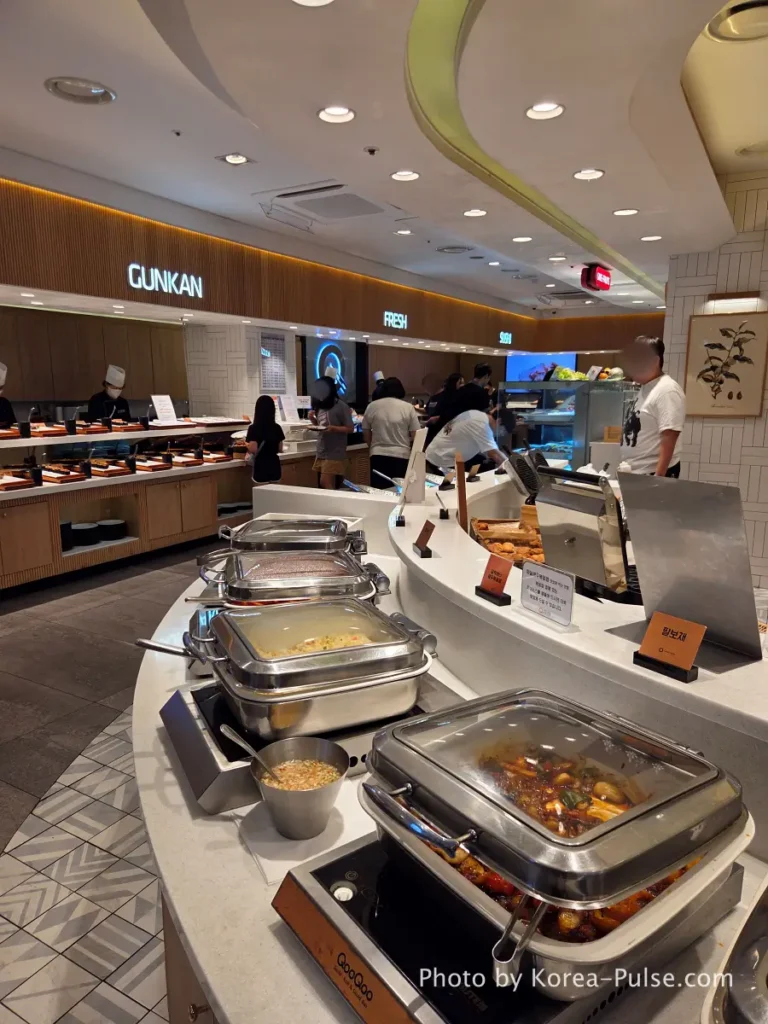
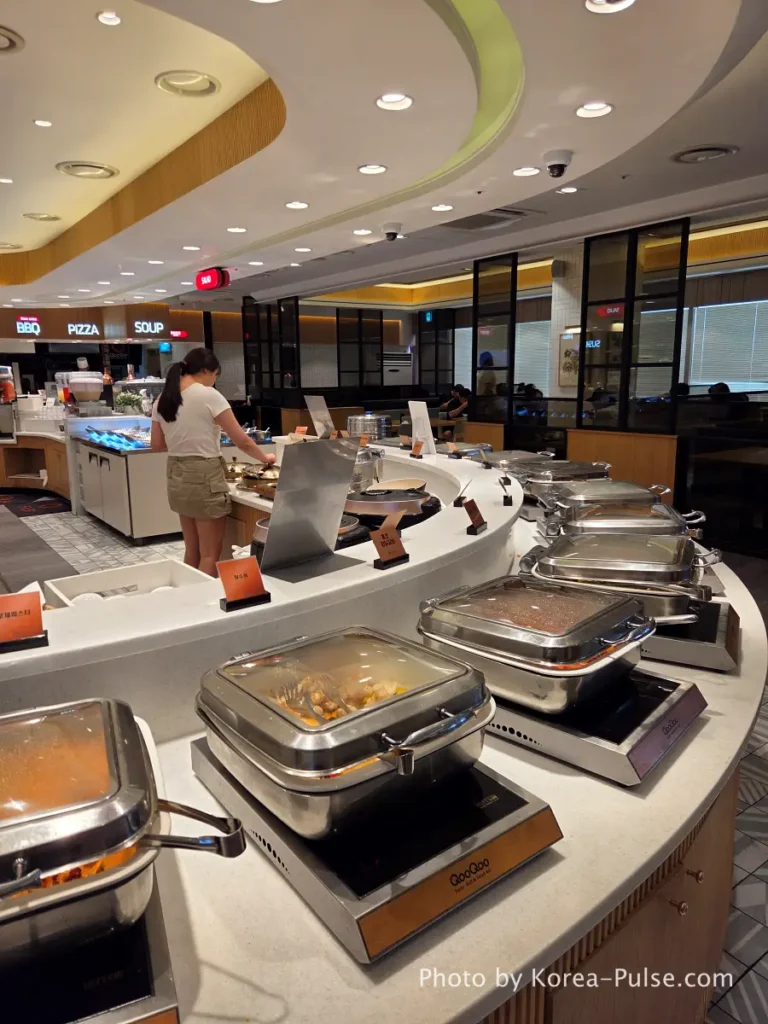
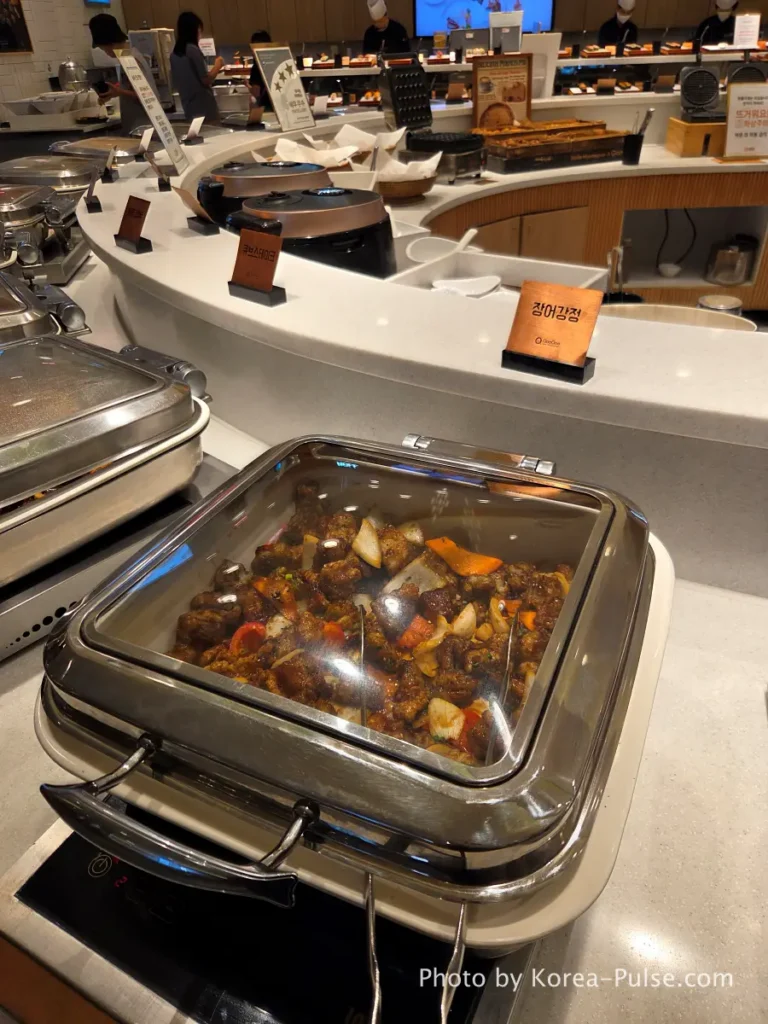
Then came the stretch that genuinely slowed me down: jangeo gangjeong (장어강정), crispy soy-glazed eel, sitting next to cube steak, sitting next to LA galbi. I have a documented weakness for eel. This arrangement did not help.
Over at the BBQ section proper, smoked pork shoulder came out beautifully, with whole pork belly alongside. There’s also a banchan bar — a wall of side dishes for building your own salad or bibimbap — plus a fruit zone (watermelon, grapes, dragon fruit and mango on our visit) and a tea station I’ll come back to at the end.
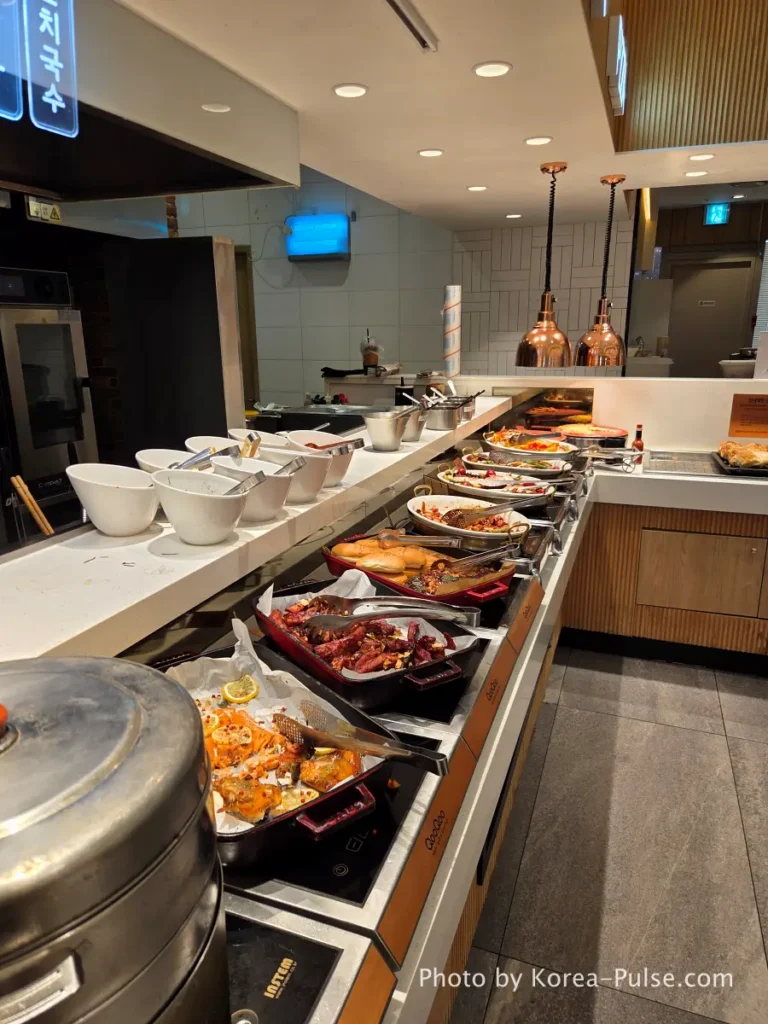
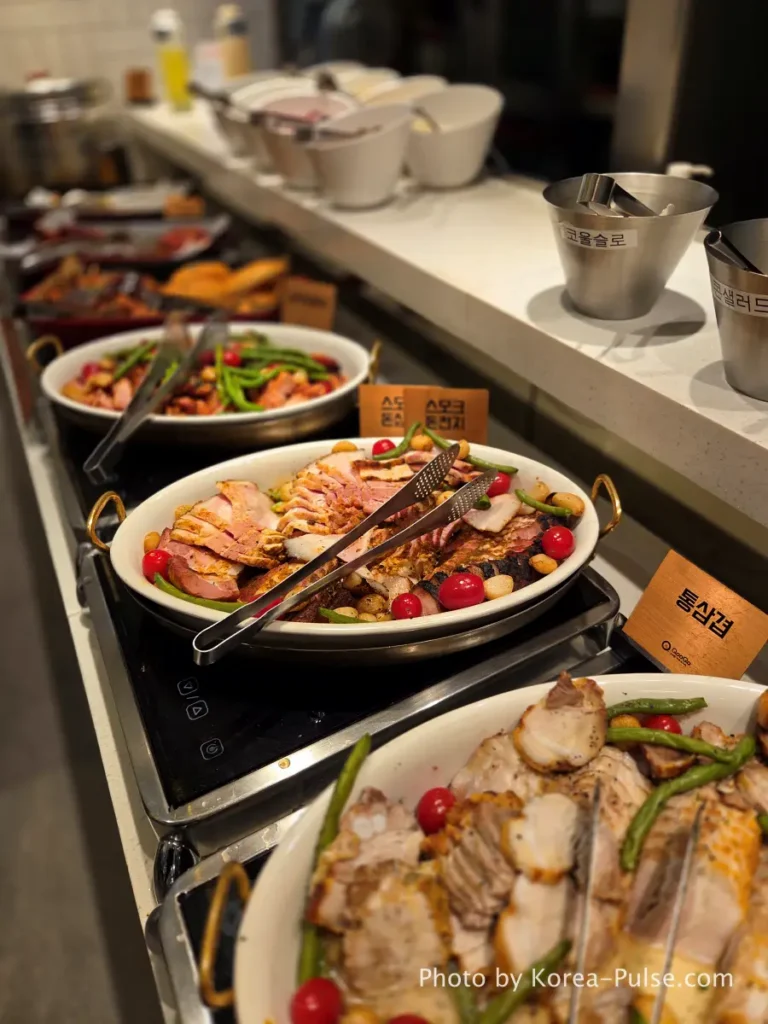
That covers the half of the floor any big buffet could plausibly offer. What foreign visitors shouldn’t miss is the other half — the part that explains the price gap with every other chain. Plate in hand, let’s cross to the raw side.
Sushi, Gunkan, Roll: The Reason People Pay Extra
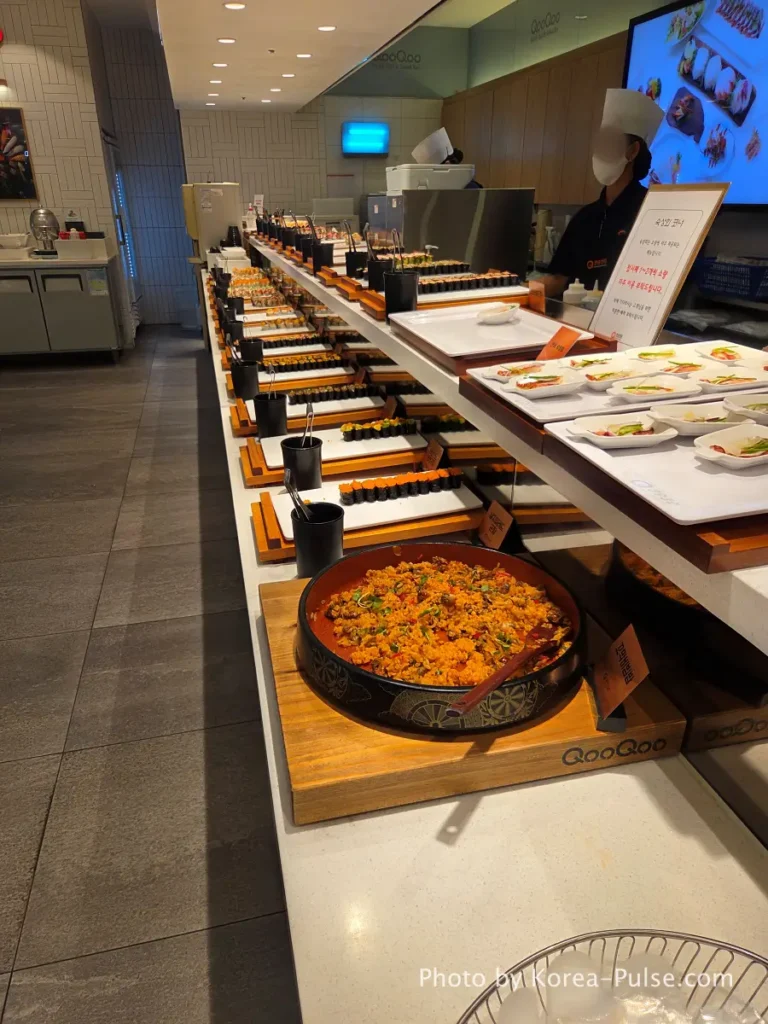
Now, the reason the extra few thousand won exists. The sushi counter here is not a section; it’s a road. It starts gently — inari pockets, smoked duck sushi, aged-kimchi sushi, egg — and then you turn the corner and the road keeps going: yukhoe sushi, shrimp, squid-leg sushi, and more trays than I managed to photograph.
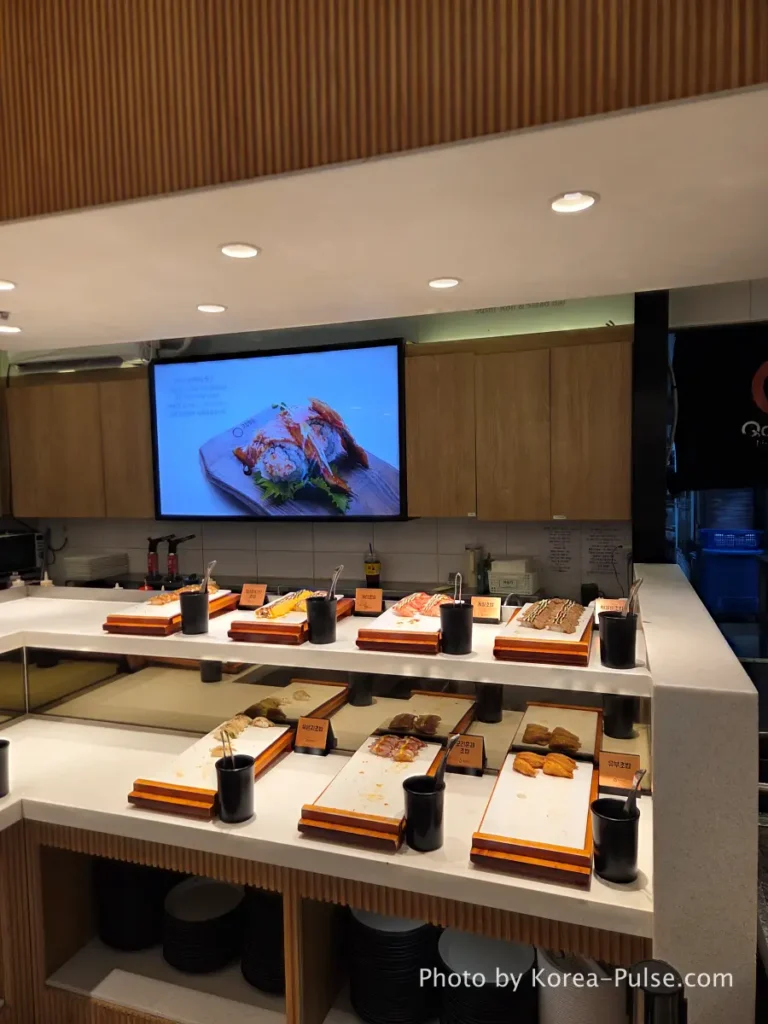
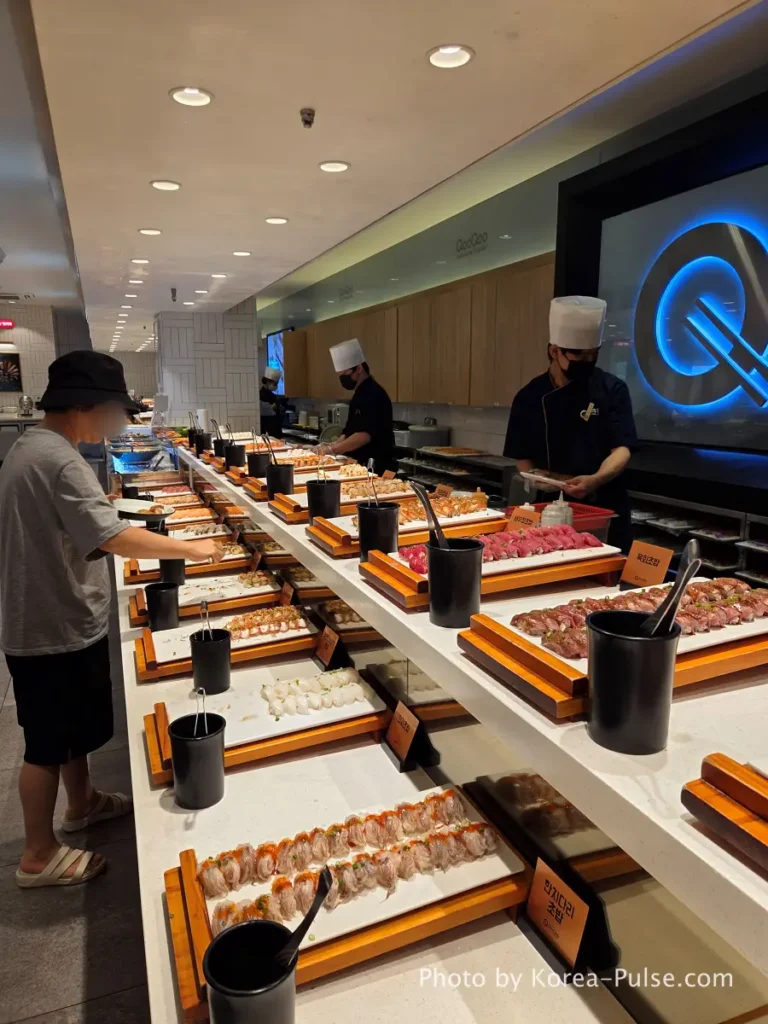
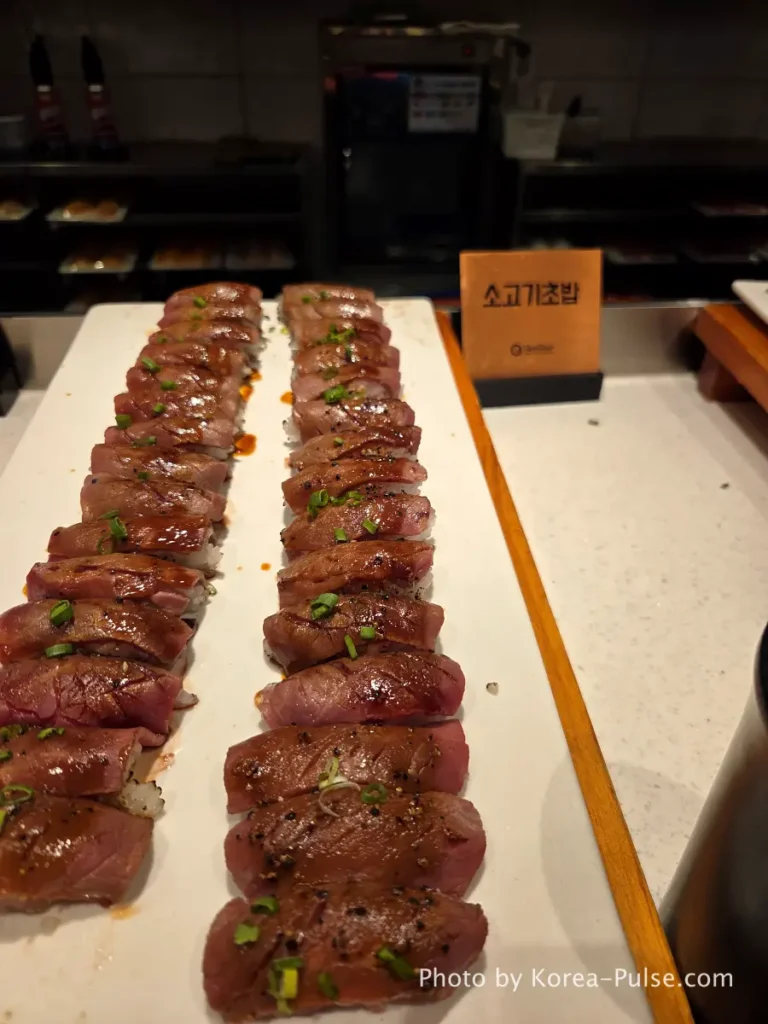
My personal target is always the beef sushi — lightly seared, scallion on top — and QooQoo lays it out in long rows, as if it knew I was coming.
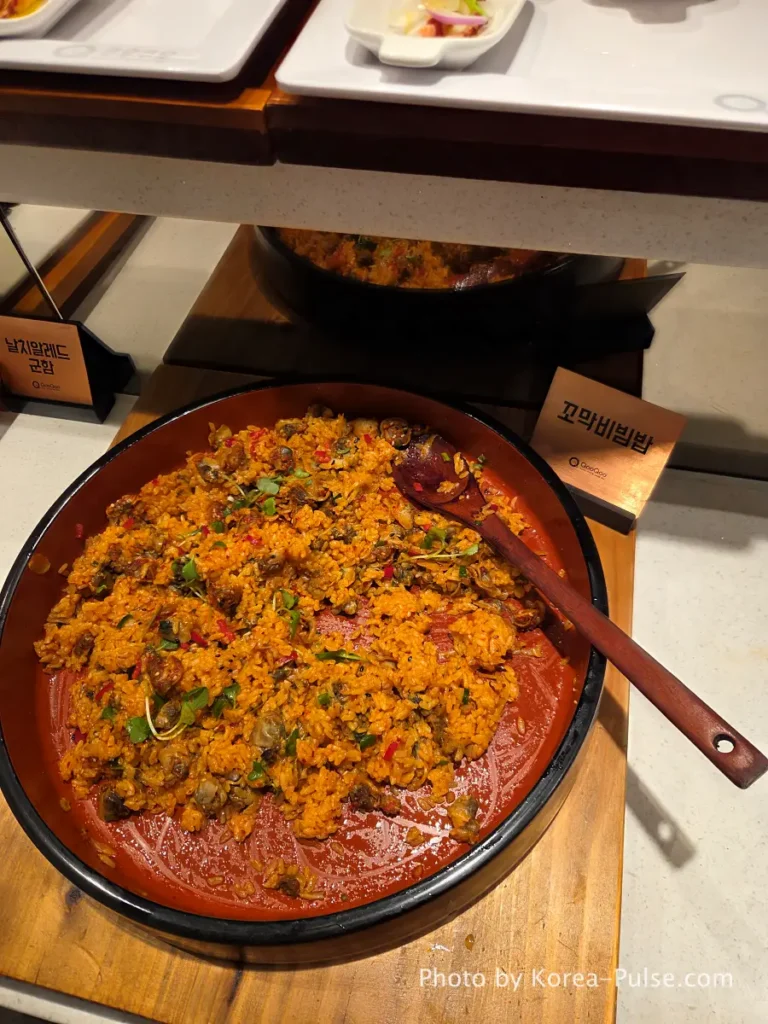
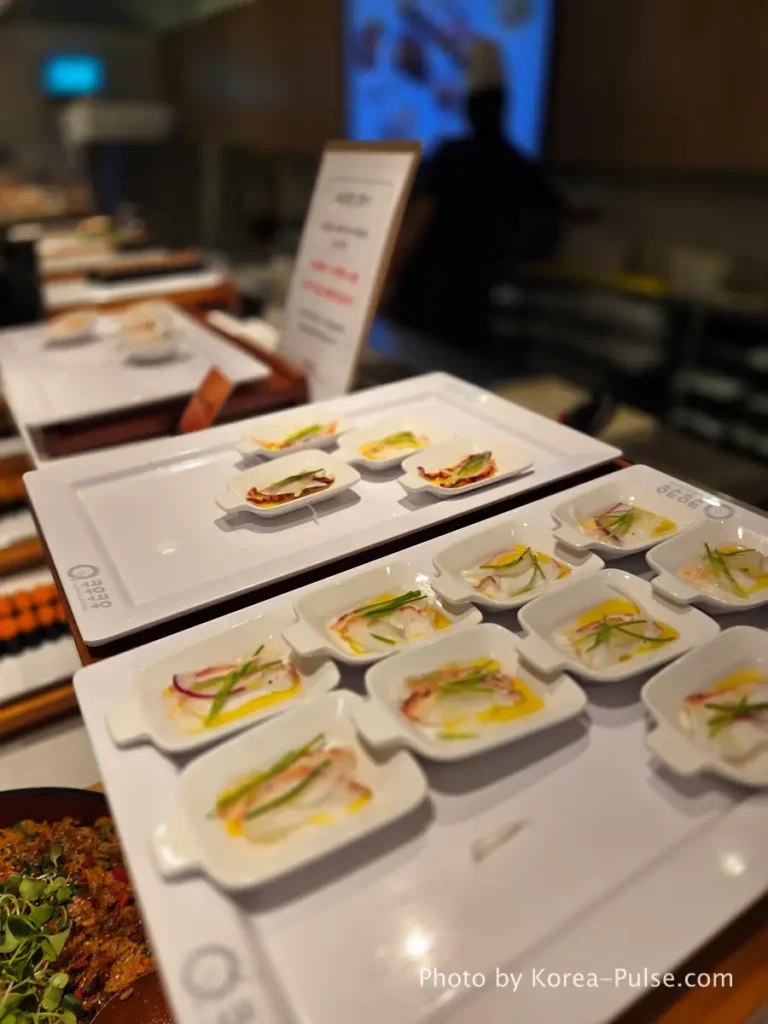
Past the nigiri, the gunkan zone opens with an aged-sashimi corner that serves small batches at a time — aged salmon on our visit — then runs into flying-fish-roe gunkan and a big pan of kkomak bibimbap (꼬막비빔밥), rice with seasoned cockles. That pan was quietly the best thing I ate all afternoon. I went back twice.
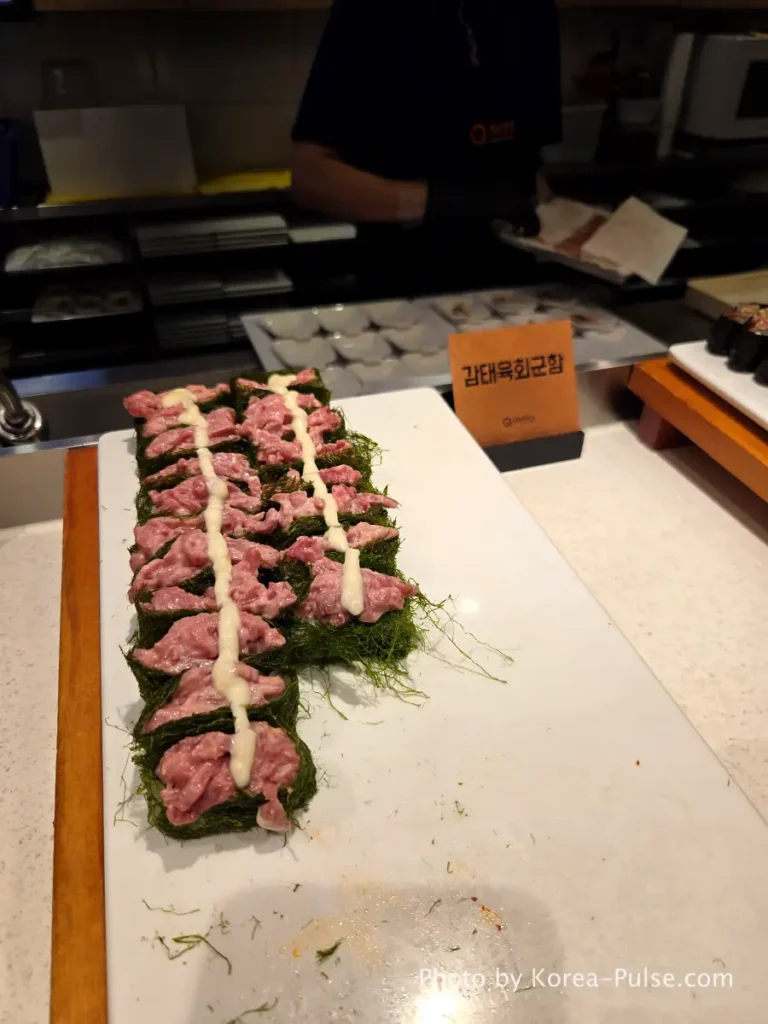
Nearby sat something I didn’t expect at a buffet: gamtae (감태) gunkan topped with yukhoe (육회), Korean seasoned raw beef. Gamtae is a delicate, faintly bitter seaweed you normally meet at the kind of fine-dining places I covered in my guide to Korean restaurant ratings. Finding it here, wrapped around raw beef in a buffet tray, was the moment I stopped comparing this place to other chains.
If you’ve never sorted out the difference between the three counters, here’s the thirty-second version so you can plan your plate like a local:
| Type | What it is | Buffet strategy |
|---|---|---|
| Sushi (nigiri) | A slice of topping hand-pressed over a pillow of rice | Start here — the widest variety and the fastest turnover |
| Gunkan | “Battleship” style: rice wrapped in a seaweed collar holding loose toppings like roe or yukhoe | Where the unusual stuff lives — this is QooQoo’s flex zone |
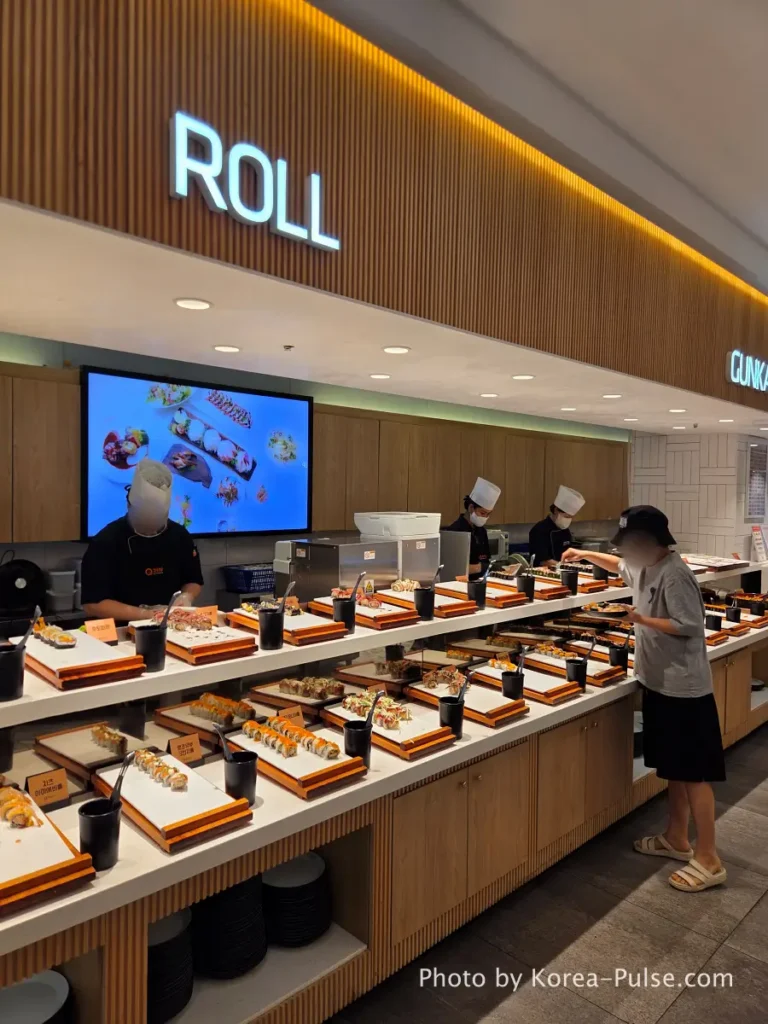
| Roll | Rice and fillings rolled in seaweed and sliced | Filling. Save for late rounds — or skip if you’re pacing yourself |
The roll zone deserves a confession. Years ago in London, a sudden craving led us into a Japanese roll shop where a modest platter cost serious money and vanished in about four minutes. Standing in front of QooQoo’s roll counter, I felt the ghost of that receipt. And then, honestly? I got so busy with the sushi and gunkan that I walked out without eating a single roll. There was simply too much else.
The Special Corner: Free Tuna Sashimi and Other Quiet Flexes
Between the sushi and gunkan zones hides a “special corner,” and this is where QooQoo shows off without raising its voice. Tuna sashimi — the kind that gets priced by the plate at dedicated Korean tuna restaurants — sits here in open trays. Yes, the tuna sashimi is included in the flat price, same as everything else. I checked the tray label twice to be sure.
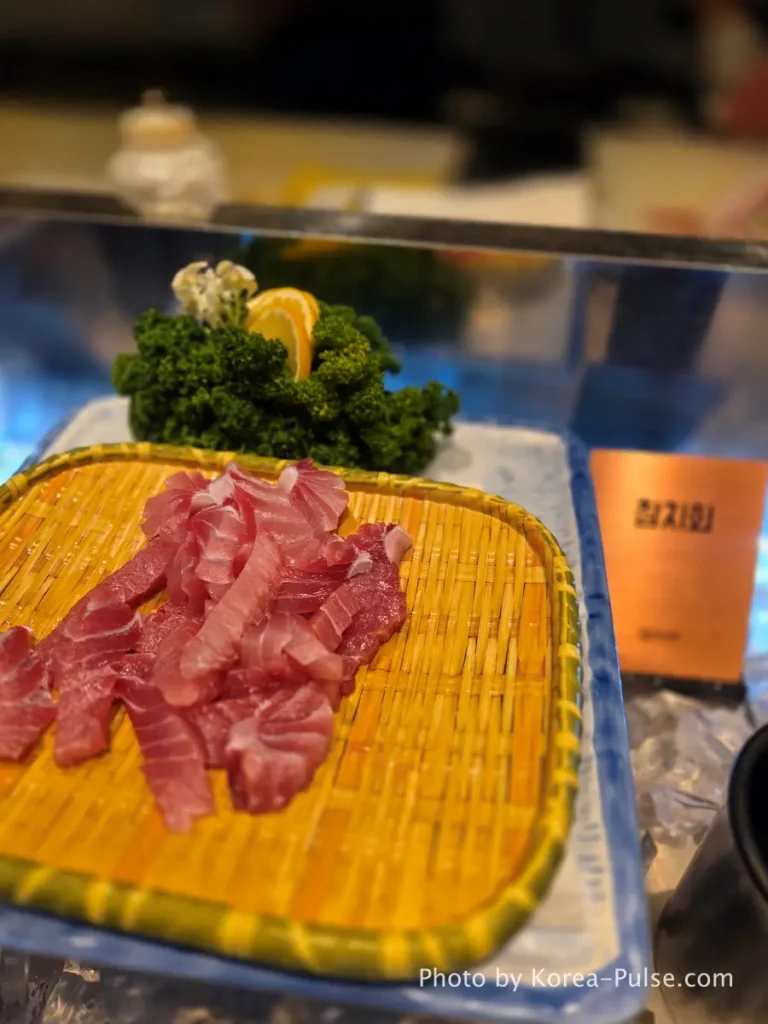
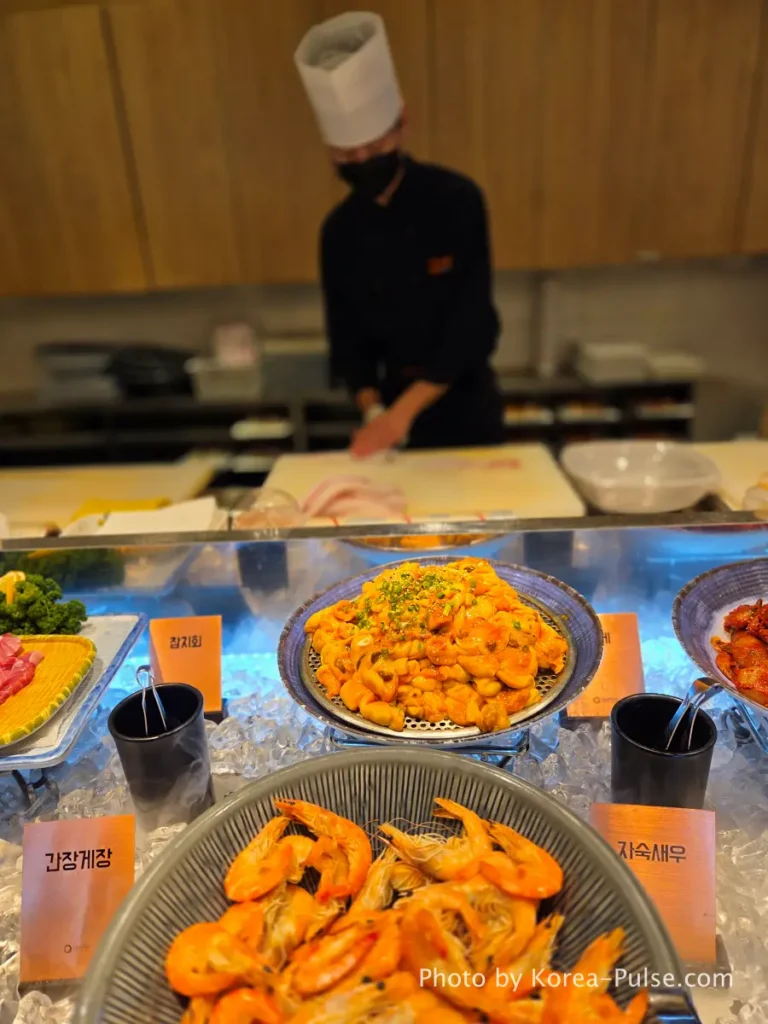
The same corner rotates octopus sashimi, ganjang gejang (간장게장) — raw crab cured in soy sauce, a dish foreigners either fear or fall for with no middle ground — boiled shrimp, meongge (멍게, sea pineapple), and mulhoe (물회), a chilled spicy raw-fish soup. Everything here felt a notch fresher than the main lines, probably because it’s replenished in small batches rather than big trays.
How a Dad and a Middle Schooler Actually Ate
Full disclosure: my daughter didn’t even want to come. The negotiated fee for her company was one hour of Roblox, played with her dad, redeemable at a date of her choosing. By her second plate, I’d say the contract worked out for both parties.
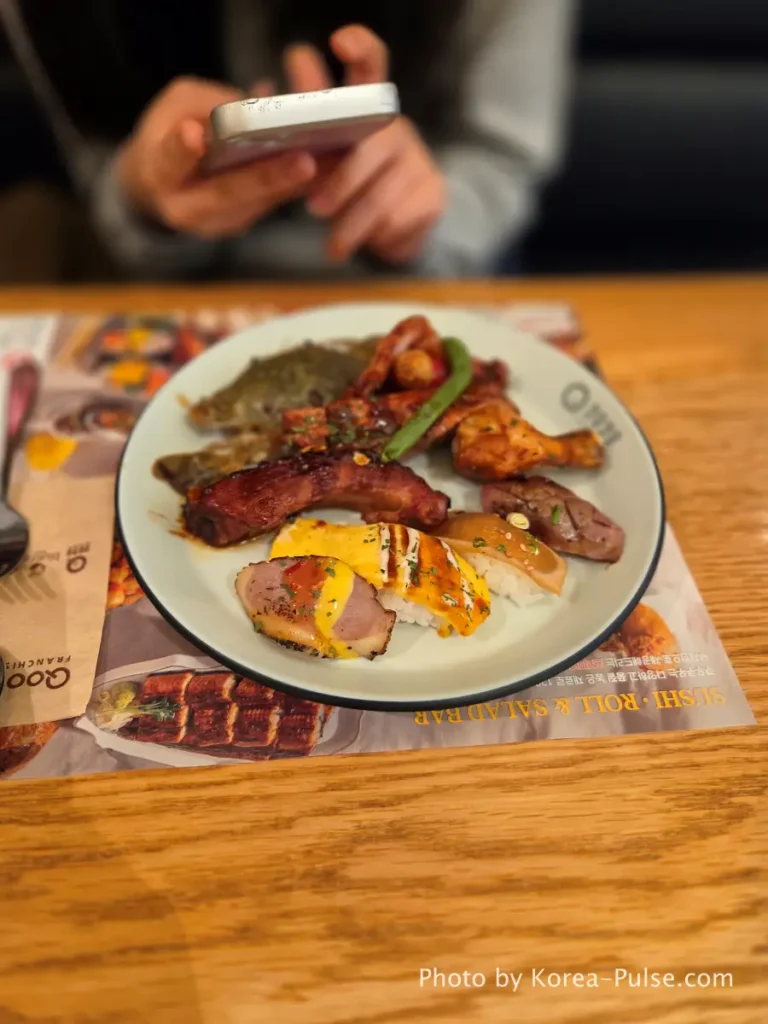
My first plate was the scouting round: a bit of fried everything, a few nigiri, one careful sample from each direction. Her plate skipped diplomacy entirely — sushi, fried chicken and pork ribs, in that order, on repeat. Now paying adult price, she seemed determined to eat like one.
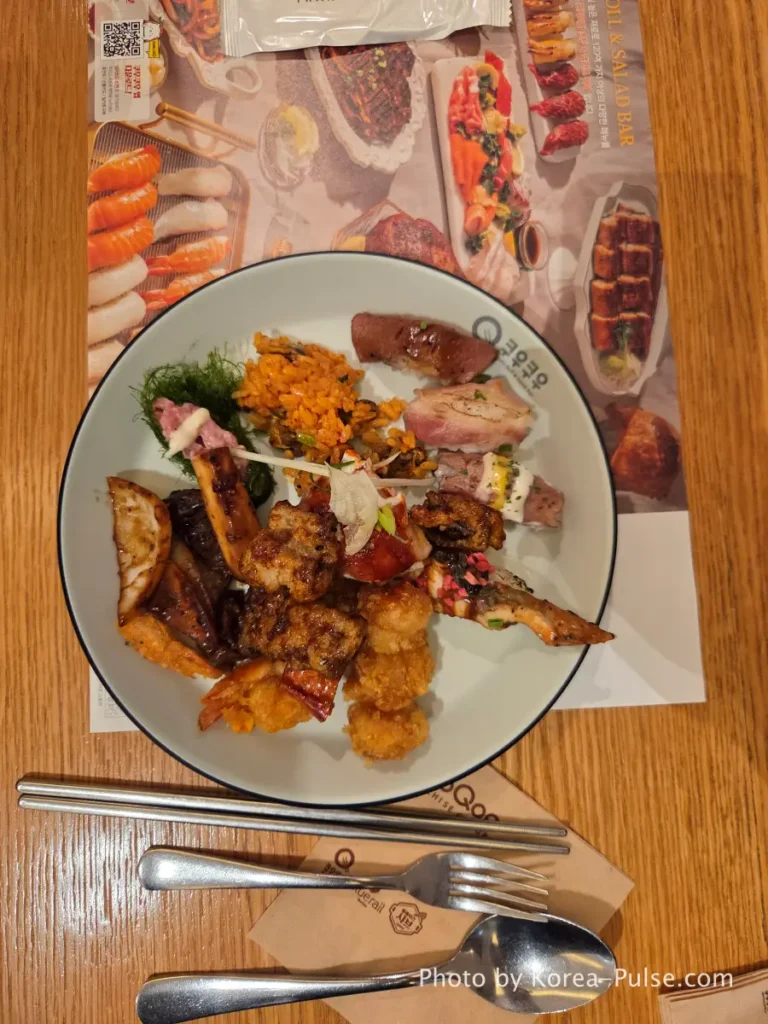
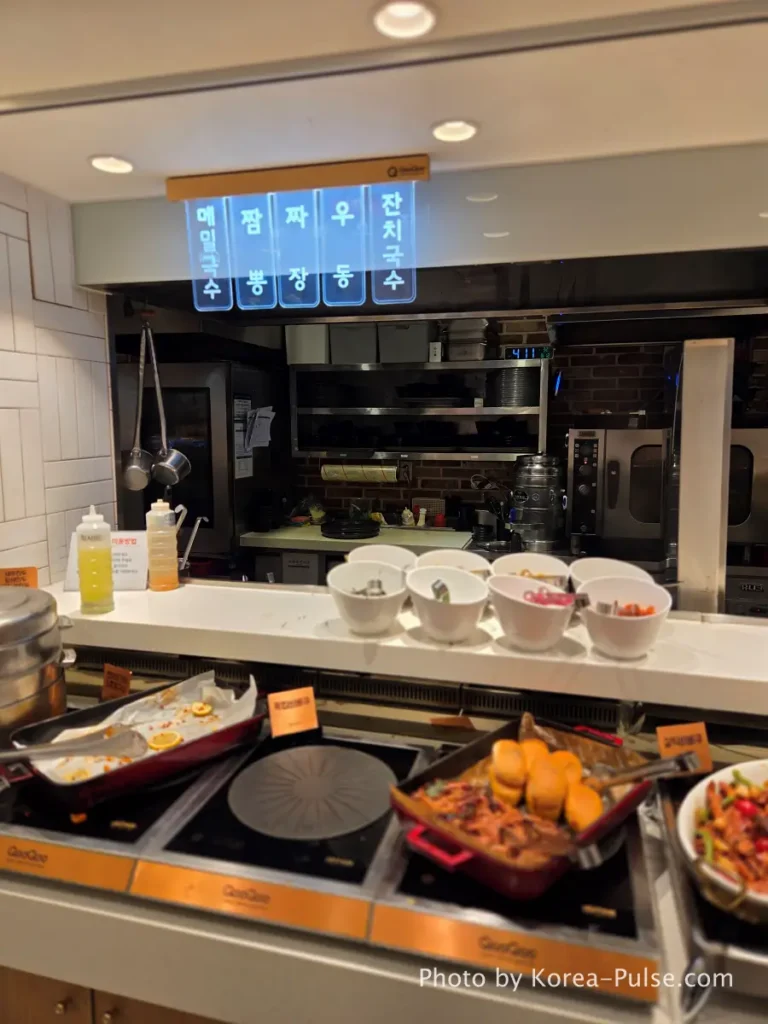
The noodle station cooks to order — I asked for jjajang noodles and had a bowl in what felt like seconds. One honest note: aside from the big zone signs (BBQ, ROLL, SOUP), little here is labeled in English, but at most stations that hardly matters — the food sits right in front of you. See it, like it, take it. The noodle station is the exception: nothing is on display, and you order from a Korean-only menu board (buckwheat noodles, jjamppong, jjajang, udon, janchi-guksu). It’s the one spot where you must read before you eat. The fix is in my Korea map and translation app guide: point your camera translator at the board and order away.
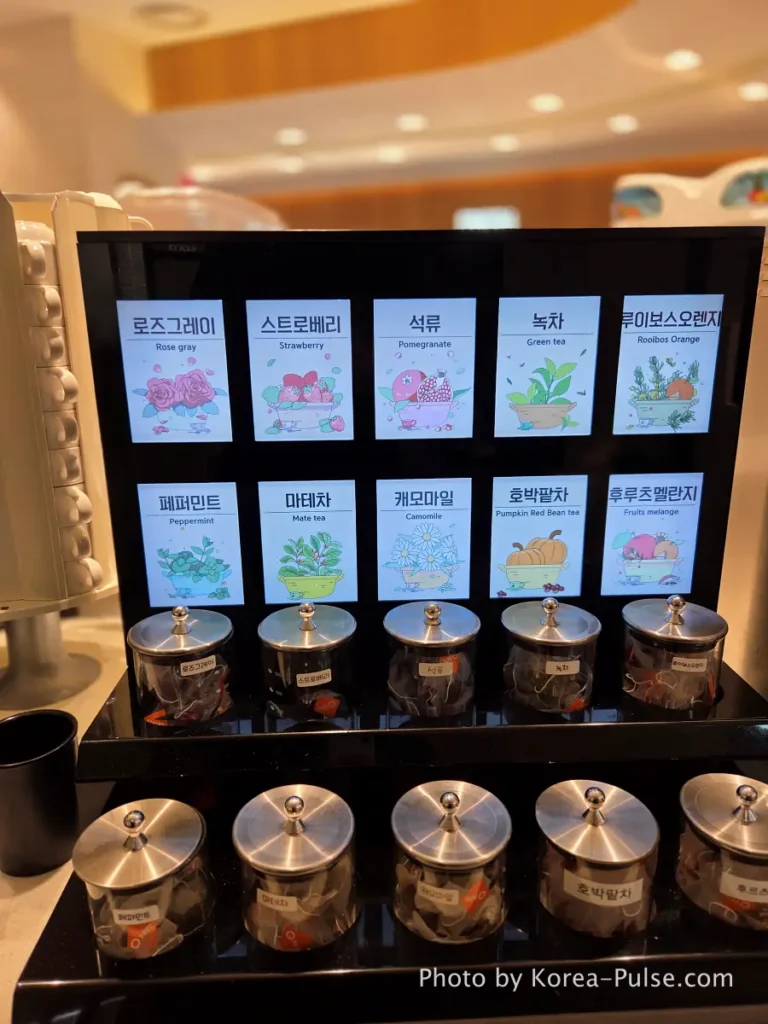
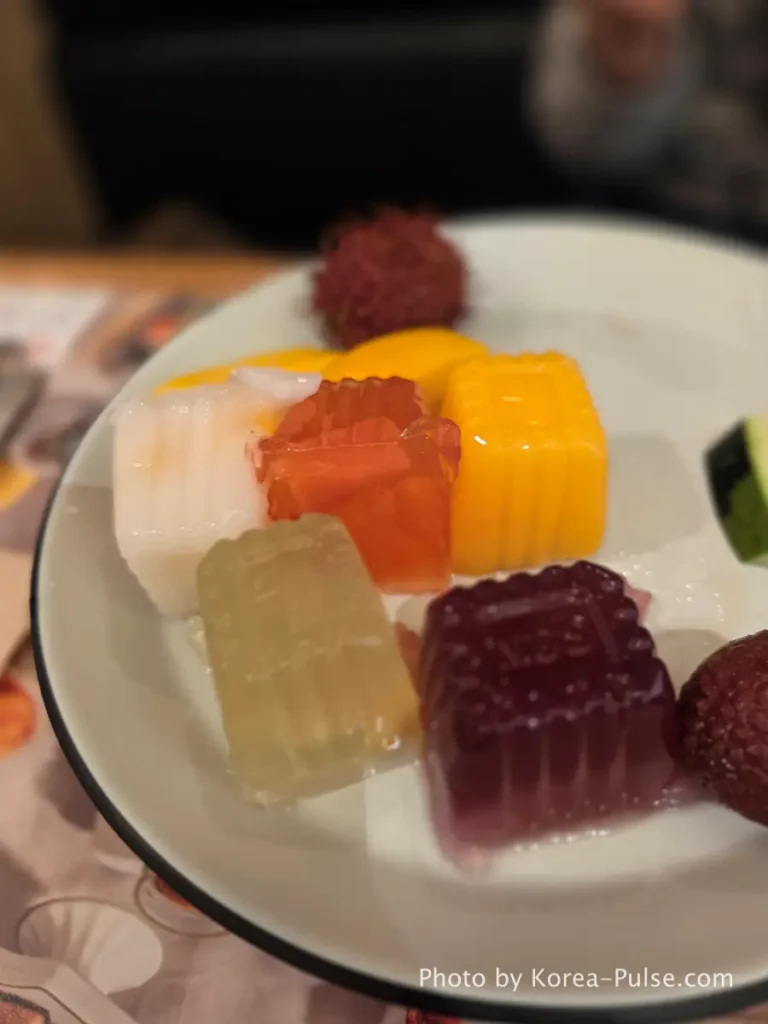
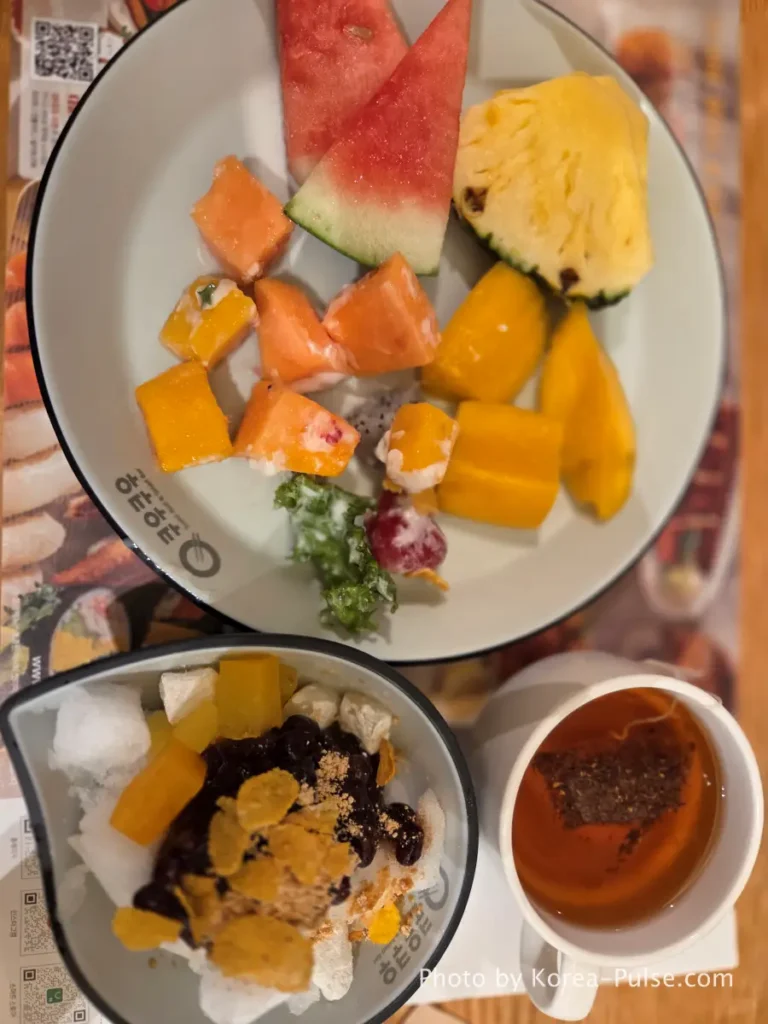
Somewhere between my third and fourth round, my daughter had quietly defected to dessert: fruit and a plate of jellies while I was still negotiating with the BBQ section. Rookie mistake or advanced strategy — I still haven’t decided. When I finally surrendered too, I did it properly, starting at the tea zone: rows of loose-leaf jars with hot water always on tap, running deeper than a buffet tea corner has any right to. The rooibos is my firm recommendation — it negotiated an honorable peace with my stomach.
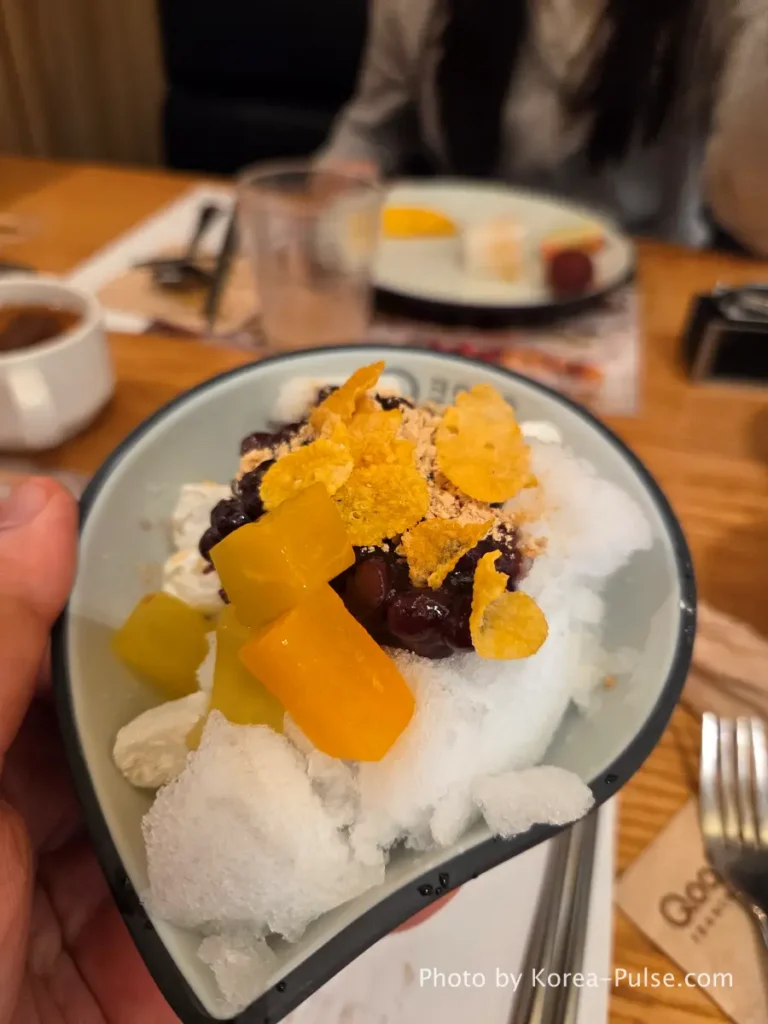
Then, bingsu — because dessert runs on separate physiology. The machine shaves the ice fresh, and you assemble your own patbingsu (팥빙수) with sweet red beans on top.
At the end of it all, I filmed a short verdict on the single best thing we ate that day. I won’t spoil it in text — it’s twenty seconds:
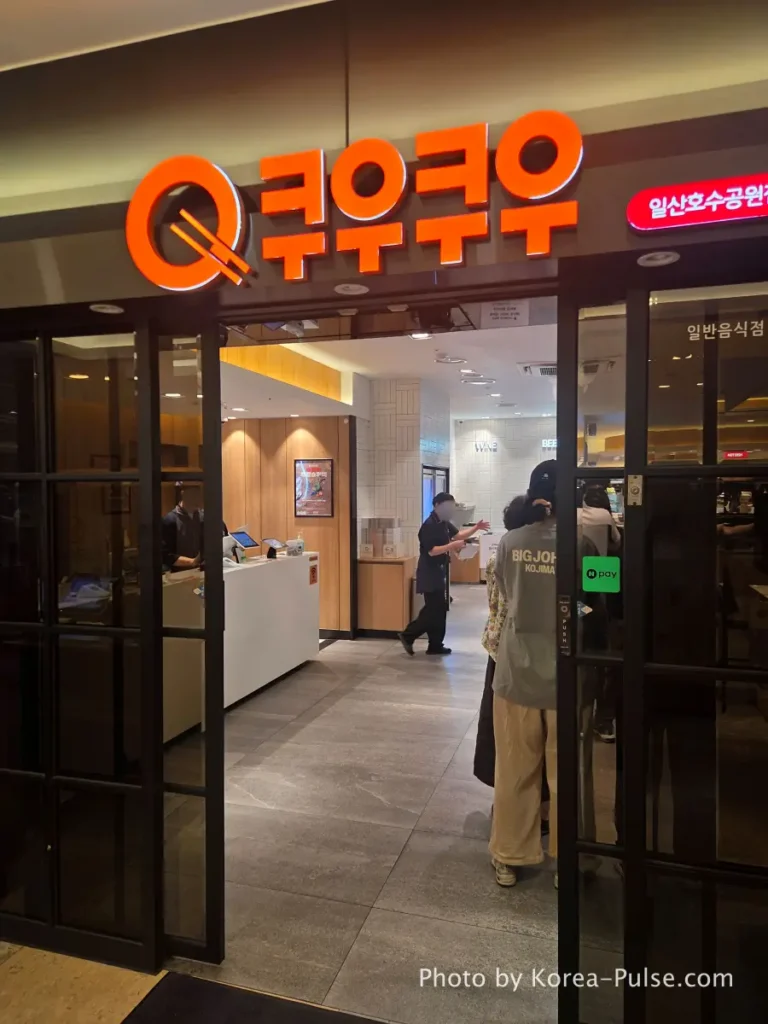
The final tally on our table: fruit salad — watermelon, pineapple, mango — one patbingsu, one rooibos. By then we’d also stretched the posted 90-minute seating limit to nearly two hours (photographing every zone is slow work), and staff politely asked us to free the table for the dinner crowd. Fair enough: the entrance we’d strolled through at 3 PM now had a proper queue. Off-peak afternoons are the cheat code here. If your schedule allows a weekday, the ₩26,900 lunch rate is the value play — just remember it’s judged by your exit time.
Where We Went: QooQoo Ilsan Lake Park
QooQoo has branches nationwide, and online reviews will tell you quality varies noticeably from store to store — so to be clear, everything above reflects one branch: Ilsan Lake Park (일산호수공원점), a third-floor spread inside the SK M-City building near Jeongbalsan Station on Line 3, which happens to be my home line. The space is enormous: the hall runs the full length of the floor and keeps unfolding to the right, which is exactly what a volume business like this needs.
Google Maps walking directions are still largely limited in Korea — locals navigate with Naver Map or KakaoMap. The fastest route here: copy the Korean address from the card above straight into either app, or simply show it to your taxi driver.
FAQ: QooQoo Korean Buffet
Q. How much does a QooQoo Korean buffet cost in 2026?
Adults pay ₩26,900 for weekday lunch, ₩31,900 for weekday dinner, and ₩35,900 on weekends and holidays, as of July 2026. Elementary schoolers pay ₩16,900–18,900 depending on the time slot, preschoolers ₩8,000 — and middle school students are charged as adults.
Q. Is the tuna sashimi really unlimited?
Yes — tuna sashimi, aged sashimi, ganjang gejang and the rest of the special corner are all included in the flat price. Small-batch items are replenished continuously rather than piled high, so if a tray looks empty, wait a minute rather than walking away.
Q. Is there a time limit at QooQoo?
The posted seating limit is 90 minutes, applied gently. We stretched ours to nearly two hours while I photographed every zone, and staff only asked us to wrap up once the dinner crowd needed tables — treat 90 minutes as the courtesy window during busy hours rather than a hard stop.
Q. Do I need a reservation, and is there a wait?
We walked in without a reservation at just past 3 PM on a weekend and were seated immediately. By 5 PM, a dinner queue had formed at the same entrance, so mid-afternoon is the sweet spot — you dodge both the lunch and dinner rushes.
Q. Is QooQoo foreigner-friendly?
Mostly, yes. Beyond the zone signs (BBQ, ROLL, SOUP), most labels are Korean-only — but since nearly everything is displayed buffet-style, you simply see it and pick it. The one real exception is the made-to-order noodle station, where you choose from a Korean-only menu board; a camera-translation app closes that gap in seconds, and staff are used to pointing orders.
If our visit is any guide, the sweet spot is the mid-afternoon lull — we walked straight in after 3 PM on a weekend. On a weekday, arriving around 2 PM keeps your whole 90-minute window inside the ₩26,900 lunch rate (it’s judged by exit time) and ahead of the dinner queue. Start at the sushi counter and work outward, pace yourself past the fried zone — a delicious trap — and save one slot for the special corner and one for patbingsu. Check your nearest branch on the official QooQoo site.
For the price of one pasta course in Rome, my daughter and I ate sushi until strategy failed us.
A QooQoo Korean buffet isn’t fine dining and never pretends to be. It’s abundance done cleanly — 120 dishes, tuna sashimi included, at a price that makes visiting families do a double-take at the till. Bring an appetite and a plan; only one of them will survive.