
Let me be honest with you: I did not plan to ride the GTX-A to Seoul Station that morning. I was fully prepared for the relaxed Line 3-to-Line 4 route — sixty minutes of familiar subway, coffee in hand, no rush. Then my family happened. And suddenly the GTX-A wasn’t a choice. It was the only option left.
As it turns out, that is precisely when you appreciate what the GTX-A Seoul Station route is actually for.
What Is the GTX-A — And Why Does Seoul Need It?
If you’ve read my Seoul Subway Guide for Foreigners, you’ll remember a brief mention of the GTX as Seoul’s next big transit upgrade. Today we go properly deep — in every sense.
GTX stands for Great Train eXpress: a metropolitan high-speed rail network built to solve a very specific Seoul problem. The city’s underground is already saturated with nine subway lines, utility tunnels, and decades of infrastructure. There is no room to build another line at shallow depth. So engineers went much deeper — and much faster.
The GTX-A is classified as a deep-depth railway (대심도 철도), tunneled at an average of 40 to 50 meters below the surface, well beneath all existing infrastructure. Running at up to 180 km/h, it doesn’t stop at every neighborhood — it connects major transit hubs across the wider metropolitan area in the kind of time that makes you question why you ever took the long way.
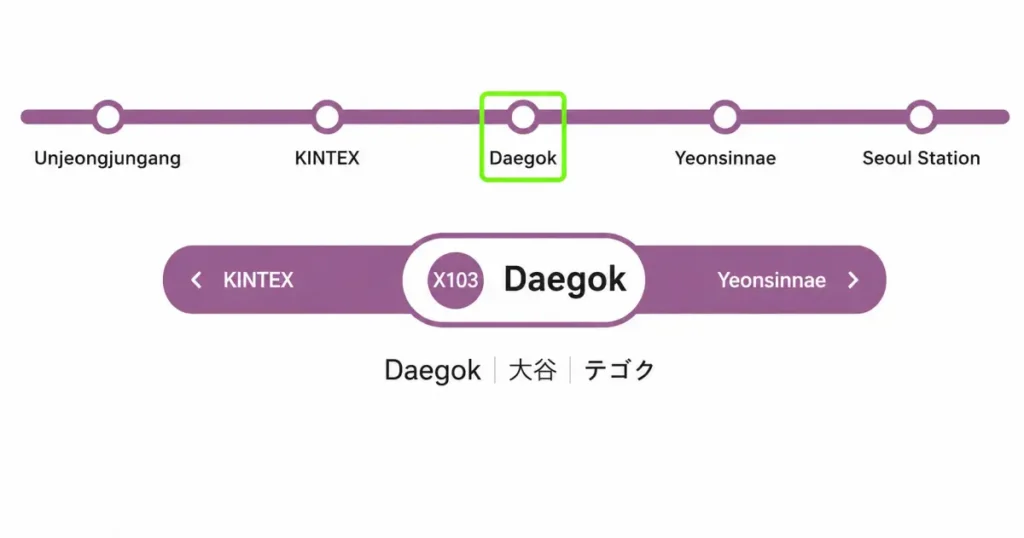
Slow Train vs. Fast Train: An Honest GTX-A Reality Check
Before we get to the experience itself, let’s talk about something most GTX-A guides skip: the total journey time is longer than the train time. The 13-to-15-minute figure you’ll see quoted everywhere is real — but it covers only the train-in-tunnel portion. The full picture, including the elevator descent, the platform wait, and the climb back up at GTX-A Seoul Station, looks more like this:
| Step | GTX-A Route | Line 3 + Line 4 Route |
|---|---|---|
| Walk to platform + transfer gate | ~5 min | ~3 min |
| Elevator wait + descent to B7 | ~5–8 min | Escalator, minimal wait |
| Train wait (avg. headway) | ~6–10 min | ~3–5 min |
| Train journey | ~13–15 min | ~50–55 min |
| Elevator back up at Seoul Station | ~3–5 min | Escalator, faster |
| Realistic total | ~35–45 min | ~60–70 min |
Step 1: Starting at Daegok Station
Our journey began at Juyeop Station on Line 3 — two stops from home — transferring at the massive Daegok Station GTX transit point, one of the most connected transit hubs in Gyeonggi-do. Five railway lines meet here: Line 3, the Gyeongui-Jungang Line, the Seohae Line, the newly opened Daegok Station GTX platform, and a forthcoming suburban line extension. It’s the kind of station that feels like it’s becoming more important every year.
Transferring to the GTX is simple. At the transfer gate, tap your T-money card, Climate Card, or Korea Tour Card once to register your transfer route. Don’t skip this tap — without it, you lose the fare discount link between your subway entry and GTX exit. Note that the GTX-A fare is charged separately and sits outside the standard Climate Card unlimited subway coverage.
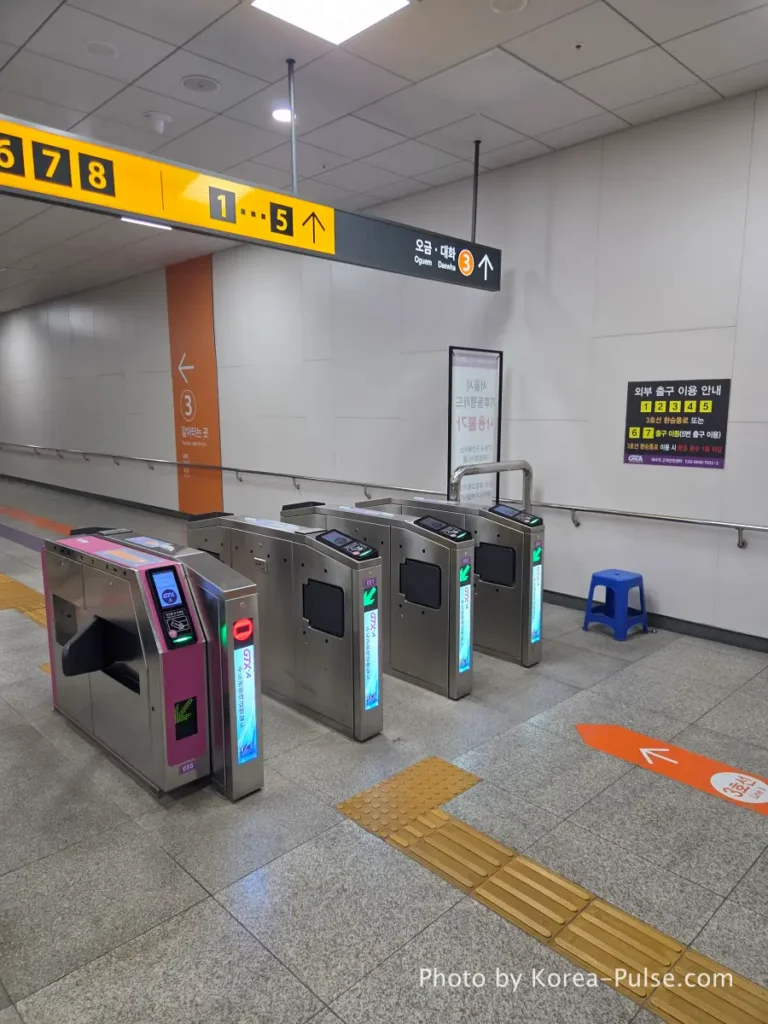
Step 2: Going 50 Meters Underground — Traveling from Daegok toward GTX-A Seoul Station
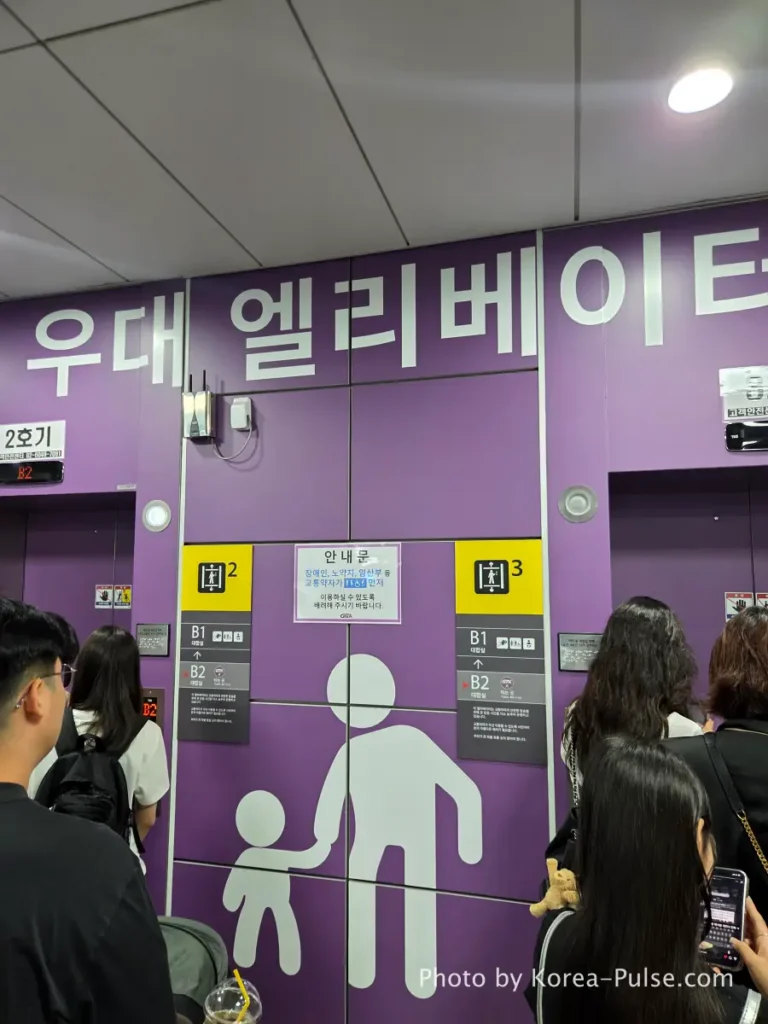
Here is the part that always makes first-timers pause. Because the GTX-A tunnel sits around 50 meters below street level, standard escalators alone would be highly inefficient at this depth — you’d be riding them for several minutes each way. Instead, the stations use large, high-speed dedicated elevators.
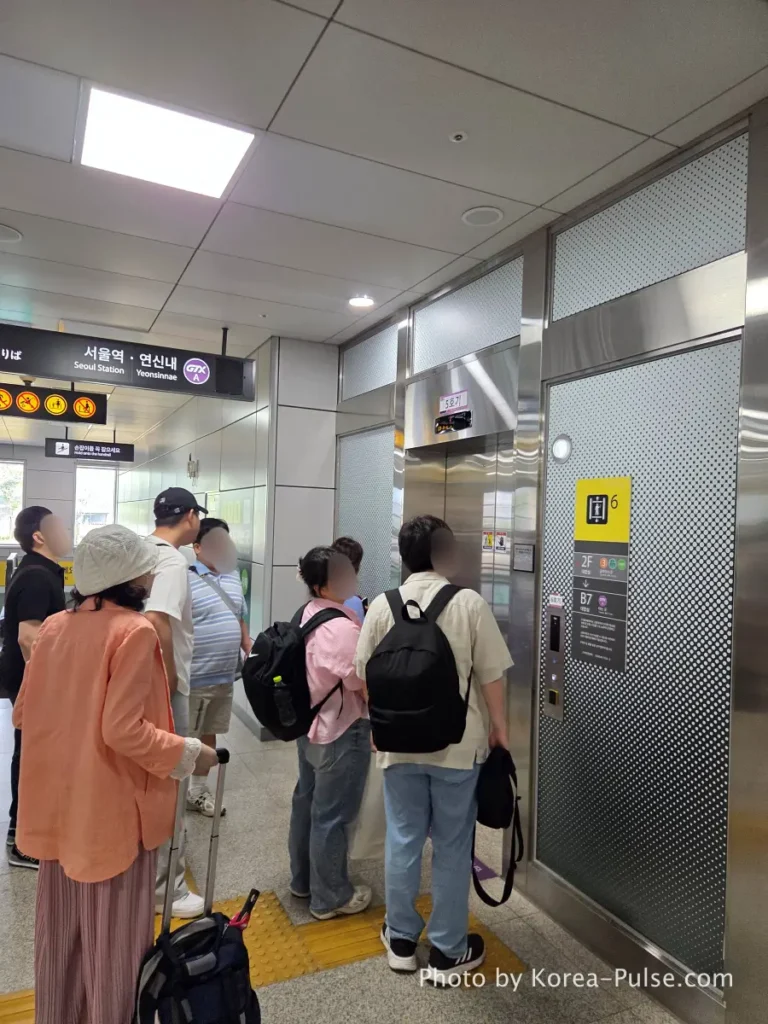
From the 2nd floor concourse, the elevator descends to Underground Level 7 (B7) — a drop of eight full floors in about 30 seconds. The first time you make this descent, it genuinely feels less like catching a commuter train and more like entering the kind of facility that only exists in Korean sci-fi dramas.
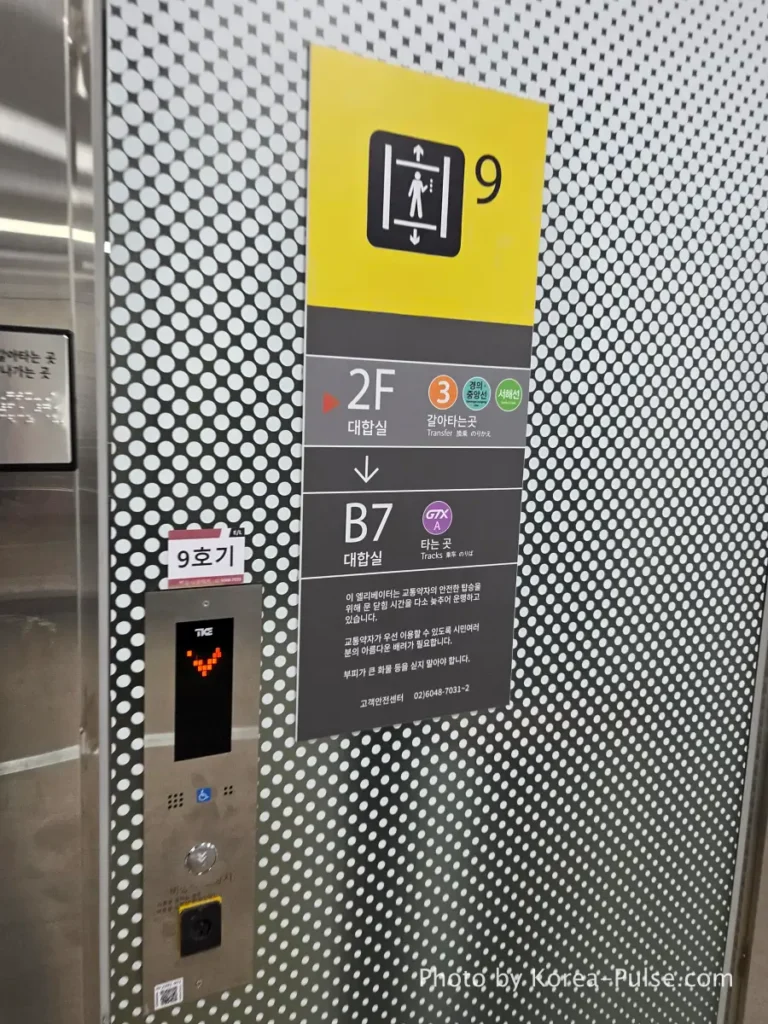
Step 3: Boarding the EMU-180
The trains on the GTX-A northern line are the EMU-180, built by Hyundai Rotem. The engineering pedigree comes directly from Korea’s KTX-Eum and KTX-Cheongryong high-speed rail programs — You can feel the high-speed rail DNA immediately — this rides far closer to a KTX experience than a traditional subway train. This is not a subway train that goes faster than usual. It is a genuine high-speed train that happens to be underground.
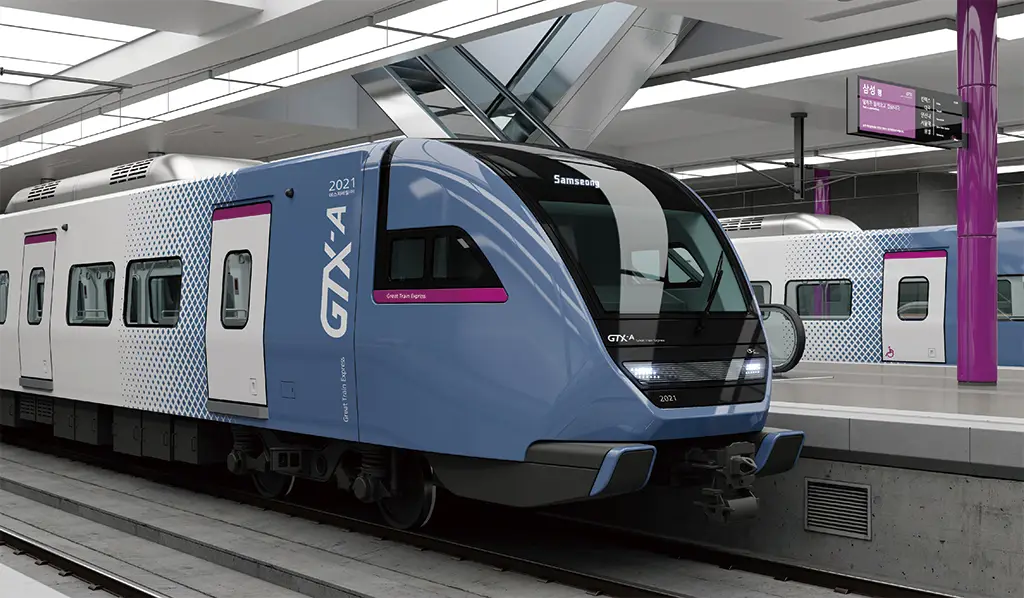
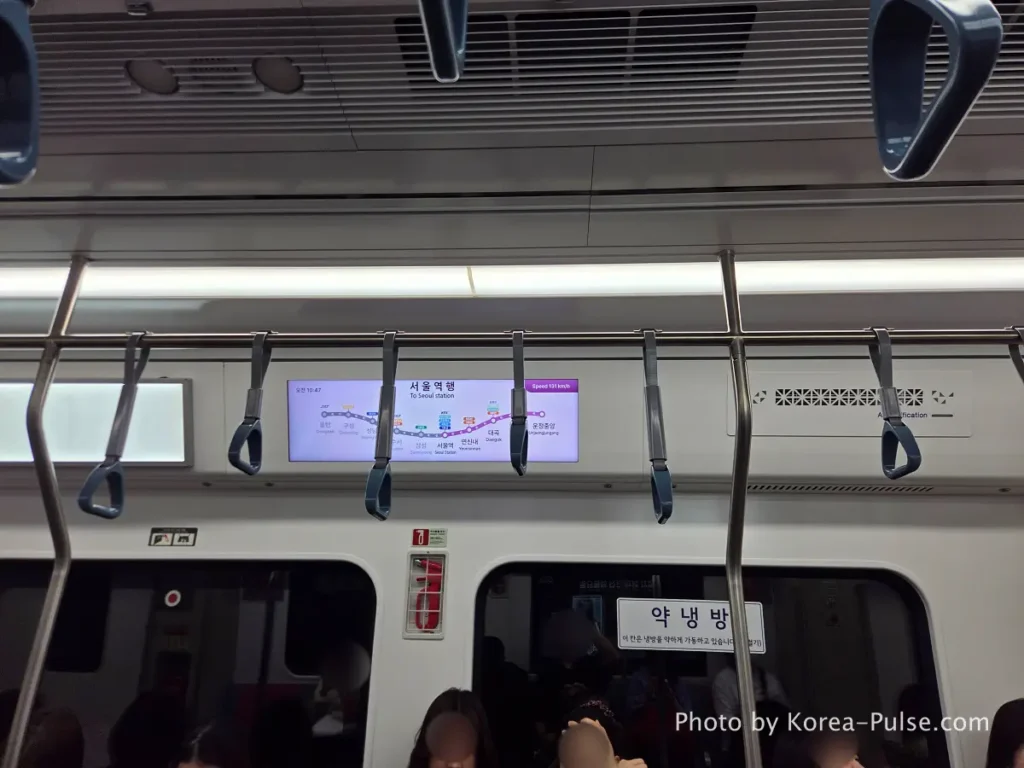
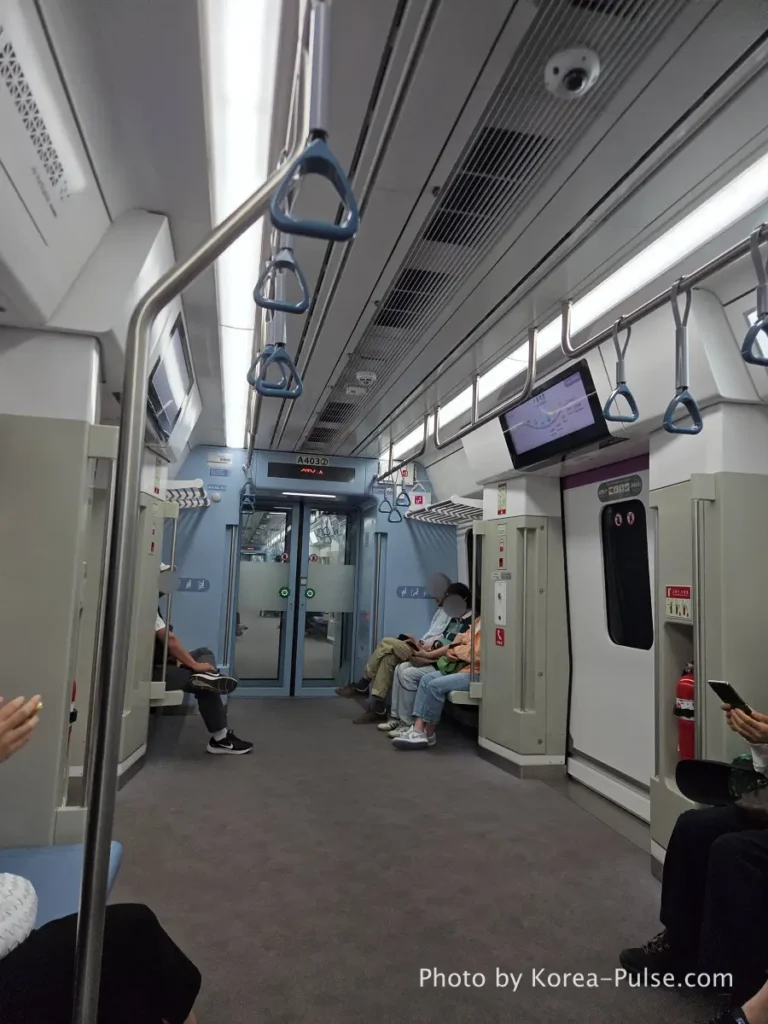
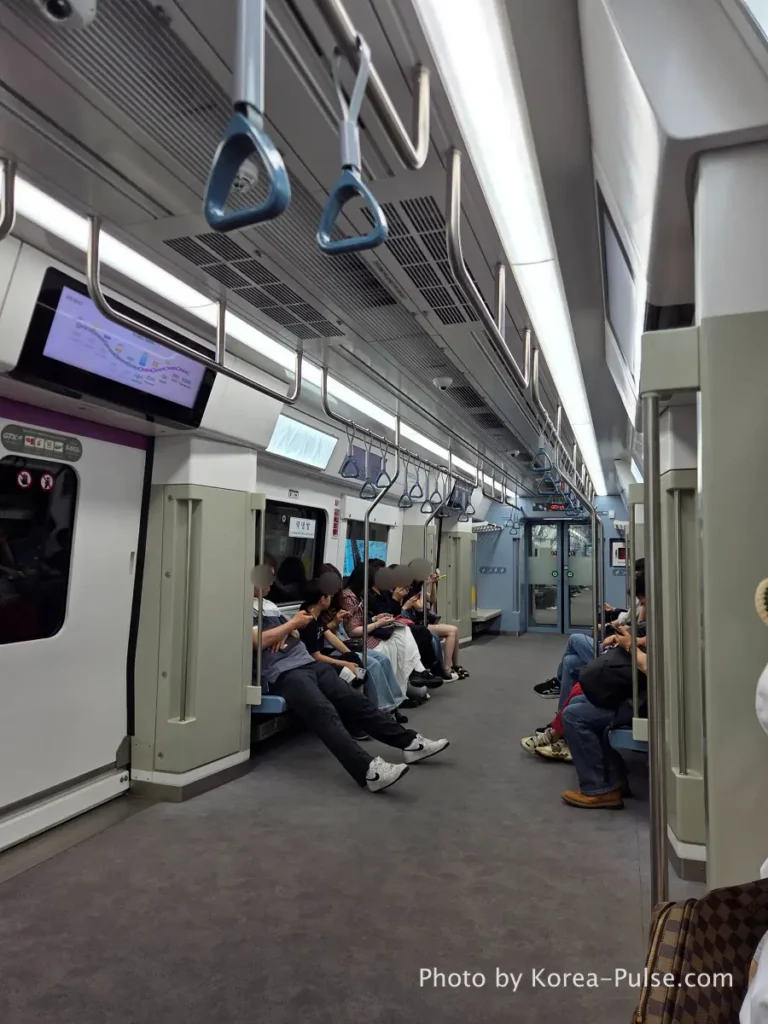
Step inside and the difference from the subway is immediate. The cabin is wide, quiet, and uncrowded. Because the GTX-A fare is roughly double the standard subway, and because stops are limited to major hubs, it doesn’t attract the standing-room-only rush-hour crowd you’ll find on Line 2 or Line 9. People sit. There is space. It feels — and this is not a small thing on Korean public transit — calm.
Weekend discount: 10% off, applied automatically.
K-Pass / The Gyeonggi Pass: monthly refunds of 20–30% depending on age — worth setting up if you ride GTX-A regularly.
Climate Card: the GTX-A fare is charged separately and is not covered by unlimited subway passes.
Note: As of this writing, GTX-A fares are not fully covered by the free-ride policies applied to the standard Seoul subway system.
Step 4: Arriving at GTX-A Seoul Station — Light, Olive Young, and a Queue
And then — genuinely before the experience of being on the train has fully settled — your sleek train glides smoothly into the newly minted GTX-A Seoul Station sector. It takes exactly thirteen minutes of pure, uninterrupted speed from Daegok to get here. Follow the exit signs, take the elevator back up, and head toward Exit 1, which connects directly to the KTX platforms above.
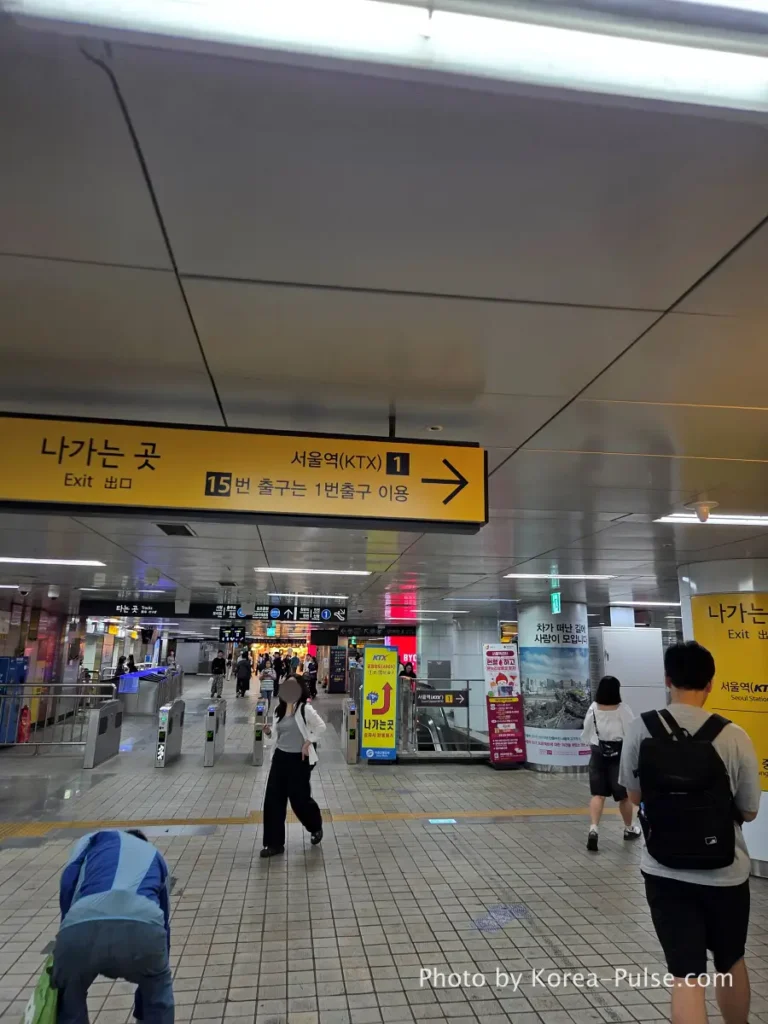
As you ride the escalators upward through the underground corridors, daylight starts bleeding through the concrete — warm, golden, the universal signal that you are almost at street level. And right there, in that in-between moment — not quite underground, not quite outside yet, the light already spilling in from the exit above — you turn a corner and find:
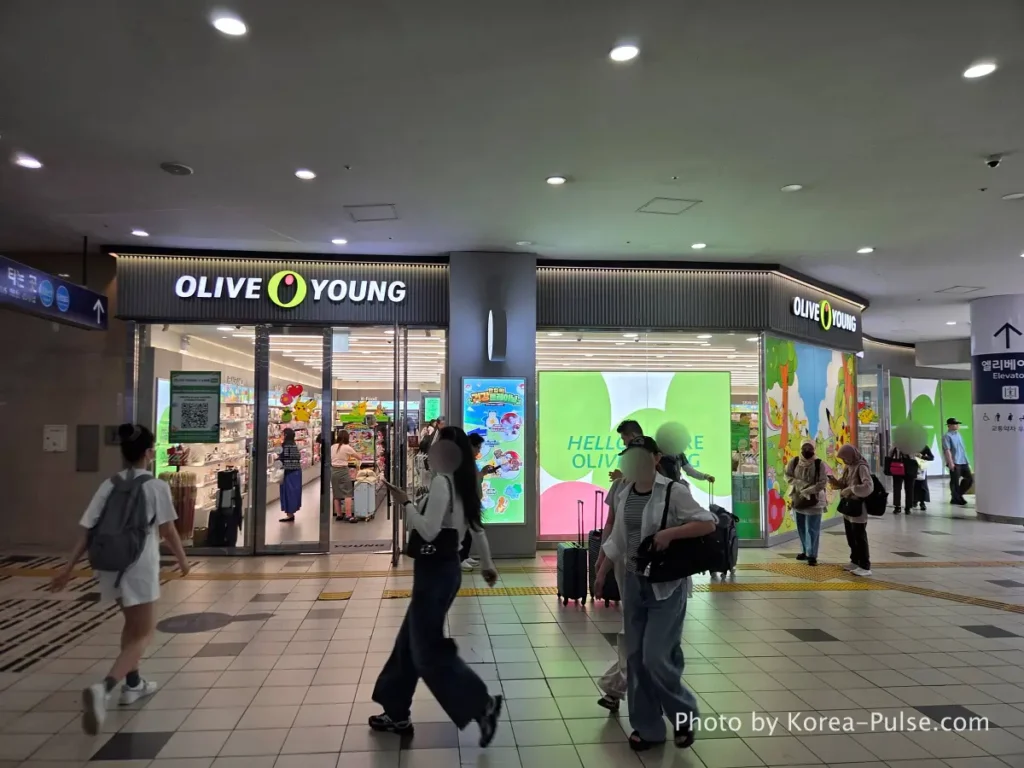
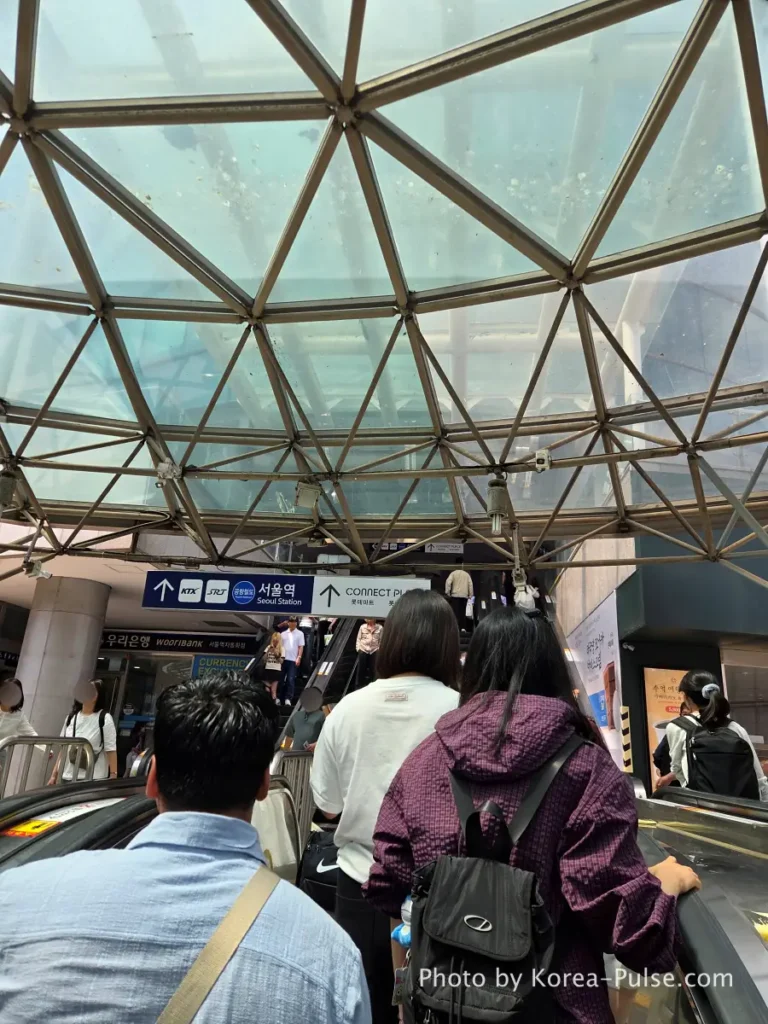
Olive Young. Positioned perfectly at the point where willpower is lowest and the journey ahead is longest. I respect the placement enormously.
I grabbed a few hydrating sheet masks for the KTX ride south — train air conditioning is relentless over several hours, and a good sheet mask mid-journey is not vanity, it is infrastructure. If K-beauty is new to you, my full Olive Young guide is required reading before any Seoul trip.
What You See After Exiting GTX-A at Seoul Station
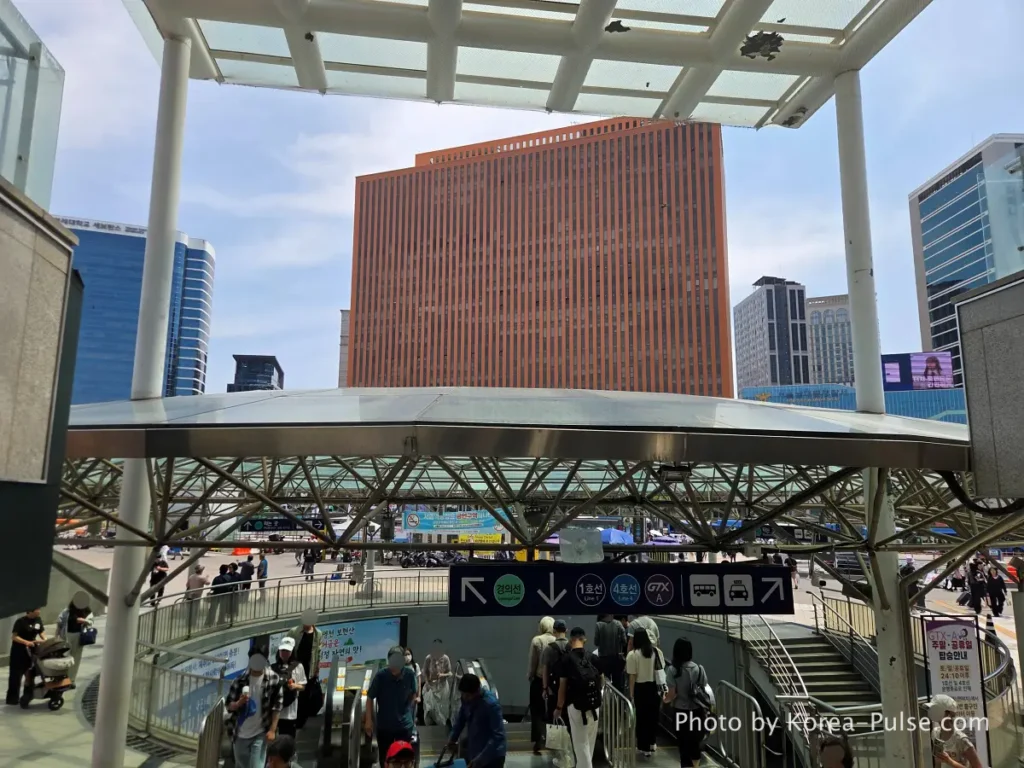
A couple more escalators up, and suddenly: Seoul. Open sky, city noise, the particular energy of one of Asia’s great transit crossroads. I turned around out of old habit — and there was the building that used to be my company’s headquarters, windows catching the morning light. A quietly strange feeling, looking at it now as a carefree weekend traveler rather than a stressed-out worker heading in for another long day. Time moves in interesting directions.
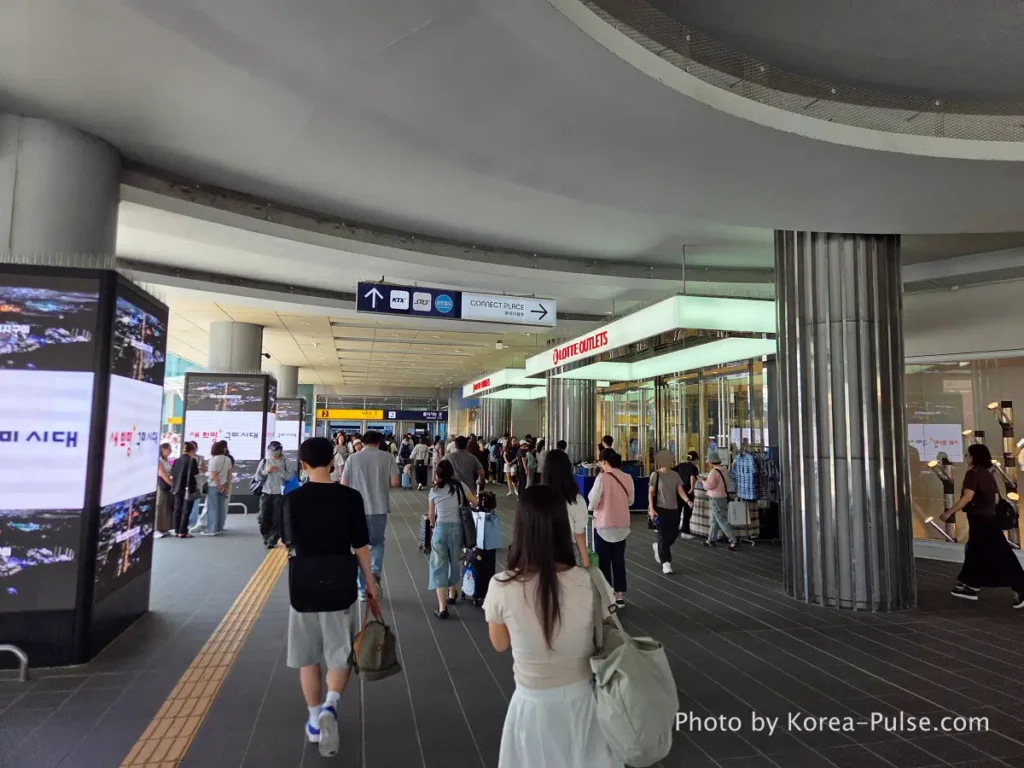
Back into the station building, the Lotte Outlet plaza was already drawing its usual weekend crowd. Inside the main hall, a queue caught my eye — not enormous, but purposeful. People who knew exactly what they were waiting for.
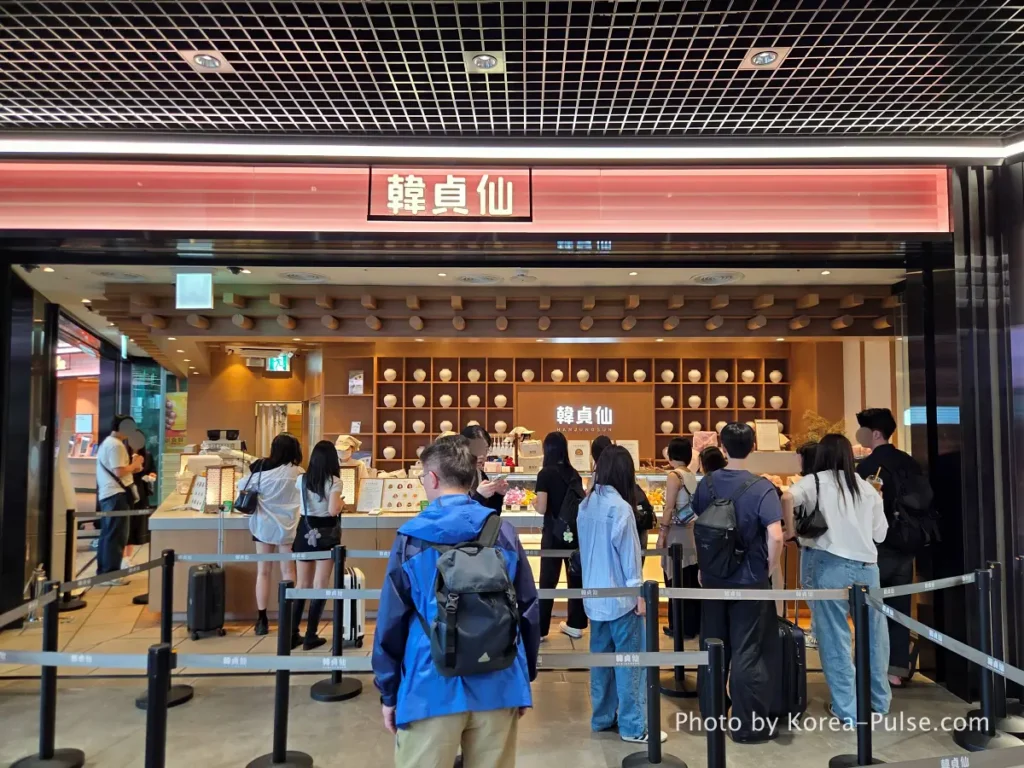
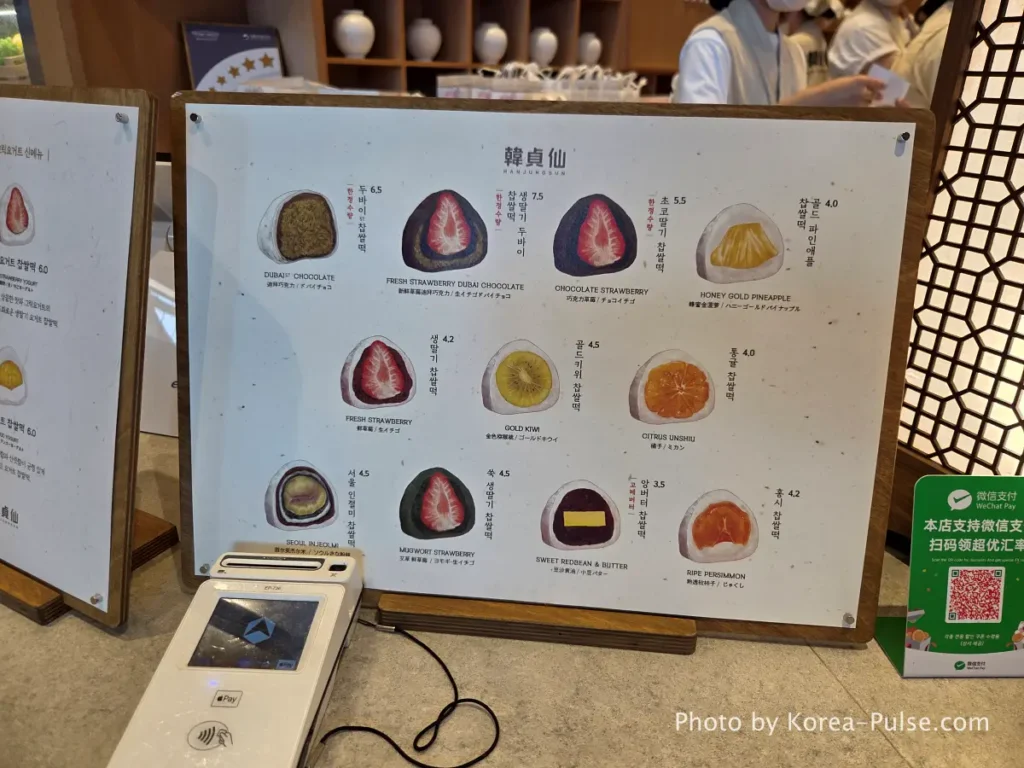
I investigated. The shop is Hanjeongseon (한정선) — a premium boutique selling luxury chapssal-tteok: traditional Korean glutinous rice cakes filled with whole fresh fruit. Strawberries, shine muscat grapes, seasonal fillings — each piece packaged like fine confectionery, priced accordingly, and clearly the gifting trend of the moment. Firmly bookmarked for a dedicated K-Food deep dive.
Should You Take the GTX-A? An Honest Verdict
| Your Situation | GTX-A Seoul Station — Worth It? |
|---|---|
| You have time and a transit card | Subway is fine. Save the fare premium for another day. |
| Your family caused a 30-minute delay | Yes. Immediately. No further discussion. |
| Connecting to KTX at Seoul Station | Yes — you arrive calm, not crammed. |
| Traveling with strollers or wheelchairs | Yes — large priority elevators are well-signed throughout. |
| First visit to Seoul, transit curious | Ride it once. The descent alone is worth the experience. |
| Daily commuter from Daegok area | Calculate with K-Pass refund. The time saving compounds daily. |
| Confirmed transit nerd | This is not a question. |
“I didn’t choose the GTX-A. My family’s morning routine chose it for me. In the end, it was the better call.”
The GTX-A Seoul Station route is a genuine engineering marvel that happens to be easy to use. Factor in the elevator time, factor in the queue, factor in the fare — and it still wins when you actually need it to. Korea does infrastructure quietly. Then it absolutely delivers.
GTX-A Seoul Station — Frequently Asked Questions
| Question | Answer |
|---|---|
| How deep is the GTX-A platform? | Around 40–50 meters underground. At Daegok Station, the platform sits at Underground Level 7 (B7) — eight floors below the street-level concourse. |
| How long does GTX-A take from Daegok to Seoul Station? | About 13–15 minutes of pure train-in-tunnel time. Once you account for the deep elevator descent and platform wait, the realistic door-to-door total for the GTX-A Seoul Station route settles at around 35–45 minutes. |
| Can tourists use GTX-A with a T-money or Climate Card? | Yes — T-money, Climate Card, and Korea Tour Card all work at the fare gate. Note that GTX-A charges a separate fare not covered by unlimited subway passes. |
| Does GTX-A connect to KTX at Seoul Station? | Yes. Following signs to Exit 1 from the GTX-A platform leads directly to the KTX departure hall inside Seoul Station. |
| Is GTX-A accessible for wheelchairs and strollers? | Yes. Large priority elevators (우대 엘리베이터) are installed at every station specifically because the platforms are so far below ground. |
| Is GTX-A worth it over the regular subway? | Depends on your situation. If time is tight or you’re connecting to KTX, yes. If you’re in no rush, the standard subway saves you around ₩2,000 and is perfectly comfortable. |
The Bottom Line — and What’s Next
The GTX-A to Seoul Station is one of the most impressive transit experiences in Asia right now, and one that most international visitors don’t yet know exists. Eight floors underground, up to 180 km/h, 13 minutes of actual train time — with a realistic door-to-door total of around 35 to 45 minutes once you account for the elevators, the wait, and the climb back up. Plan accordingly, and it will not let you down.
From Seoul Station, our journey continues south. Next up: boarding the KTX to Dongdaegu — Korea’s high-speed rail at full stretch, and a city that deserves far more attention than most travelers give it.
Keep the pulse going: