
K-TRAVEL · May 2026
Seoul Station Luggage Storage:
T-luggage vs. Zimcarry
Drop the bags. Reclaim the city. A Global Dad’s on-the-ground guide to Seoul’s two best luggage services.
There is a specific kind of despair that hits when you are dragging a 25kg suitcase through a packed transit hub, knowing you have six hours left before your flight and nowhere to put the thing. Seoul Station has an answer — actually, it has two. And they are better than you think.
I stumbled onto both of them on the same afternoon. I had just stepped off the newly opened GTX-A at Seoul Station — still buzzing from how fast and smooth that ride was — and was following the Exit 1 signs when I nearly walked straight into a crowd of tourists with hard-shell suitcases queuing outside a sleek white-brick storefront.
That was my first introduction to premium Seoul Station luggage storage. A floor up, on the main KTX concourse, a bold yellow sign announced Zimcarry. Same problem, different philosophy. Here’s everything you need to know about both hubs.
The Subway-Side Veteran: T-Luggage Seoul Station Luggage Storage
hubs in Seoul
tourist users
growth curve
T-luggage is an official transit initiative backed by Seoul Metro, launched on May 22, 2023, to solve a problem that had been quietly plaguing the city: coin lockers perpetually booked out, tourists hauling bags up escalators, everyone suffering.
The concept is clean — drop your suitcase at a manned center, pick it up later at a different station, or have it delivered all the way to Incheon or Gimpo Airport by the afternoon. Because it’s managed by the public metropolitan network, it runs with the absolute mathematical reliability of the subway grid itself.
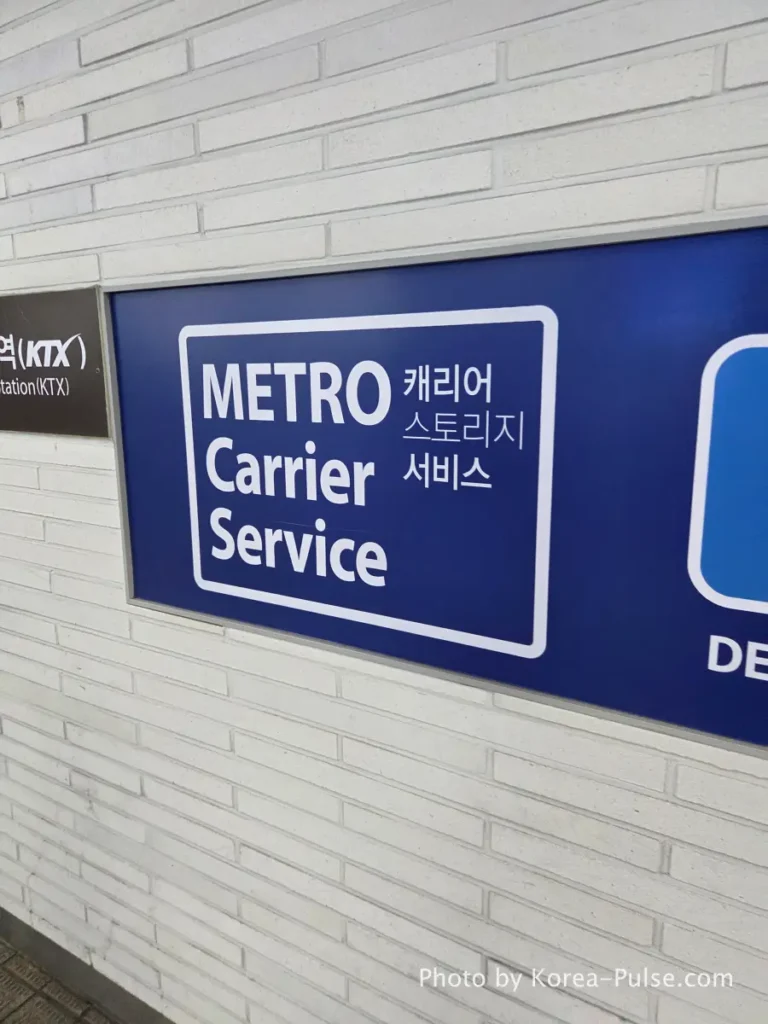
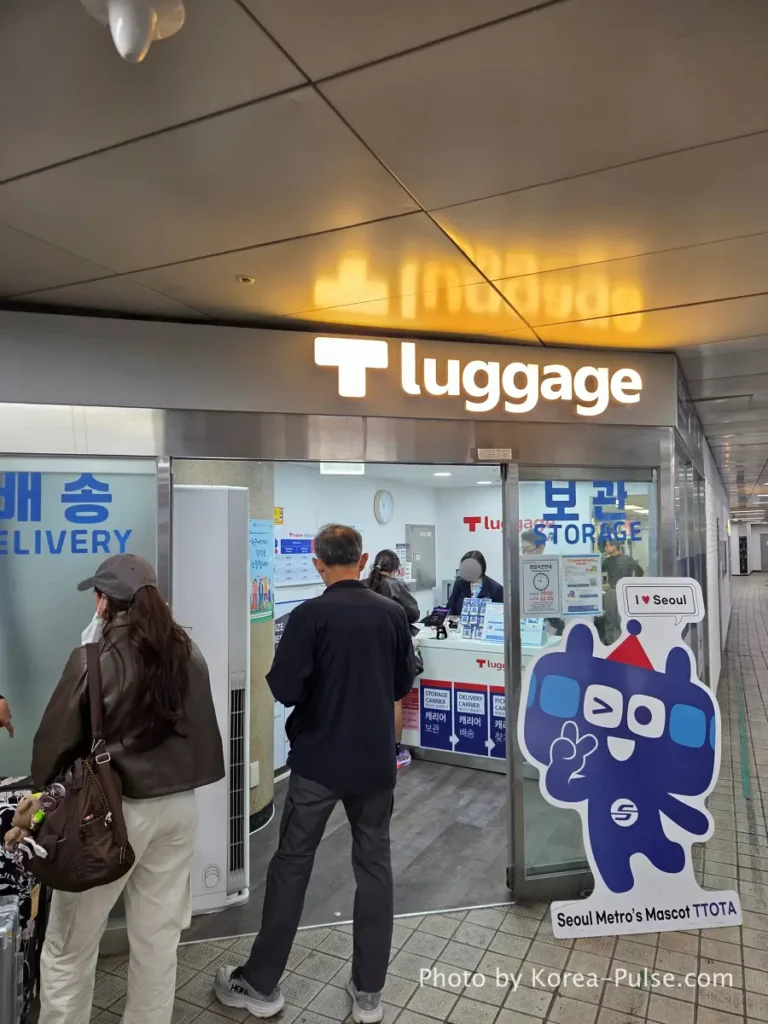
The Seoul Station branch sits on the B1 subway concourse level, a short walk from the Line 4 exit gates heading toward Exit 1. The crowd I walked into was not unusual — since launch, T-luggage has seen massive growth, with international tourists making up roughly 70% of all users during peak seasons.
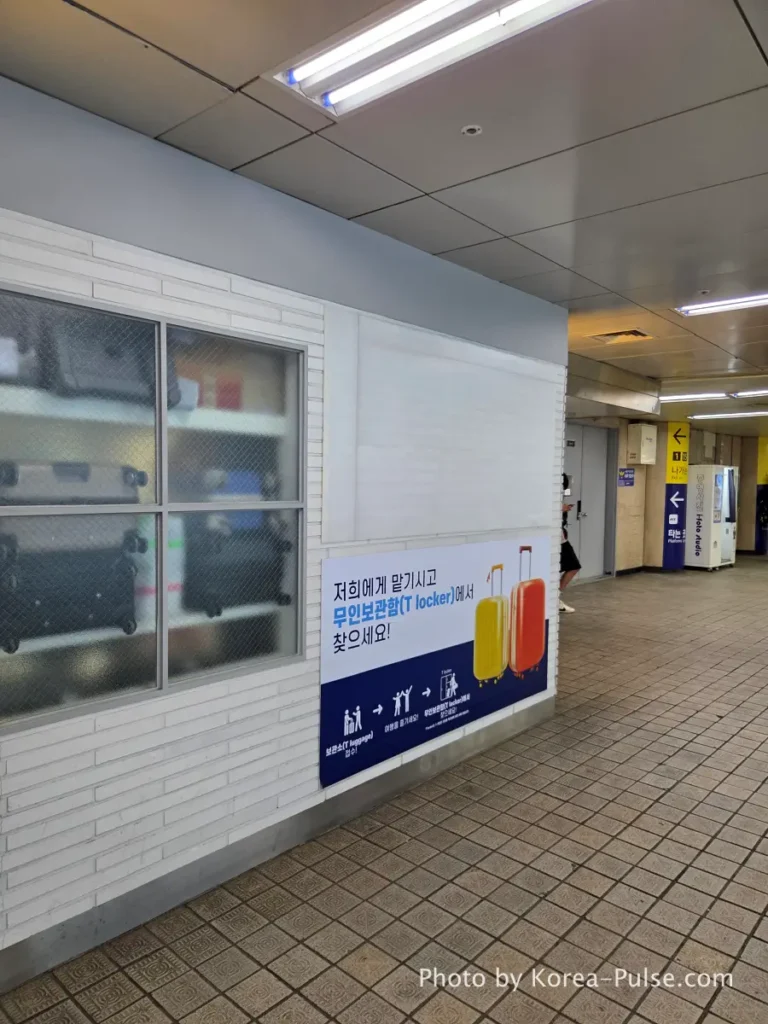
Following the official suspension of certain legacy terminals like the Suseo branch, the service currently maps around 6 key manned centers across the primary metropolitan grid: Seoul Station, Hongik University, Myeongdong, Gimpo Airport, Jongno 3-ga, and Jamsil. Hundreds of automated unmanned T-Lockers extend this network to standard subway platforms across the city. Note that the manned counters specifically open at 09:00 AM and close at 10:00 PM daily (though operational timelines may shift slightly depending on seasonal travel demands).
The KTX-Level Player: Zimcarry (짐캐리) Hub
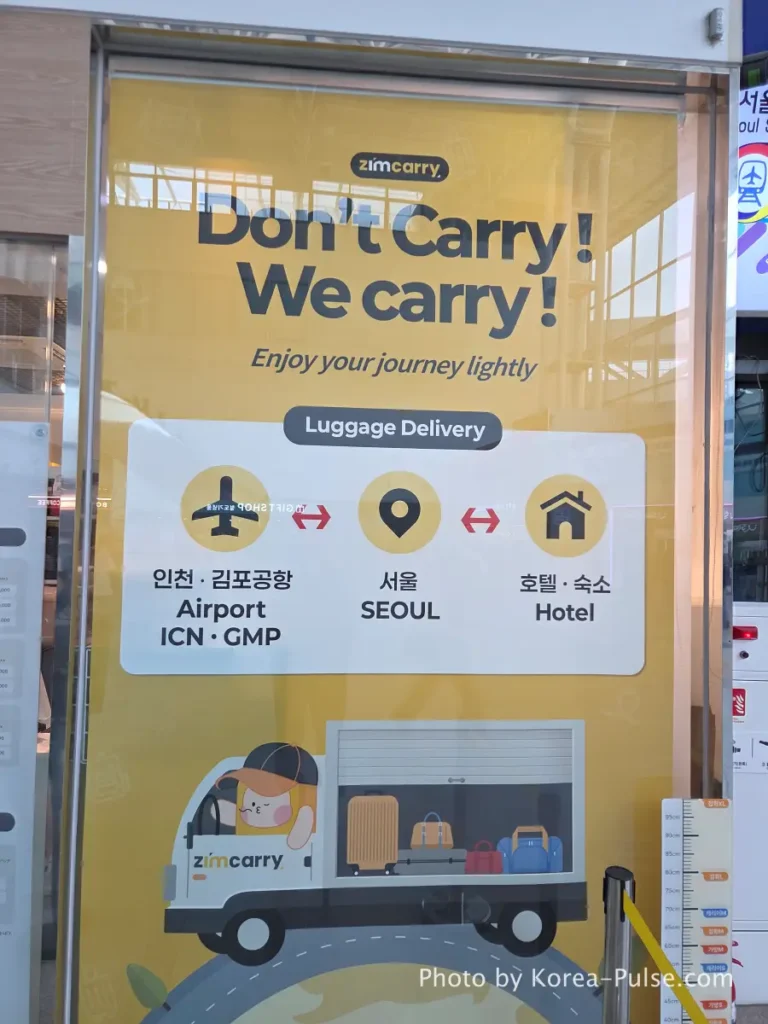
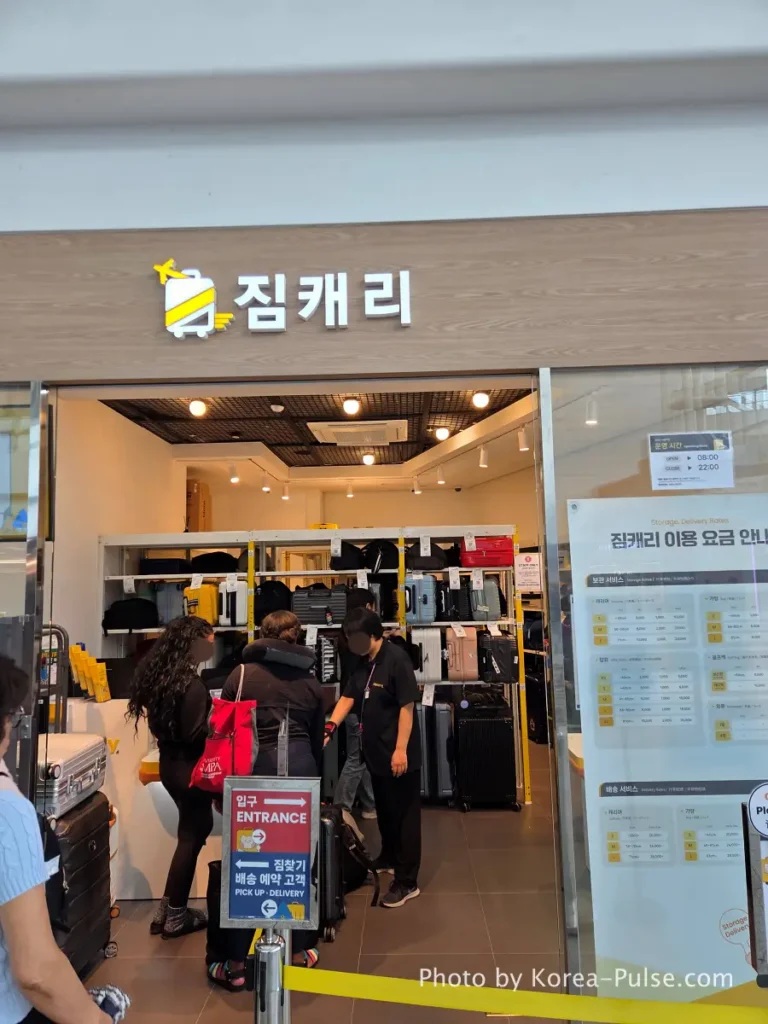
One floor up from the subway concourse, on the main ground-level KTX station floor, a completely different aesthetic takes over. Yellow. Bold. A cute animated suitcase character. And a name that, every single time I see it, makes my brain flash to The Mask, Dumb and Dumber, Ace Ventura, and of course the absolute existential masterpiece that is The Truman Show.
Jim Carrey. Not Jim Carrey. Korean wordplay: 짐 (Zim/Jim) means luggage in Korean. Plus Carry. Luggage-Carry. Zimcarry. Brilliant once you know, maddening until you do.
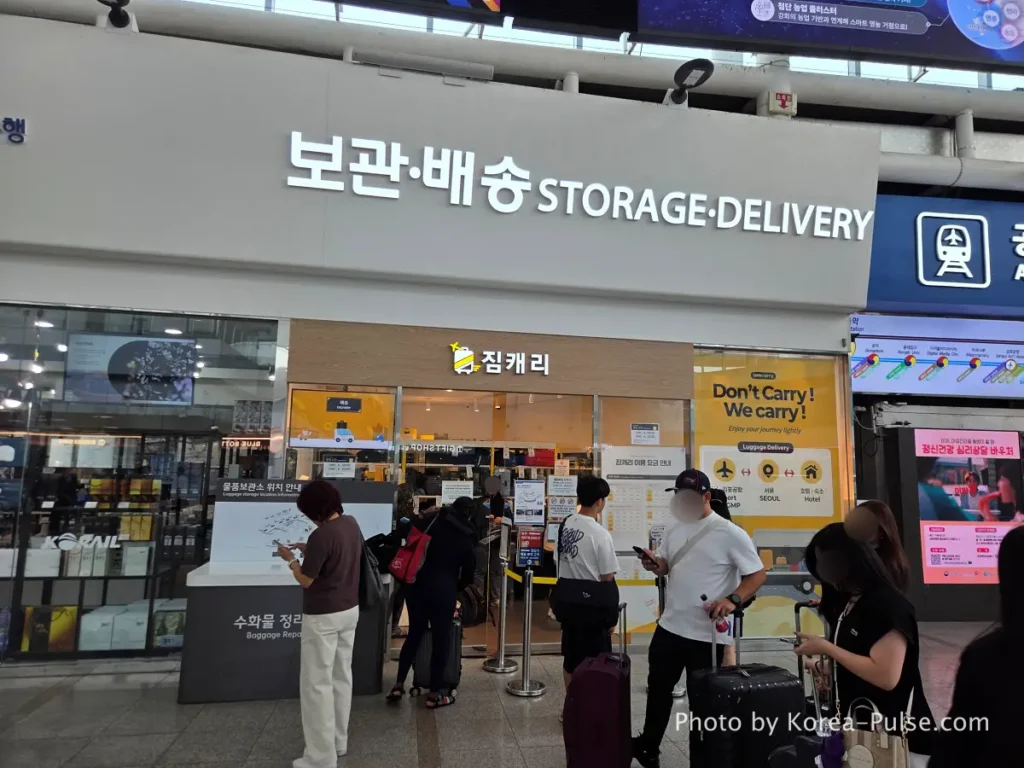
Where T-luggage operates primarily within the Seoul subway ecosystem, Zimcarry thinks bigger. Their core network, accessible through the official Zimcarry Portal, connects Seoul Station directly to Incheon (ICN) and Gimpo (GMP) airports, and to hotels citywide.
Beyond that, they tie into major KTX and SRT rail shipping routes via KORAIL Hub Logistics — meaning your bags can travel from Seoul to main destinations like Busan, Dongdaegu, or Gwangju while you travel light on the same train. They even handle outerwear storage, golf bags, and specialty sports gear.
Crucially for early birds, Zimcarry opens an hour earlier than its subway rival, running from 08:00 AM to 10:00 PM daily (be aware that same-day airport delivery slots usually have a strict noon cutoff time!).
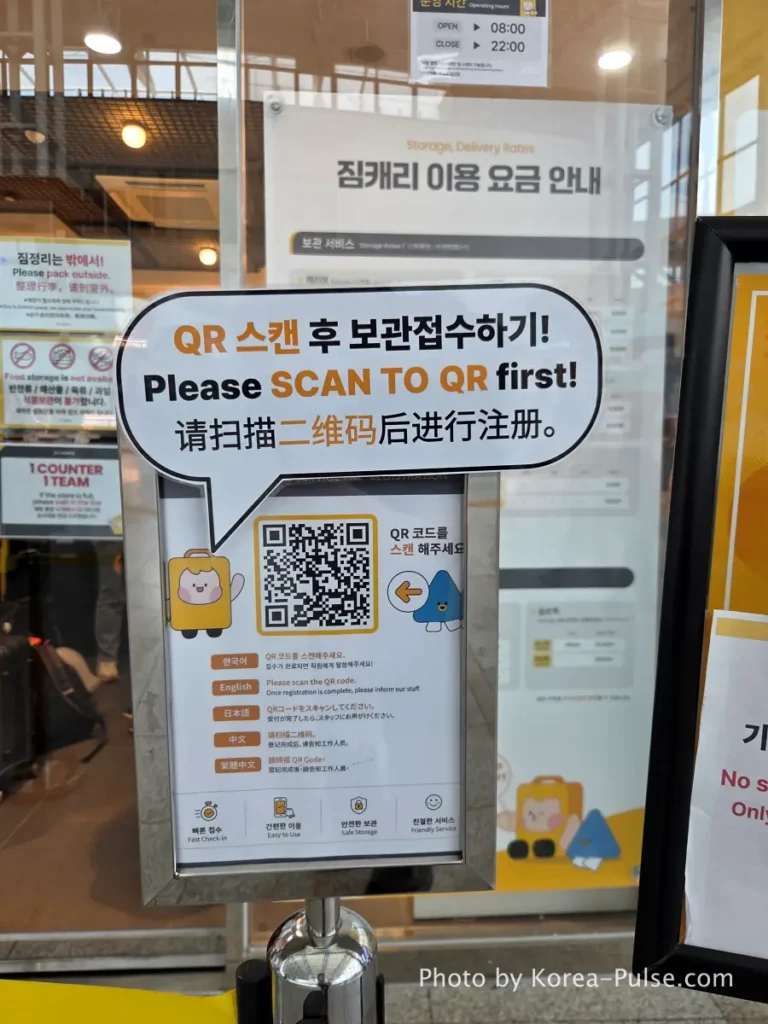
One practical tip I noticed: Zimcarry asks you to scan their QR code first before approaching the counter. The multi-language sign out front — Korean, English, Japanese, Chinese, Traditional Chinese — makes it clear they are built for international visitors. Fill in your details on mobile, then step up to the desk. Much faster than filling out paper forms while juggling a suitcase.
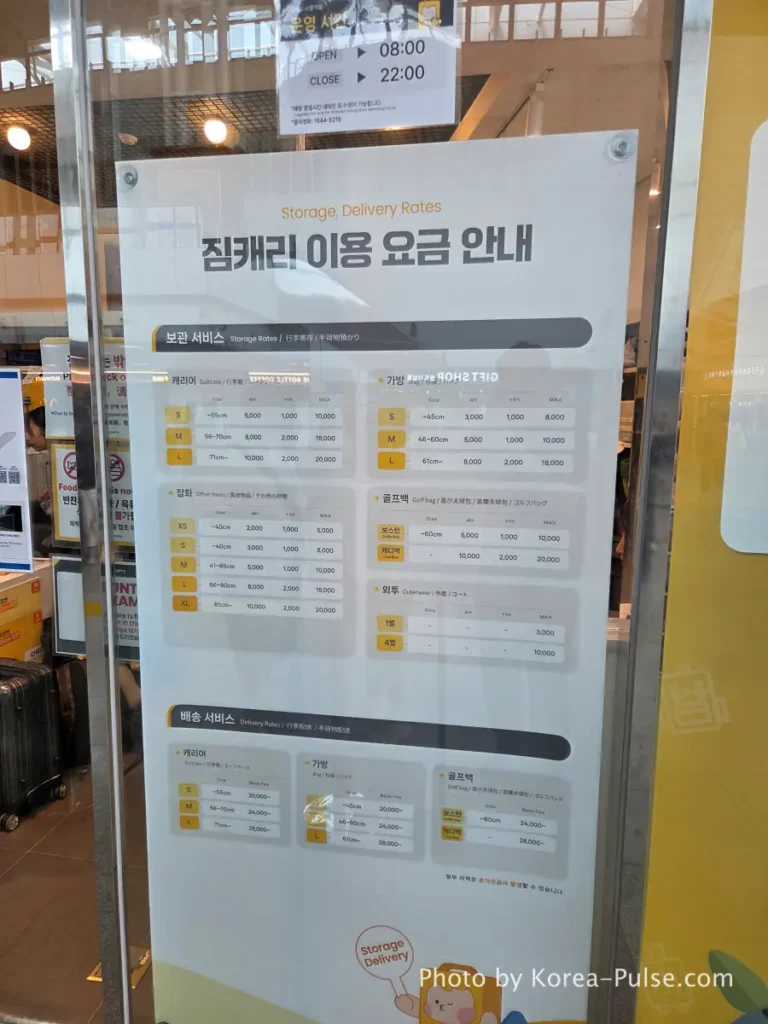
Ultimate Seoul Station Luggage Storage Comparison Matrix
Both services solve the same problem but from different angles. Here is the cleanest breakdown — strictly cross-checked against actual posted rates, independent alternatives like Raon Storage (AREX zone), and automated station locker structures. Note that basic storage rates indicate the starting fee for the first 4 hours; subsequent hourly additions apply.
| Service Brand | Operating Hours | Base Storage Rates (First 4 Hours) | Delivery Options | Best Suited For |
|---|---|---|---|---|
| T-Luggage (Subway B1) | 09:00 AM – 10:00 PM | Weekday (주중): S ₩3,000 / M ₩4,000 / L ₩6,000 / XL ₩9,000 Weekend (주말): S ₩4,000 / M ₩6,000 / L ₩9,000 / XL ₩13,000 | Seoul Subway Station Lockers & Selected Hotels | Subway commuters, budget-conscious travelers sticking to the main 6 metro hubs |
| Zimcarry (KTX 1F Hall) | 08:00 AM – 10:00 PM | S ₩5,000 / M ₩8,000 / L ₩10,000 (Flat initial rate structure) | Major KTX Hubs, Airports, and All Hotels | KTX national rail tourists, Airport transfers, Specialty golf/coat storage |
| Raon Storage (AREX Zone) | 08:00 AM – 09:30 PM | S ₩4,000 / M ₩5,000 / L ₩7,000 | Mainly limited hotel delivery options | Airport Railroad (AREX) passengers looking for basic terminal alternatives |
| Electronic Lockers | 05:00 AM – Midnight | ₩2,000 – ₩6,000 (Depending on small/medium/large tier sizing) | Strictly None (Stationary steel locker slot only) | Ultra-quick, small day-packs or small bags under 4 hours |
Go Hands-Free: What To Do Next
Once your bags are safely sorted via the premier Seoul Station luggage storage networks, the city opens up beautifully. From the B1 T-luggage center, you are literally steps from the metro gates. Hop right onto the Line 4 train and you are at 4호선 명동역 1번 출구 (Line 4 Myeongdong Station Exit 1) in under five minutes — one of the most satisfying express connections in Seoul for a hands-free shopping run.
The street food markets, the packed cosmetic lanes, the massive 12-story Daiso shopping tower — none of it requires a suitcase. None of it should require a suitcase.
Remember how I noted that the 12th floor of that massive building is dedicated to incredibly affordable clothing items? It actually reminds me of a hilarious episode from the hit travel variety show Unplanned Trip: Limited Edition. In that show, actor Choi Woo-shik realized mid-trip that he had completely run out of clean underwear!
Because his travel budget was strictly capped, every single high street retail fashion shop was way over budget. He had to desperately wait outside a local Daiso branch right until the doors opened the next morning because it was the only reliable place offering underwear multipacks within his strict emergency cash allotment.
If a global movie star can count on these smart budget transit hacks, so can you — just make sure you drop your heavy suitcases off at the Seoul Station hubs first!
“Your spine will thank you. Spend the few thousand won, drop the bag, and experience Seoul the way it was meant to be — light on your feet.”
For subway-centric travelers and budget-conscious tourists, T-luggage is the clear tactical pick: cheaper baseline rates and a reliable network backed by Seoul Metro’s infrastructure. For anyone flying the same afternoon, executing a KTX provincial rail loop, or carrying specialty gear (golf bags, winter puffer coats), Zimcarry earns every single won. The two systems don’t really compete — they seamlessly cover different halves of the exact same traveler journey. Between them, Seoul Station has established itself as one of the most luggage-friendly transit fortresses in Asia.