K-BEAUTY · July 2026
Olive Young Gwangjang Market
The Retro K-Beauty Store Hiding Inside a Century-Old Market
A 1960s-themed Olive Young branch with Hanbok color matching, a free Bojagi gift, and a view over Gwangjang Market’s food alley.
When I wrote about the hanbok and textile shops in Gwangjang Market’s clothing district, I mentioned in passing that Olive Young had opened a branch just upstairs. I promised I’d go back and take a proper look. This is that follow-up: a full walk through Olive Young Gwangjang Market, quite possibly the most theatrical Olive Young branch I’ve ever set foot in.
I’m the type who needs to see things with my own eyes, so instead of just writing a paragraph about it from memory, I went back to Gwangjang Market on a weekday morning. Right next to Garlic Boy — the bakery stall I already gushed about in an earlier post — a green staircase leads up to the second floor. Ignoring the smell of garlic bread completely (a real achievement on my part), I climbed toward a sign that reads 올영양행: Ol-Yeong Yanghaeng.
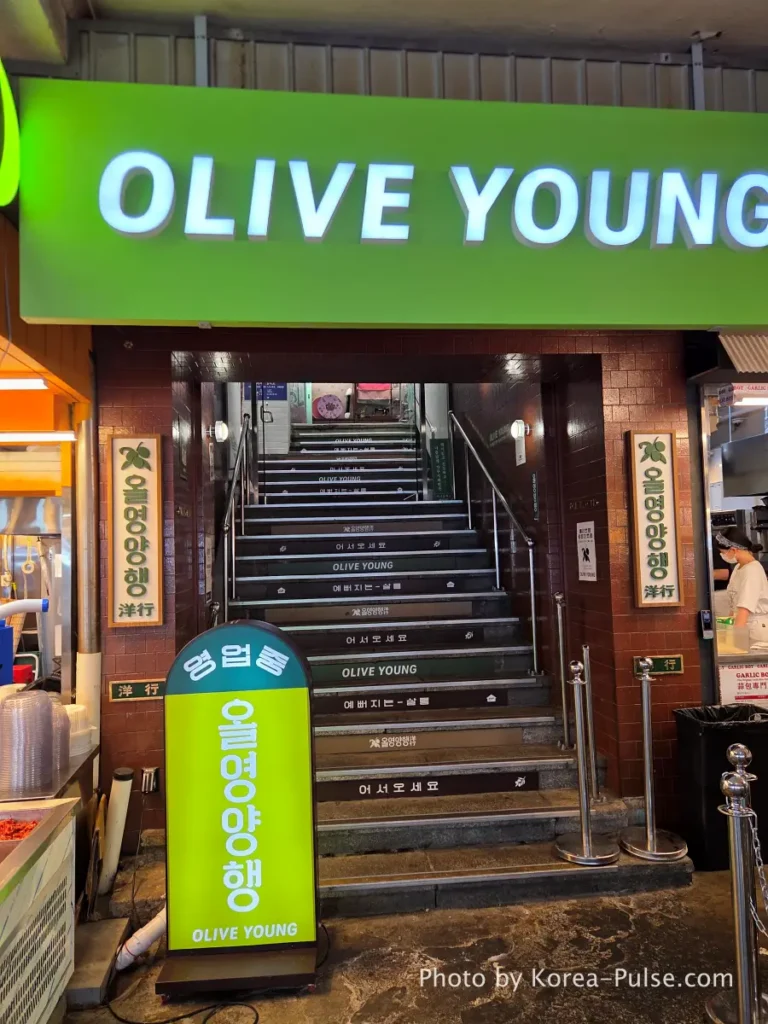
Welcome to Olive Young Gwangjang Market
One thing up front: Olive Young Gwangjang Market sells the exact same products as any other branch. What’s different here is the packaging of the space itself — a full retro theme built around a name most young Koreans, including my own daughter, have never heard: Ol-Yeong Yanghaeng.
What Is Ol-Yeong Yanghaeng?
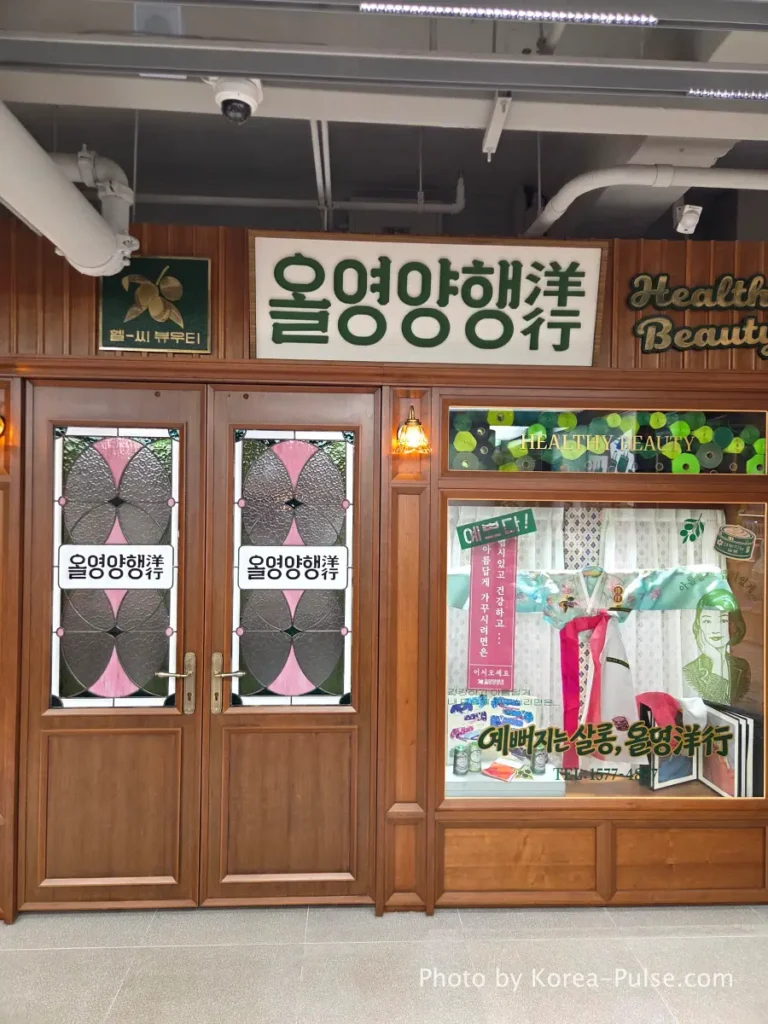
“Yanghaeng” isn’t a word many young Koreans use anymore. Historically, it roughly referred to a trading company that imported and sold Western goods — cosmetics, clothes, appliances — to local customers. It’s an old-fashioned, slightly clunky word, which is exactly why Olive Young chose it for a branch built entirely around Gwangjang Market’s history. Someone clearly spent real time thinking about how a modern K-beauty chain should sit inside a market that’s been trading since the early 1900s, and hanging a retro sign over the entrance was their answer.
There’s a neat twist buried in that word choice, too. A traditional yanghaeng was where Koreans went to buy imported foreign goods. Flip that around today, and it’s largely foreign visitors making the trip to Ol-Yeong Yanghaeng to buy Korean beauty products — the original transaction, reversed. Whether Olive Young planned that irony or stumbled into it, it’s a smart bit of naming for a K-beauty chain setting up shop inside a 120-year-old market.
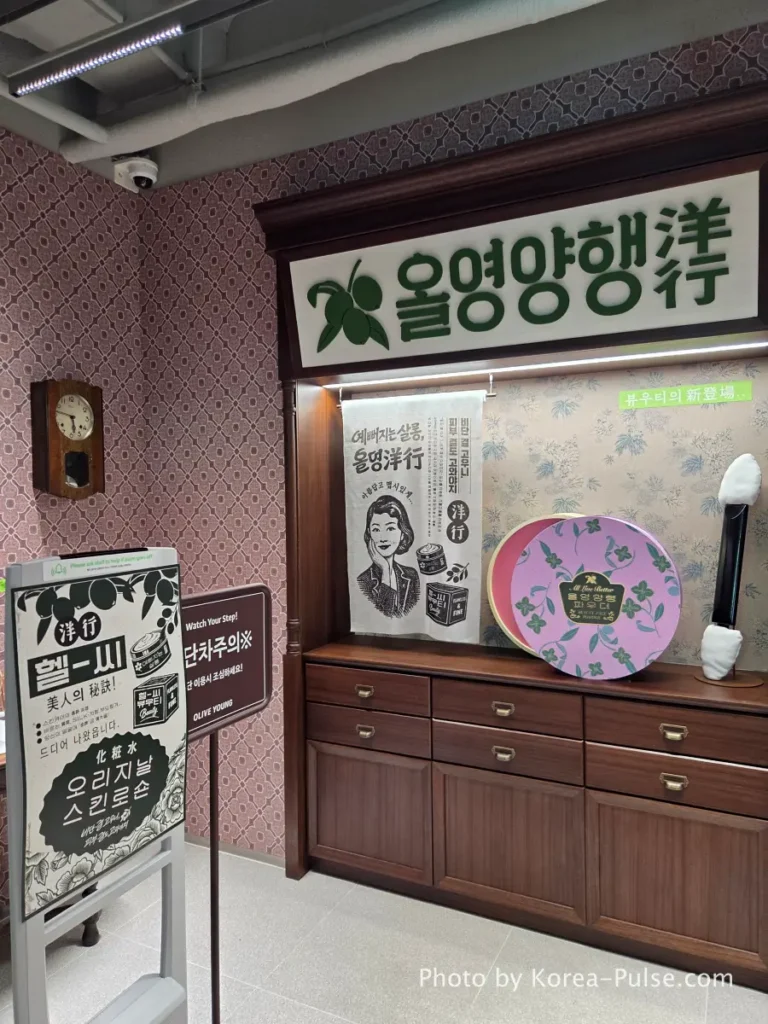
Even the stairwell leading up sets the tone, with playful little signs reading “Getting Prettier Salon, Ol-Yeong Yanghaeng, Welcome, Olive Young” scattered along the walls next to equally old-fashioned neighboring shop signs. It’s a small detail, but it tells you exactly what kind of store you’re about to walk into.
A 1960s Korean Retro Beauty Set
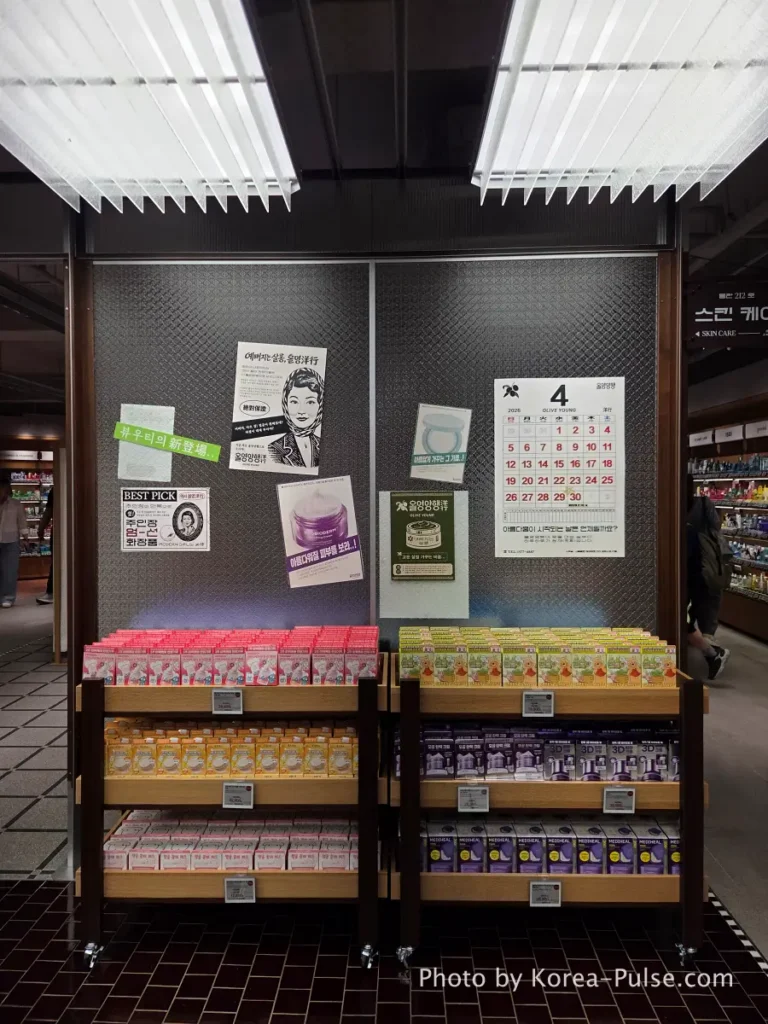
Step through the doors and it genuinely feels like walking onto a film set. Posters throughout the store lean on typography straight out of Korea’s 1960s, back when Korean spelling itself looked different. “Lotion” is written as the archaic 로숀 (roshon) instead of today’s 로션, and “beauty” becomes 뷰우티 (byu-uti) instead of 뷰티. It’s a tiny detail, but it made me laugh out loud in the aisle.
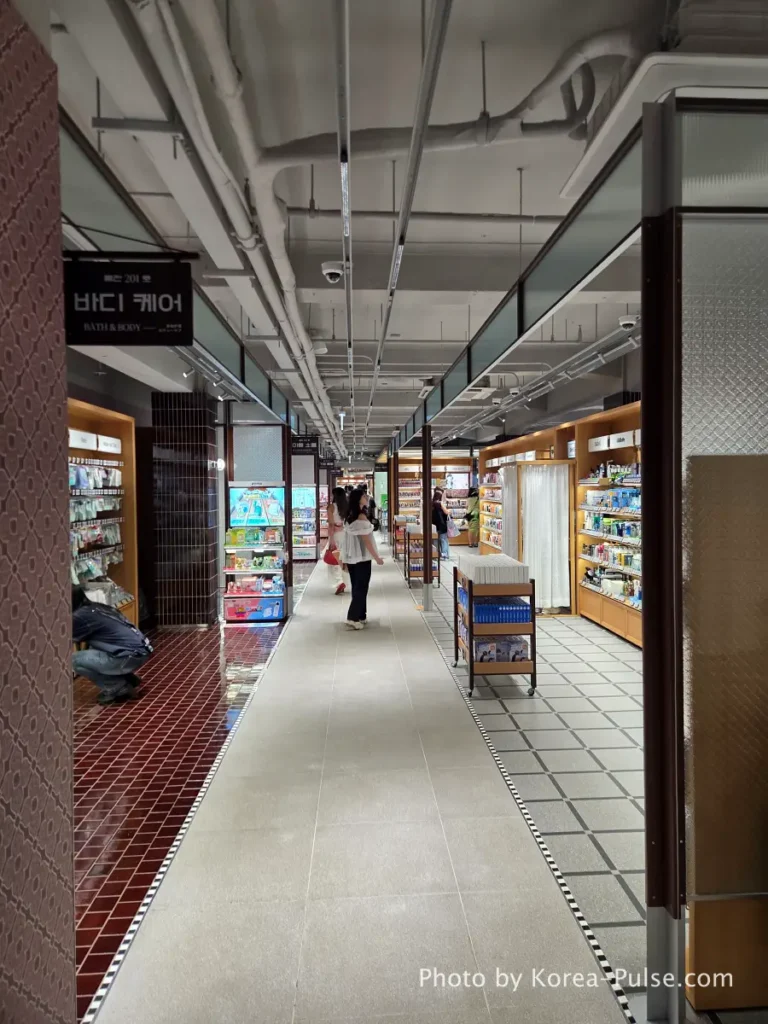
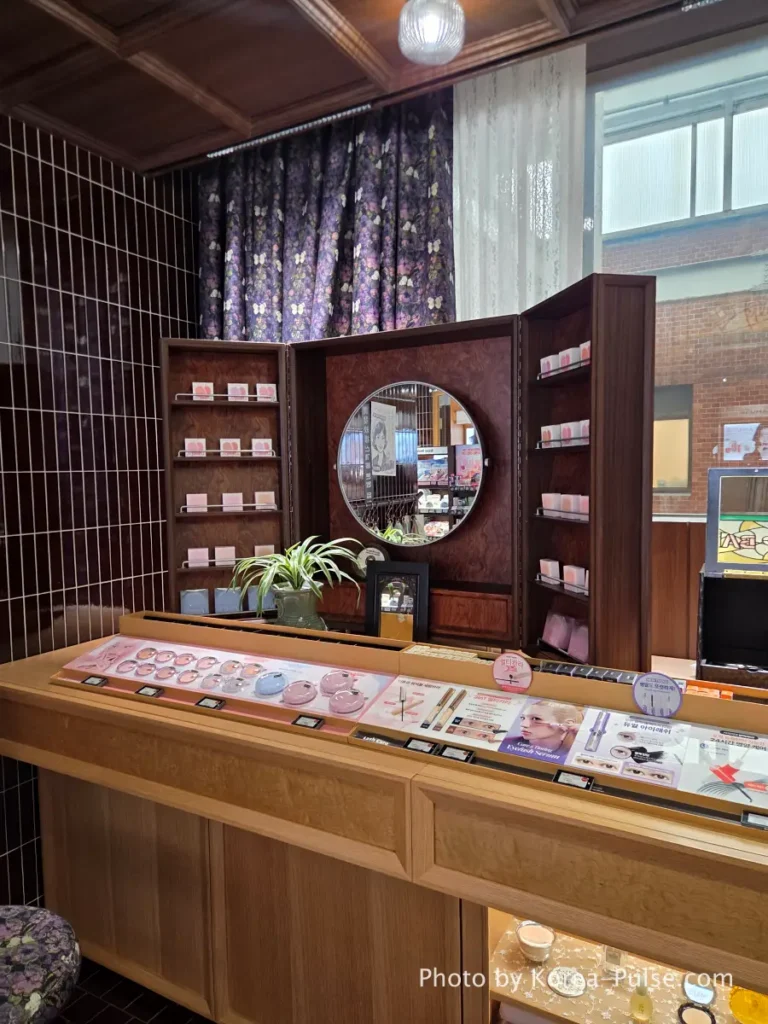
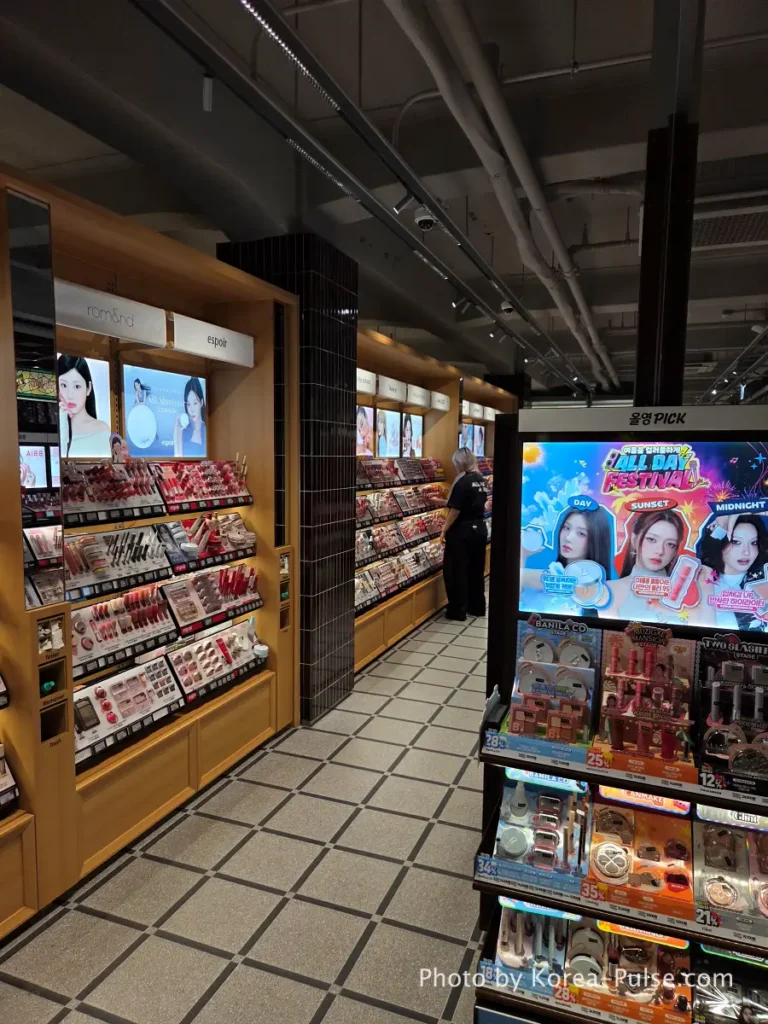
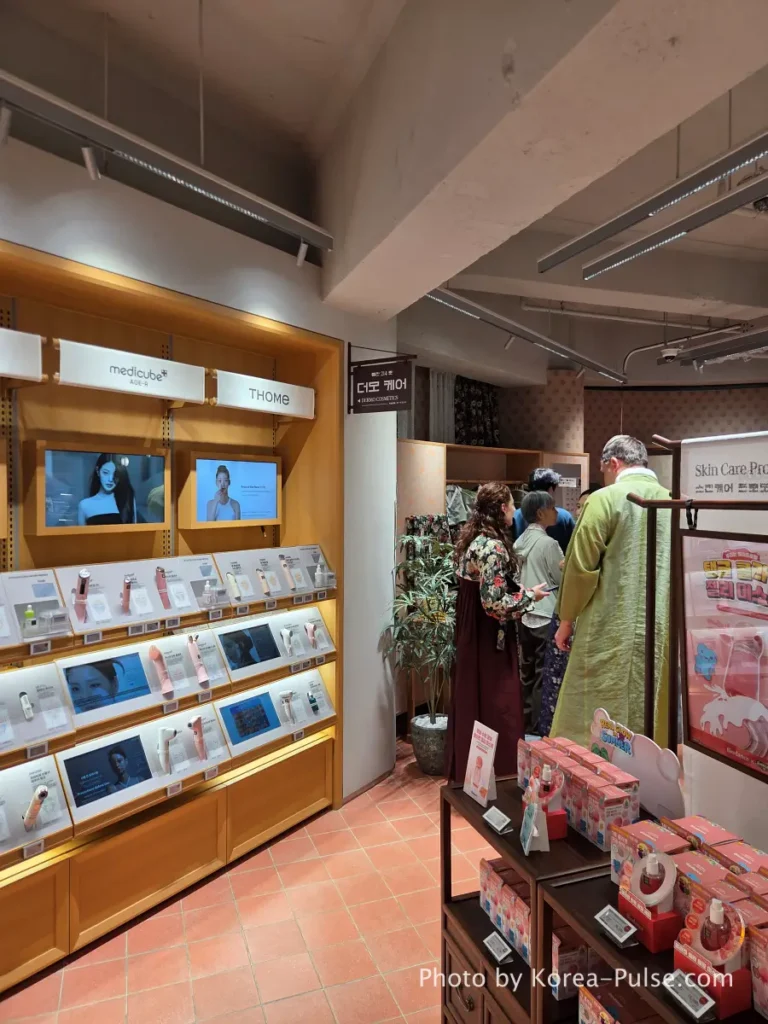
Olive Young Gwangjang Market is also far bigger than I expected, and busier than I’d guessed for a weekday morning. Despite the aesthetic, the shelves themselves stock the exact same lineup you’d find at any other branch — the same lineup covered in our full Olive Young shopping guide, including the massive Myeongdong Town flagship. The 1960s aesthetic is strictly in the decor, not the products.
Finding Your Hanbok Personal Color
The most Gwangjang Market-specific corner of the whole store is tucked along one wall: a hanbok color-matching station. A sign above it announces, a little dramatically, that they’ll pick your hanbok color for you. In practice it’s simpler and more fun: 12 different shades of traditional silk fabric hang below the sign, and you hold each one up to a mirror yourself.
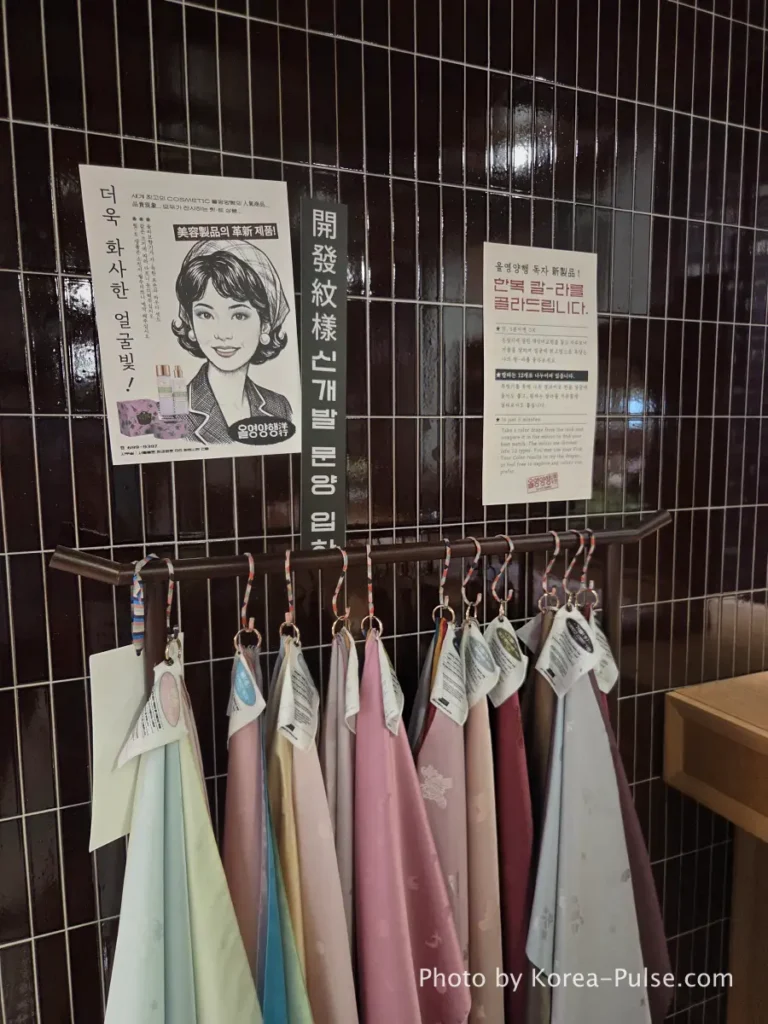
Comparing the shades against your own skin tone in the mirror is essentially a personal color test dressed up in hanbok fabric instead of makeup swatches. It’s a clever way to tie a beauty chain back to the textile merchants working one floor below, and it’s the one thing here you genuinely can’t do at a regular Olive Young.
The Checkout Counter and a Free Bojagi
The checkout counter, tucked toward the back, is the one corner of the store that looks thoroughly modern — green tile, clean lines, no retro spelling in sight. Right next to it is a small stack of traditional wrapping cloths.
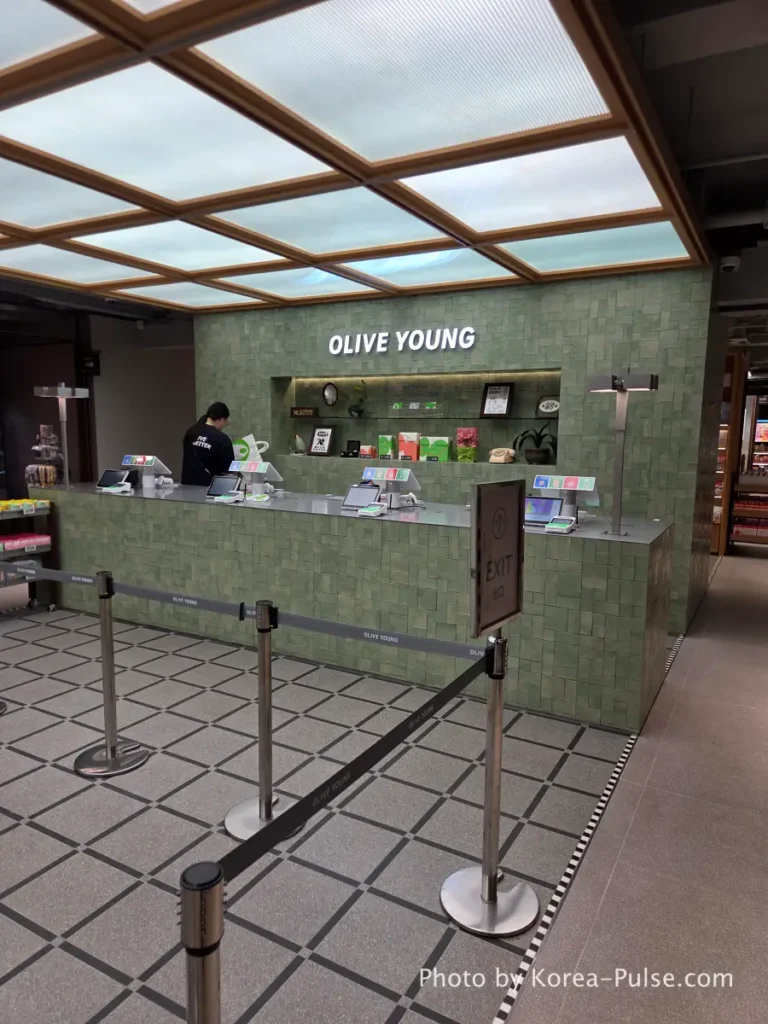
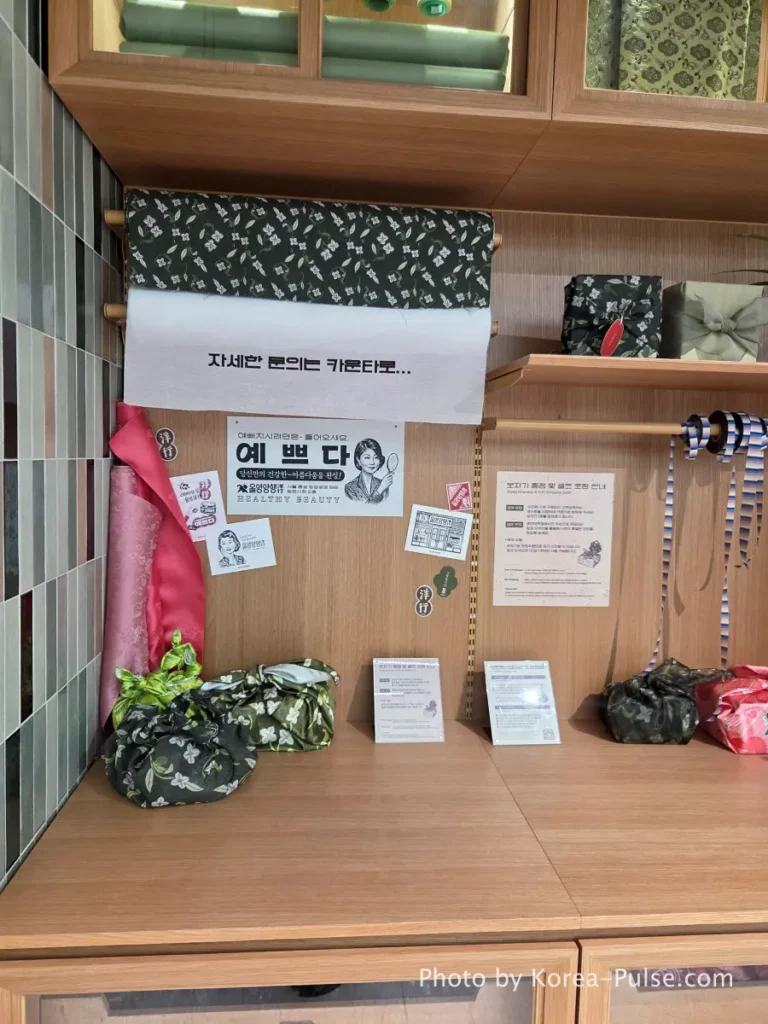
At the time of my visit, spending 100,000 KRW or more at this branch got you a free bojagi — a traditional Korean cloth once used for wrapping and carrying everyday items. It’s a genuinely useful, good-looking souvenir and worth asking about at checkout, since in-store promotions can change.
“Getting Prettier Salon”: Ol-Yeong Yanghaeng’s Identity Corner
Near both the entrance and the far wall, the same phrase keeps popping up: 건강하게 이뻐지세요, roughly “get beautiful the healthy way.” It’s printed on wooden panels, hanging signs, even the in-store map, which lays out the whole floor from the entrance all the way to the gift counter — a small but consistent reminder that this whole branch, Ol-Yeong Yanghaeng included, is one continuous piece of set design.
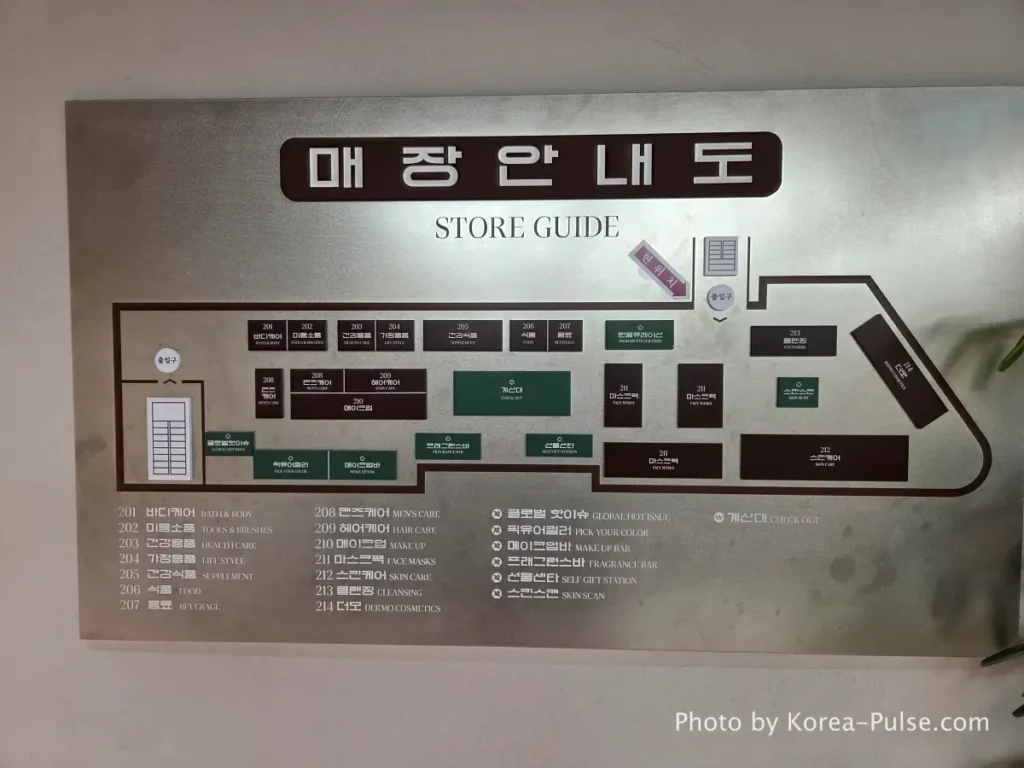
According to the map, I was already two-thirds of the way through the store at this point, which tells you how deep this branch really runs for a single floor above a traditional market.
A Hanbok Photo Point You Didn’t Expect
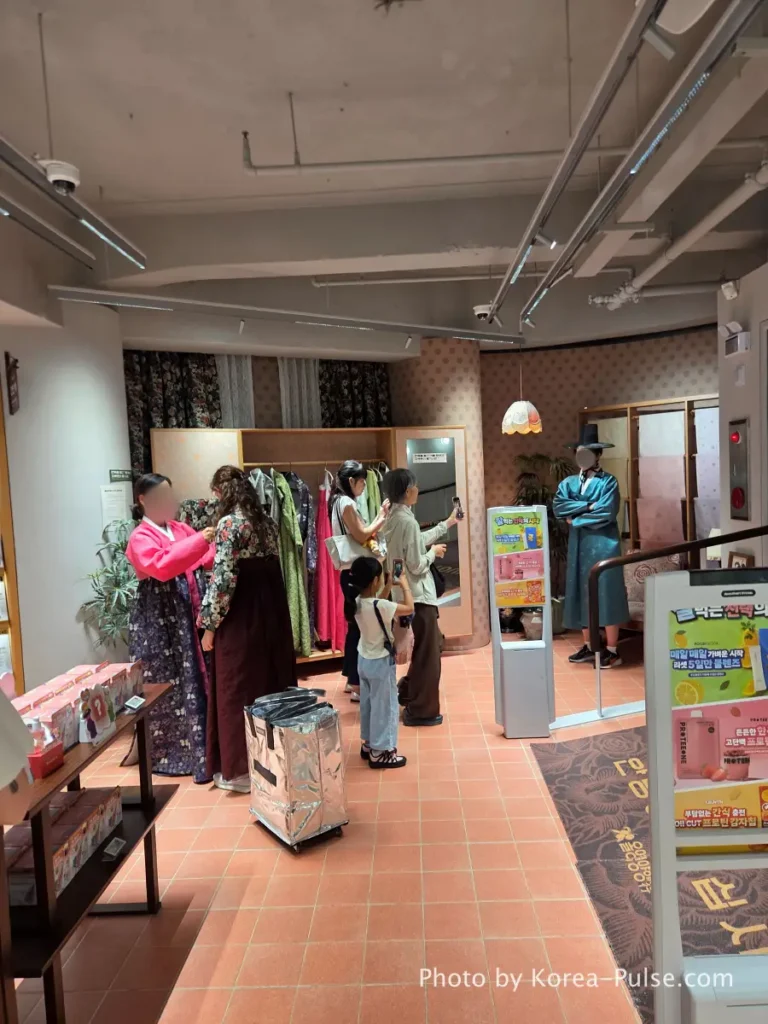
At the very end of the store, past the checkout and just beside the demo-care shelves, there’s a small photo corner with hanbok that appeared to be available for anyone who wanted to try one on when I visited — I watched a staff member helping a tourist into one, while another visitor posed in a gat (a traditional horsehair hat). It’s an unexpected, genuinely fun stop for a cosmetics store.
One More Look Before Heading Back Down
A few more retro touches caught my eye on the way out. The shelf displays throughout the store use old promotional-style graphics instead of standard Olive Young signage, and one pillar near the center is wrapped entirely in the shop’s signature “getting prettier” phrase.
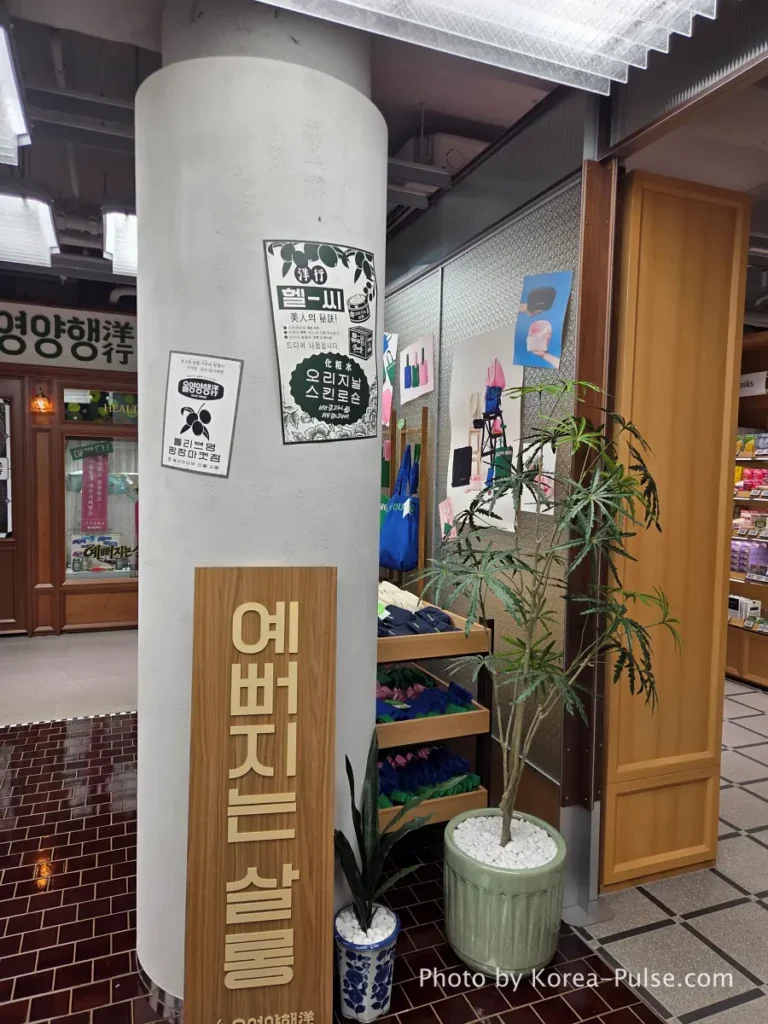
Even the calendar hanging near the register skipped the modern grid look for something that belonged in a different decade, red dates and all, with a small caption underneath playing on the idea that every day since the store opened has been a good one. Cheesy, sure — but it fits the shop’s whole bit.
A Window Over Gwangjang Market’s Food Alley
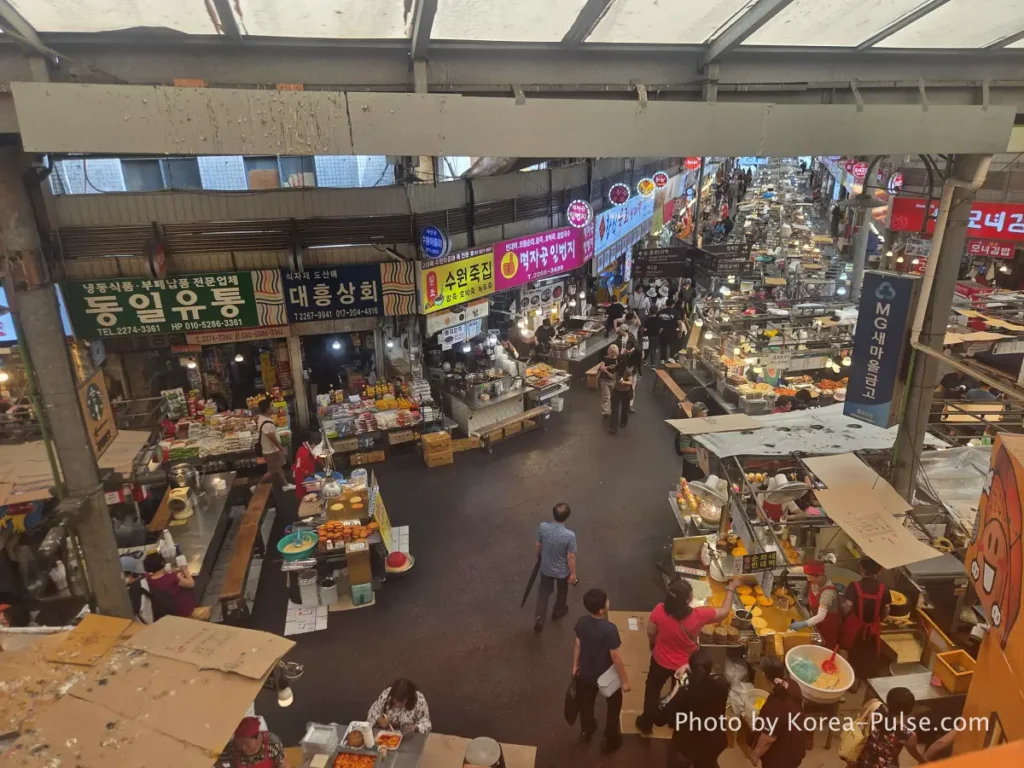
Before heading back downstairs, I looked out through the second-floor windows and got a view I hadn’t expected: Gwangjang Market’s food alley, spread out below — rows of food stalls, steam rising, and tourists moving through it. If you want to check out more of the surrounding food scene after shopping, I’ve also covered the nearby Euljiro outdoor dining strip, just a short walk from here.
FAQ: Olive Young Gwangjang Market
It’s on the second floor of Gwangjang Market in Jongno-gu, Seoul. The easiest landmark is the staircase right next to the Garlic Boy bakery stall.
At the time of my visit, spending 100,000 KRW or more in a single visit got you one traditional wrapping cloth (bojagi) at checkout. Worth confirming at the counter, since in-store promotions can change.
The products are identical to any other Olive Young store. What’s different is the 1960s retro theme, the hanbok color-matching corner, and the free bojagi gift running at this specific branch.
No — it’s near the back of the store by the checkout, and it appeared to be open for anyone to stop by and take photos when I visited.
Olive Young Gwangjang Market shows a modern beauty chain can move into a century-old market without steamrolling it — mostly.
Between the 1960s signage, the hanbok color matching, and a free bojagi thrown in for good measure, Olive Young Gwangjang Market is worth the detour even if you weren’t planning to buy sunscreen. Just don’t let Garlic Boy distract you on the way in.