K-TRAVEL · July 2026
Inside Seoul Rush Hour
Why Korea’s Subway System Feels Different
300 commuters clear a platform in under two minutes. No shouting. No shoving. Just Tuesday.
This is Part 2 of our K-Travel series. If you missed Part 1 — Riding the KTX: Korea’s Bullet Train Experience, that’s a good place to start. But if you’re already navigating Seoul itself, you’re in exactly the right place.
This Seoul Subway Guide starts on a rush-hour platform at Euljiro 3(sam)-ga, where around 300 commuters clear out in under two minutes flat — no shouting, no shoving, just Korea’s subway system doing exactly what it promises, every single time. Here’s how it actually works, and how to use it with confidence.
across Seoul
in the network
give or take
I know this platform well. It’s my Tuesday. My Wednesday. My entire weekday existence, laptop bag cutting into one shoulder, yesterday’s optimism about leaving early thoroughly defeated. But here’s the thing about commuting in Seoul: the system is so well-engineered that even at its most crowded, it never feels chaotic. Just dense. Efficiently, almost philosophically dense.
If you read our KTX post and wondered how to get around once you’re inside Seoul, you’ve come to the right place. This is a real-world look at navigating the Seoul Metropolitan Subway, which is, by most measures, the world’s most efficient metro system.
Why Seoul’s Subway Feels Different
Koreans have a word, Hell Joseon (헬조선) — a sardonic term for the relentless pressure and competitiveness of Korean society. Rush hour on Line 3 is, by most objective measures, a front-row seat to that pressure. And yet, to a visitor’s eye, this particular “hell” runs with a precision that feels closer to a utopian sci-fi film than a dystopian one.
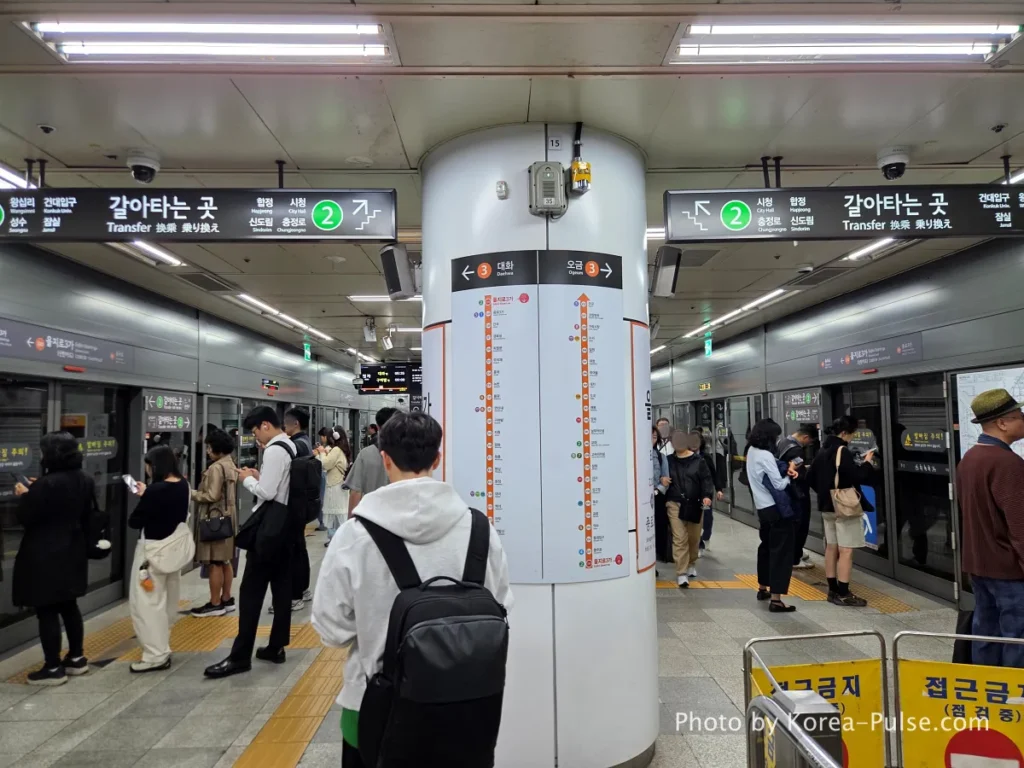
Platform screen doors sit at every station. Real-time arrival displays are actually accurate. Transfer corridors are designed to minimize walking distance between lines — something London’s Tube designers apparently never considered when they put the Jubilee and Northern lines at Bank/London Bridge.
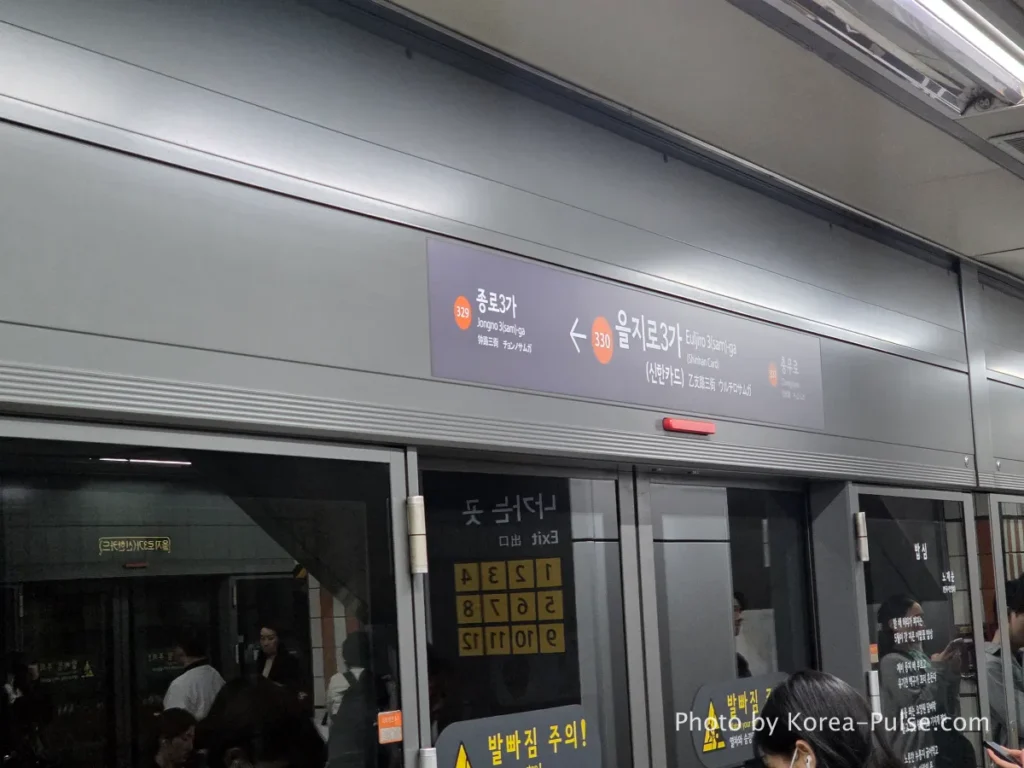
Tokyo’s subway is famously excellent, but it’s still primarily designed for people who read Japanese. Seoul layers Korean, English, Japanese, and Chinese across nearly every touchpoint — overhead signs, platform panels, in-car announcements, screen door displays. This multilingual coverage is a core reason this system ranks as one of the world’s more tourist-friendly ones.
The stations are air-conditioned. The trains are air-conditioned to a temperature suggesting the operator believes passengers are premium-grade tuna that need refrigerating — bring a light layer in summer. And Naver Map or Kakao Map give you real-time transit routing that updates around disruptions and transfer options, in English, with walking directions included. New York’s MTA app, by comparison, will show you a train that stopped running in 2019.
Decoding the Platform: Left or Right?
Here’s where most first-timers freeze. You’ve come down the escalator and you’re staring at two platforms, one on each side. Which way?
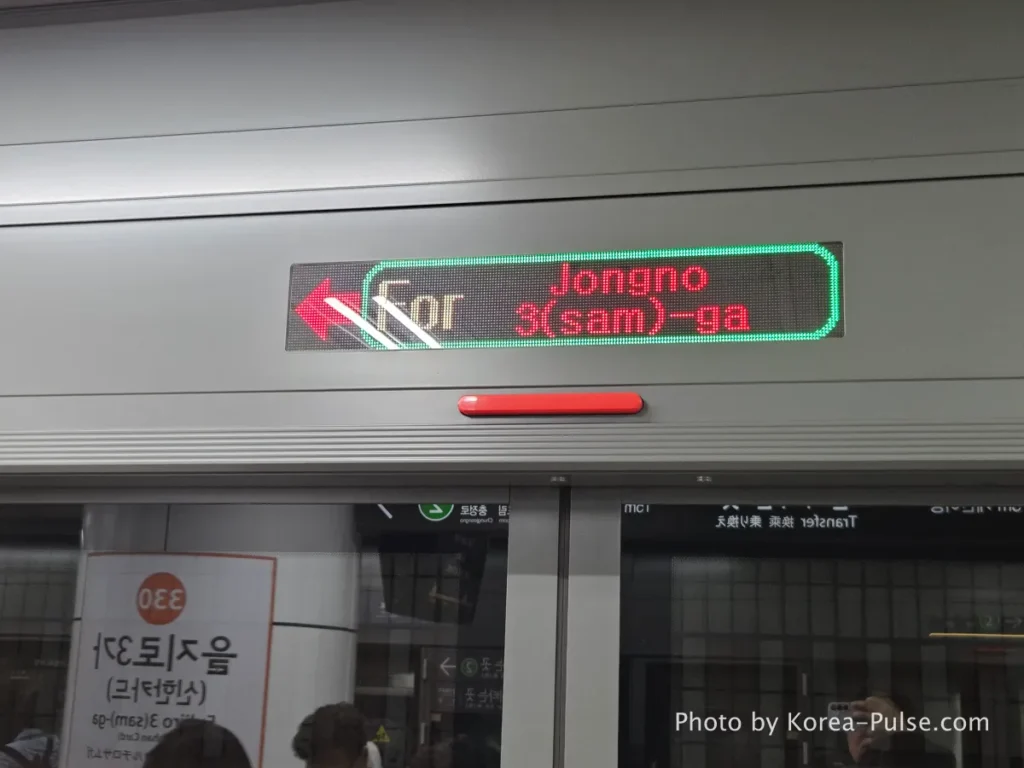
Deep breath. Look up. The overhead signage tells you everything: which direction each platform serves (for example, “For Gupabal” versus “For Suseo”), the next several stations on each side, and which exits connect to which neighborhoods. It’s the kind of information hierarchy that took years of watching confused tourists to design, and it shows.
The platform panels on the screen doors rotate through Korean, English, Japanese, and Chinese, showing the previous station, current station, and next station. Blink and miss the English? Wait five seconds. It comes back around. Other panels lay out the full route, with transfer points highlighted in their line colors — essentially a map that walked over to you.
The Queue: Seoul’s Unspoken Social Contract
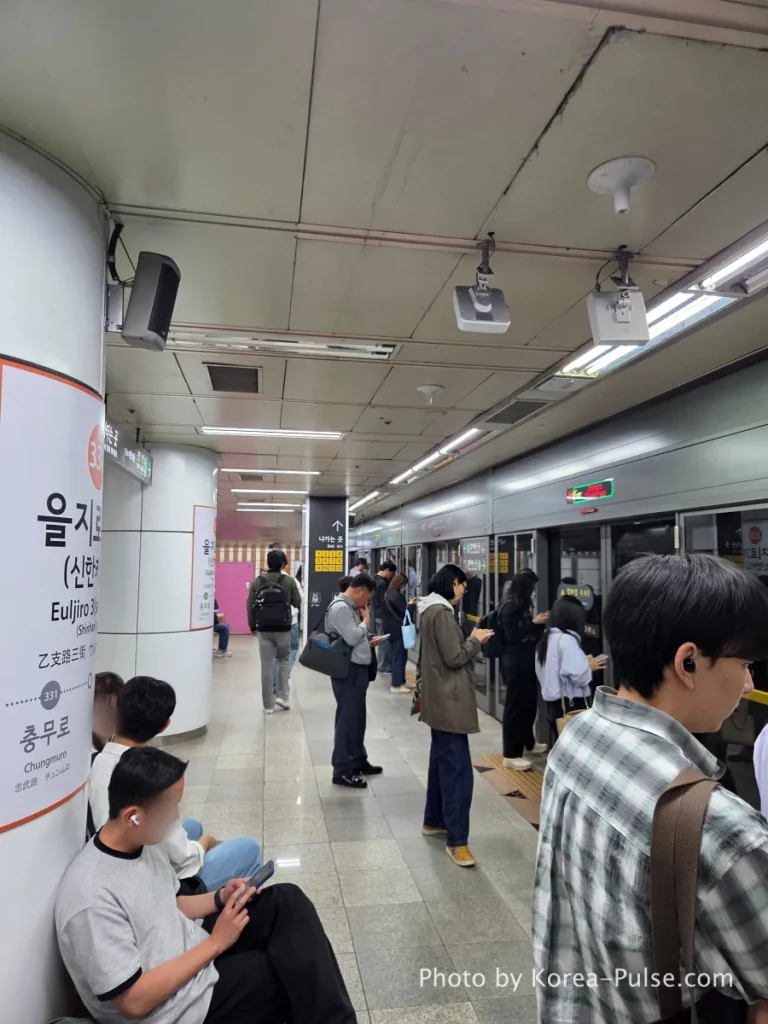
Koreans queue for the subway with a quiet discipline that’s genuinely striking to watch. Yellow floor markings show exactly where to stand, two parallel lines flanking each door, center clear for exiting passengers. People follow them without anyone telling them to. Every single time.
The answer to how Koreans always know exactly where to stand is: floor markings, habit, and a social contract that’s deeply real. You don’t push, you don’t wedge, you wait for the exiting crowd to clear, then you board — and somehow, through mechanisms that continue to defy my understanding of spatial physics, more people fit onto that train than should be possible. Compared to the shoving of the London Tube or the diagonal-entry techniques of the New York City subway, Seoul’s platform culture is its own world.
The Ceiling Display: Your Countdown
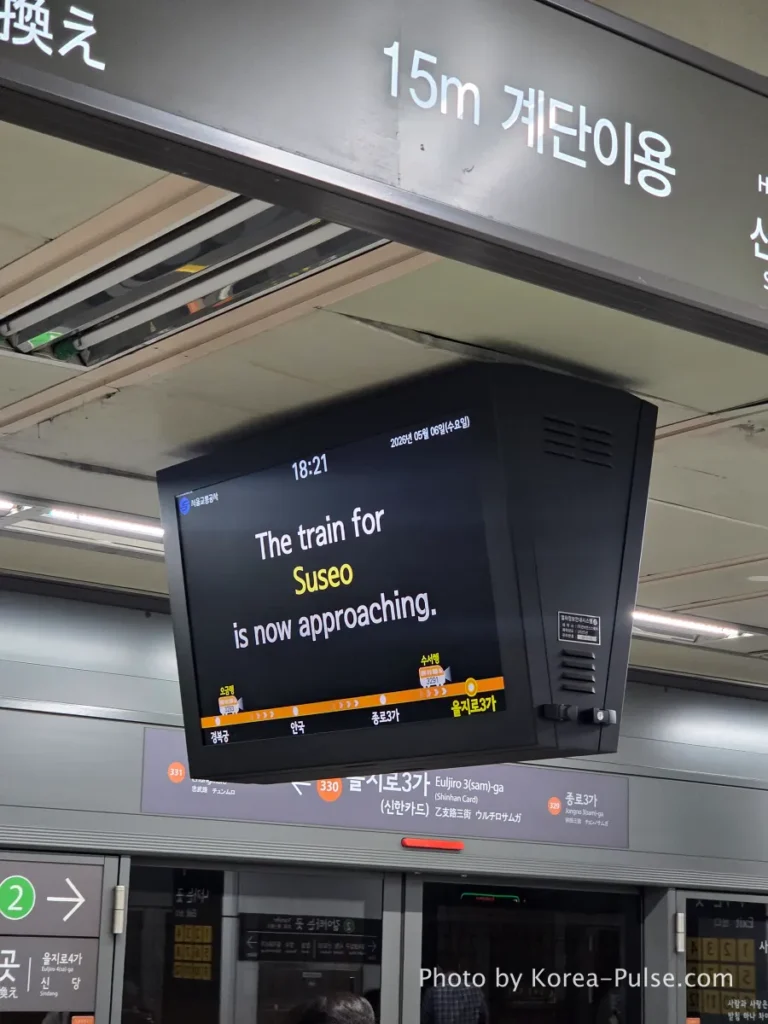
Look up while you wait. Ceiling-mounted displays run a live countdown to the next train, with destination, line number, and minutes remaining, in English. When it switches to “The train for [destination] is now approaching” and the animated train icon starts moving, that’s your cue. The train arrives when it says it will. This is not a drill.
The Plot Twist: Not Every Train Goes the Distance
Here’s the one thing that consistently trips people up on Line 3, and I learned it the hard way, early in my Seoul life. Line 3 runs from Daehwa in the northwest all the way down to Suseo in the southeast. But not every train covers the full length — some terminate at Gupabal, a few stops short of Daehwa. Same line, same platform, different destination, and it’s easy to miss.
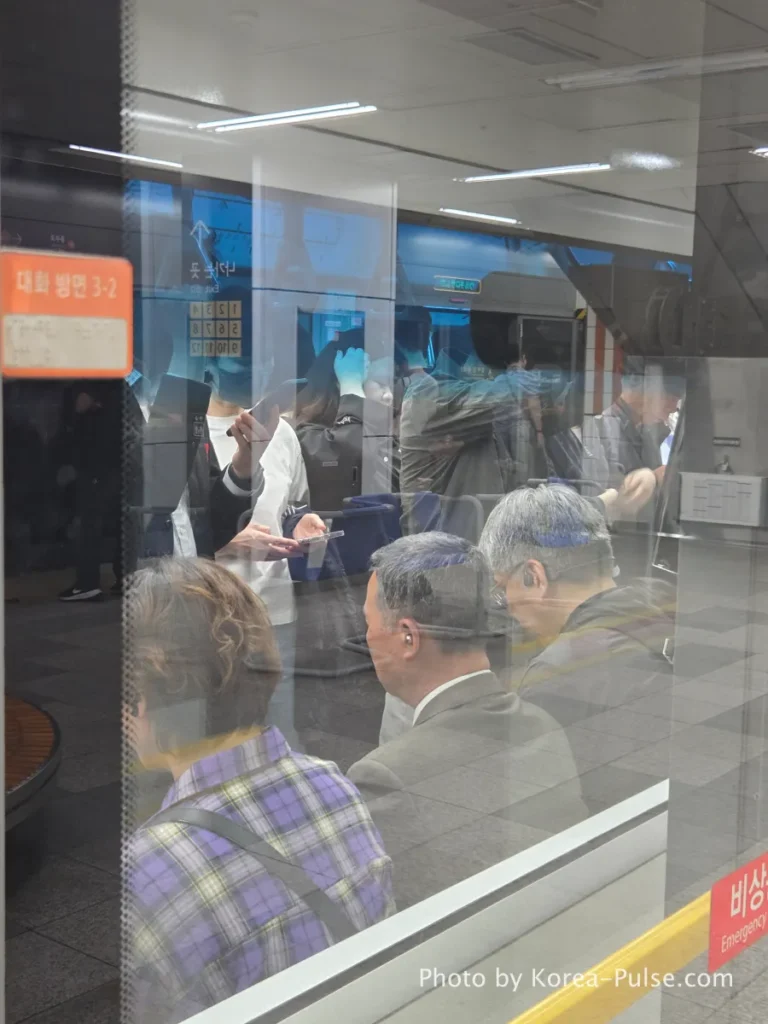
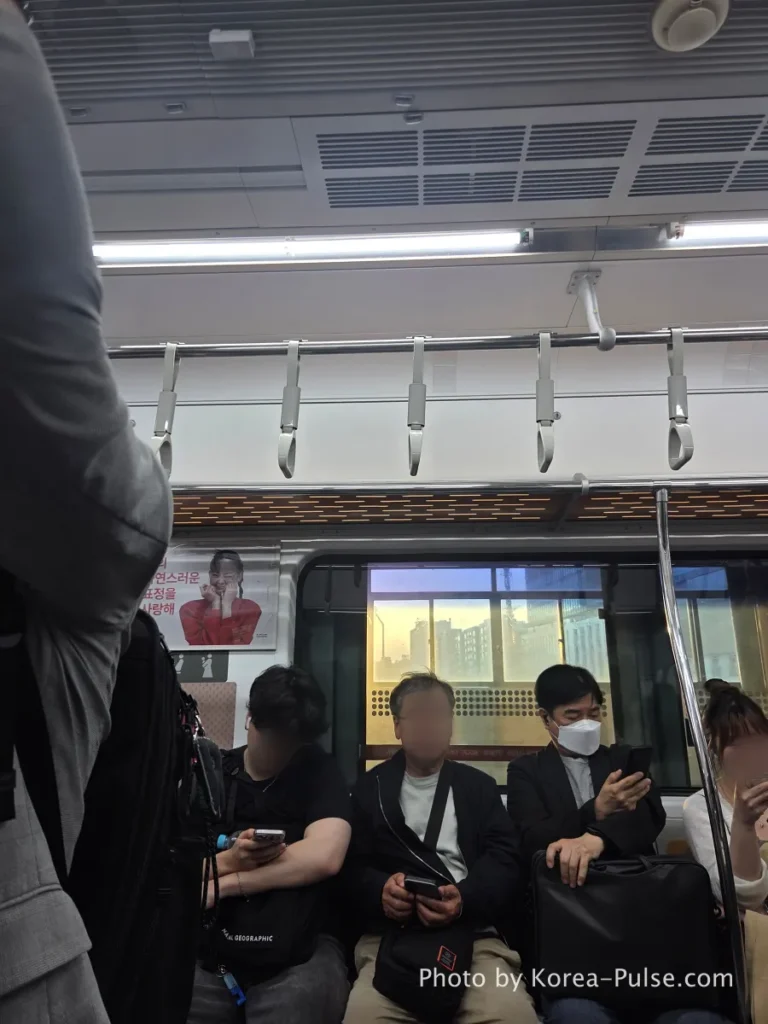
So when the Gupabal train pulled in, filled up, and left, I stayed on the platform. My destination is Daehwa, the terminus, and I’ve made peace with the math. The silver lining: watching a packed Seoul subway car is its own small anthropological study. Earphones, universal. Phones, a rough 60/40 split between social media and mobile games. One office worker, head tilted back, somewhere between rest and deep sleep. An older woman with three grocery bags balanced with improbable expertise. Students gaming in silence, instinctively shifting sideways at every transfer corridor without looking up. One person reading an actual physical book. There’s always exactly one.
Rush Hour, Full Expression
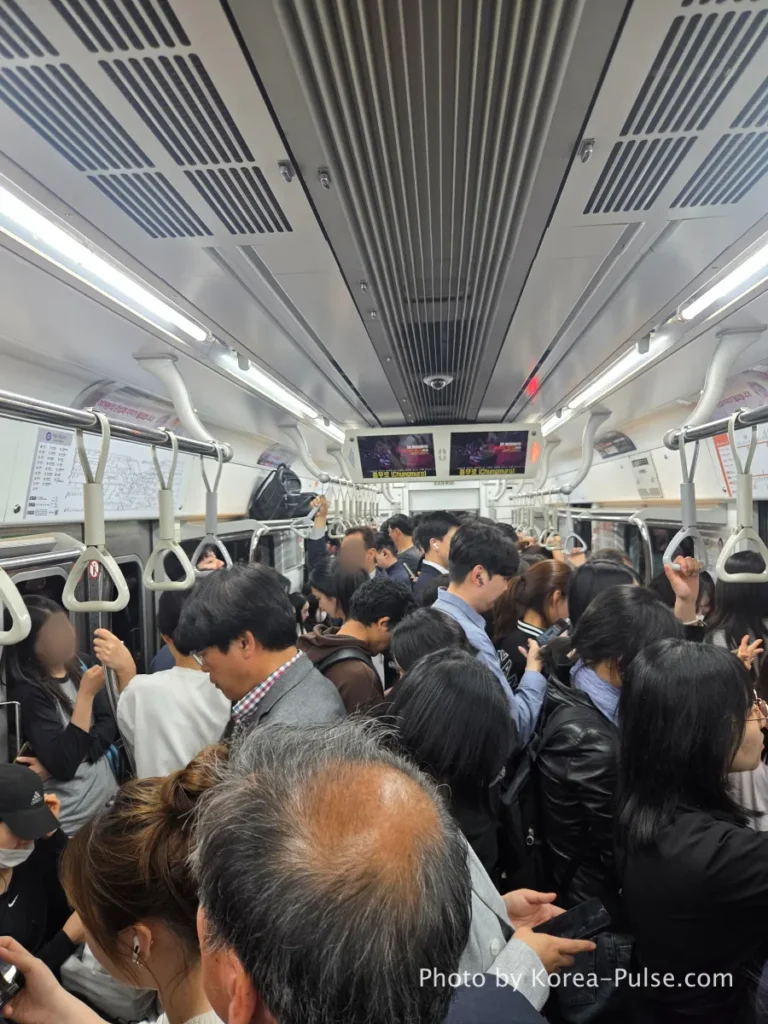
This is rush hour at full expression. Bodies arranged with polite precision, bags pulled forward, nobody elbowing. The train is full in a way that would unsettle you in any other city, and yet it moves, on time, with four-language announcements at every stop and air conditioning set somewhere between comfortable and meat locker.
Koreans call this Hell Joseon. Visitors call it impressive. Both are correct.
Paying For It: Tickets and Fares in 2026
T-money card is the baseline — buy one at any convenience store, then load credit at the machine or counter. The T-money system also covers buses and even some taxis, which makes it worth having even for a short trip.
Korea Pass (K-Pass), launched in 2024, is a transit card with a government-backed rebate: ride 15 or more times a month and get 20–53% of fares refunded. Registration needs a Korean phone number, so it suits long-term visitors more than a one-week trip.
The Climate Card (기후동행카드) is Seoul’s unlimited transit pass, now sold in 1, 2, 3, 5, and 7-day visitor versions covering subway, bus, and even Hangang River ferries. If you’re sightseeing heavily for several days, the math works strongly in your favor. Single-journey tickets work fine for one ride but get tedious across a full day of transfers.
🔗 External: Seoul Metro official site | T-money card info (English) | Climate Card visitor pass info
Apps worth downloading before you arrive: Naver Map or Kakao Map for real-time routing with English support and platform-level accuracy, and the Seoul Metro app for line maps and live arrival times.
Is It Complicated for Foreigners? Genuinely, No
The Seoul subway looks intimidating — 23 lines, millions of daily riders, signs in Hangul. But the English signage coverage is thorough, the color-coding is logical, the apps are excellent, and the directional information at platform level outperforms many systems built for native speakers.
The hardest part isn’t navigating it. The hardest part is deciding which stop to get off at, because there’s something worth exploring at nearly every single one of them. Start with Line 2, the green loop line that circles central Seoul and hits nearly every major neighborhood a first-timer wants to reach. Get comfortable with the rhythm, then add transfers. Then one day you’ll be speed-walking through Euljiro 4-ga at 6:14 PM, knowing exactly which car to board, which door to queue at, and which train you can afford to let go.
FAQ: Seoul Subway Guide
Q. Is the Seoul subway safe to use at night?
Yes. Seoul’s subway is widely considered one of the safest metro systems in the world, with CCTV, platform screen doors, and a strong late-evening ridership that keeps stations from ever feeling empty. Last trains generally run until around midnight to 1 AM, depending on the line.
Q. Do I need cash to ride the Seoul subway?
No. A T-money card, bought and topped up at any convenience store, covers subway and bus fares without needing cash at the gate. Major international credit cards also work at newer turnstiles, though T-money remains faster and slightly cheaper per ride.
Q. What happens if I board a train that terminates early, like at Gupabal instead of Daehwa?
You simply get off at the terminus and wait for the next train, which usually arrives within a couple of minutes. Check the overhead destination display before boarding to avoid the extra wait in the first place.
Q. Is the Climate Card worth it for a short trip?
Only if you’re sightseeing heavily across multiple days — the unlimited visitor passes start around ₩15,000 for 24 hours, which pays off with roughly five or more rides a day. For a lighter itinerary, a T-money card with pay-as-you-go fares is usually cheaper.
Every lunchtime, I walk from Euljiro 4-ga through the underground arcade to City Hall station — one of Seoul’s small daily pleasures, and the stretch where I see the most visitors stuck in front of a ticket machine. That’s exactly what the next post covers: How to Buy a Seoul Subway Ticket, Step by Step.
Twenty-three lines, seven million daily riders, and it still runs like it’s the only train in the world.
The Seoul subway looks intimidating on a map and runs like clockwork in person. Learn to read the platform signs, respect the queue, and check whether your train goes the full distance — the rest takes care of itself.