
K-TRAVEL · PILLAR GUIDE · 2026
Korea Transit Guide
The Complete Airport-to-Anywhere Playbook
From baggage claim to bullet train — every guide on this blog about getting around Korea, mapped into one continuous trip.
Every Korea Transit Guide on this blog was written in isolation — a bus here, a train there, a lucky discovery at Seoul Station. Put them in order, though, and they tell one continuous story: how a traveler can land at Incheon Airport with too much luggage and zero Korean, and be eating fried chicken at a station four hundred kilometres away before the day is over. This is that story, mapped end to end.
the fastest leg of the trip
by KTX
woven into this one trip
Touchdown: Incheon Airport
Every trip into Korea starts the same way — immigration, baggage claim, and the slightly disorienting moment of standing in an enormous airport trying to decide what happens next. The good news: Incheon consistently ranks among the most efficient airports on earth, and most of the friction points have a documented workaround on this blog.
If you qualify for expedited entry, the Smartpass lane can turn a 30-minute immigration queue into something closer to a formality. I documented exactly who’s eligible, where the lane actually is, and what happens when it fails in Incheon Airport Smartpass: Skip the Line & Hit the Lounge Fast. For everyone else, the full step-by-step from plane door to arrivals hall — customs, signage, what to expect at each checkpoint — is laid out in Incheon Airport Arrival Guide: Plane to Bus in Under an Hour. Start there. Everything after it gets easier.
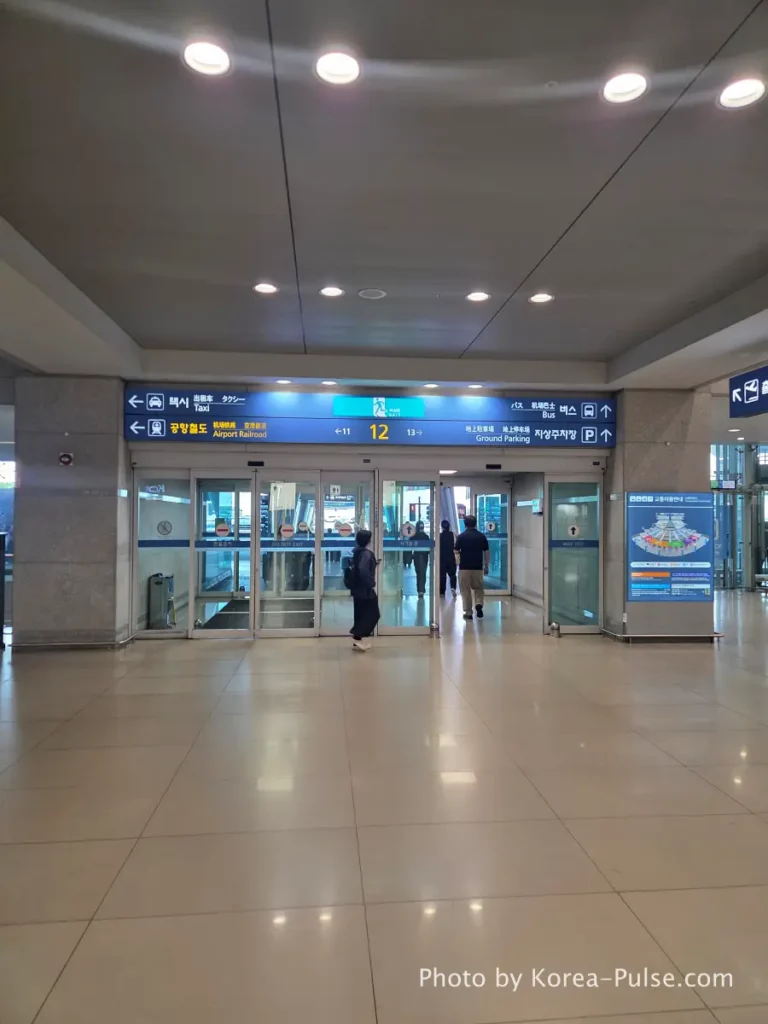
The Last Mile: Getting Into the City
From the airport, the standard menu is AREX express rail, a fleet of long-distance buses, or a taxi if you’re feeling generous with your won. I’ve personally tested the bus route from Ilsan in Airport Bus 3300: Ilsan to Incheon Airport, and the on-board experience turned out to be a story of its own — I clocked a borderline absurd 828 Mbps on the bus’s free Wi-Fi, documented in full in This Shouldn’t Be Possible: 828 Mbps of Free Wi-Fi on a Korean Public Bus. Whatever route you choose, you will probably have better internet on the bus than you do at home.
Bus numbers, gate assignments, and schedules at Incheon shift periodically — always double-check signage on the day rather than relying on a fixed gate number from any blog, including this one.
Seoul Station: The Nerve Center
However you arrive, almost every thread of this Korea Transit Guide eventually runs through Seoul Station — and it earns that reputation. AREX, the metro grid, and KTX service to the entire country all converge under one roof, alongside enough food options to make you forget you’re in a transit hub at all.
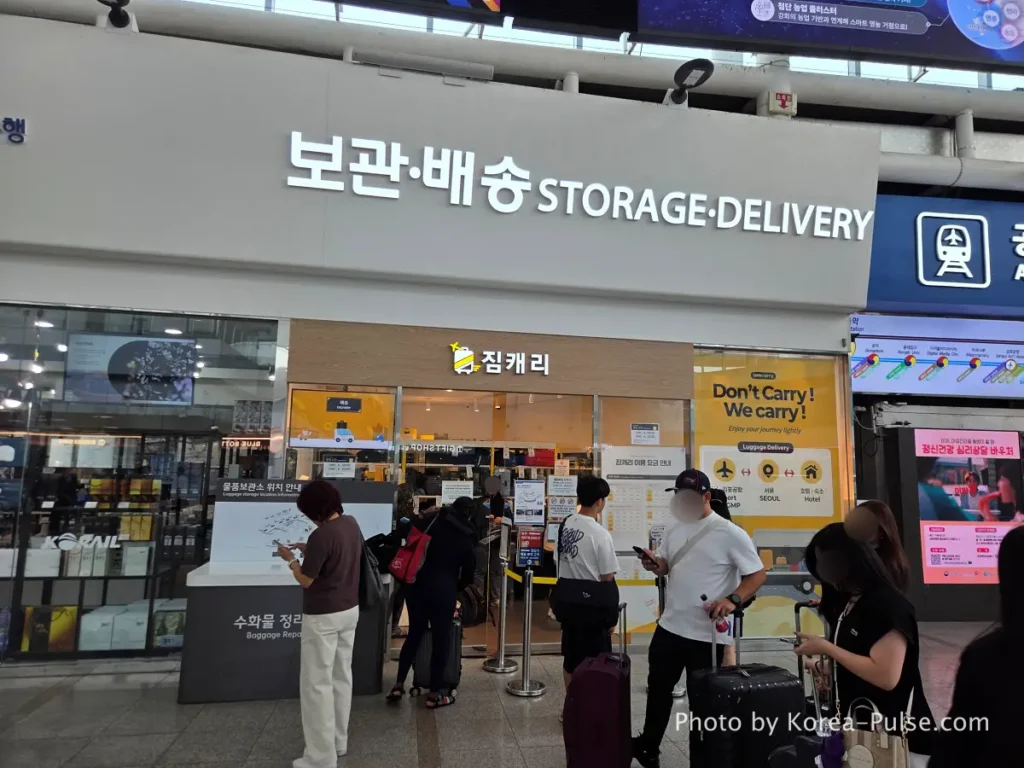
If you’re arriving with bags you don’t want to drag around the city, Seoul Station runs two excellent storage and delivery services. T-luggage operates from the B1 subway concourse — officially backed by Seoul Metro, typically from around ₩3,000 per bag (may vary). Zimcarry, on the KTX floor above, handles delivery to Incheon, Gimpo, hotels, and other KTX cities, starting around ₩5,000 depending on bag size (may vary).
The first time I handed my bags over to Zimcarry and walked out of Seoul Station with empty hands, I genuinely didn’t know what to do with myself — it felt like a cheat code. The full comparison, hours, and which service actually suits your itinerary is in Seoul Station Luggage Storage: T-luggage vs. Zimcarry.
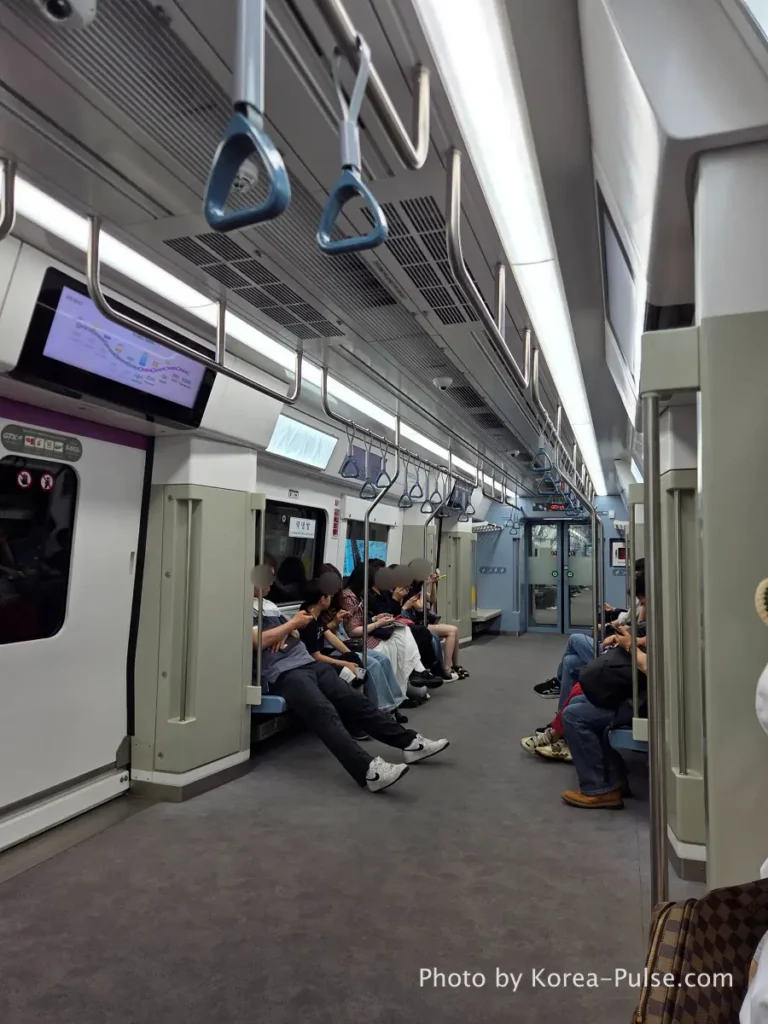
Once your hands are free, the subway is genuinely the easiest way to move around the city. I’ve covered exactly how to buy a ticket — including the deposit-refund T-money trick most first-timers miss — in How to Buy a Seoul Subway Ticket: Step-by-Step Guide for Foreigners, and the broader rhythm of riding it like a local in Inside Seoul Rush Hour: Why Korea’s Subway System Feels Different. For anyone connecting toward the northwest corridor or Goyang and Daegok, the newer GTX-A Seoul Guide covers Korea’s deep-underground express line stop by stop — read that one before you assume the subway is the fastest option in that direction.
| Leg of the Journey | Your Main Options | Best For | Full Guide |
|---|---|---|---|
| Airport → Seoul | AREX Express, long-distance bus, taxi | Bus = budget & comfort · AREX = speed | Arrival Guide → |
| Fast-track entry | Smartpass lane (eligible travelers) | Frequent visitors, registered travelers | Smartpass Guide → |
| Bags at Seoul Station | T-luggage (from ~₩3,000) · Zimcarry (from ~₩5,000) | T-luggage = subway-side budget · Zimcarry = airport/KTX delivery | Luggage Guide → |
| Around Seoul | Subway (T-money or single ticket) | Almost everyone, almost every day | Subway Ticket Guide → |
| Seoul → Regions | KTX (up to 300 km/h) · GTX-A (northwest corridor) | Day trips, multi-city itineraries | KTX Ticket Guide → |
Going the Distance: KTX and the Regions
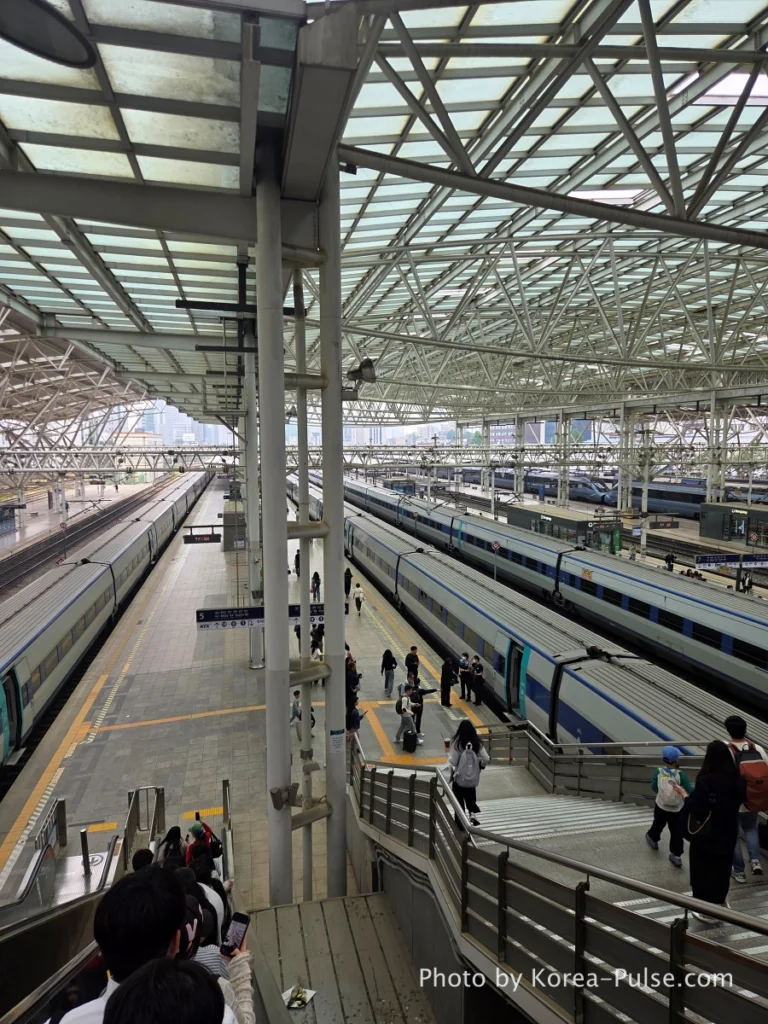
This is where Korea’s transit system stops being merely convenient and starts being a little absurd. At up to 300 km/h, KTX turns Seoul–Daegu into a 1 hour 40 minute hop and Seoul–Busan into roughly 2 hours 10 minutes — distances that would require an overnight stay almost anywhere else in the world.
I’ve written before about using this exact route to reach a parent recovering from surgery 325 km away and being home in Ilsan well before midnight. That trip redefined what “far” means in Korea for me — and the full story, plus a practical breakdown of booking, seat classes, and the Korea Rail Pass, is in KTX Korea: A 600km Day Trip That Turned Distance into Family Time.
For the ticket-buying mechanics specifically — kiosk navigation, app booking, what to do if you’ve never set foot in a Korean train station — How to Buy a KTX Ticket at Seoul Station walks through every screen step by step.
Doing two or more regional day trips in a short window? The unlimited 3/5/7-day KR Pass can pay for itself quickly. For a single round trip, individual KTX tickets are usually cheaper. Check current pass pricing at the Korail official site.
The Return Loop
The trip closes exactly the way it opened, just in reverse: KTX or subway back to Seoul Station, bags collected from whichever service you used, bus or AREX back out to Incheon, and — if you registered in advance — the same Smartpass lane waiting to wave you through departures. The whole loop runs almost entirely on rails and Wi-Fi. No rental car required for most major destinations on the mainland.
FAQ: Korea Transit Guide
The questions I get asked most about stitching this whole trip together — answered straight.
No — not for the core transit system. T-money cards, subway ticket machines, and KTX kiosks all work without a local number. A Korean eSIM helps with maps and real-time apps, but it’s a convenience, not a requirement.
For late-night arrivals or heavy luggage with small kids, yes — Korean taxis are metered, plentiful, and far less intimidating than they look. For everything else on the main transit corridors, rail and subway are faster and dramatically cheaper.
If you’re doing two or more regional day trips in a short window, the unlimited 3/5/7-day KR Pass can pay for itself quickly. For a single Seoul–Busan or Seoul–Daegu round trip, booking individual KTX tickets is usually the cheaper call.
Yes, and it’s more common than you’d think. KTX’s speed is exactly what makes same-day regional trips realistic — even starting straight from the airport if your flight timing cooperates. I’ve done it.
A T-money card or Climate Card — loaded with a few thousand won. It covers the bus, the subway, and convenience store runs. You can buy and top up at airport convenience stores or any subway station machine. Everything else can be figured out as you go.
Official resources worth bookmarking: Incheon International Airport for live flight and transit information, and the Korail official site for KTX schedules and booking.
“Korea has no ‘far.’ It only has connections you haven’t made yet.”
Taken individually, these are ten separate guides about buses, trains, and storage lockers. Taken together, they’re a single argument: that a country this size, with infrastructure this good, doesn’t require a rental car for most of the places travelers actually want to go. Land, store your bags, ride the rails, come home. Repeat as needed.