K-FOOD · Gwangjang Market Series · Part 3
Gwangjang Market Worth the Wait
Garlic bread, ₩1,000 twisted donuts, and a world-ranked coffee bar
Three spots that pull the longest lines in the entire market — and every single one of them is worth the wait.
This is Part 3 of our Gwangjang Market series. If you missed Part 1 — the history, the gates, and how to navigate — that’s a great place to start. And if you haven’t read Part 2 on the food alley, the bindaetteok and yukhoe are waiting for you there. But if you’re already inside and wondering why everyone seems to be standing in a queue, you’re in exactly the right place — because today we’re covering the Gwangjang Market worth the wait spots that most first-time visitors stumble into by accident.
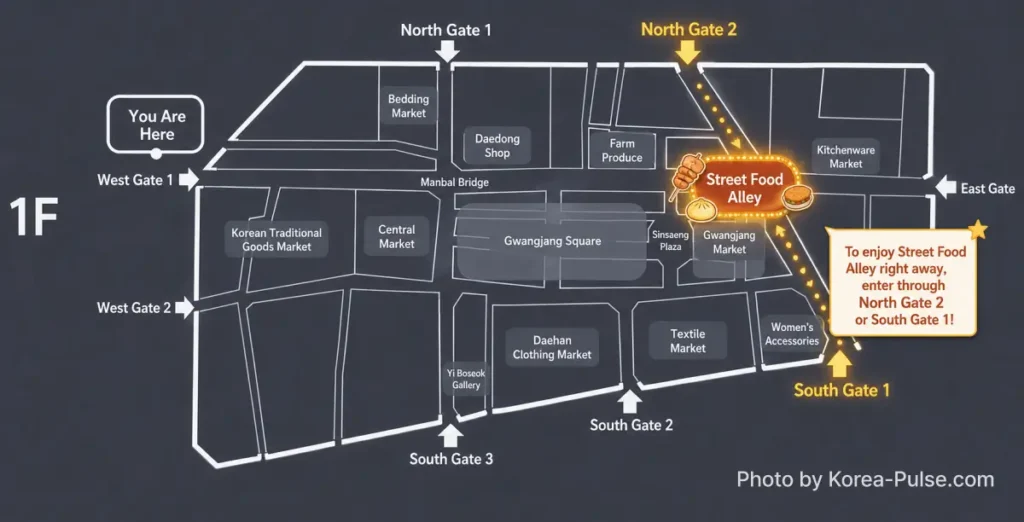
These three spots are not all in the same section, but they connect logically. Start at Garlic Boy in the middle of the market (enter through the West Gate and walk straight). Then head toward the food alley and exit toward North Gate 2 (북2문) — the kkwabaegi stall is right there on the left. YLESS and Ilho Coffee Bar are immediately adjacent, within 30 meters of the kkwabaegi stall. One end of the market to the other, with three very good reasons to stop along the way.
Before we dive in — here’s the Gwangjang Market English map from Part 1. Today’s three spots run from roughly the middle section of the market all the way to the North Gate 2 end of the food alley perimeter.
Stop 1: Garlic Boy — The Market Bakery That TV Made Even More Famous
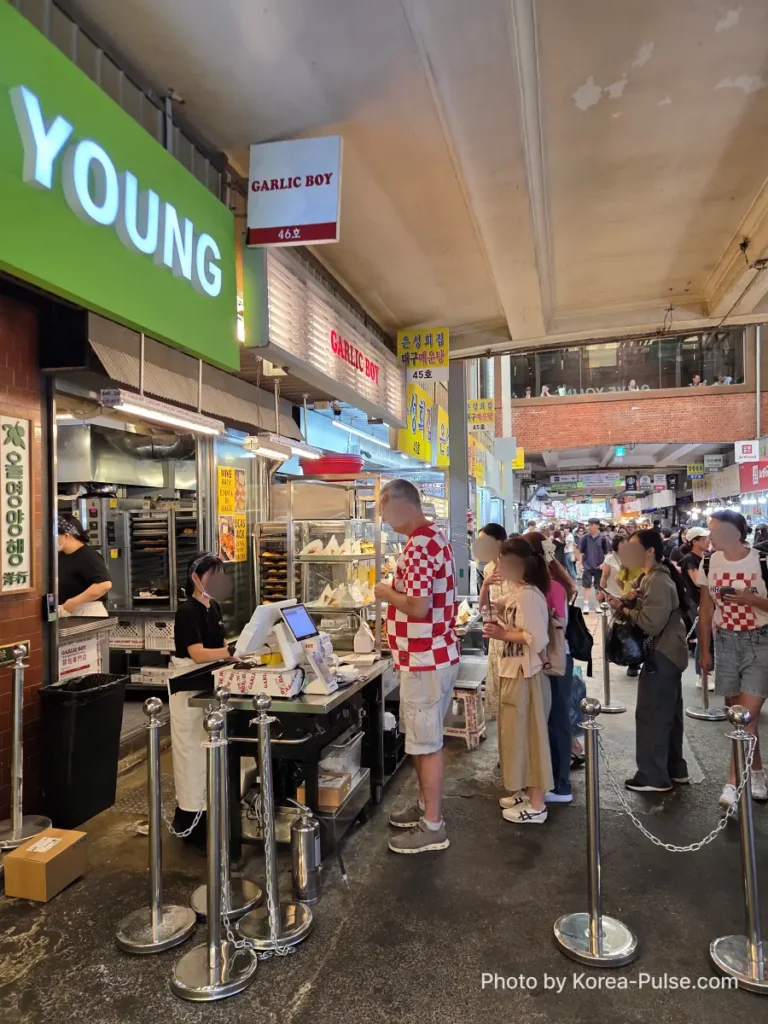
Garlic Boy doesn’t sit in the main food alley where all the bindaetteok smoke and sizzling gopchang action happens. It’s positioned slightly on its own, roughly in the middle of Gwangjang Market. When I entered through the West Gate and walked straight in, I almost passed it — until the smell stopped me. Then I saw the line of foreign visitors waiting patiently at the counter and thought: okay. This is Gwangjang Market worth the wait — one of the most surprising ones in the building.
Head Baker Kim Eun-hee runs Garlic Boy — she became known online as the “Gwangjang Market Garlic Goddess” long before television came calling. She appeared on Cheonhajepang (천하제빵), MBN’s baking survival show that debuted in February 2026 and gained widespread attention, streaming simultaneously on Netflix alongside its broadcast run. After the show aired, Garlic Boy saw a fresh wave of visitors making the trip specifically to try the bread they’d seen on screen.
Cheonhajepang: Bake Your Dream is MBN’s K-bakery survival show — think Culinary Class Wars, but for bread. Seventy-two competitors judged in a high-stakes, bread-factory-style setting, streaming on Netflix alongside its MBN broadcast run. It debuted in February 2026 and quickly became one of the more talked-about food programs of the year, with viewers tracking down the featured bakeries in real life.
What Chef Kim brought to the show was her signature garlic-forward baking style — the kind that has kept Garlic Boy’s counter busy long before any cameras arrived. The approach centers on working garlic butter directly into the dough rather than applying it as a surface treatment, which produces something pull-apart and intensely aromatic rather than crisp and one-dimensional.
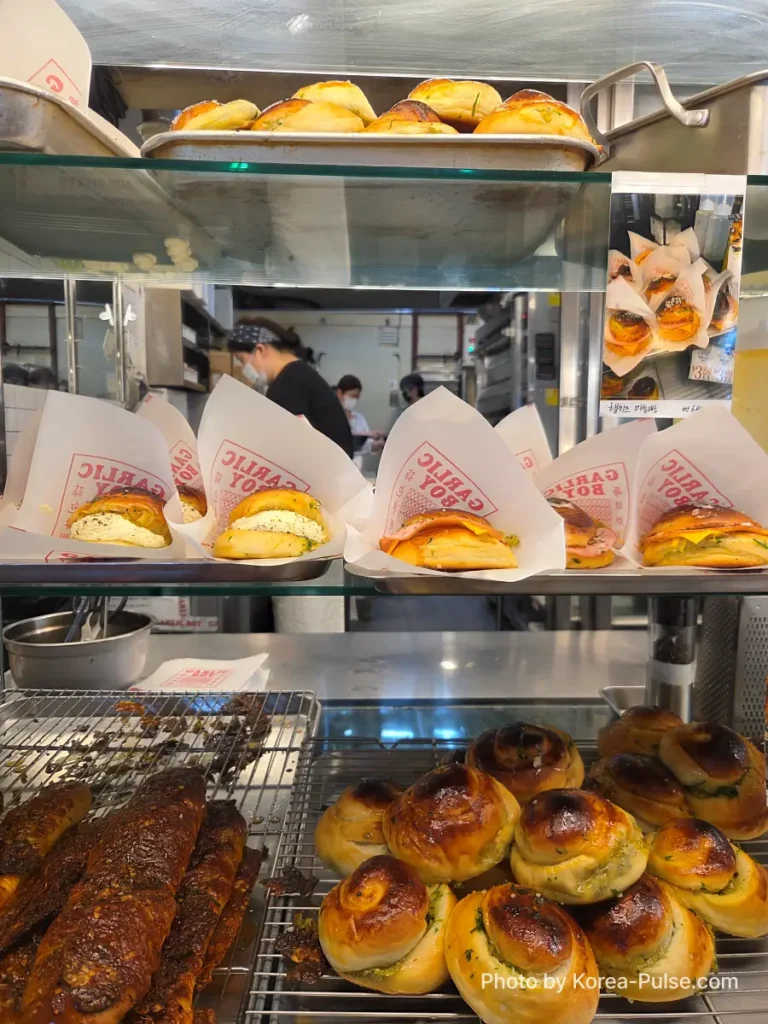
One honest caveat, which I say as someone who genuinely enjoys this place: garlic bread has a ceiling. You can eat one. You can split one with a friend and feel great about it. Buy three to take home, and you will begin to understand why the market’s neighbors have complicated feelings. The aroma is intense, persistent, and it will follow you onto the subway. Plan accordingly.
This is the episode that sent a new wave of visitors to Garlic Boy:
Stop 2: 광장시장 찹쌀꽈배기 — ₩1,000. Always a Queue. Absolutely Worth the Wait.
If Garlic Boy earned its fame through television, the Gwangjang Market Glutinous Rice Kkwabaegi (광장시장 찹쌀꽈배기) stall — known to international visitors as the Gwangjang Market twisted donut — has been pulling crowds entirely on its own terms for years. During my visit on a weekday lunch hour, the queue stretched well past the entrance. I’ve seen it go outside the gate on weekends, with a staff member stationed at the door to manage the flow. This is what Gwangjang Market worth the wait looks like at full volume.
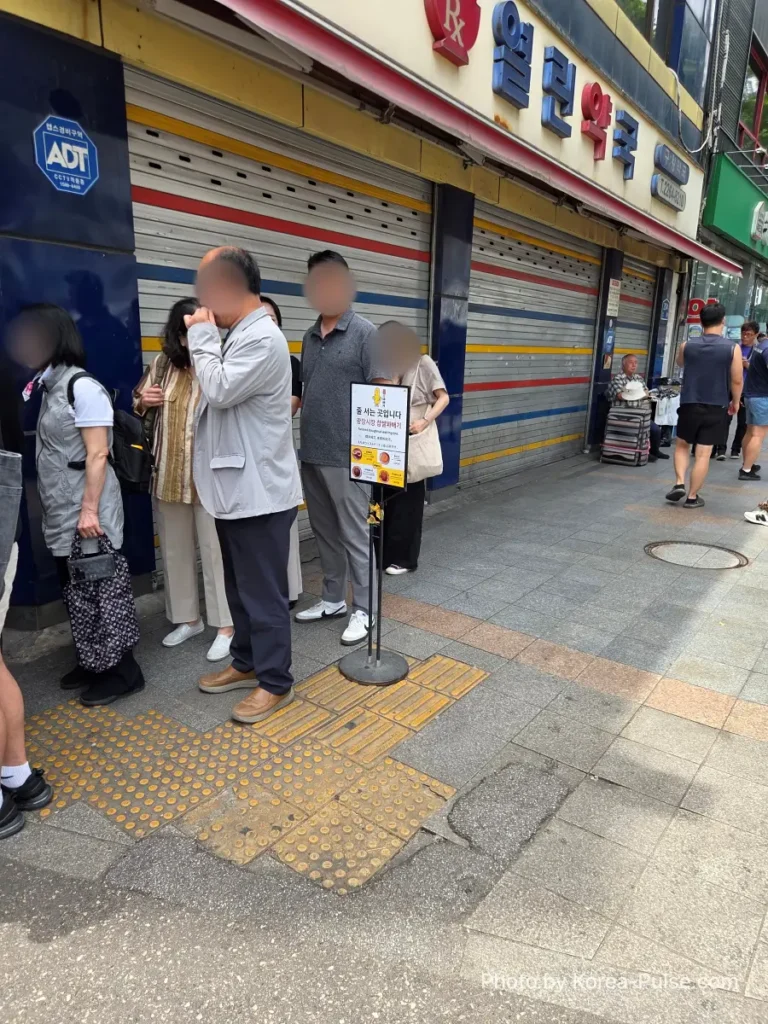
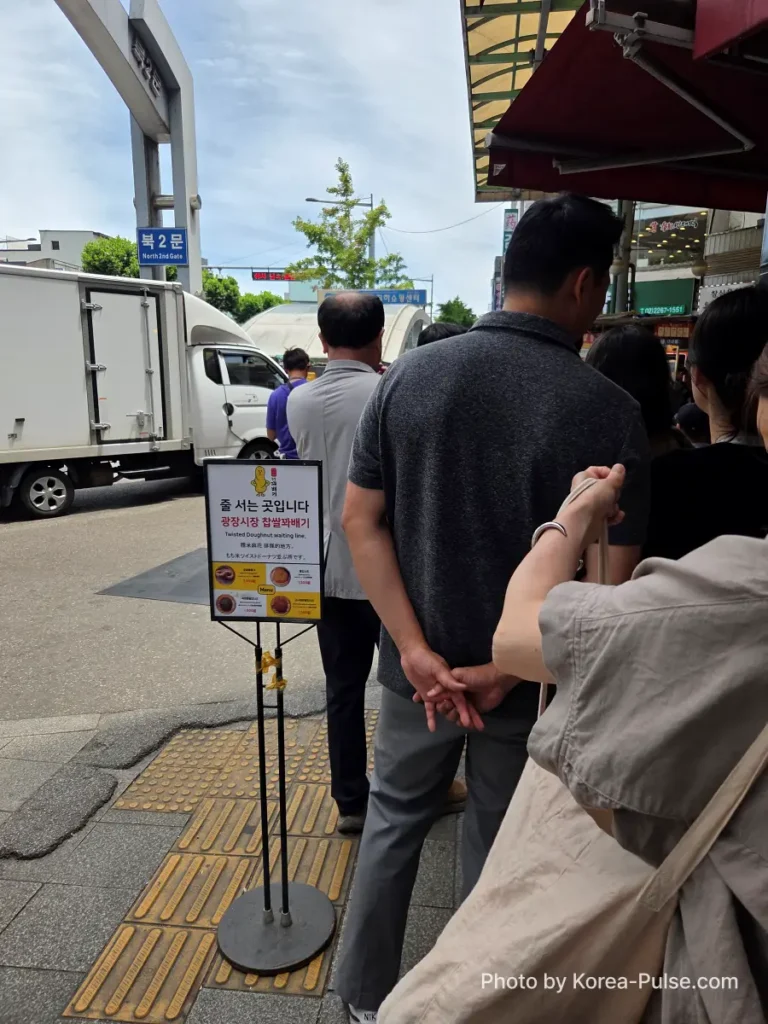
Location-wise, it sits at a natural pinch point. Walking from Jongno 5-ga Station, it’s one of the first stalls you encounter near the food alley entrance — positioned to stop anyone before they’ve even properly entered the market. Coming from inside heading toward North Gate 2 (북2문), it’s on the far left at the very end of the alley. Either direction, you find it the same way: by noticing everyone else already there.
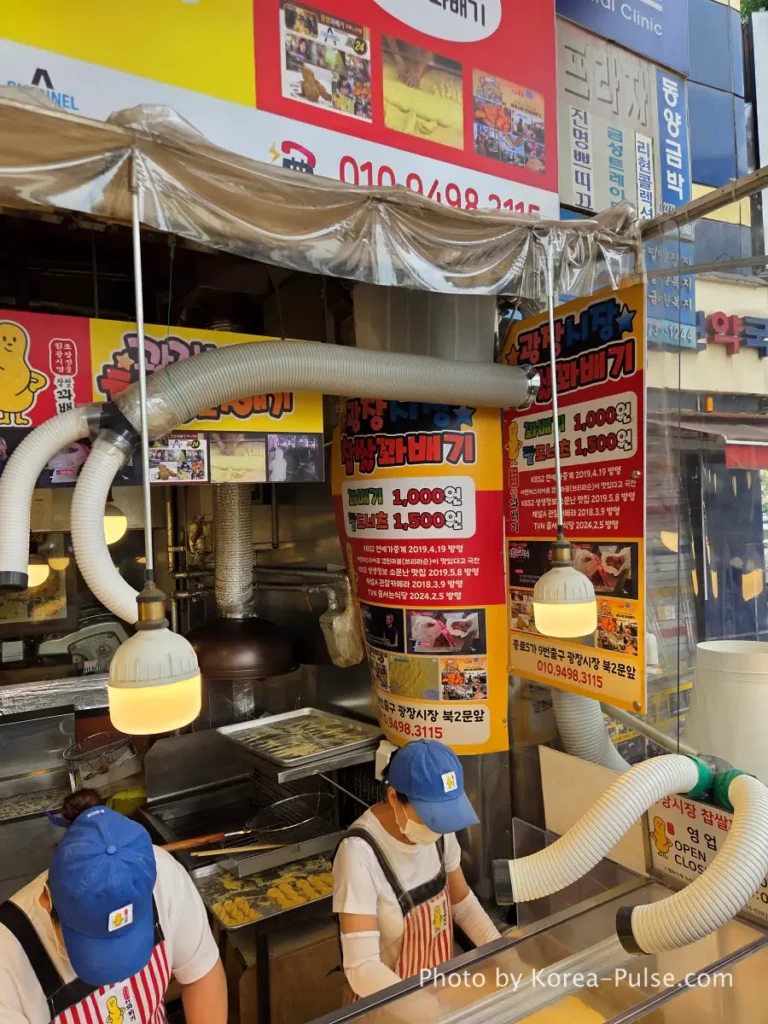
찹쌀꽈배기 (Glutinous Rice Twisted Donut): ₩1,000 — The twisted one. Chewy inside from the glutinous rice flour, lightly crisp outside, dusted with sugar. Served in a small white paper cup.
팥도너츠 (Red Bean Donut): ₩1,500 — Denser, rounder, filled with sweet red bean paste. Also served one per paper cup.
The broadcast history on the stall walls reads like a media marathon — KBS (2019), Channel A (2018), EBS, SBS, MBC, and most recently tvN’s Eating Around (줄서는식당) in early 2024. That last one matters: Eating Around specifically covers places with queues worth joining, and being selected is essentially official confirmation that the wait is justified.
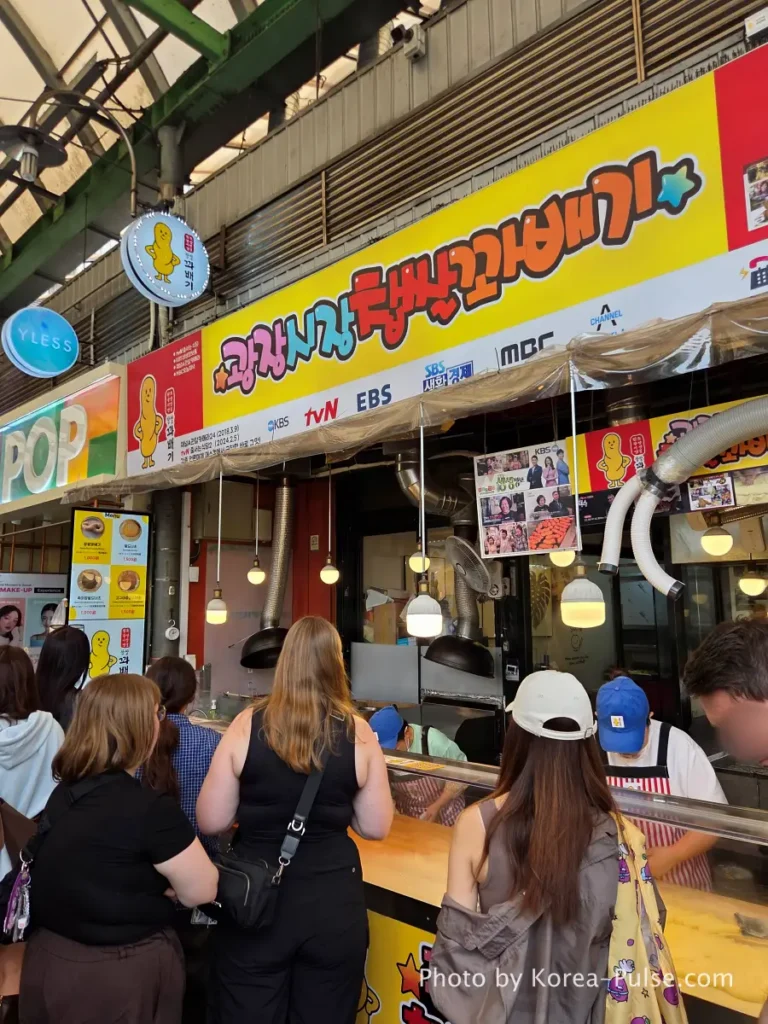
What makes this place interesting to watch, beyond the food, is the ventilation setup. Frying hundreds of portions continuously in an open-air stall on a hot Seoul day is a heat management problem. Their answer is a network of white overhead ducting running the full length of the stall — industrial, utilitarian, and at this point completely iconic.
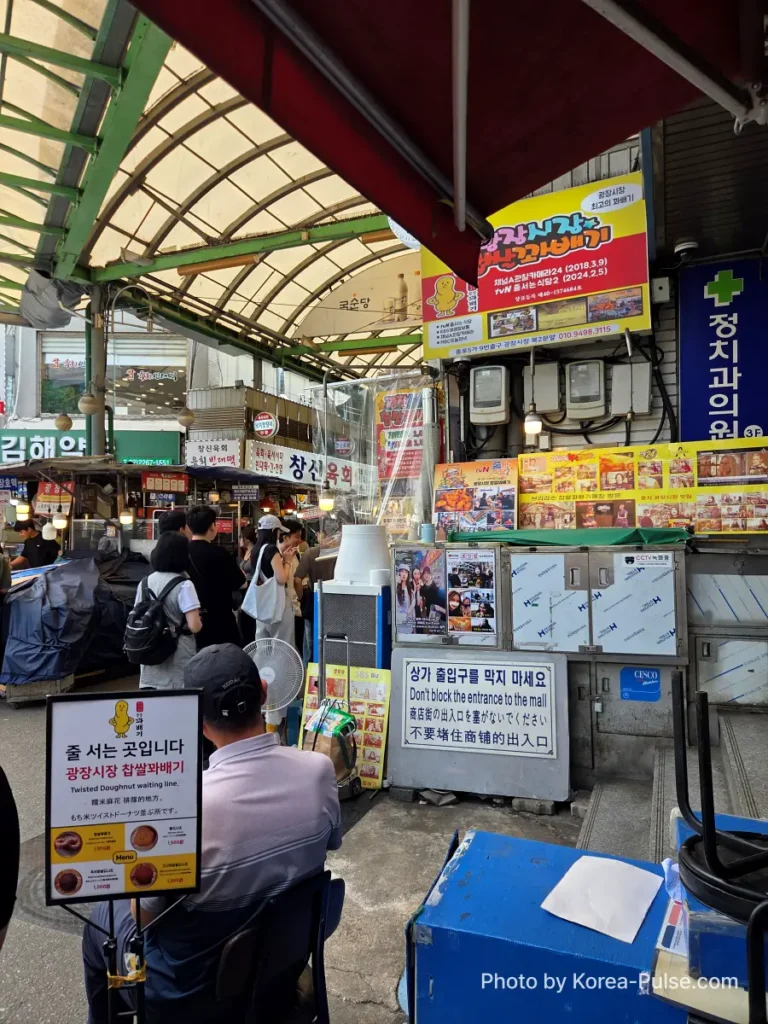
I decided to wait it out and watch the whole process. And I mean the whole process.
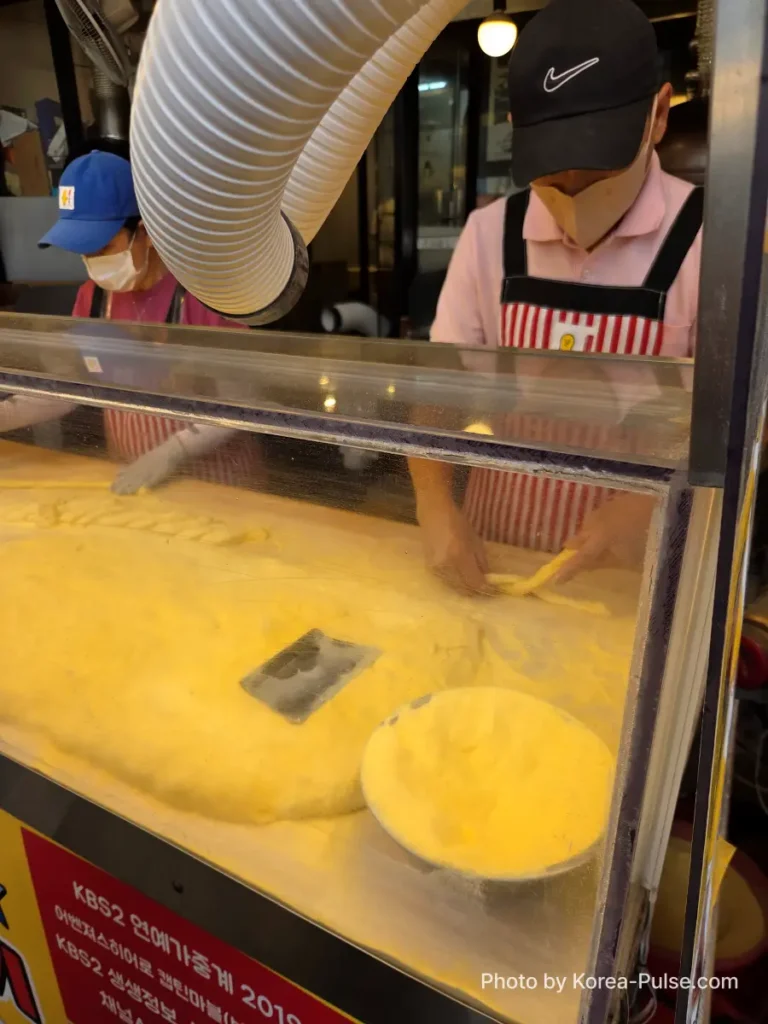
There’s a moment in the queue where you realize the batch you’re waiting for hasn’t come out yet. The tray is empty. More people join the line behind you. Then:
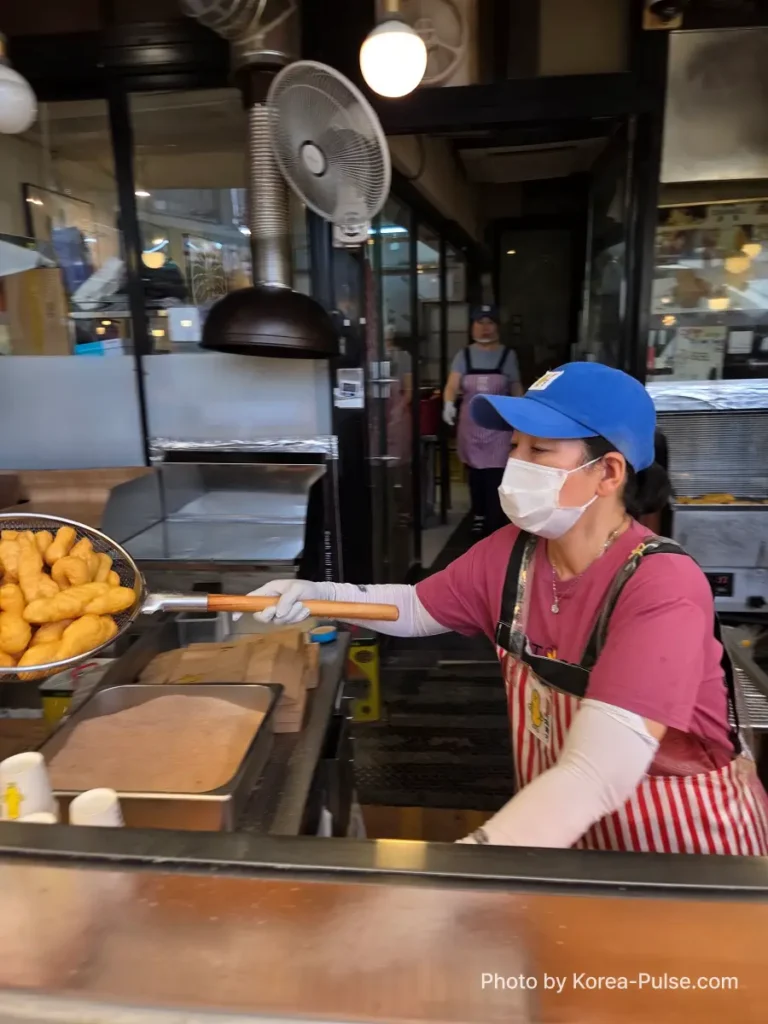
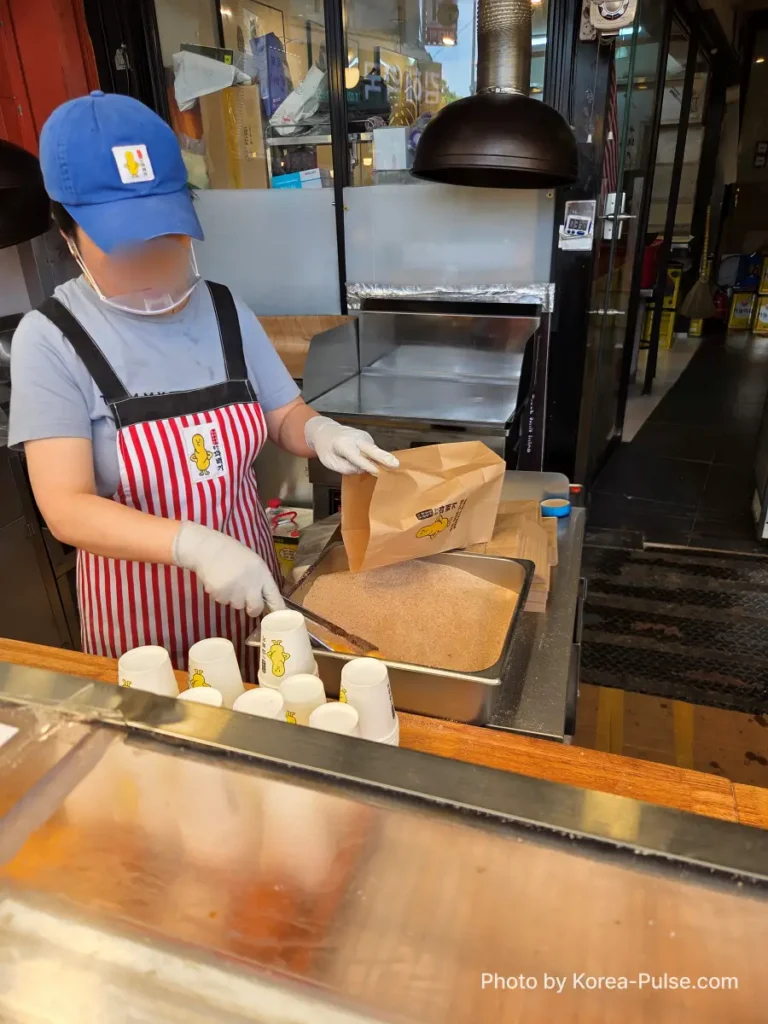
And this is what ₩1,000 looks like when you finally get to the front:
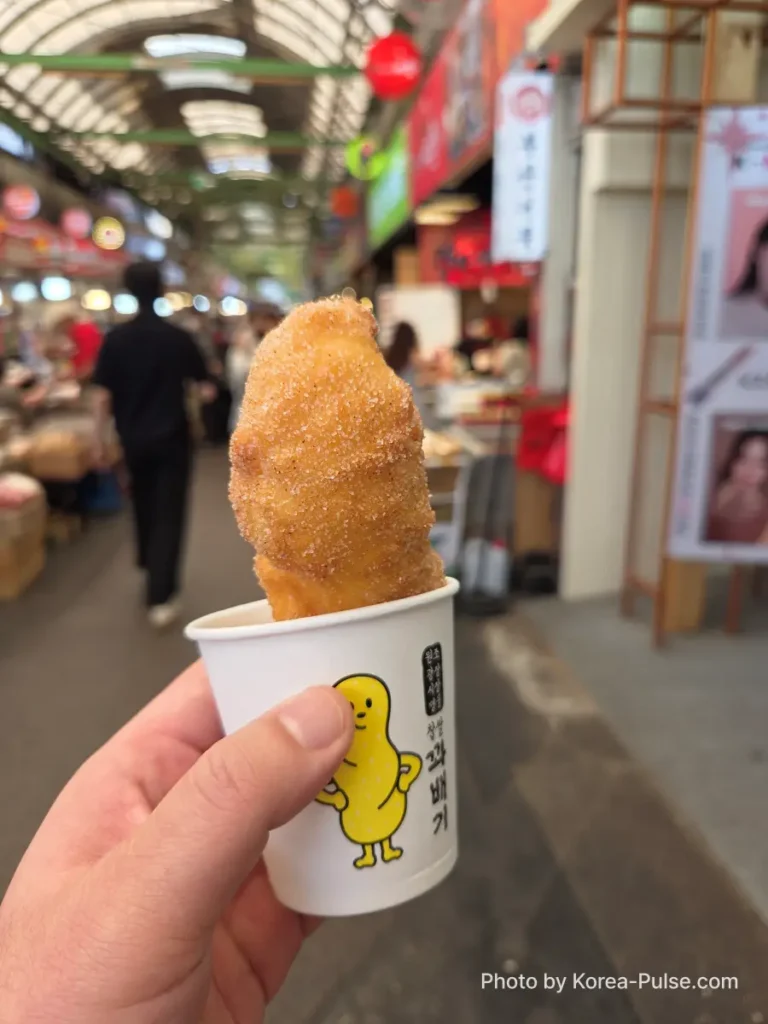
One thing I hadn’t expected: the payment system here is beautifully low-tech. The bank account number, bank name, and account holder name are posted at several spots around the stall. You transfer the amount while you’re waiting in line, then hold up your phone to show the completed transaction when you reach the front. I did exactly that. The Japanese visitor ahead of me had come prepared with crisp ₩1,000 notes — which also works perfectly. Either way, sort out your payment while you’re in the queue, not when you get to the counter.
And yes — I filmed the whole process. Watch the full twisted donut experience here:
The queue moves faster than it looks — most transactions take about 15 seconds. Payment: cash (₩1,000 notes ideal) or bank transfer — the account details are posted around the stall, so transfer while you wait and show your phone at the counter.
Eat immediately: hot, lightly oily, perfectly chewy. Don’t refrigerate. It loses everything that makes it worth queuing for.
광장시장 찹쌀꽈배기 (Gwangjang Market Twisted Donut)
Exit 9 at Jongno 5-ga Station → Gwangjang Market North Gate 2 (북2문) entrance, far left stall
Tel: 010-9498-3115
On the way from the kkwabaegi stall toward Ilho, you’ll pass Gangga-ne Tteokbokki (강가네 떡볶이) — another stall with its own dedicated queue. It deserves its own visit, but that’s a story for another post.
A Brief Detour: YLESS — When K-Beauty Sets Up Shop Between Two Frying Stalls
Between the kkwabaegi stall and Ilho, something will make you slow down: a sleek, well-lit K-beauty studio with studio-style vanity mirrors and a board advertising a free personal color consultation. Inside a 120-year-old traditional market. Sandwiched between a stall selling fried dough for ₩1,000 and a world-ranked coffee bar. It looks completely out of place. It was also completely busy.
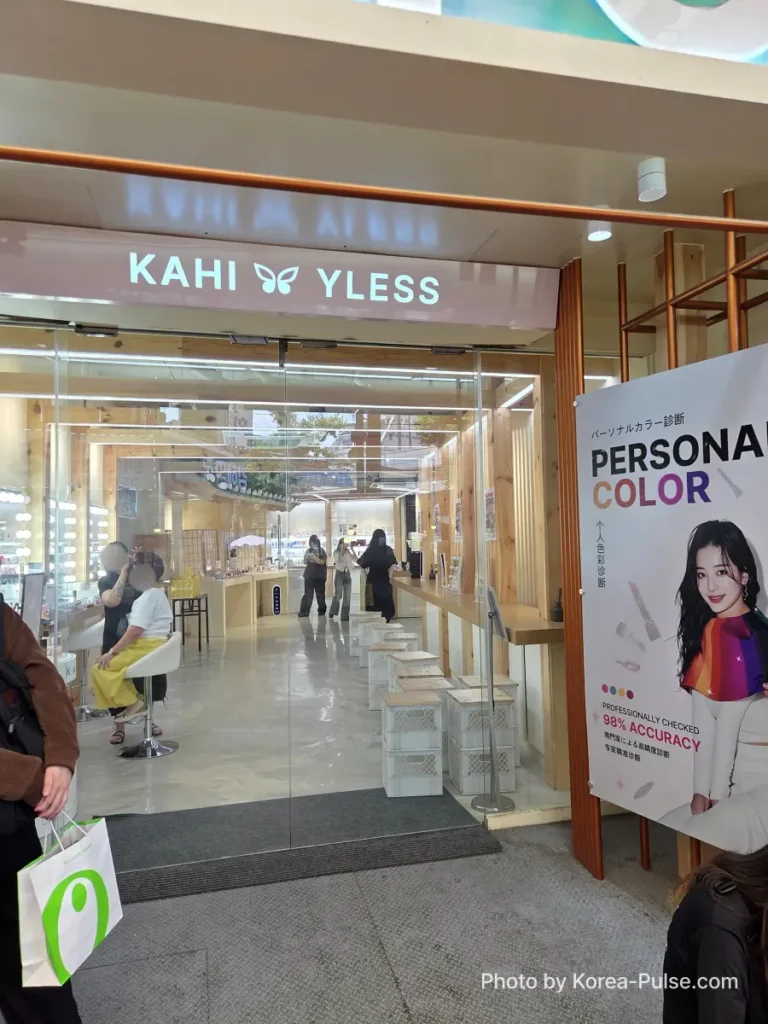
YLESS (와이레스) is a K-beauty platform that opened its Gwangjang location in December 2025 — one of the newest additions to a market that’s been here since 1905. The concept is deliberate: the store takes the traditional jangter (市場) market as its design anchor, incorporating hanok architectural elements and serving traditional drinks like omija tea, while housing over 1,500 K-beauty indie brand products under one roof.
YLESS offers a free personal color diagnosis by a professional color artist, along with a live makeup demonstration — no purchase required, no appointment needed. Just walk in. The consultation zone is right at the entrance. For international visitors who find Korean beauty product selection overwhelming, this is a genuinely useful starting point — you leave knowing which tones actually work for your skin. The service has been particularly popular with Japanese visitors, though the signage is multilingual.
Stop 3: Ilho Sanghoe (일호상회) — A World-Ranked Coffee Bar in a 120-Year-Old Market
Past the beauty studio, another queue. I assumed it was overflow from the kkwabaegi crowd. It wasn’t. Completely separate line. Completely different reason. People were waiting for coffee. And from what I could see through the glass, the equipment inside was not market-stall equipment. This is the third Gwangjang Market worth the wait spot on this list — and the most unexpected of the three.
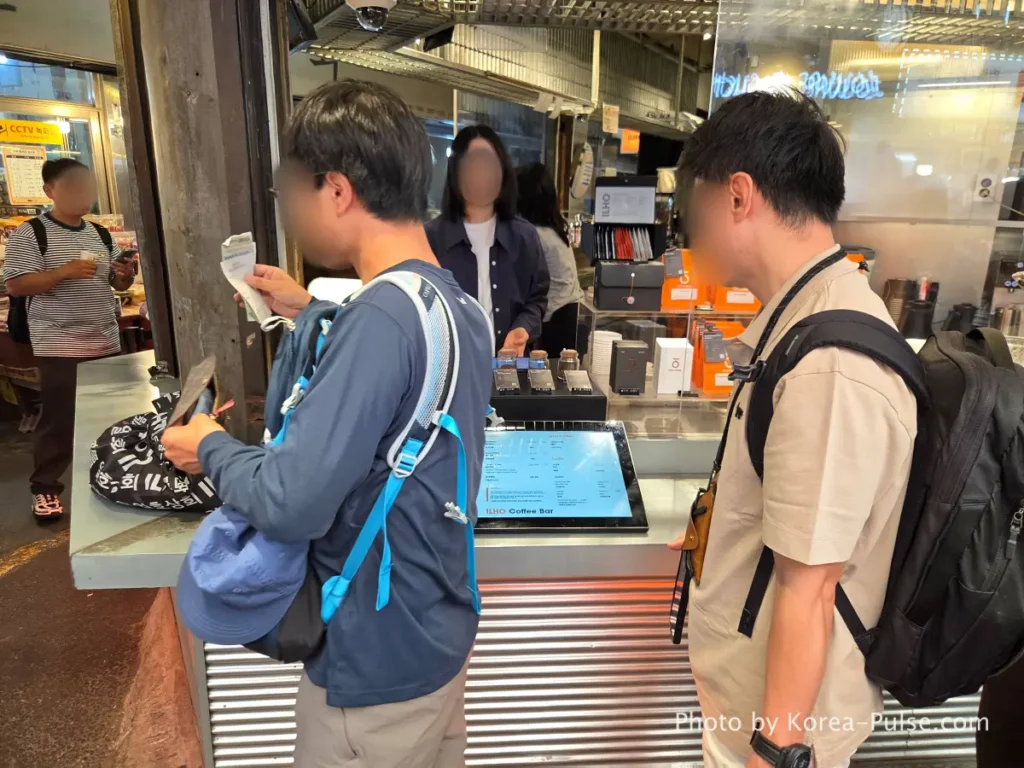
Ilho Sanghoe (일호상회 · 一號商會) translates as “Store No. 1 Trading Company.” The name is deliberate: this is a specialty coffee bar built on Gwangjang Market’s very first store — the original No. 1 stall that anchored the market when it opened in 1905. That historic identity now frames a world-class coffee operation, which opened here in July 2023.
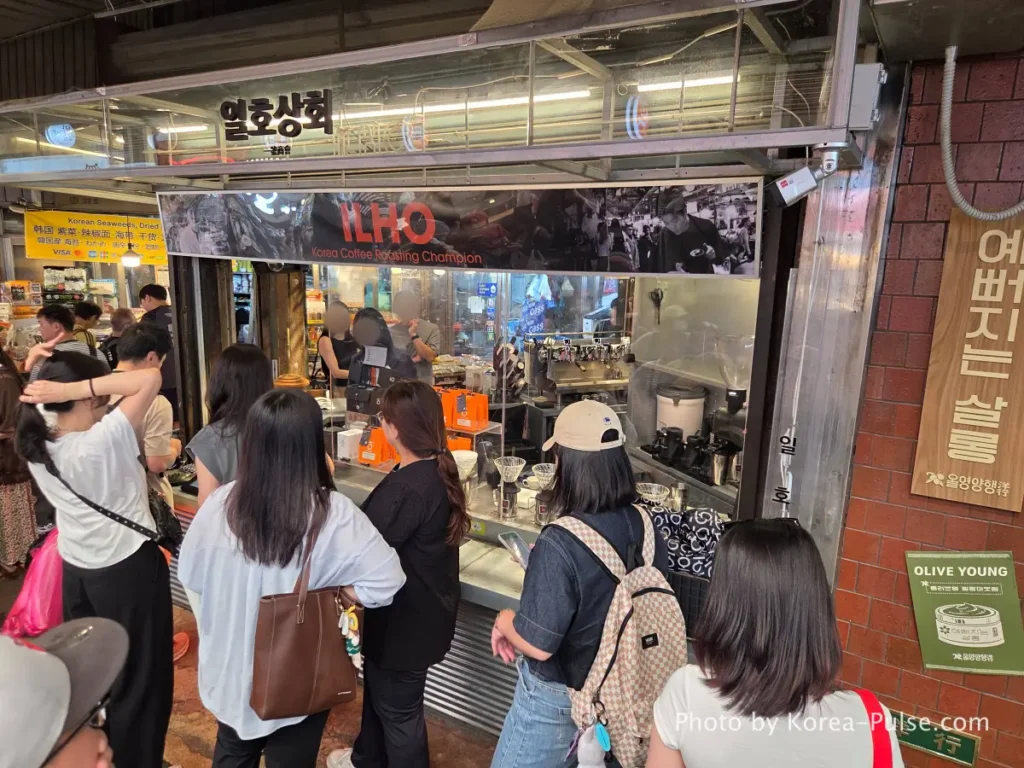
The reason the queue exists becomes obvious the moment you look at the counter display:
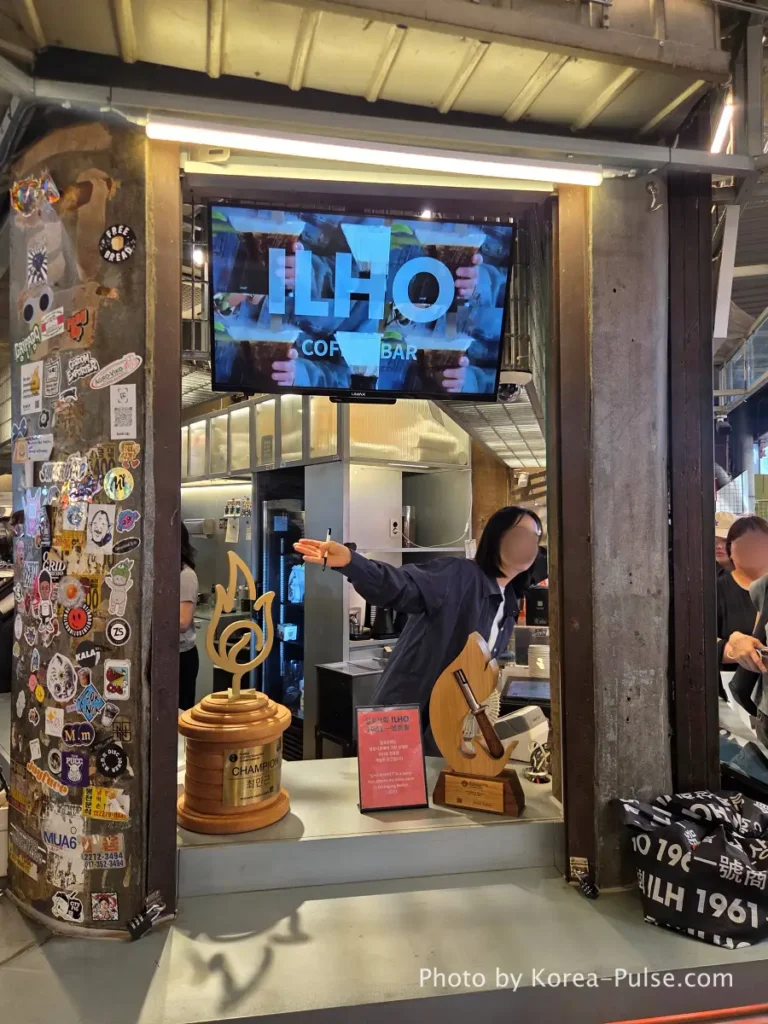
Roaster Choi Min-geun (최민근) is Korea’s national coffee roasting champion and is known for his achievements in international competition, including a 3rd place finish at the World Coffee Roasting Championship. Coffee roasting as a competitive discipline evaluates the ability to draw out the best qualities from a given green coffee under timed, standardized conditions — it is what happens long before any barista touches a cup. Having a competitor at that level running a stall inside a traditional market is, to put it plainly, unusual.
The physical space captures exactly what the whole concept is about: the exterior is raw market — corrugated metal, worn wood beams, a column so comprehensively covered in stickers it has become its own exhibit. The interior is all specialty coffee: grinders, pour-over bars, beans listed by origin and tasting notes. The menu board is the kind that makes you slow down and actually think before ordering.
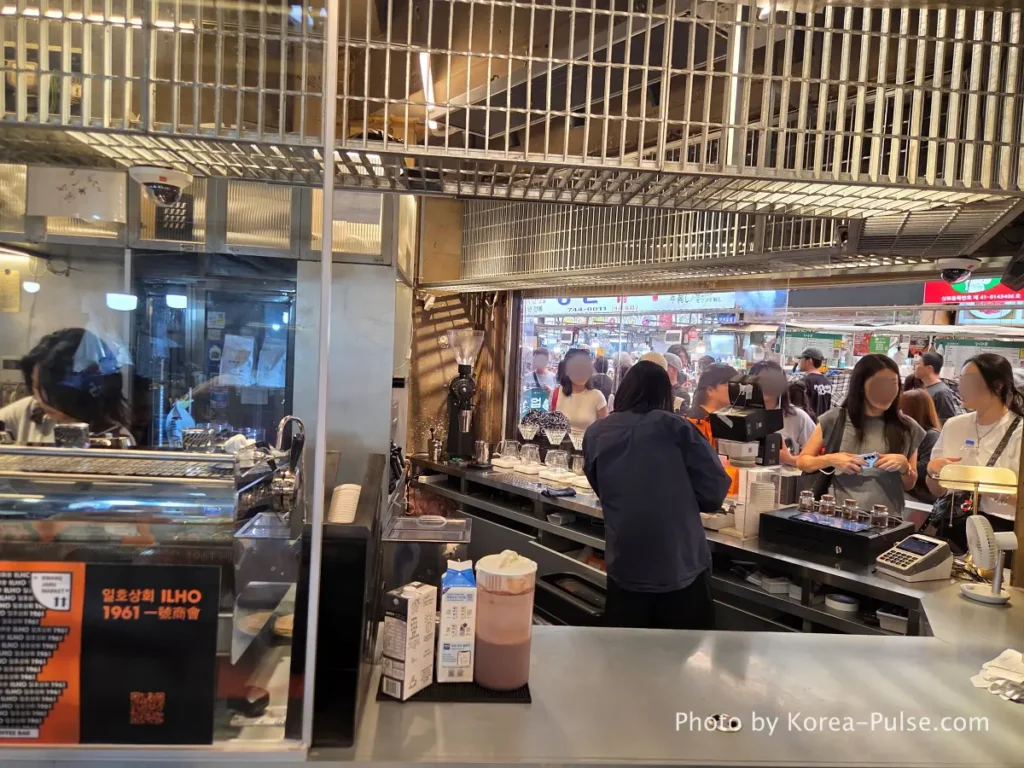
Drip coffee runs ₩7,000–₩8,500 depending on origin. Takeout only — no chairs, just the bar counter and the market corridor around it. The signature Gwangjang Latte (광장라떼) comes with dried fruit on top. The queue is steady but manageable; arriving earlier in the day gives you the best selection of beans.
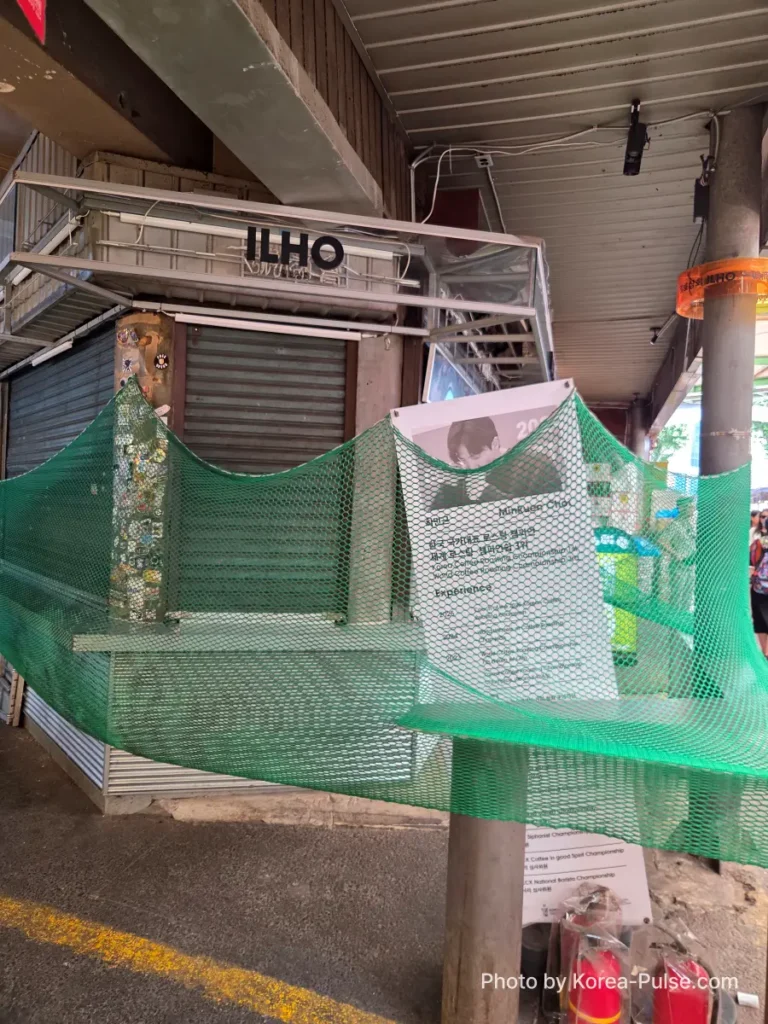
Ilho Sanghoe operates daily but takes one irregular rest day per month, announced on @ilho_market the day before. I arrived on exactly one of those days — shutters down, green safety net across the front. Always check their Instagram before making a special trip. It would be a shame to queue for the kkwabaegi and then find the coffee closed.
FAQ: Gwangjang Market Worth the Wait
The questions visitors ask most — answered straight.
It varies. On a weekday lunch hour I waited about 15–20 minutes — the batch had just run out when I arrived. On busy weekend afternoons it can stretch well outside North Gate 2. Go earlier in the day if you want the shortest wait. The queue moves fast once a fresh batch arrives — most transactions take about 15 seconds.
Cash (₩1,000 notes are ideal) or bank transfer. If you go the transfer route, the bank name, account number, and account holder name are posted at several spots around the stall — look for them while you’re waiting in line. Transfer the amount, then hold up your phone to show the completed transaction when you reach the counter. The Japanese visitor ahead of me came with exact change; I used the bank transfer. Both work. Just have it sorted before you reach the front.
It’s not in the main food alley — it sits roughly in the middle section of the market. Enter through the West Gate (서문) and walk straight. You’ll smell it before you see the sign. There’s also a second location near Anguk Station if Gwangjang timing doesn’t work out.
Yes — if specialty coffee is part of your life, having a nationally-ranked roasting champion’s work available for ₩7,000–₩8,500 inside a traditional market is genuinely Gwangjang Market worth the wait. But check @ilho_market on Instagram first. They take one irregular rest day per month and don’t announce it far in advance. I found out the hard way.
Yes — done by a professional color artist, walk-in, no appointment needed. The makeup demo that follows is also free. A genuinely useful service for anyone who finds K-beauty product selection overwhelming — you leave knowing which tones work for your skin.
“Gwangjang in 2026 is not just the bindaetteok-and-yukhoe market your guidebook described. It’s a place where a TV-featured garlic bakery, a ₩1,000 twisted donut stall with six broadcast credits, a K-beauty studio offering free color consultations, and a world-ranked specialty coffee bar all operate within about 200 meters of each other. Every single one is Gwangjang Market worth the wait — for completely different reasons.”
What’s remarkable is that none of this feels forced. The market absorbed all of it and kept moving. That’s probably the most Gwangjang thing about it.
Next, we go deeper into Gwangjang — past the crowds, past the food alley, into the sections most tourists walk right by. The West Gate 2 entrance opens into a different world: sit-down restaurants with decades of history, bolts of fabric stacked to the ceiling, and hanbok shops where the real business of the market still quietly happens — including a story about my daughter and a hanbok.