
K-TRAVEL · 2026
KTX Family Trip Korea
2 Ways to Book Companion Seats — And Which One’s Actually Worth It
Seoul → Dongdaegu · With Family · With the Unplanned Trip Connection
We’d done this route before — Seoul Station to Dongdaegu, KTX, about two hours. But last time I was alone with a coffee and a podcast. This time, the whole family was coming. Same train. Completely different trip.
by KTX
on companion seats
vs standard fare
A KTX family trip Korea is a completely different experience from going solo — and not just because someone keeps asking if the train has a bathroom. The logistics shift, the snack situation becomes a team sport, and suddenly the face-to-face companion seat you’d normally scroll past becomes the most important booking decision of the trip. There are 2 ways to book those companion seats, and they are not equal. This post explains exactly which one is worth it — and covers everything else you need for the Seoul to Dongdaegu run.
What made this particular run even better: almost every stop along the way — the departure board, the wooden bleachers, the platform, the train door — appeared in near-identical form in Unplanned Trip: Limited Edition, the 2026 tvN travel variety show I reviewed here on Korea Pulse. I kept stopping to think: this is exactly the shot from the show. Same station. Same angle. Same Korea.
Here’s how the whole trip went — from the Seoul Station departure board to the Samsong Bakery bag swinging out the exit at Dongdaegu. And throughout the post, you’ll see watercolor-style scenes from the show placed right next to the real locations. The resemblance is not a coincidence.
Seoul Station: The Board, the Buzz, and the Ticket Window Scene
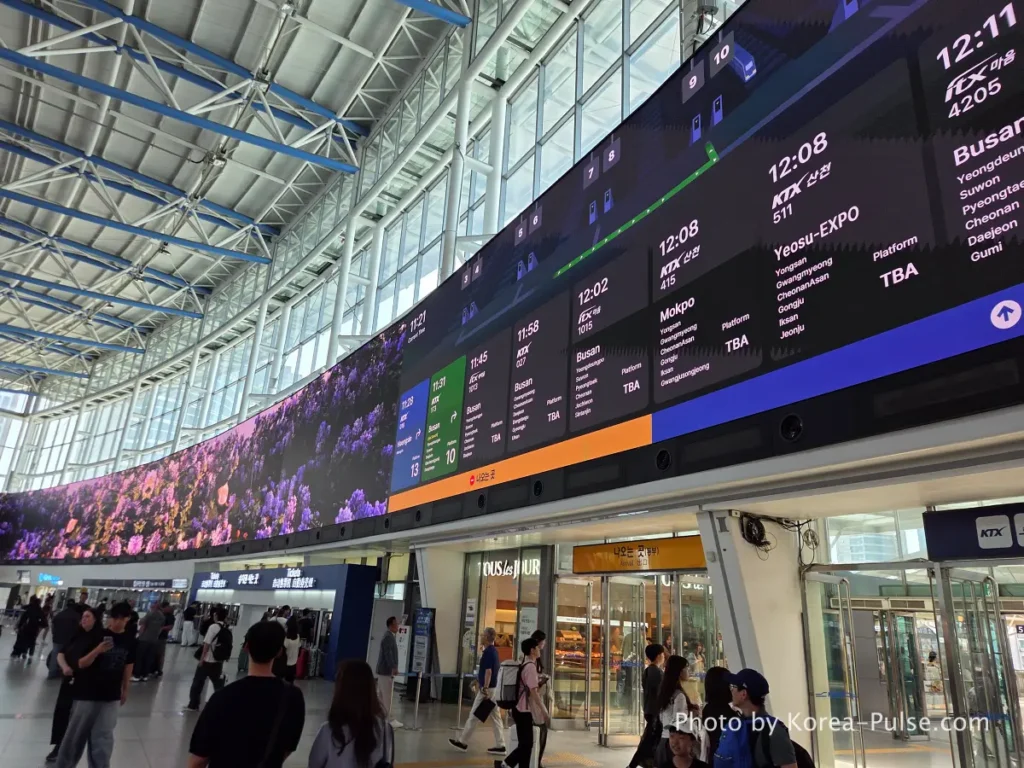
Walk into Seoul Station and the first thing that hits you is that giant digital departure board — a wall of scrolling trains, platforms, and departure times that somehow manages to feel both overwhelming and deeply satisfying. Our KTX was the 11:31 AM departure. Platform 10. Easy enough.
In Unplanned Trip: Limited Edition, this is the exact spot where Yumi — slightly flustered, very charming — was filmed at the ticket window just below the board, sorting out her payment method. Standing in the same spot with my family, I kept thinking: the show really didn’t exaggerate any of this. It just filmed it.
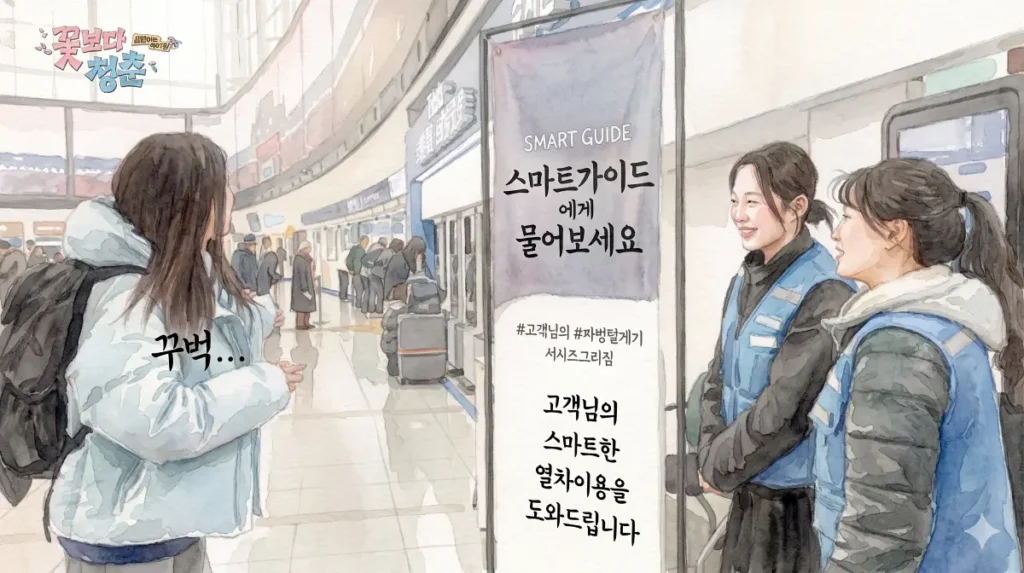
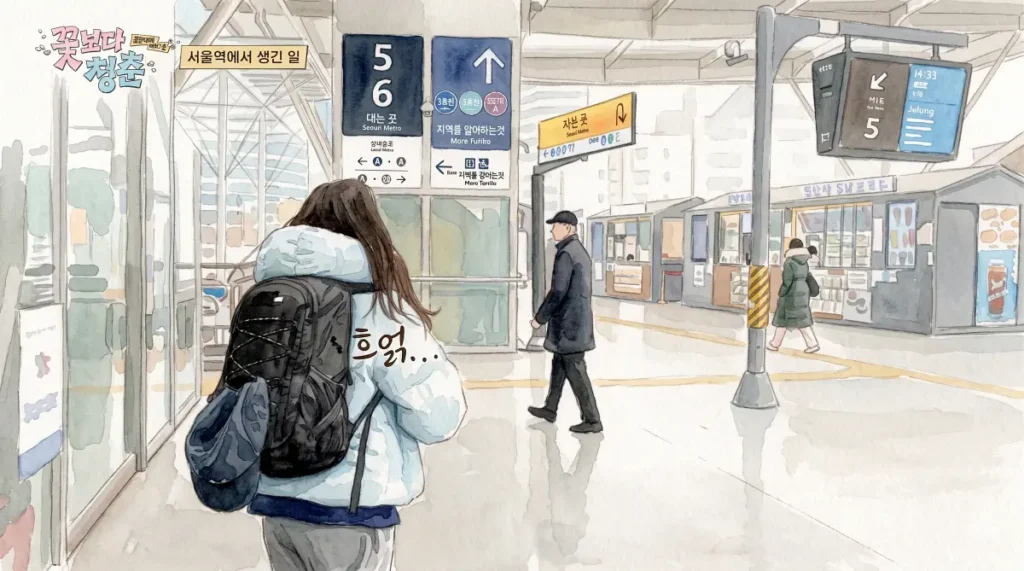
The departure board shows platform numbers alongside each train. Confirm your platform number here first — then head straight through the main gate. The concourse beyond it is where the pre-departure routine really begins.
The Concourse & the Bleachers: Where the Show Actually Happens
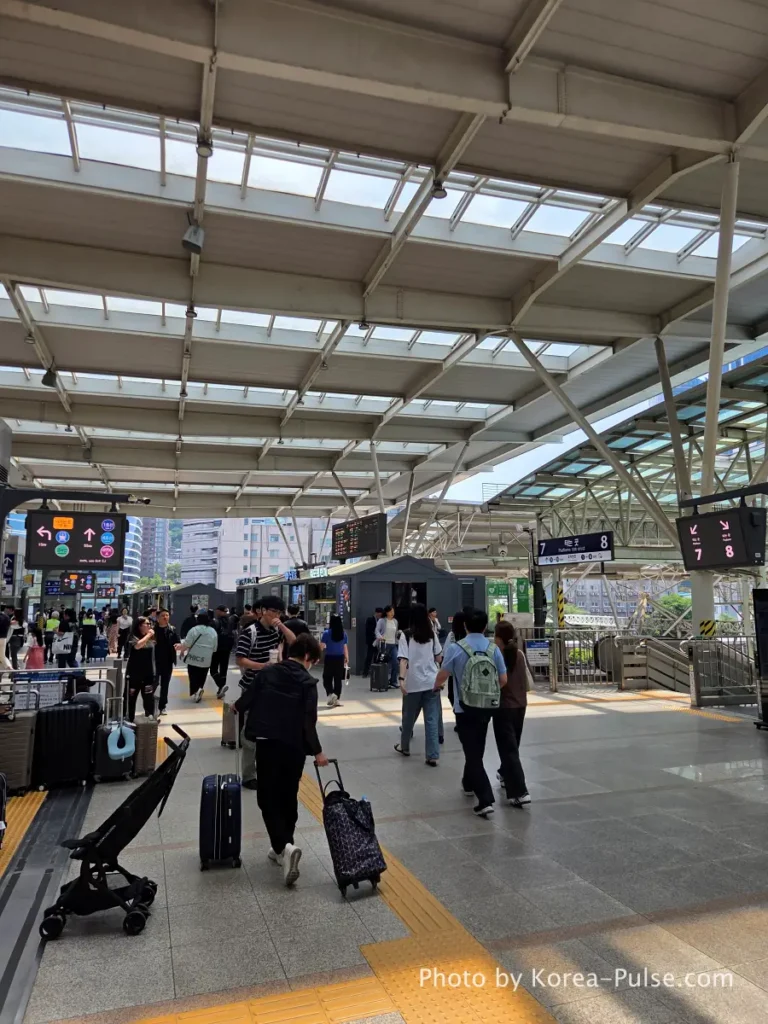
Once through the gate, you enter a long, wide concourse lined with kiosks, convenience stores, and small snack counters. This is the last civilised chance to stock up before boarding. In the show, Yumi’s pre-departure wander happened somewhere down this same stretch.
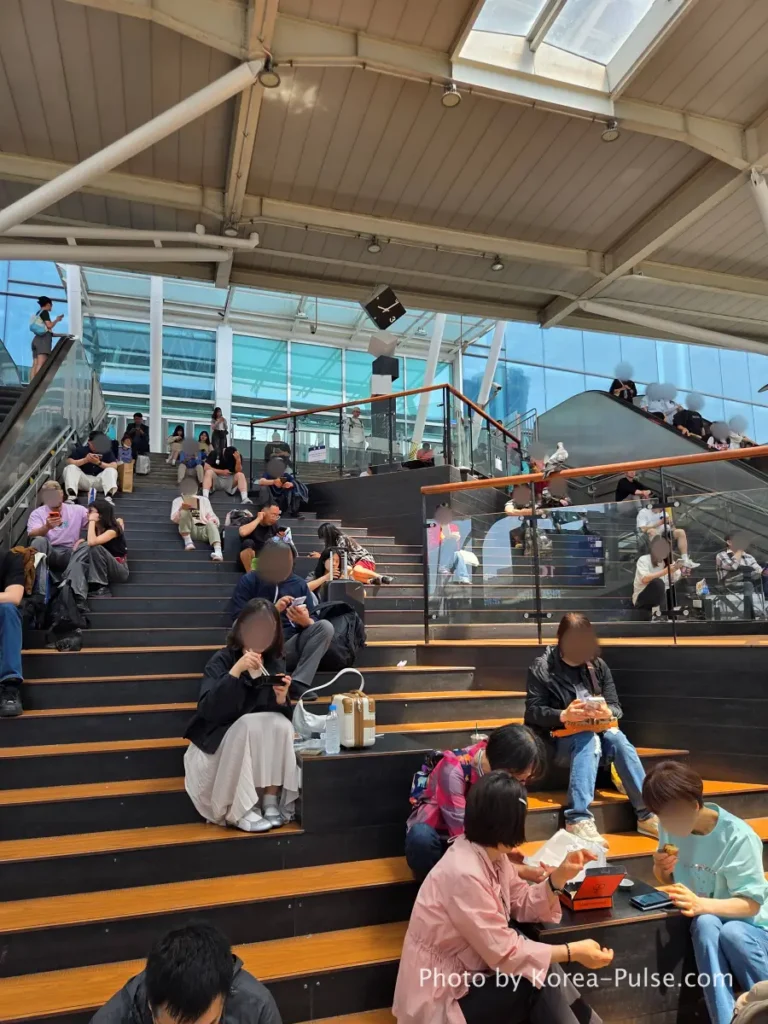
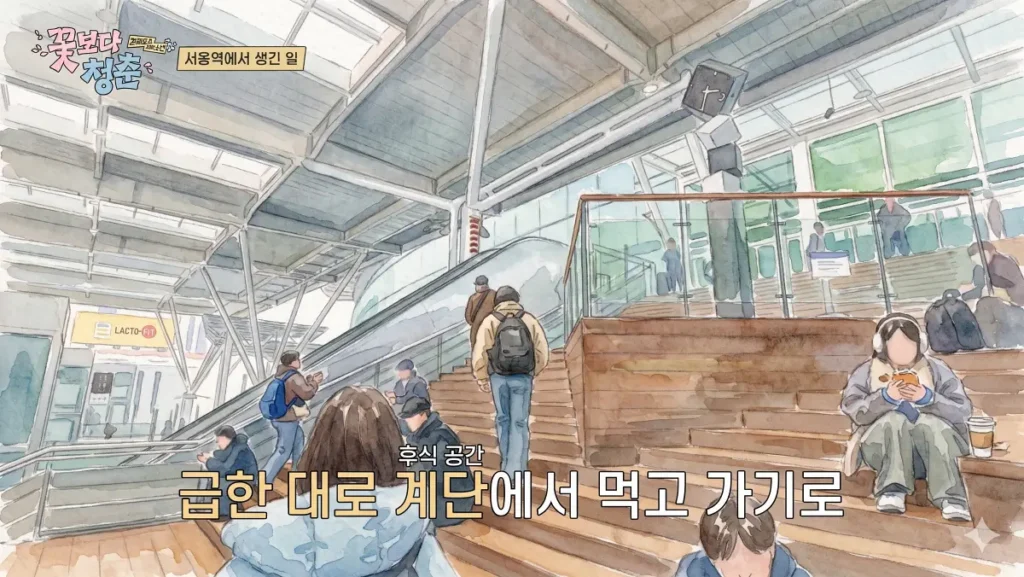
The wooden bleacher-style steps inside the main hall are one of Seoul Station’s quiet institutions. On the day we traveled, they were packed — people eating kimbap, ramen cups, convenience store sandwiches — all with the calm urgency of people who know exactly which train they’re catching and are going to finish their meal first.
The Unplanned Trip: Limited Edition cast sat on these same steps mid-episode, sharing a quick meal before departure. What struck me — watching the show, then standing here in person — is how unmanufactured the whole thing is. The production didn’t clear the crowd or dress the location. They just filmed real people in a real station. That’s the kind of honesty that makes the show worth watching before any Korea rail trip.
Most KTX trains originate at Seoul Station, so the train is already waiting at the platform well before departure. You could board early and eat at your seat — but in a quiet KTX cabin, strong food smells can travel surprisingly far. The bleachers are quieter, airier, and the far more comfortable option. Standard practice for Korean commuters.
Platform 10: Boarding the Beast
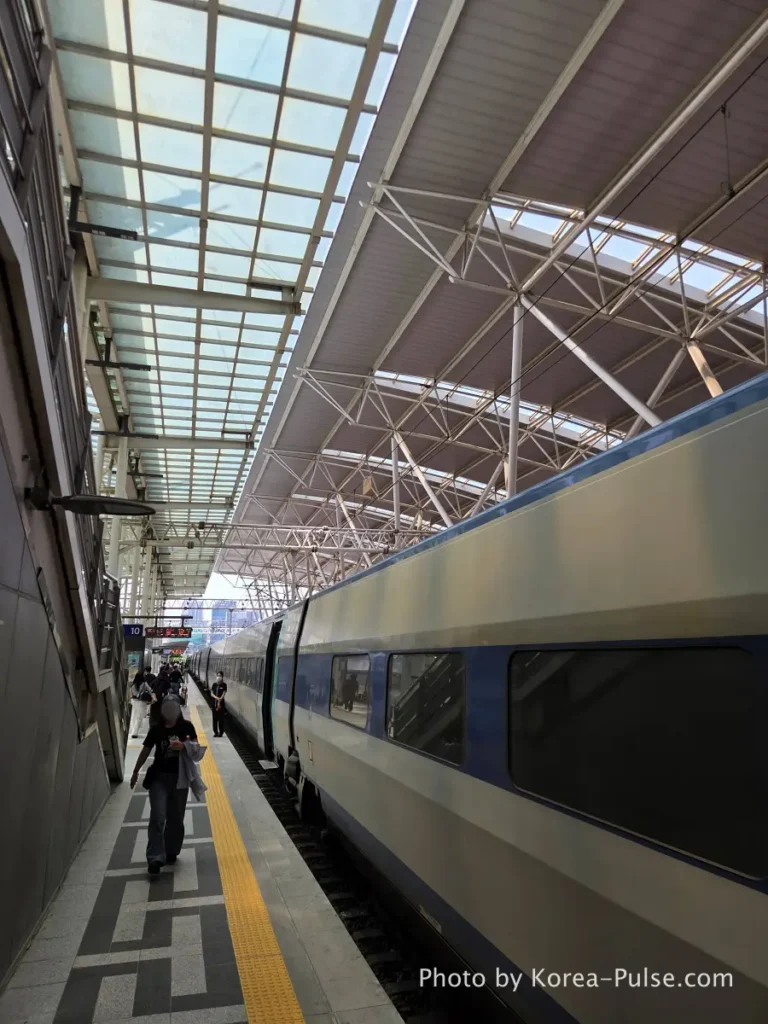
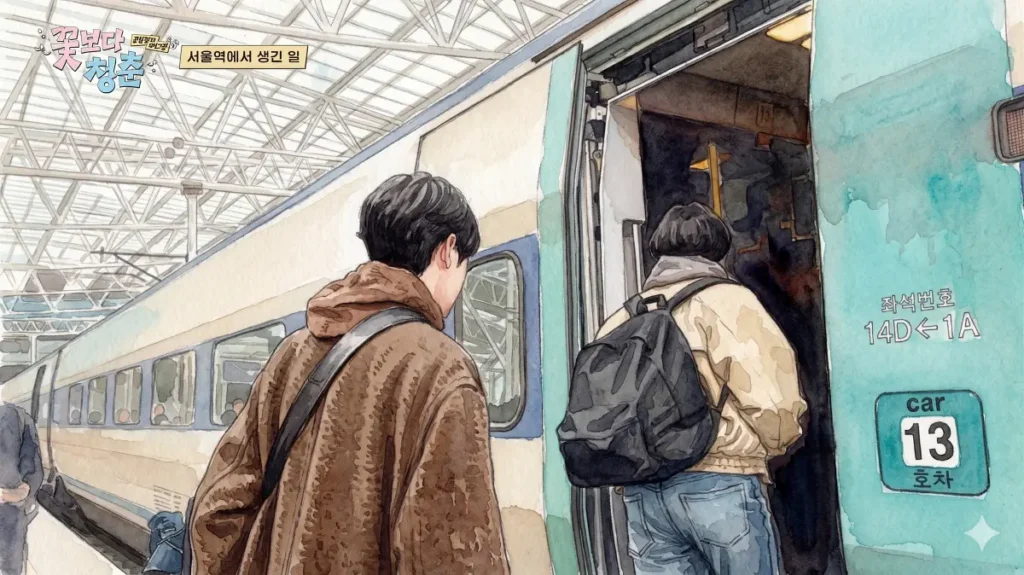
Down to Platform 10, and the KTX was already there — long, low, that distinctive aerodynamic nose pointing south. There’s always a small moment of “yes, this is actually happening” when you see it up close.
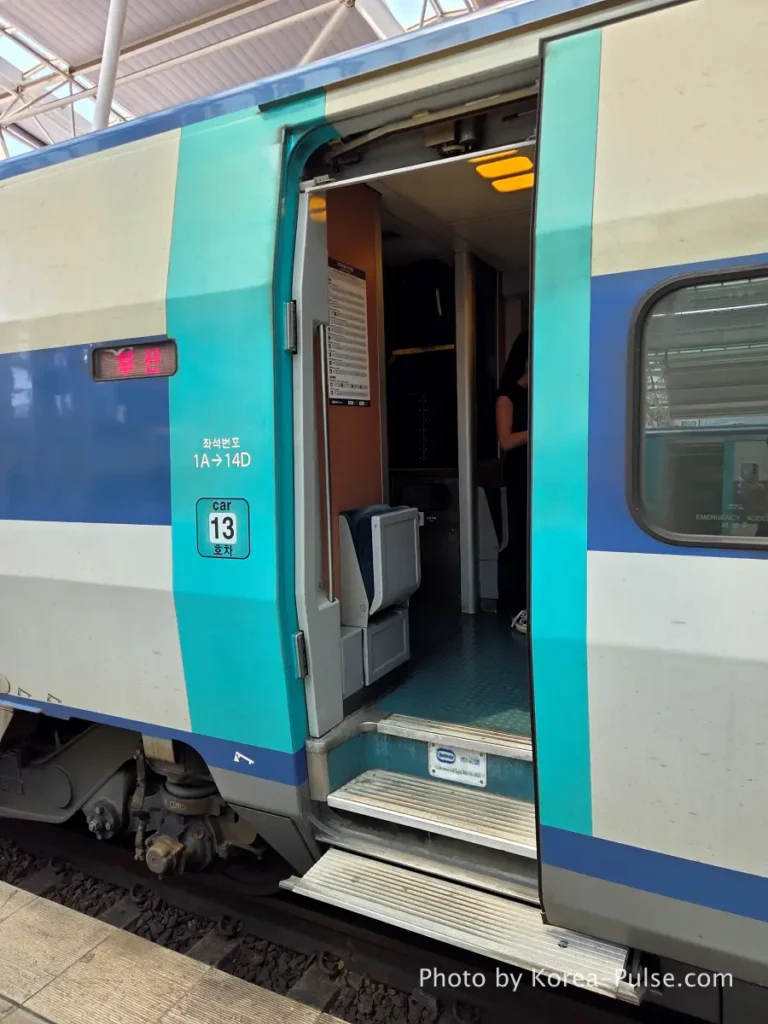
Step through the cabin doors and the first thing you see is a luggage rack. Large suitcases go here — don’t carry them down the aisle. Directly opposite, tucked against the wall near the exit, is a fold-down jump seat. Easy to miss. Extremely popular. When a train sells out and the only remaining tickets are standing-room, arriving early to claim one of these makes the entire journey manageable.
The Companion Seats: How the KTX Family Trip Korea Group Discount Actually Works
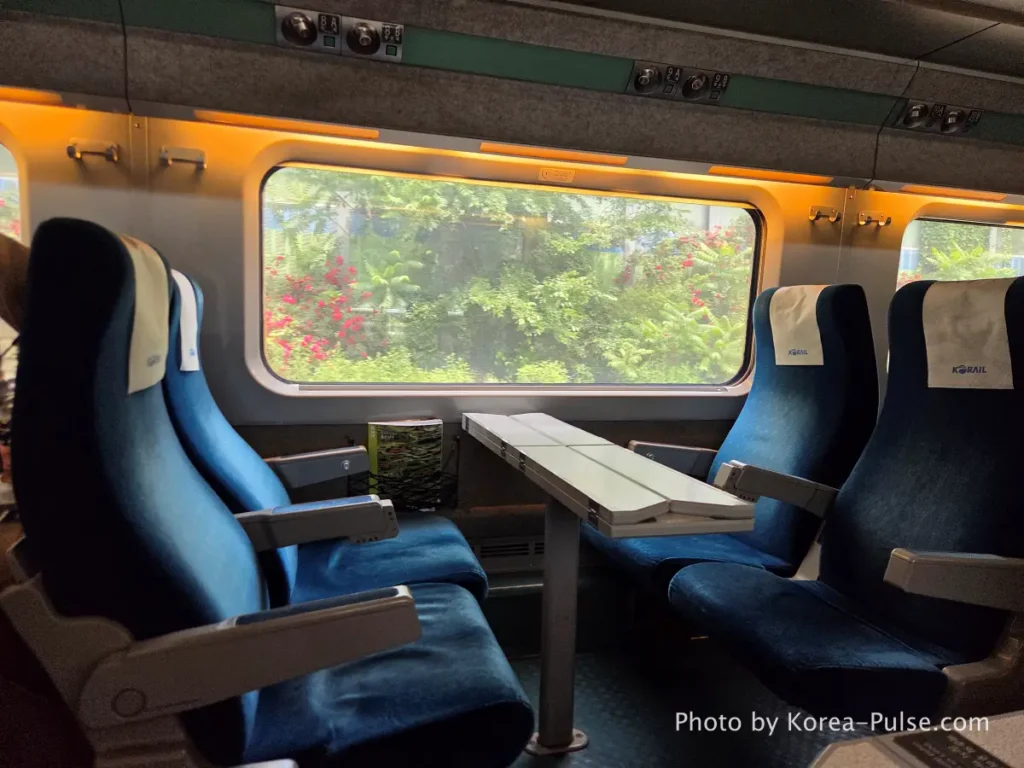

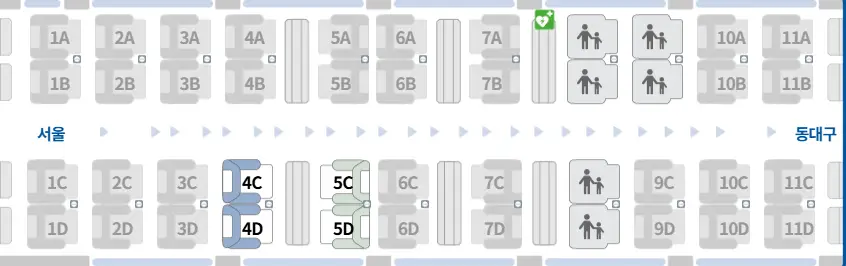
This is the part of a KTX family trip Korea that most travel guides skip entirely. The 동반석 (Companion Seats) are a set of four seats arranged in a face-to-face quad layout, separated by a shared wooden table in the middle. Think of it as a private booth inside the train. Book directly through the Korail official booking system — the English interface is available and international cards are accepted. For train schedules and timings, the Let’s Korail English site is the clearest option for foreign visitors.
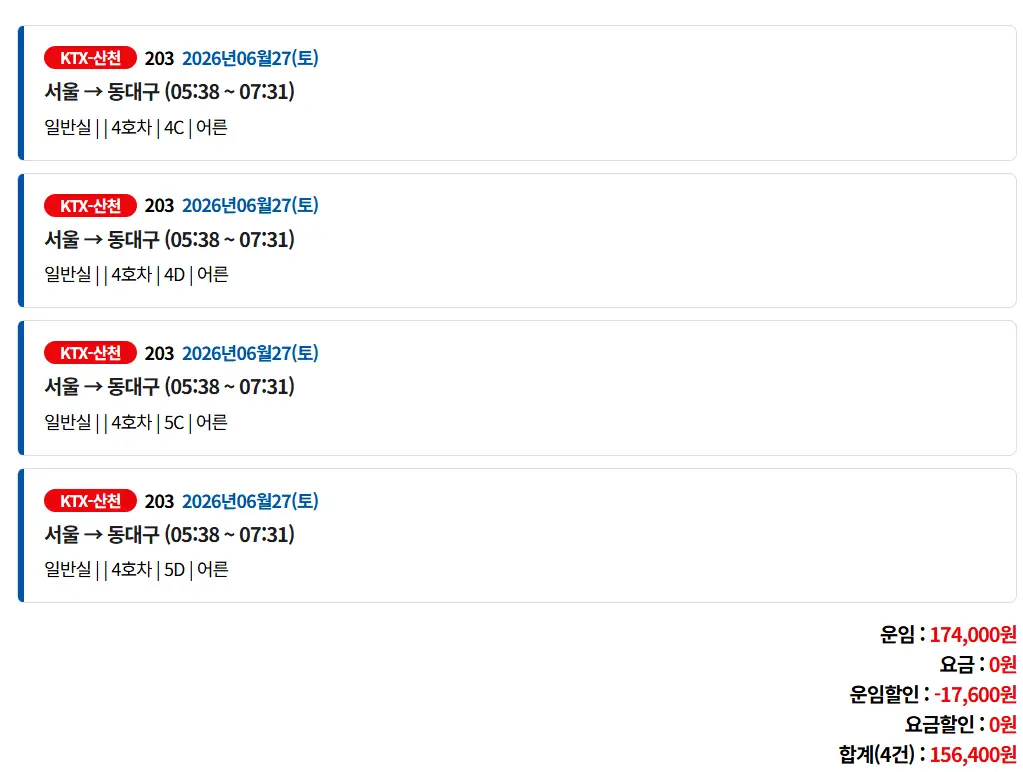
The seats are labelled in rows — in our case, 4C, 4D, 5C, and 5D, facing each other across the table. Here’s how the pricing broke down at the time of our booking — always verify on the live Korail screen before you confirm, as rates may vary. Here’s what the actual Korail booking screen looks like for each option, so you know exactly what to expect when you sit down to book.


| Booking Type | Per Seat | 4-Person Total | Saving vs Standard |
|---|---|---|---|
| Standard Seat (individual) | ₩43,500 | ₩174,000 | — |
| Companion Zone (individual, ~5%) | ₩41,300 | ₩165,200 | ₩8,800 |
| Companion Zone (1 set of 4, 10%) | ₩39,100 | ₩156,400 | ₩17,600 |
Here’s the key thing most guides get wrong about 동반석: anyone can book seats in the companion zone individually — 1 person, 2 people, 3 people, whatever you need. When you select seats in that quad area on Korail, a ~5% adjustment applies automatically. That’s what shows up in the booking screenshot: ₩41,300 per seat instead of the standard ₩43,500.
Based on my booking screen, the best per-seat price came from purchasing all 4 seats in the quad in a single transaction — the discount is tied to the purchase, not the headcount. Korail’s pricing can vary by time and campaign, so always check the live booking screen before you confirm.
Purchase the entire quad in a single booking. The 10% discount applies to all four seats — total ₩156,400 (₩39,100 per seat), saving ₩17,600 versus standard fare. Any seats your group doesn’t fill stay empty, giving you a fully private table. Best value regardless of group size, if the budget allows. This is how the Unplanned Trip: Limited Edition cast traveled.
Select just the seats your group needs from the companion zone. The ~5% adjustment applies automatically: ₩41,300 per seat. Lower upfront cost, but the remaining seats in the quad may be taken by other passengers — which means sharing the table with strangers. Perfectly normal in Korean train culture, just worth knowing in advance. This is what we did as a family of three, and it worked fine.
For families or groups who want a private table: Option A. The per-seat saving is real and the private quad changes the whole dynamic of the trip. For solo travelers or anyone on a tighter budget: Option B is a perfectly reasonable choice — the ~5% discount still applies and sharing the table is rarely awkward. Next time, we’d go Option A.
Watching Korea Go By: Rain, Mountains, and Rice Fields
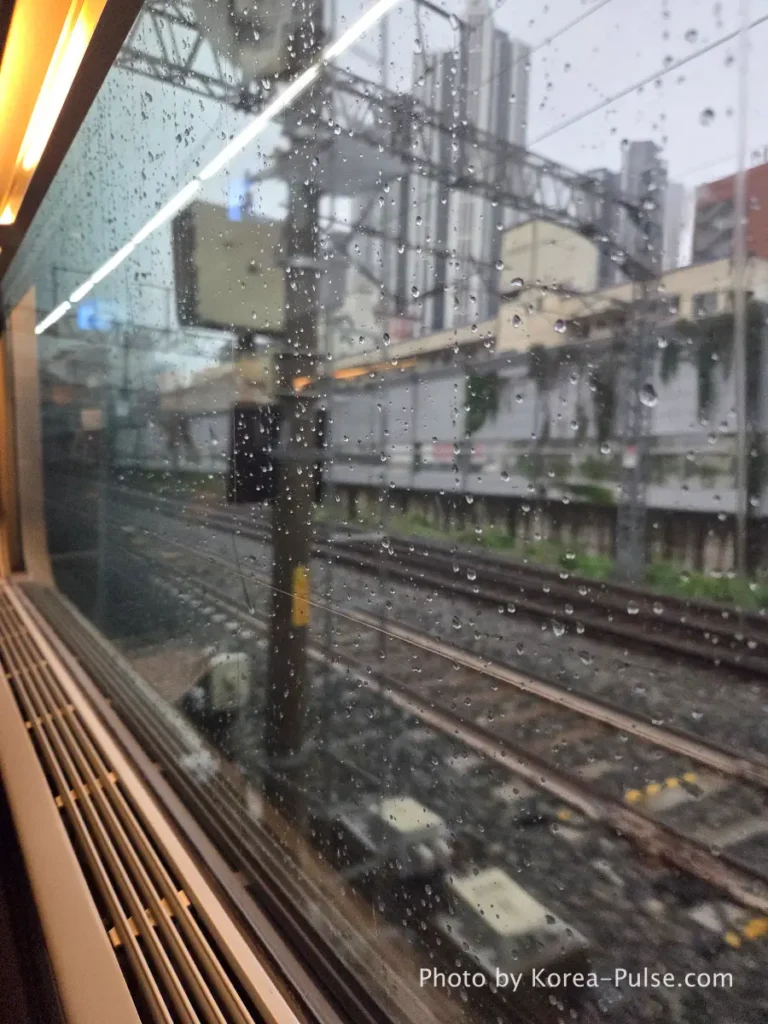
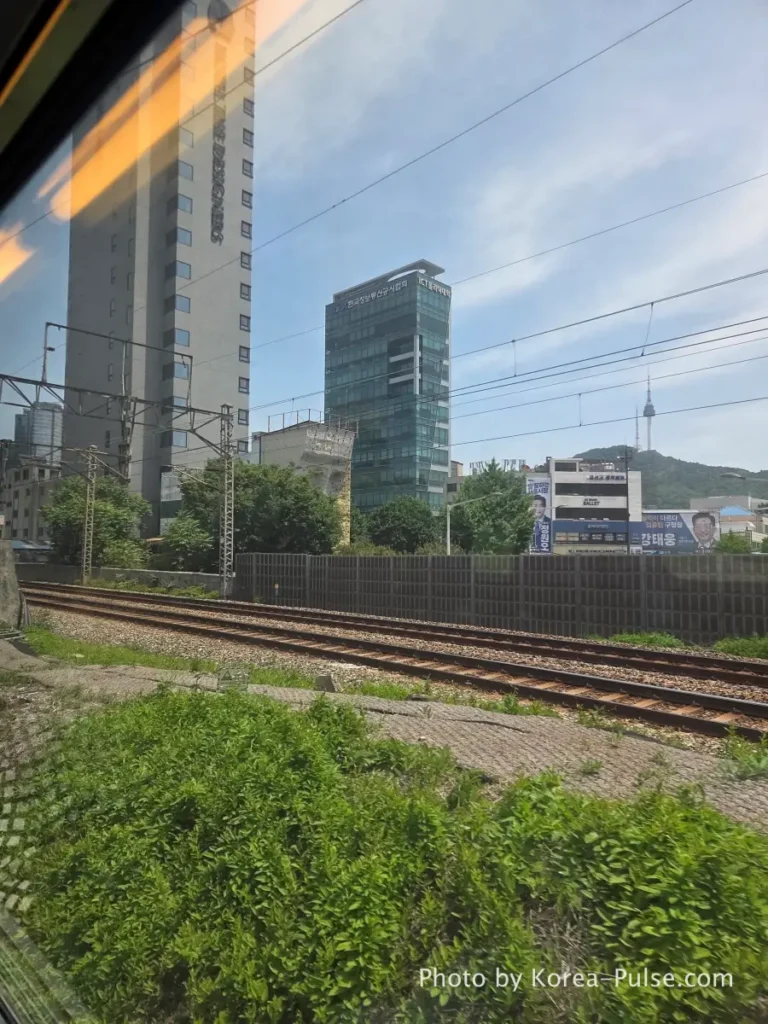
One of the quiet pleasures of a KTX family trip Korea is what happens outside the window. We left Seoul in the rain — proper grey, drizzly Seoul rain — and watched the city gradually dissolve into green hillsides and open rice paddies. Somewhere south of Cheonan the clouds broke. By the time we pulled into Dongdaegu, it was full afternoon sun.
That shift in scenery is one of the things you simply don’t get on a short domestic flight. The Korean peninsula is compact but varied — you can feel the geography change over two hours in a way that’s oddly satisfying, especially when you’re sharing a table with people you like.
The Two Essentials: Samgak Kimbap & a Power Bank

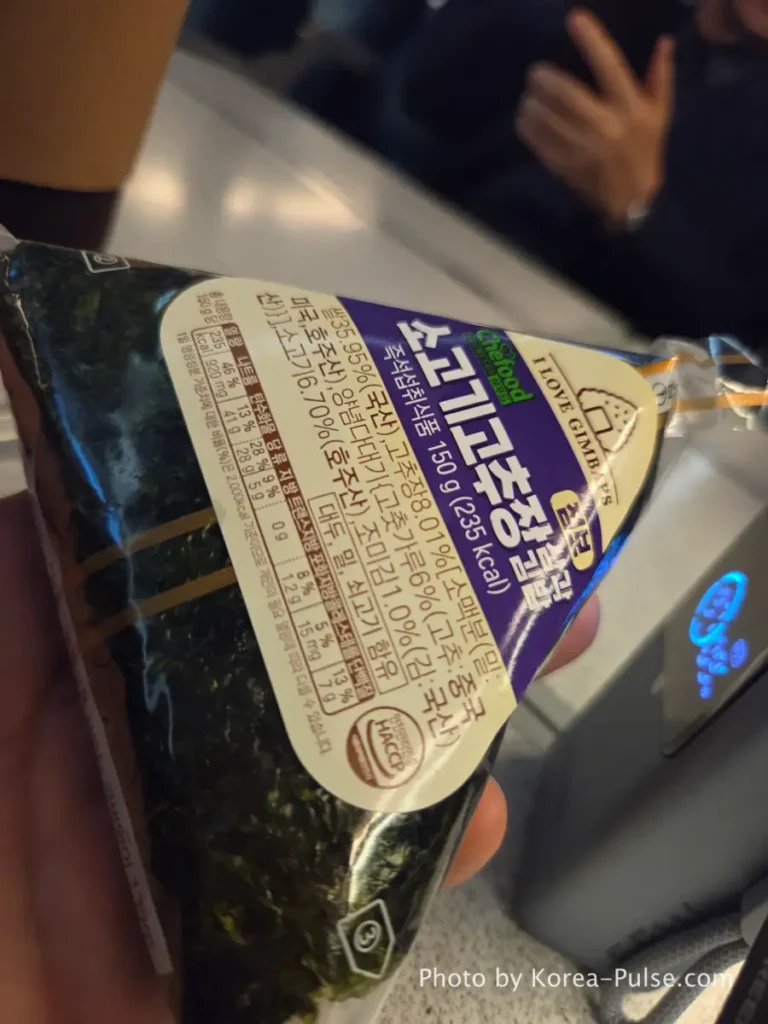
Two items that belong on every KTX family trip Korea packing list, no exceptions.
Power bank first. KTX trains do have onboard outlets, but they can be awkward depending on where your seat lands. On older trains, the sockets are mounted on the wall between windows — meaning you’d need to lean across the person in the window seat, or ask them to plug in for you. On some KTX-Sancheon models, the outlet sits closer to the row behind you than to your own seat, which means asking your neighbour for a favour before you’ve even had your kimbap.
Neither situation is a disaster, but it’s an unnecessary awkwardness on a family trip. Bring a high-capacity power bank, put it on the companion seat table, and forget the socket entirely. That’s what we did. Everything stayed charged, nobody had to negotiate with a stranger.
Samgak Kimbap second. These triangular seaweed-wrapped rice pockets — stuffed with tuna mayo, spicy pork, or kimchi — are one of Korea’s great transit foods. Cheap, mess-free, and engineered with a clever pull-tab wrapper that keeps the seaweed perfectly crisp until the moment you open it. Grab a few from the station convenience store before boarding.
Samgak Kimbap (삼각김밥) comes in a range of fillings, most labelled with an English translation. The spicy ones mean it. Tuna mayo (참치마요) is a safe, universally loved starting point. Cost: around ₩1,200–1,800 each at GS25 or CU inside Seoul Station.
Dongdaegu Station: Arriving, Escalators, and the Mandatory Bakery Stop
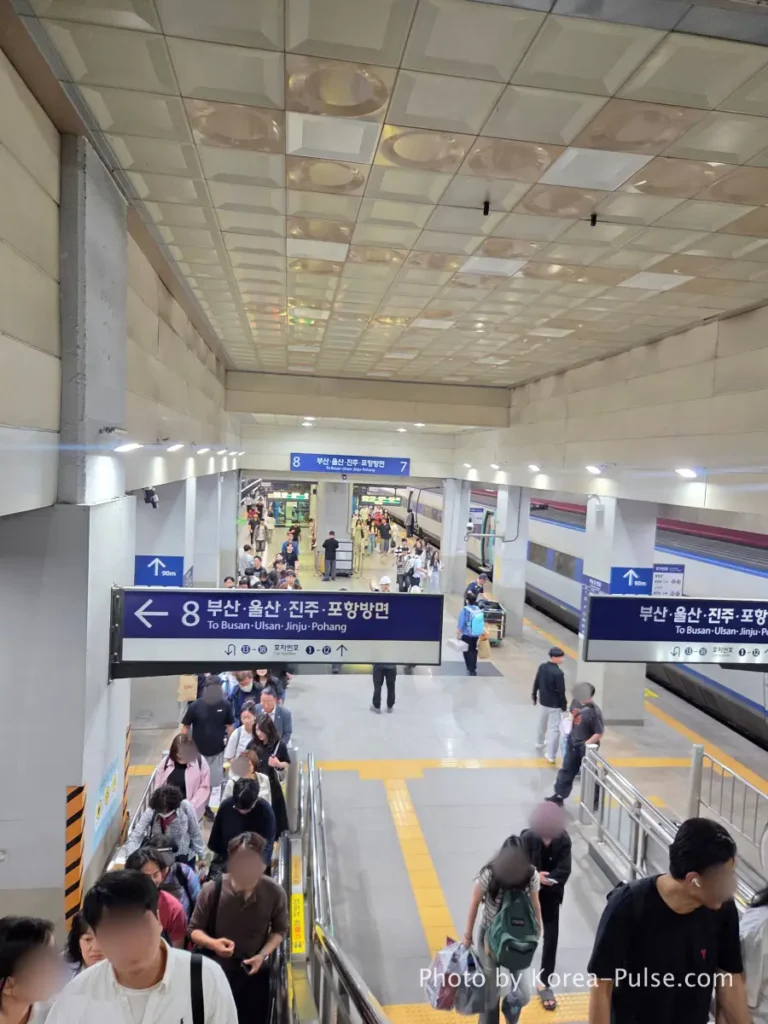
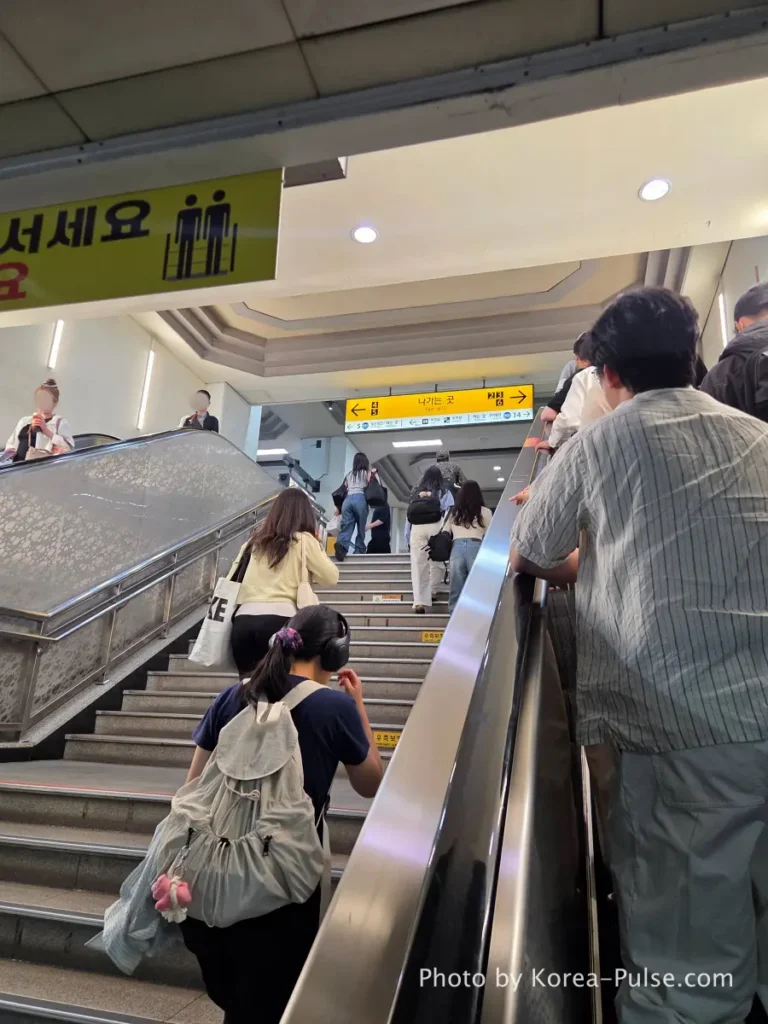
Pulling into Dongdaegu and stepping off the train, the first thing you do is ride the long central escalator up into the station complex. It’s a good escalator — the kind that makes an arrival feel like an arrival.
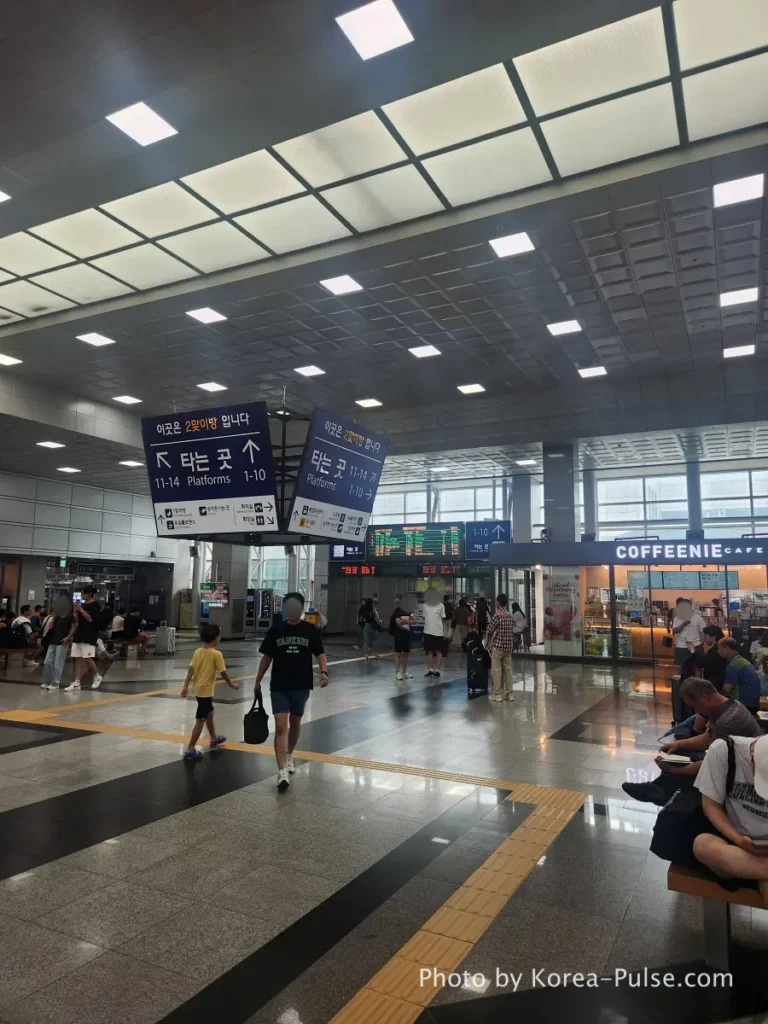
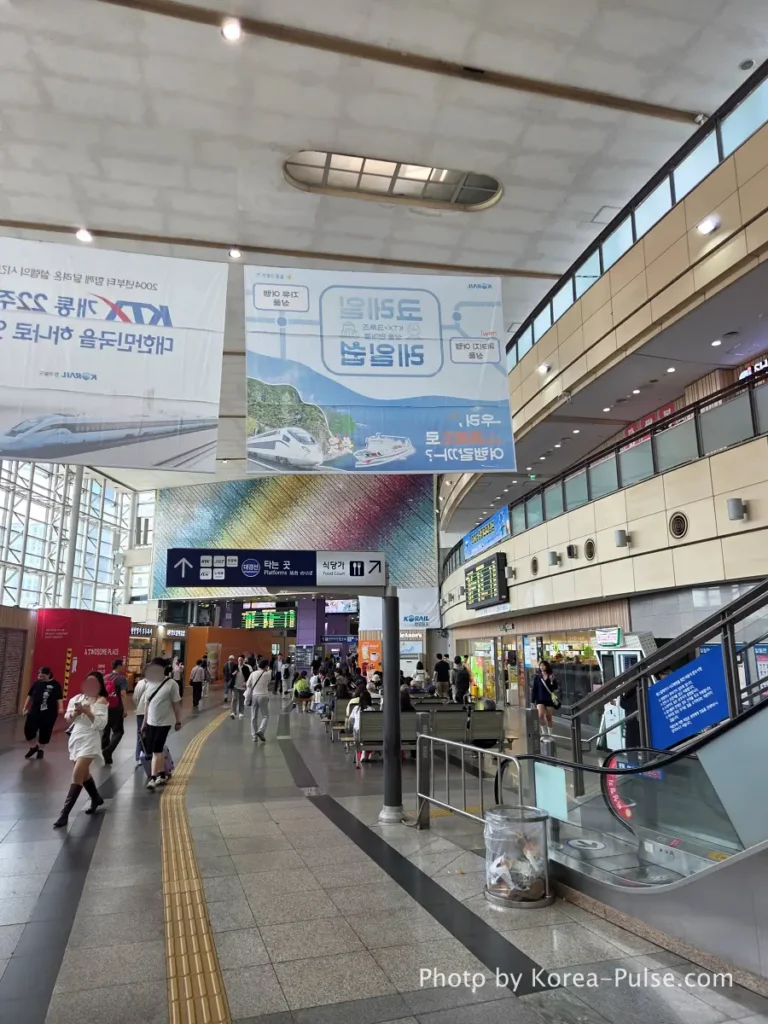
Dongdaegu Station divides into two passenger waiting areas — 맞이방 1 and 맞이방 2 (Waiting Hall 1 and 2). Hall 2 is the quieter option, good for regrouping and checking bus connections. The main hall connects directly to the Dongdaegu Intercity Bus Terminal, making onward travel to smaller Gyeongsang Province cities easy. Food courts and shops fill the rest of the complex.
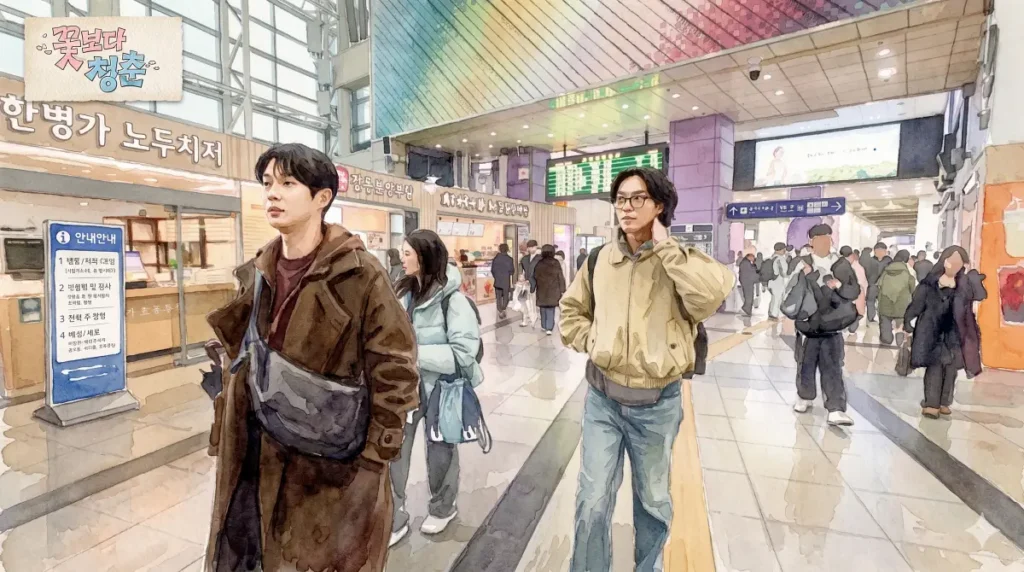
The Unplanned Trip: Limited Edition crew walked through this exact hall near the end of their episode — and seeing it on screen first makes arriving here in person feel like recognition rather than tourism. This is what the show does well: it films real Korea, not a polished version of it.

Before heading out, one mandatory stop: Samsong Bakery (삼송빵집), the legendary Daegu institution famous nationwide for their sweet corn bread — so addictively rich and creamy it’s earned the nickname mayak-ppang (마약빵, “drug bread”). A fresh box makes the perfect hospital visit gift. Which is exactly where we were headed.
Watch This Before You Go: Unplanned Trip: Limited Edition
If you’re planning a KTX family trip Korea — or any Korea rail journey, family or solo — I’d genuinely recommend watching Unplanned Trip: Limited Edition first. Not as research. Just because it’s good, and because it will make every station you pass through feel familiar in the best possible way.
The show follows Park Seo-jun, Choi Woo-shik, and Jung Yu-mi as they travel across Korea with minimal planning and maximum realness. Seoul Station, the KTX platform, the bleacher stairs, Dongdaegu — they didn’t manufacture the locations or clear the crowds. They filmed the places as they actually are. That’s why standing in the same spots in real life feels like recognition: you’ve already been there, through the screen.
The show aired on tvN in 2026 and is available on TVING. It also covers a lot more of Korea beyond the Seoul–Daegu corridor — if you’re curious about other parts of the country, the itinerary is genuinely worth following as travel inspiration.
Full review here: Unplanned Trip: Limited Edition — Korea Pulse
The watercolor-style images throughout this post are screenshots from the show, converted to preserve their character. They’re placed next to the real locations not as decoration, but as a practical comparison: here’s what it looks like in the show, here’s what it looks like when you actually show up. The resemblance is not a coincidence. The production team just chose to film Korea honestly.
FAQ: KTX Family Trip Korea
The questions I get asked most about a KTX family trip Korea — answered straight.
Yes. The Korail website and app both support international credit cards and English language booking. Look for the 동반석 (companion seat) option when selecting seats for 3–4 passengers traveling together.
No. You can book 3 of the 4 seats (getting the ~5% discount) and leave the fourth empty. The discount structure rewards 4-person bookings most — 10% off — but 3 people can still use the same quad layout with extra table space.
Yes, but location varies by train model. KTX-Sancheon models place outlets under the seat cushion; older KTX trains have them on the wall between windows. Bring a portable power bank to avoid the seat-hunting situation entirely.
Around 1 hour 40 minutes to 2 hours, depending on the specific service. KTX-Sancheon trains on express runs can do it in under 1 hour 45 minutes. Check the schedule on the Korail booking page for exact timings.
Inside the main station complex, near the retail area. Look for the yellow branding. It’s well-signposted and usually has a short queue — which is a good sign.
For most travelers doing a KTX family trip Korea, yes. Flights do exist between Gimpo and Daegu, but when you factor in check-in time, airport transfers on both ends, and baggage restrictions, the total door-to-door time rarely beats KTX. The train gets you city centre to city centre in under two hours, with no check-in wait, no liquid rules, and a shared table if you book companion seats. For a family, it’s not a close comparison.
What’s Next: Mugunghwa to Andong
After the hospital visit and a proper Daegu meal, the KTX family trip Korea had one more chapter. Back to Dongdaegu Station — but this time, we weren’t catching the express. We were looking for the slow train. The Mugunghwa-ho (무궁화호), Korea’s classic intercity service, northbound toward the historic city of Andong. That’s the next post — Riding the Mugunghwa: Dongdaegu to Andong.
“Same train, same route — but bring family and a shared table, and the whole thing becomes something worth writing about.”
The KTX companion seat is one of the most underrated parts of any KTX family trip Korea. The discount is real, the face-to-face setup changes the whole trip dynamic, and the two-hour window goes by faster than you’d expect. And if you’ve watched Unplanned Trip: Limited Edition first, every station stop comes with a layer of recognition that makes the whole journey feel a little richer.