K-FOOD · JUNE 2026
Gwangjang Market Clothing Market
The Complete Hanbok & Textile Guide (Part 4)
Past the food alley smoke: silk wholesalers, a century of hanbok tailoring, and a very unexpected Olive Young.
This is Part 4 of our Gwangjang Market series. If you missed Part 3 — the market’s legendary twisted donut alleys, that’s worth backtracking for. But if you’ve already filled up on bindaetteok and mayak gimbap, you’re in exactly the right place, because everything you’ve eaten so far only tells half the story.
Before Gwangjang Market went viral for sizzling mung bean pancakes and glistening bowls of yukhoe, it was known for exactly one thing: fabric. This final chapter steps past the smoke of the food alley and into the market’s original heart — the wholesale textile corridors, silk shops, and hanbok ateliers that gave the Gwangjang Market clothing market its name back in 1905.
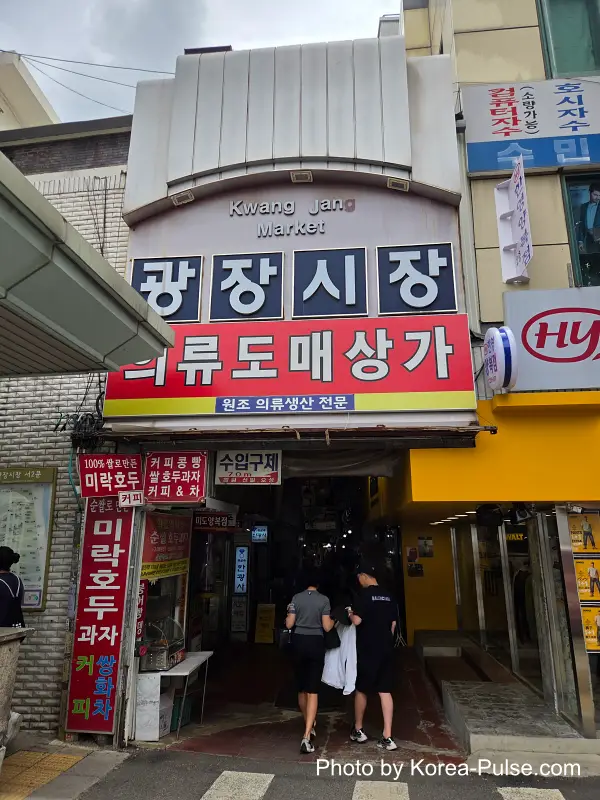
West Gate 2: Where the Gwangjang Market Clothing Market Begins
Our final walk starts at West Gate 2 (서2문), a historic entrance flanked by signage proudly proclaiming its status as a wholesale clothing and original textile production hub. It’s a fitting starting point — when Gwangjang Market opened in 1905, widely credited as Korea’s first permanent market, its core trade wasn’t tteokbokki or bindaetteok at all. It was silk (judan), fabric for hanbok, and general textiles. The food alley everyone associates with the market today grew up decades later, layered on top of a business that was originally about cloth.
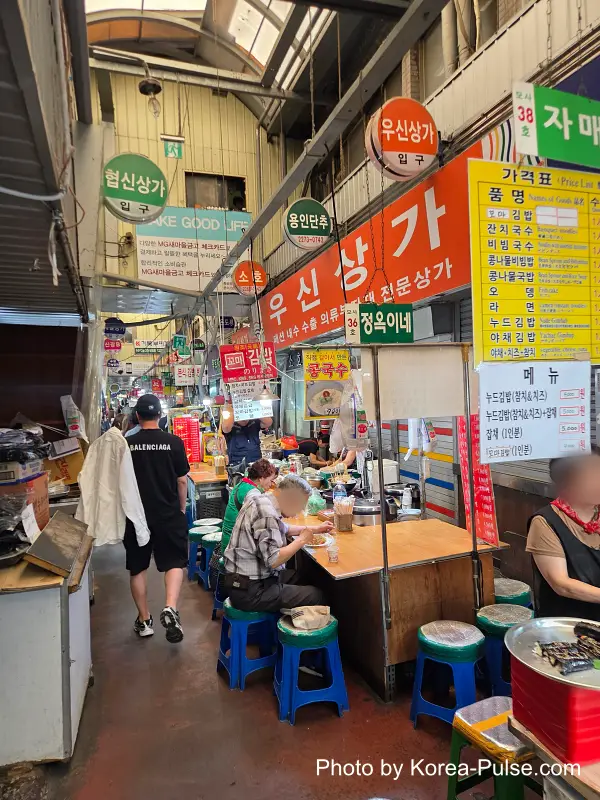
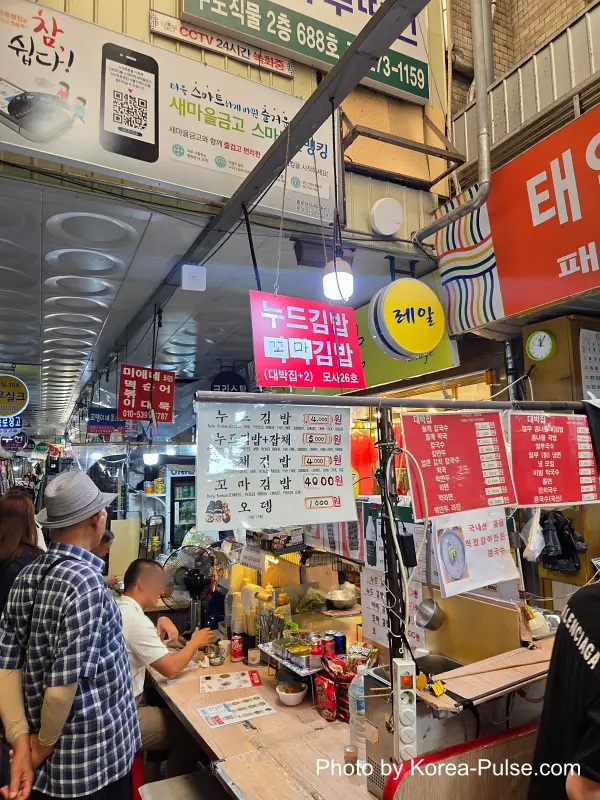
Step through the gate and the rhythm changes immediately. Instead of grill smoke and shouting vendors, you’re met with a handful of cozy, tucked-away noodle stalls, the kind of small operations that quietly feed the wholesale workers upstairs rather than perform for tourists. I didn’t have to look far before spotting a local legend hiding right in the entrance alley.
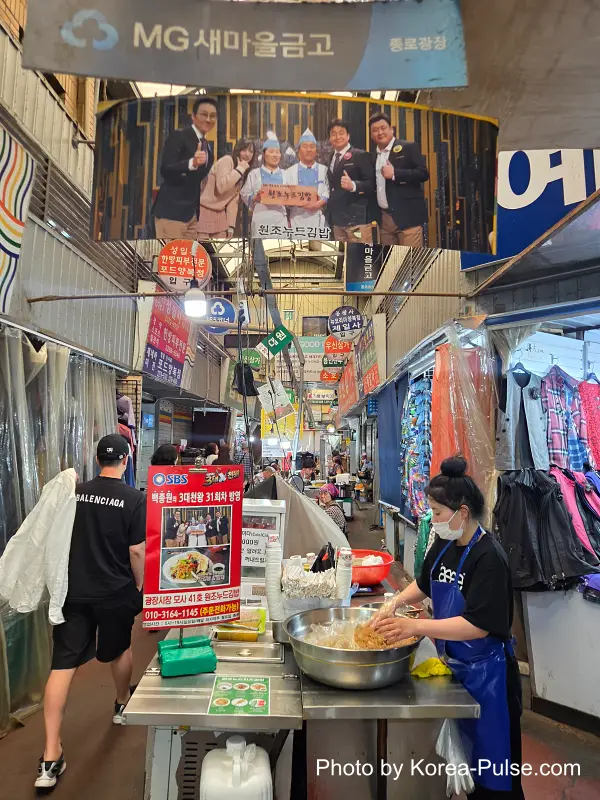
That stall is Wonjo Nude Gimbap, which earned its fame on 3 Dae Cheonwang, an SBS food program (2015–2017) hosted by chef-entrepreneur Baek Jong-won. A “nude” gimbap flips the usual formula, wrapping the rice on the outside of the roll instead of the seaweed.
Here it comes stuffed with cheese, tuna, and japchae (stir-fried glass noodles), and the counter also serves banquet noodles (janchi-guksu), spicy noodles (bibim-guksu), and bean sprout bibimbap. A roll runs around ₩4,000 — cheap enough that I watched a table of grandmothers and a table of backpackers order the exact same thing within a minute of each other.
The Main Artery: Silk, Bedding, and a Sudden Catch of the Day
Past the noodle stalls, I stepped into the grand western corridor that connects the outer street directly to the food plaza. This is the true main street of the wholesale side — stacked with traditional Korean bedding, heavy rolls of silk, and everyday clothing shops. It’s wide, busy, and less touristy than the food alley, with real trade happening between shopkeepers.
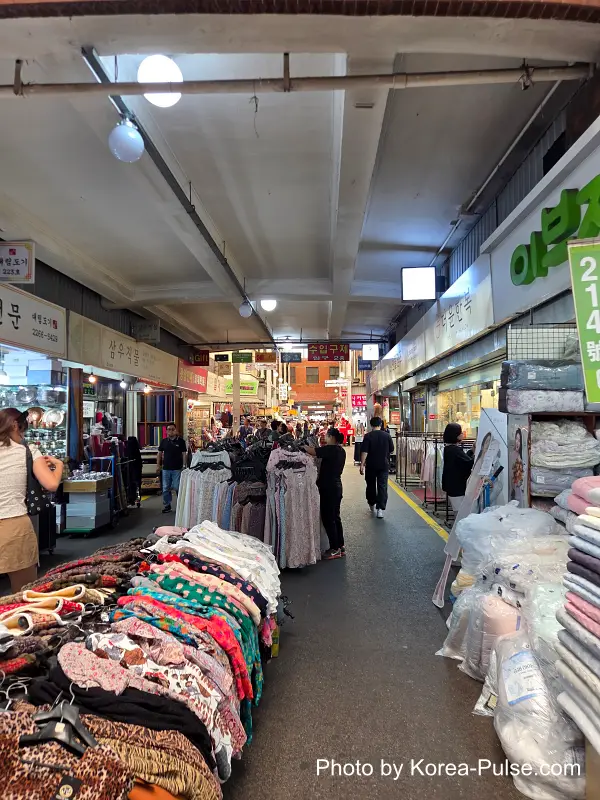
Then, as happens constantly in older Korean markets, the scenery flips without warning. One moment you’re surrounded by soft linens, and the next you’ve wandered into a mini seafood corridor, fresh fish and shellfish stacked neatly on ice right along the walkway. Textile market, food market, fish market — in a hundred-year-old space like this, the boundaries were never that strict to begin with.
Ol-Yeong Yanghaeng: A 1905 Market Gets a 2026 K-Beauty Wing
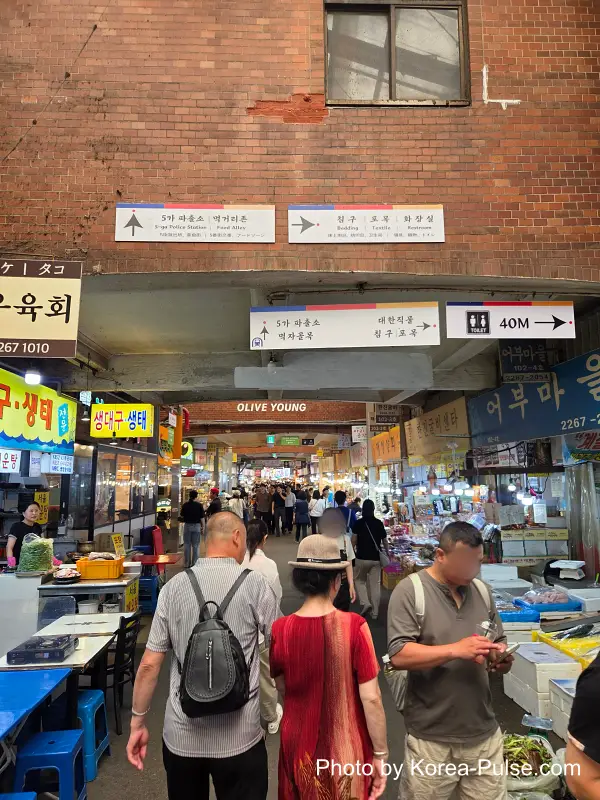
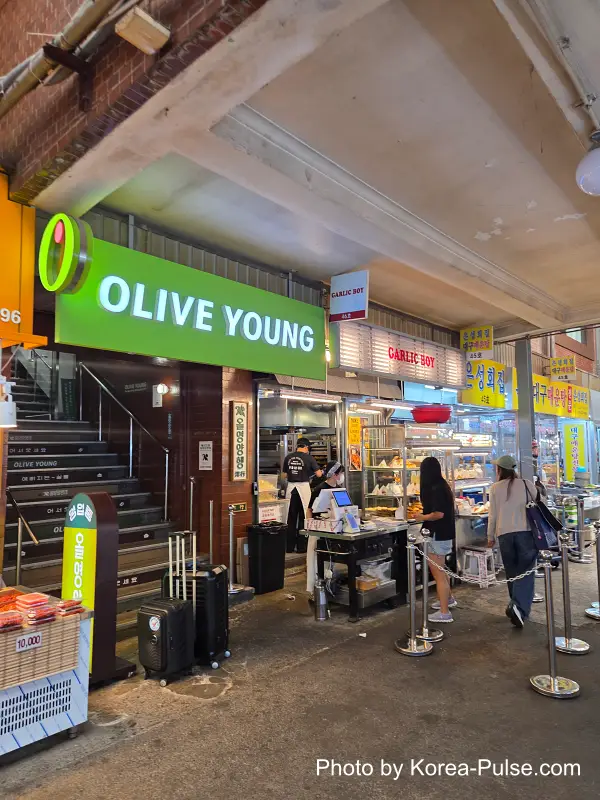
Right where the seafood stalls give way to the food alley, a bright green sign stopped me in my tracks: Olive Young, of all places. This isn’t a standard branch. CJ Olive Young opened it as the Gwangjang Market Store on April 30, 2026, and instead of dropping a generic shop into a historic building, they built a full 1960s retro concept called Ol-Yeong Yanghaeng (올영양행) — right down to the wooden “beautifying salon” signage and stained-glass trim.
It sits on the second floor of the market’s silk-and-fabric district building, a genuinely large footprint at roughly 806 square meters, according to CJ Olive Young’s official opening announcement. Olive Young deliberately doesn’t sell the market’s signature snacks in-store out of respect for the surrounding vendors. Instead it runs a “natural ingredient curation zone” tied to Korean beauty staples like citrus peel, birch sap, carrot, and mugwort, plus a retro photo corner where visitors can try on hanbok and durumagi coats for pictures.
The brand also signed a formal partnership with the market’s merchant association to share marketing and revenue during peak seasons. It’s the same expansion playbook Olive Young has used at its Myeongdong Town flagship and its first US store in Pasadena — go big, go story-driven, and lean into the neighborhood’s identity instead of flattening it. A rare case of a global Olive Young store getting it right.
I didn’t make it inside on this visit, so I can’t give you my own verdict on the shopping experience yet — that’s a trip for the next round. But you can browse the brand’s full catalogue any time on Olive Young’s official global site while you plan your visit.
Side Streets: Pottery, Banchan, and Garlic Boy’s Neighbors
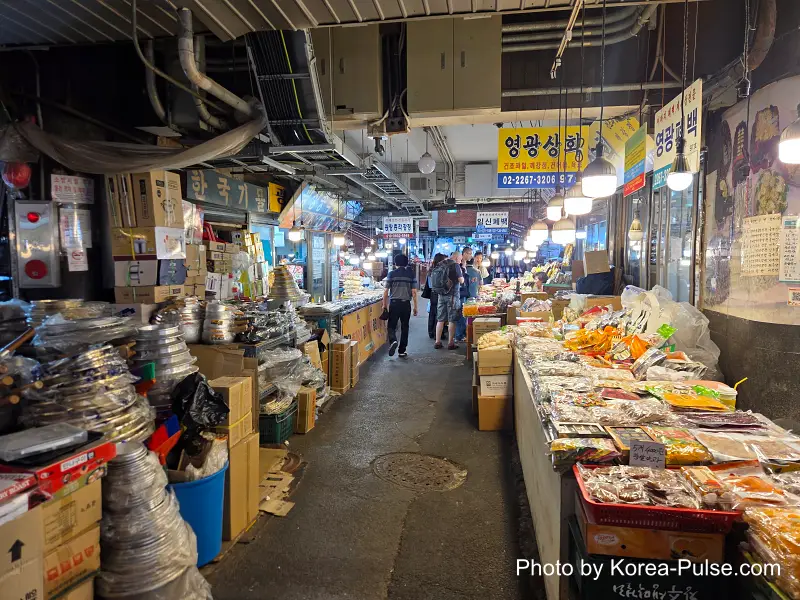
Right next to Ol-Yeong Yanghaeng sits Garlic Boy, the twisted donut shop we covered in Part 3. Wandering the smaller side paths around it turns up a completely different Gwangjang Market: pottery stalls, heavy kitchenware, and dried goods vendors that most food-alley visitors walk straight past.
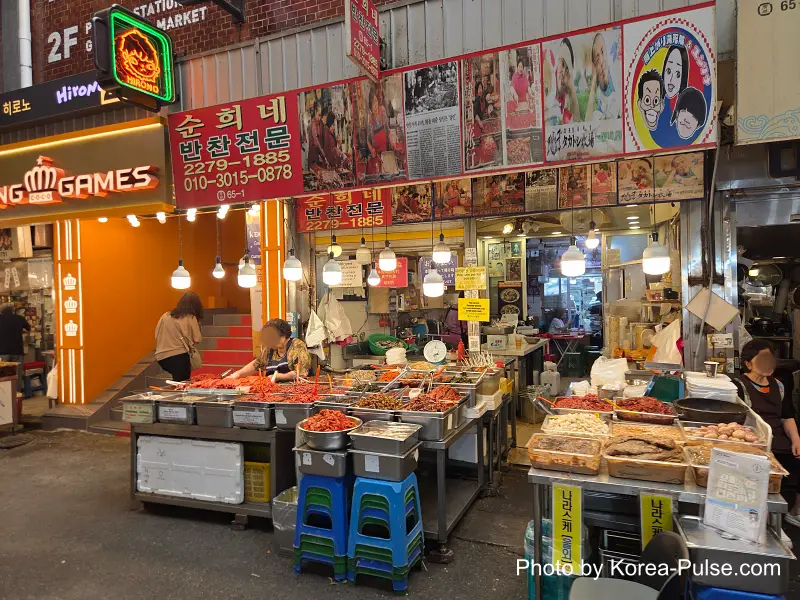
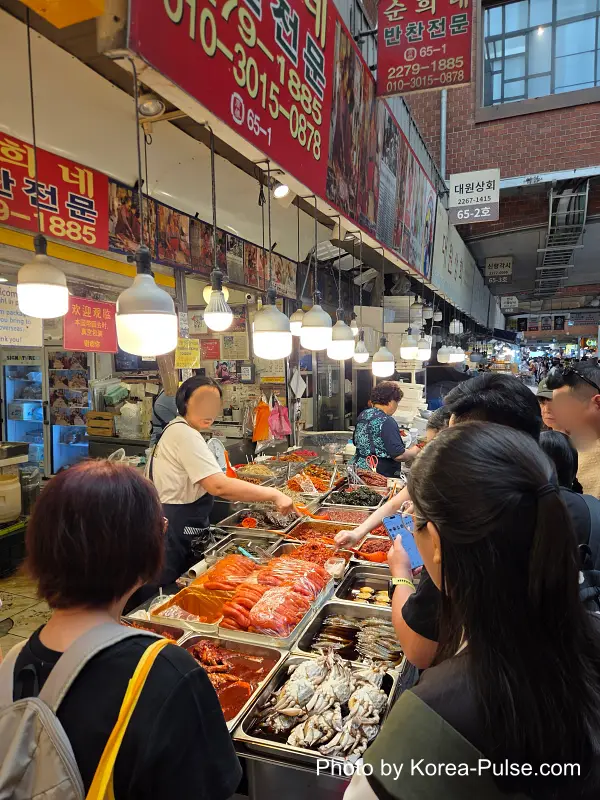
Directly across from Garlic Boy is a classic banchan (Korean side dish) shop — a good reminder that the sheer variety of banchan is one of the defining features of Korean home cooking. Watching a steady stream of curious foreign visitors stop and stare at the trays never gets old.
The Hanbok Alley: A Sea of Silk and a Century of Craft
Now for the true crown jewel of the Gwangjang Market clothing market: the alley dedicated to custom-tailored hanbok — Korea’s traditional dress. Walking down this row is a genuine feast for the eyes, with shop after shop displaying bolts of fabric in every shade imaginable, from deep crimson and gold to soft, dusty pastels.
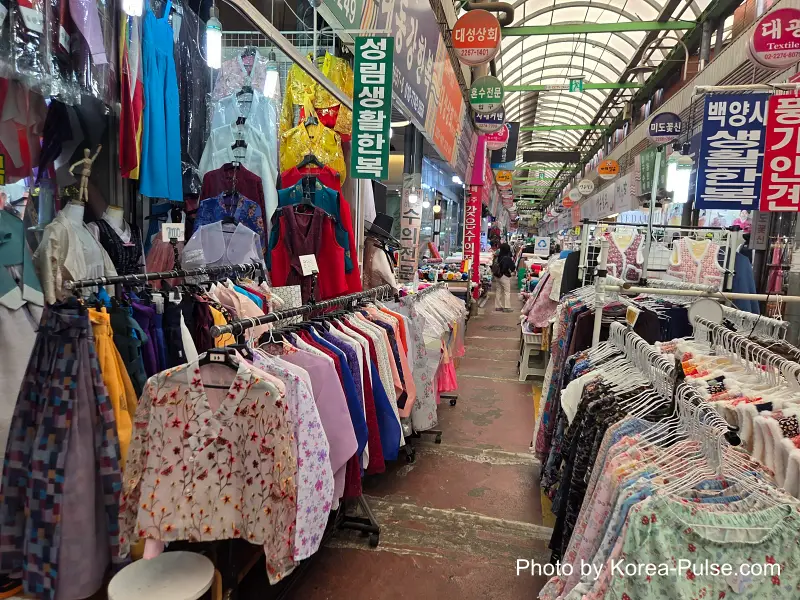
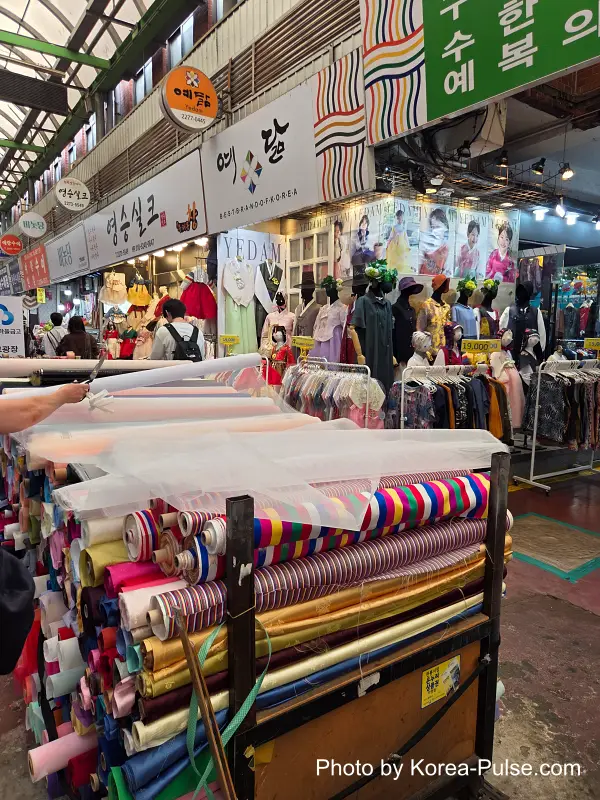
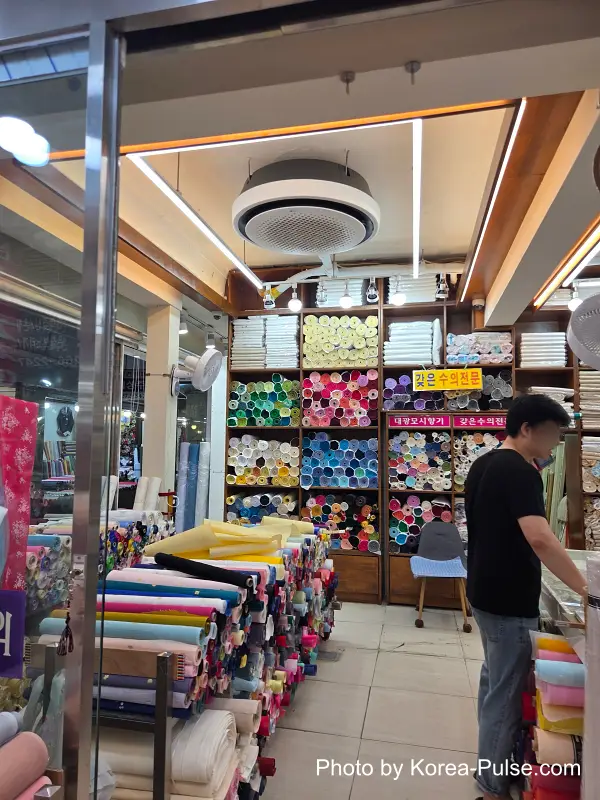
The craftsmanship on display is genuinely striking. Grand, elaborate robes styled after palace dress hang beside tiny children’s outfits made for celebration days — most of it made to order rather than mass-produced.
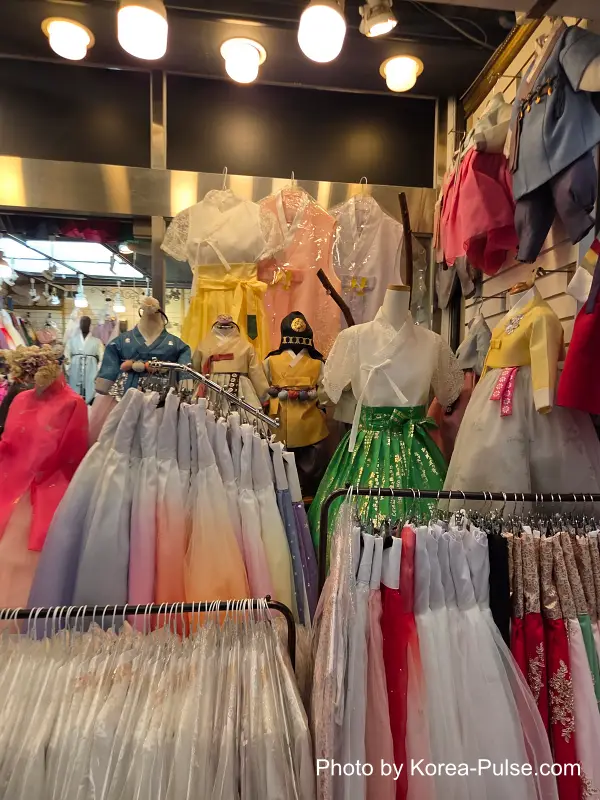
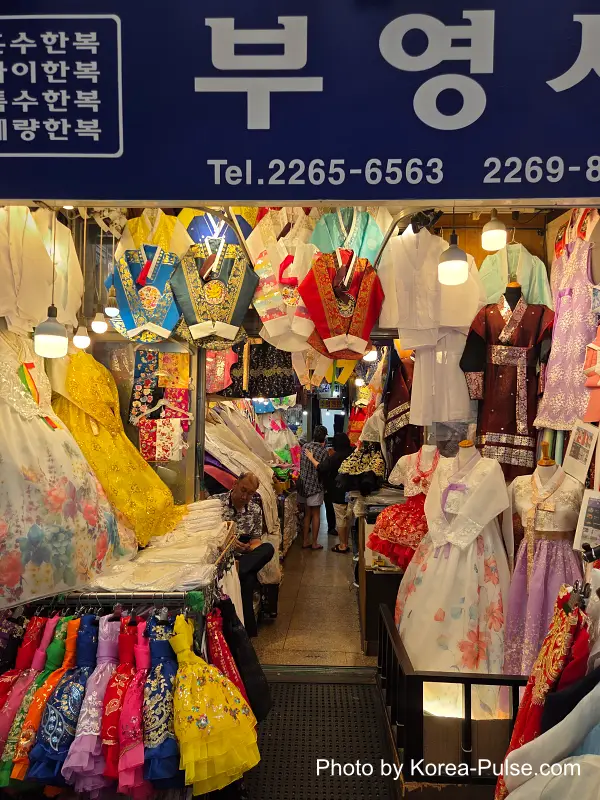
As a local dad, walking down this particular row brought back a flood of memories. About ten years ago, my wife and I spent an entire afternoon in this exact alley hunting down the right hanbok for our daughter’s kindergarten festival. The food alley wasn’t a global sensation yet back then — the market was mostly grandmothers, newlyweds, and parents like us, picking out fabric for real occasions rather than photos.
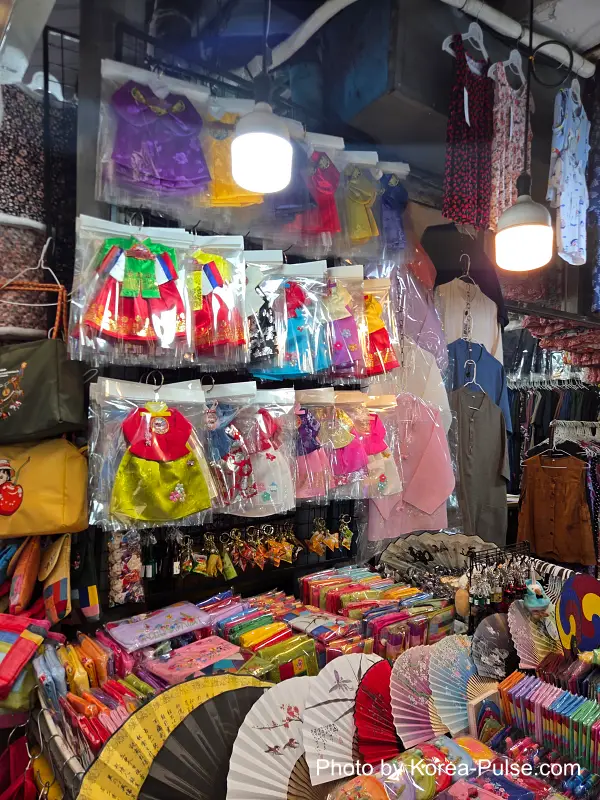
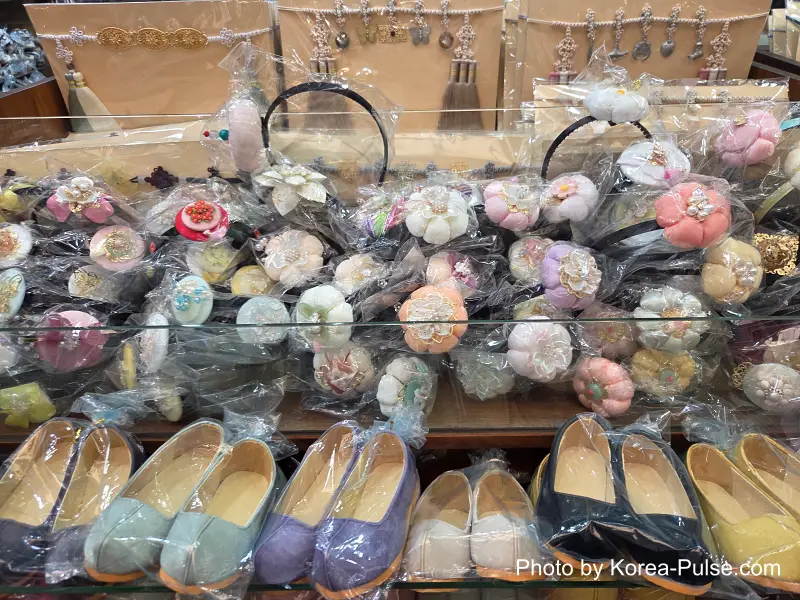
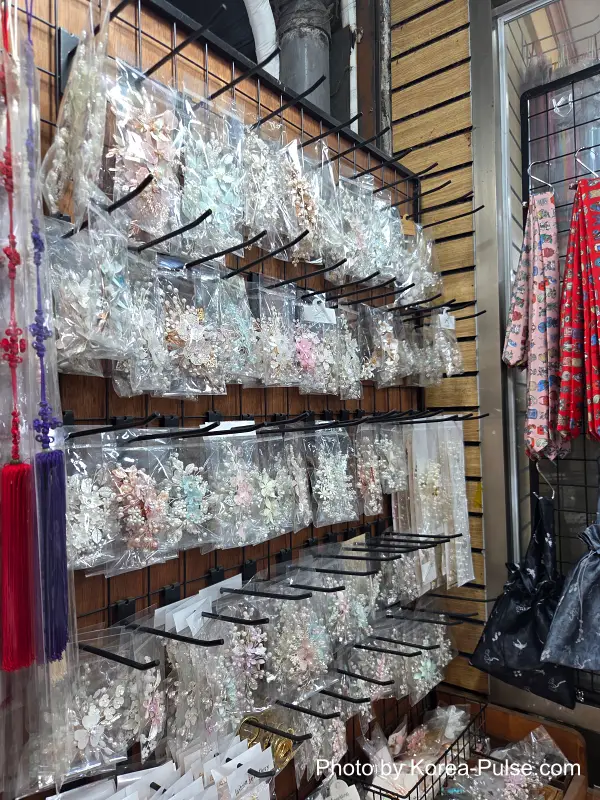
Beyond the garments themselves, the small booths sell a full range of accessories: embroidered pouches, folding fans, floral hairpins, and the rubber shoes called gomusin that traditionally pair with hanbok.
When Do Modern Koreans Actually Wear Hanbok?
Casual, modernized hanbok (saenghwal hanbok) shows up daily on style-conscious young people and some older residents who wear it as everyday clothing. Full traditional hanbok, though, is largely reserved for a handful of milestone occasions:
- Major holidays — traditionally worn for Seollal (Lunar New Year) and Chuseok, though this custom has become more casual over time.
- Weddings and Pyebaek — parents of the couple regularly wear hanbok, and the newlyweds wear it during Pyebaek, a private post-wedding ritual where the couple bows to family elders.
- First birthdays (Doljanchi) — babies are almost always dressed in a bright hanbok for the celebratory first-birthday photos.
Beyond Silk: The Western Tailoring Corner
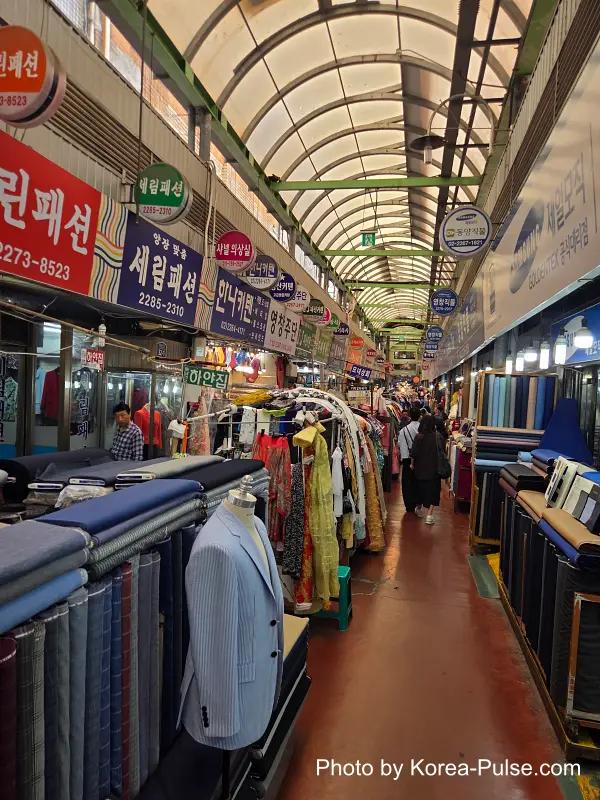
Past the bright hanbok rows, the market shifts into an older wholesale garment section aimed at Western-style clothing. Here, veteran tailors work through thick rolls of premium fabric, still turning out custom shirts and suits for Seoul’s older generation of regular customers.
Full Circle: Where a Century-Old Market Meets 2026
Heading back toward the central crossroads, you can see exactly how far this place has grown. Right along the edge sits a bright, oversized HBAF store — the Korean seasoned-almond brand that’s taken snack aisles worldwide by storm. Finding it steps away from century-old fabric shops sums up how well this market keeps absorbing new tenants without losing its identity.
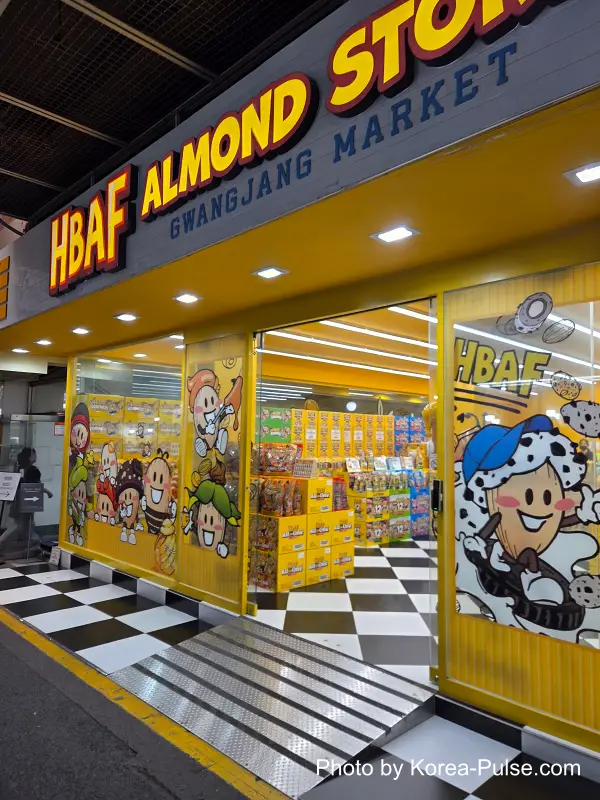
Looking down the vaulted central roof one last time, I felt genuinely happy about what this series turned into. Watching the wildly popular food stalls run alongside decades-old silk shops, a retro Olive Young, and a snack brand that’s gone global tells you that old markets don’t have to fade to survive — they just need room to keep layering new stories on top of the old ones.
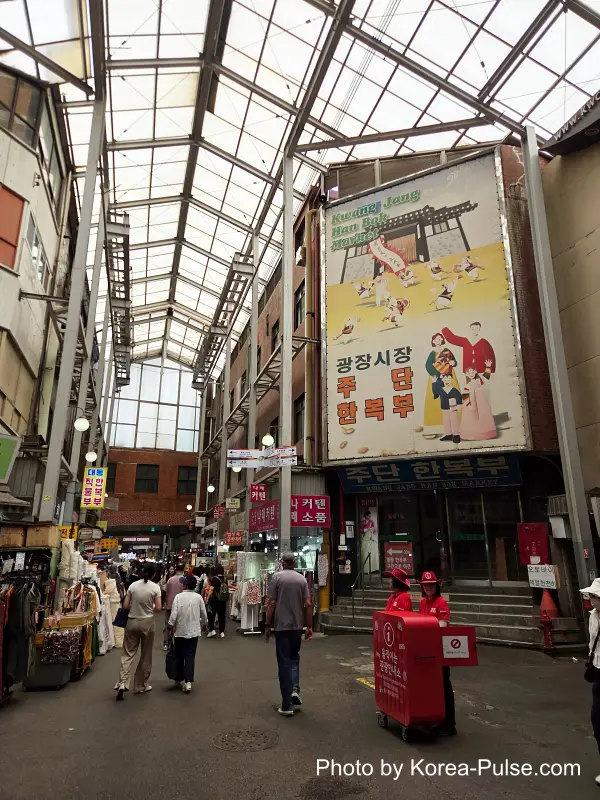
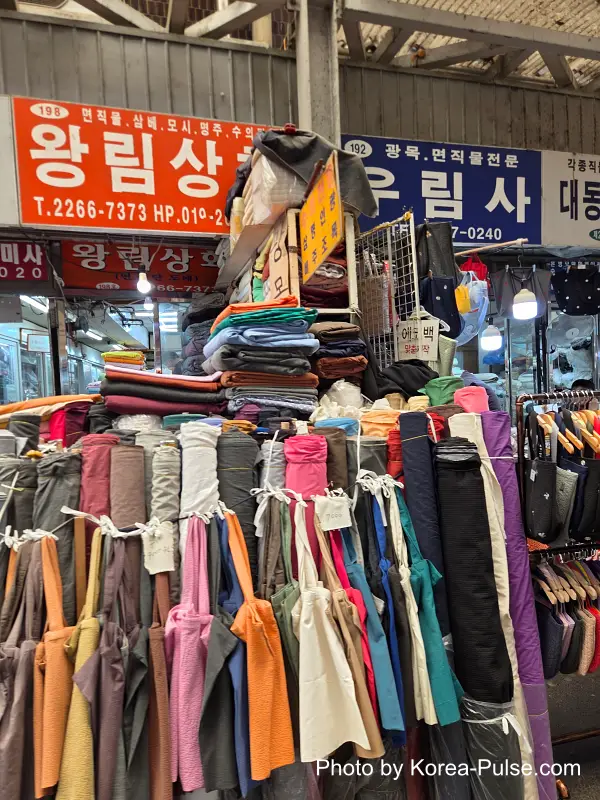
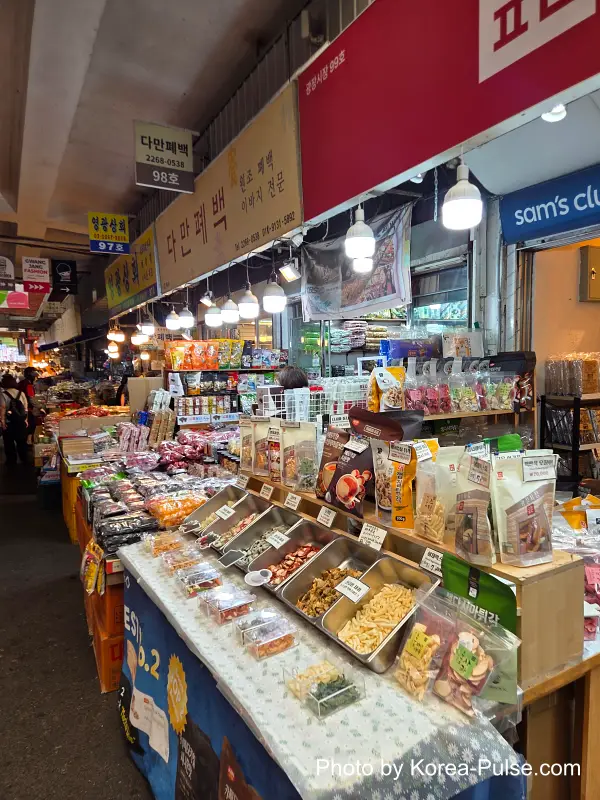
Skip the food alley just once. The Gwangjang Market clothing market is where much of this place’s original identity was built, and it’s still one of the most authentic textile experiences left in Seoul.
It won’t have the crowds or the viral videos, but it has a century of craft that the food alley never had to earn.
Enter through West Gate 2 for the textile side, or take Line 1 to Jongno 5-ga Station (Exit 8), about a 5-minute walk — if you haven’t picked up a T-money card yet, here’s how to buy one. Fabric and hanbok shops tend to close earlier than the food alley, so go in the afternoon rather than the evening if shopping — not just eating — is the goal.