
K-TRAVEL · JUNE 2026
Incheon Airport Arrival Guide:
Plane to Bus in Under an Hour
Immigration, baggage, customs, bus ticket — the full real-time walk-through.
New to this Incheon Airport arrival guide? Here are the steps:
① Follow “Arrivals” signs off the plane → ② Quarantine check (walk through if not flagged) → ③ Passport control (e-gate or staffed booth) → ④ Baggage claim (or skip if carry-on) → ⑤ Customs green channel → ⑥ Arrivals hall, Gates 3–14 → ⑦ Buy bus ticket at kiosk or tap Tmoney → ⑧ Board at numbered platform
Carry-on only + Tmoney card: 20–30 minutes, plane to bus. Checked baggage: add 20–35 minutes.
Planning your first trip around Korea? Start with my complete Korea transit guide before choosing your airport transfer — and if you haven’t sorted your data plan yet, grab a SIM or eSIM before you land, since you’ll want it working the moment you’re through customs.
If it’s your first time arriving at Incheon Airport, the journey from the aircraft door to your bus can feel overwhelming — signs in every direction, gates numbered in no obvious order, ticket machines with six screens you’ve never seen before. This Incheon Airport arrival guide covers every single step, in sequence, photographed in real time on June 9, 2026, arriving from Bangkok. No fluff. Just the walk.
So I’m back. Wheels down, camera out, and quietly relieved that Korea’s immigration system is, pound for pound, one of the fastest in the world. Here’s exactly what it looked like.
Ranking 2026
gate in practice
to Ilsan (Juyeop)
Step 1: Off the Plane — Arrival or Transfer?
The first thing this Incheon Airport arrival guide will tell you: the moment the cabin door opens at Incheon, you’re standing inside the #2 airport in the world — that’s the official 2026 Skytrax World Airport Awards verdict, jumping from fourth place in 2025. ICN also picked up a second award this year: World’s Most Family-Friendly Airport. Anyone who’s recently transited through a major European hub will not need convincing on either count.
This guide is based on Terminal 1 (T1), documented June 9, 2026 on arrival from Bangkok. If you arrive at Terminal 2, the overall process is identical — quarantine, immigration, baggage, customs — but the platform gate numbers and indoor layout differ slightly. Check the signage on arrival.
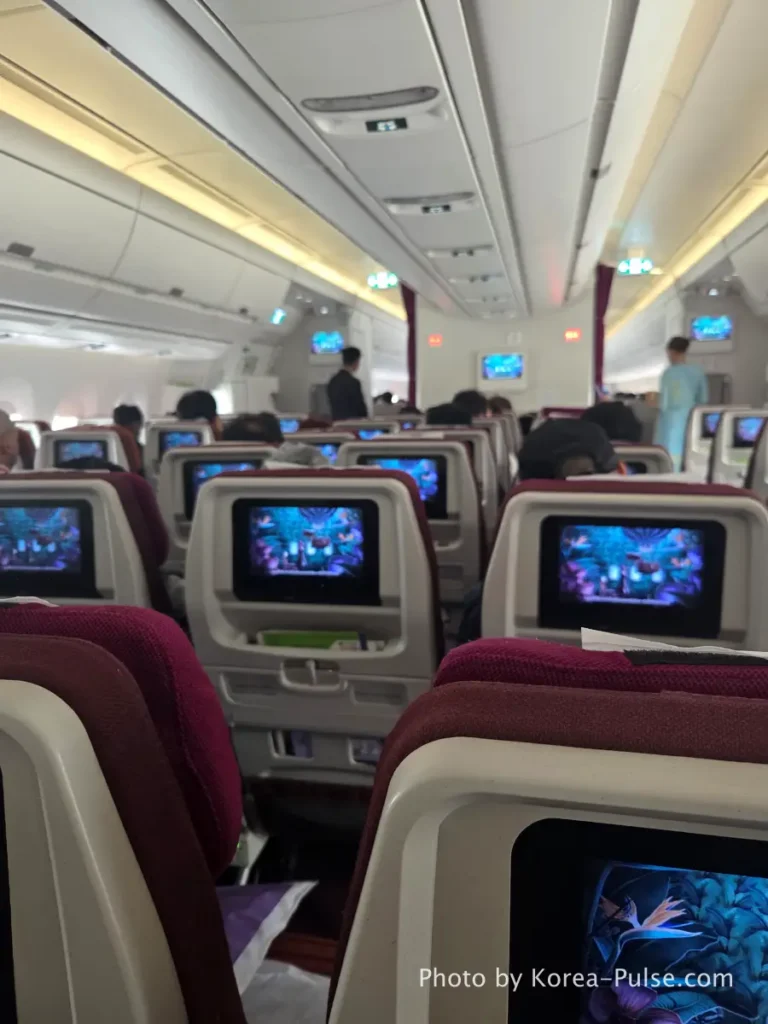
Stepping off the plane, you’ll immediately see two streams: Arrival (final destination Korea) and Transfer (connecting flight). Most people go the same general direction, but the signage splits you early. Follow Arrivals — down the main corridor.
The arrivals corridor at T1 is wide, well-lit, and lined with moving walkways — a small mercy when your carry-on wheels are fighting you after a long flight. Along the left wall: massive digital screens looping traditional Korean artwork — folk paintings, seasonal landscapes, old Seoul street scenes. It’s a genuinely warm welcome, and I never quite get tired of it.
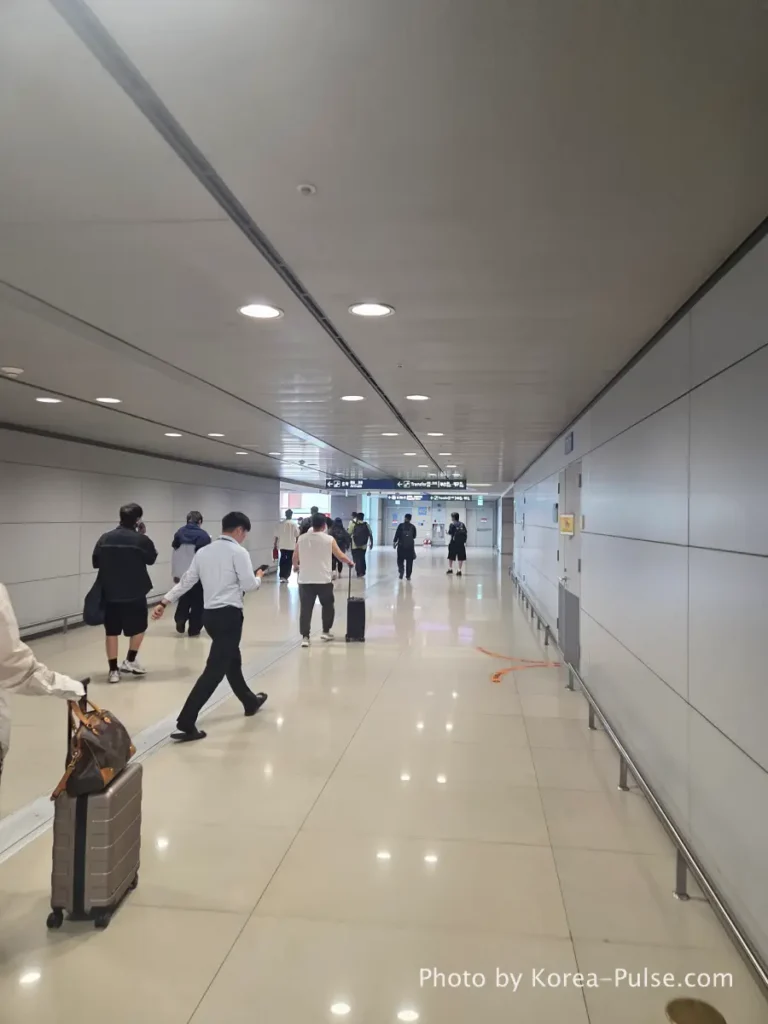
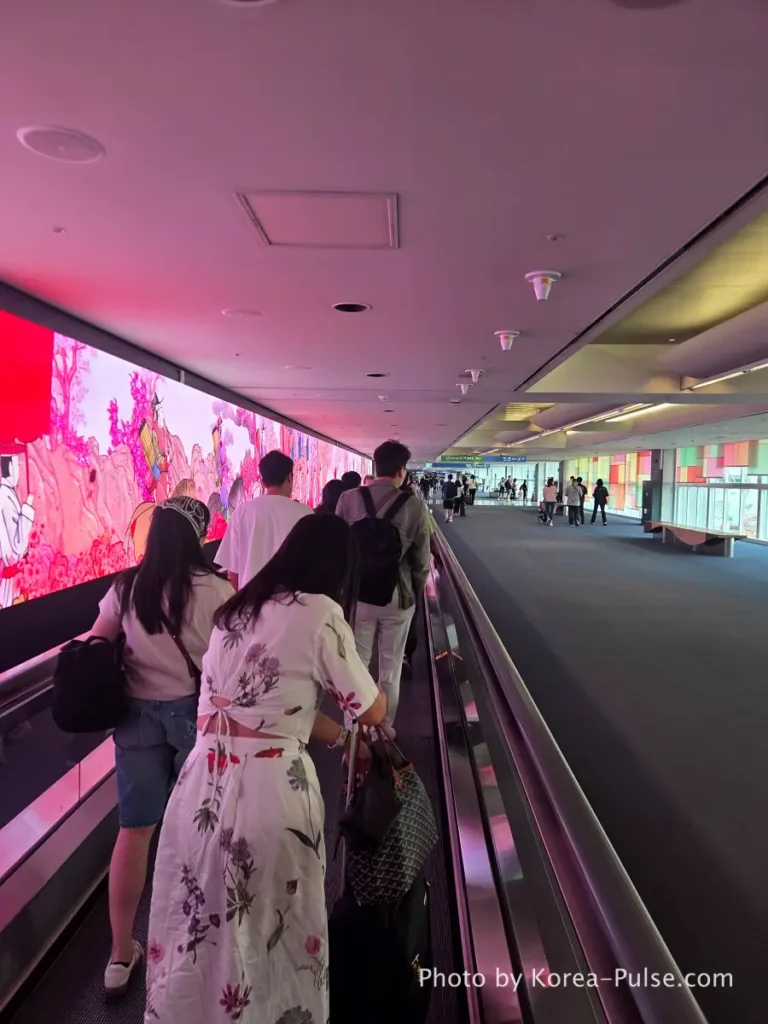
Step 2: Quarantine — Left or Right?
Before passport control, you’ll pass through the quarantine checkpoint. The corridor splits here: immigration to the left, and a secondary health screening zone on the right for passengers arriving from countries currently designated by Korea’s KDCA (Korea Disease Control and Prevention Agency) based on active outbreak alerts.
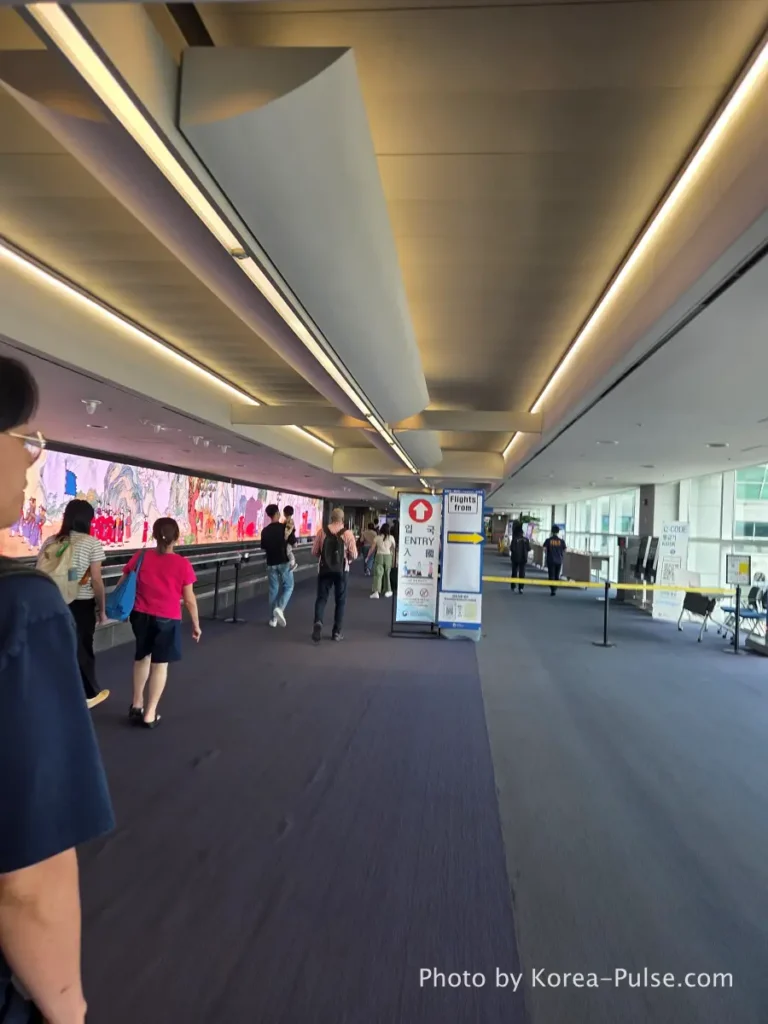
If you’re arriving from a KDCA-designated region, you’ll need to complete a health declaration at the secondary desk — a quick process these days, nothing like the COVID-era bottleneck this area used to be. If your origin isn’t flagged, you walk straight through under the thermal cameras without stopping.
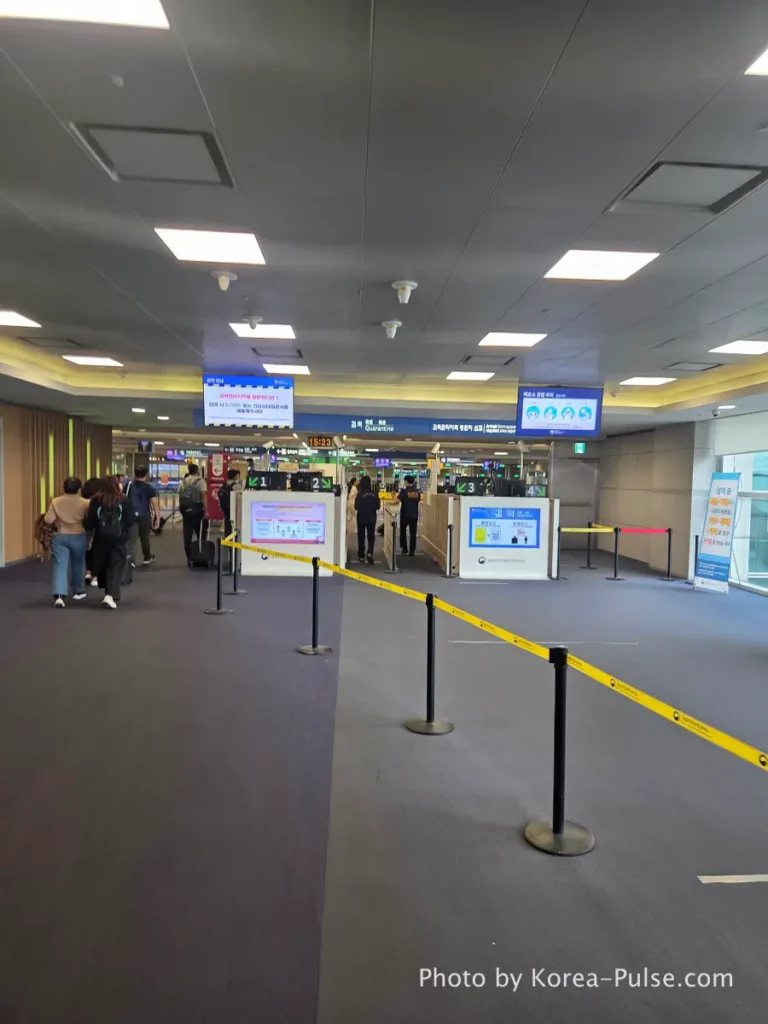
If in doubt before you fly, check the official Incheon Airport health information page for the current list of designated regions — it updates as conditions change.
Step 3: Immigration — The 15-Second Miracle
Next up in this Incheon Airport arrival guide: passport control. Korean citizens and registered foreign residents head directly to the automated e-gates. Scan your passport, look at the camera, press your finger on the reader — and the gate clicks open. In practice, the whole sequence takes as little as 15 seconds. Every single time, it still feels slightly too fast, like you must have accidentally broken out of somewhere.
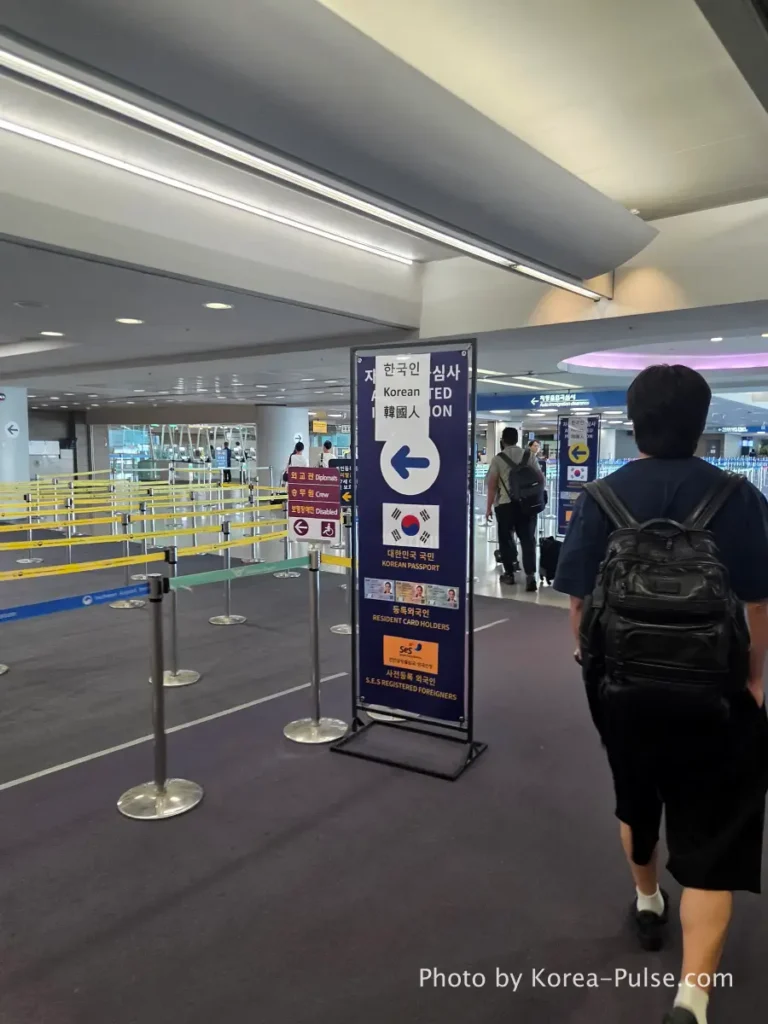
Every time I glide through these gates in under 20 seconds, my brain involuntarily replays Lisbon Airport, late 2025. Three and a half hours. One staffed booth. One agent. I stood in that line until I seriously considered applying for Portuguese citizenship just to access a different queue. Korea doesn’t do that to you.
First-time visitors without pre-registration will use the staffed booths — still efficient by global standards, but noticeably longer during peak arrival windows. If you plan to visit Korea regularly, it’s worth asking the officer at your first visit about enrolling in the Smart Entry Service (SES) for automated gate access on future trips. Eligibility varies by nationality and visa status — check the Hi Korea immigration portal for the latest conditions before your trip.
Step 4: Baggage Claim & The Green Light Exit
Past immigration, escalators drop you into the Baggage Claim hall. On this trip I was carrying a single compact carry-on, which meant I got to do the most satisfying move in all of international travel: walk straight past every carousel at full speed without slowing down.
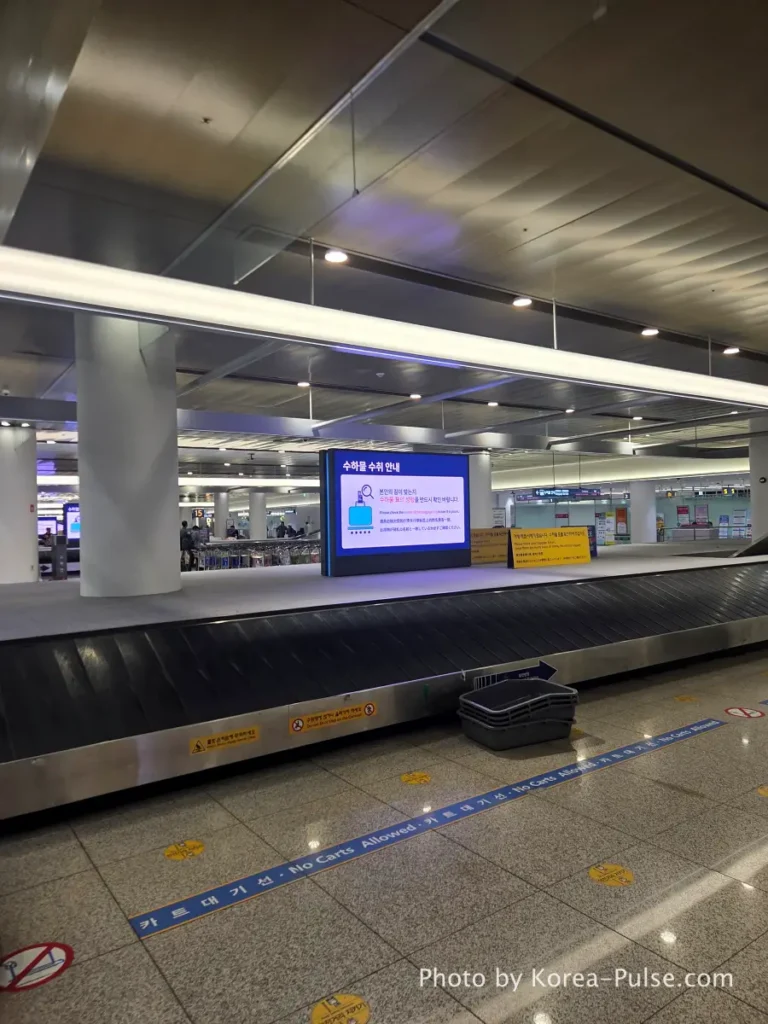
Even if you sprint off the plane and clear immigration in record time, checked baggage typically takes 20–35 minutes after landing to reach the belt. If you want a truly seamless airport-to-bus experience, travel carry-on only. It’s the single biggest time-saver in the entire process.
After baggage claim comes Customs. The green channel means “Nothing to Declare.” Red means you have something to declare and pay duty on. Korea’s duty-free allowance for inbound travelers is USD $800 worth of goods (as of 2026), plus separate limits on alcohol (up to 2 bottles / 2L total / value ≤ $400) and tobacco (200 cigarettes or equivalent). Random checks do happen — declare honestly, pay what you owe, and walk out with your dignity and your passport intact.
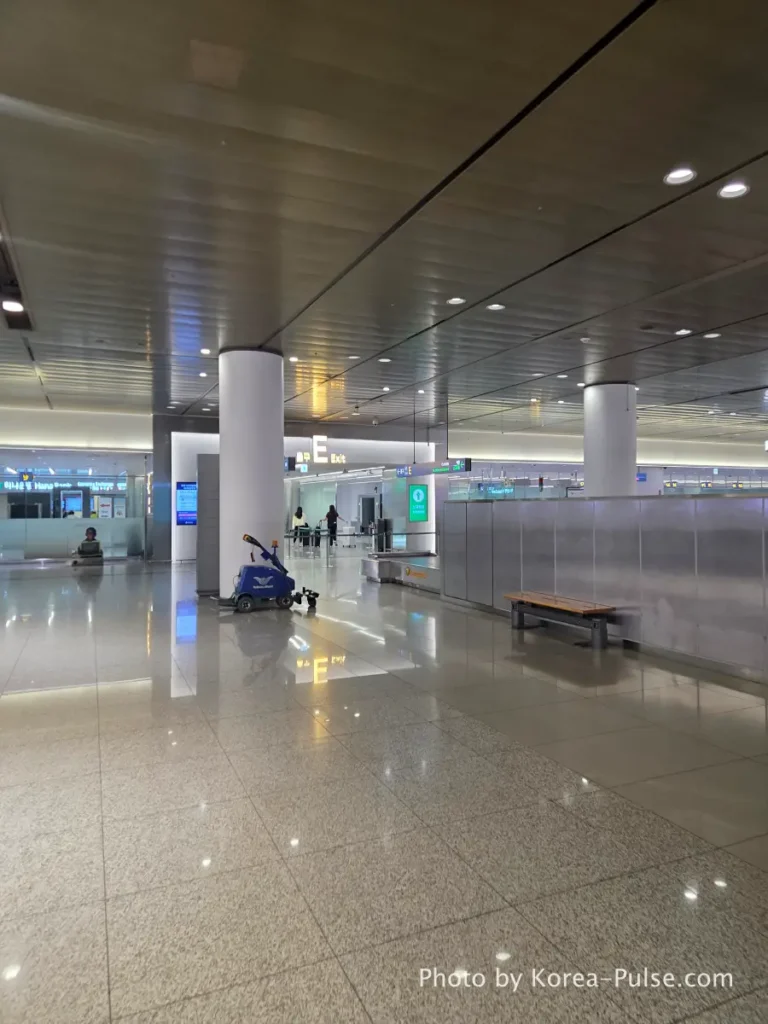
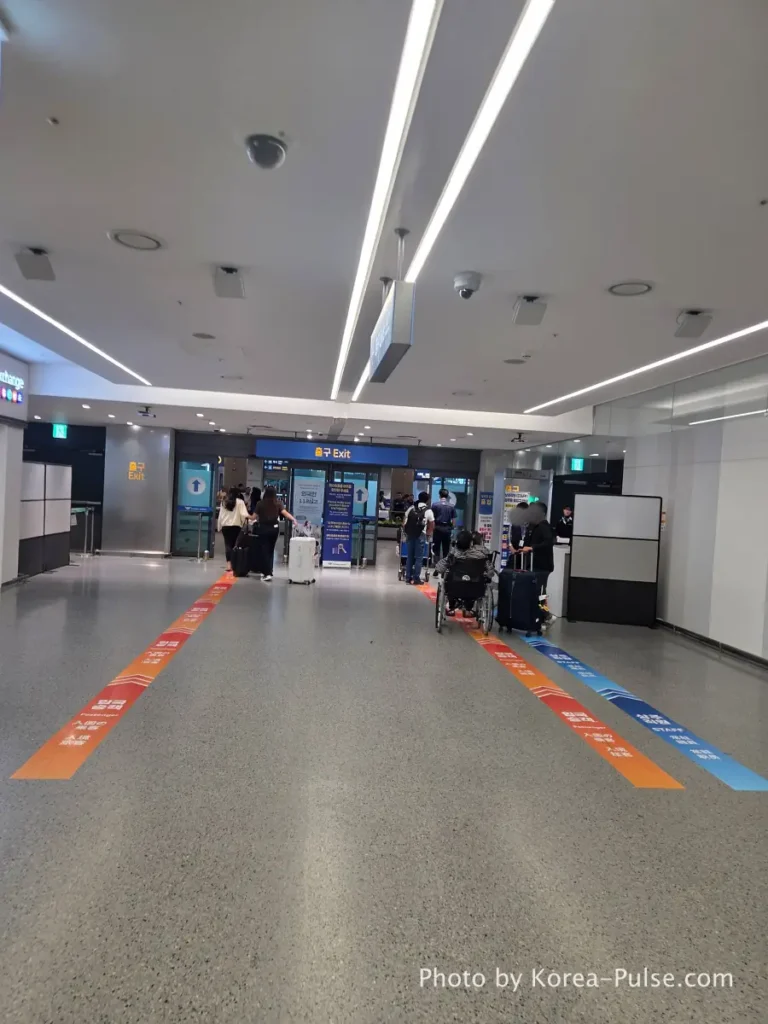
Step 5: The Arrivals Hall — Gate 12 and Where to Go
Here’s where this Incheon Airport arrival guide gets practical. I emerged near Exit Gate 12, and the overhead signs split traffic immediately: AREX (Airport Railroad) and Taxis → left. Airport Buses → straight out. Right inside the hall, there’s a transportation information board showing the full T1 gate layout — worth a 10-second glance if this is your first time navigating the bus system.
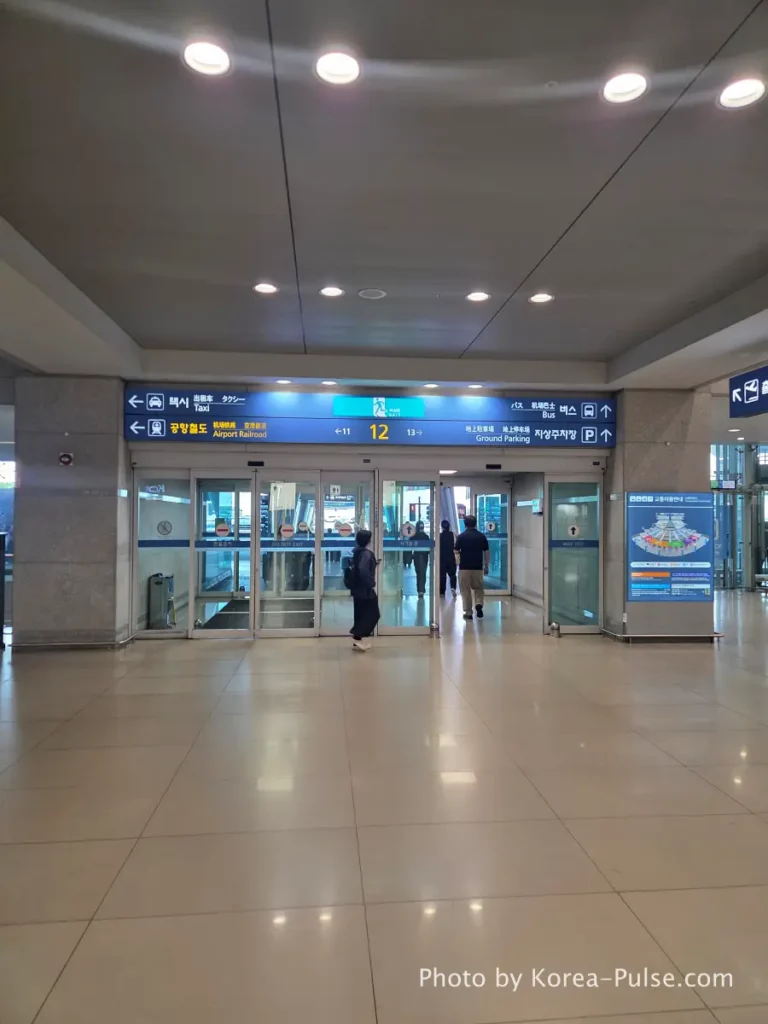
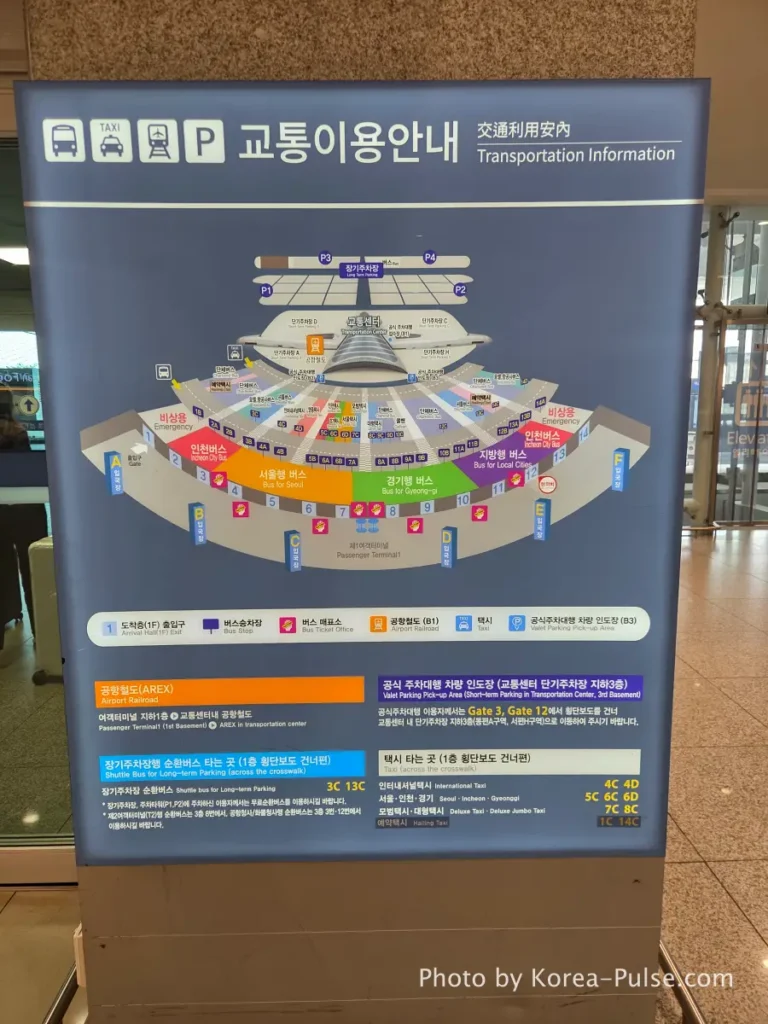
Gates 3–14 have outdoor bus platforms
Central Seoul, Gangnam, Hongdae etc.
Ilsan, Suwon, Seongnam, Bundang etc.
Approx. every 20 min (daytime)
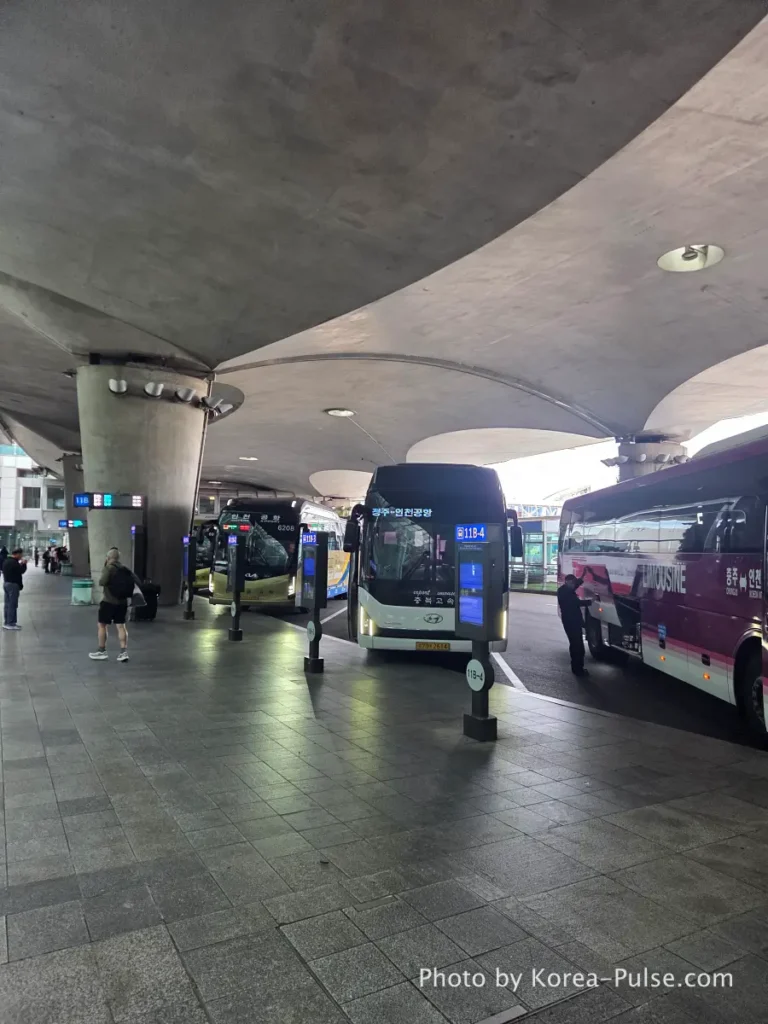
Walking toward Gate 9, I passed by the platforms for regional routes — parked up at Gate 11. The whole outdoor platform area is organized well: every column has large signage showing the platform number and which buses stop there.
Step 6: The Bus Ticket Machine — And a ₩500 Confession
Continuing toward Gate 9, the BUS TICKETS zone came into view. A row of automated kiosks, clear overhead signage. Now — time for a true confession from your dedicated blogger.
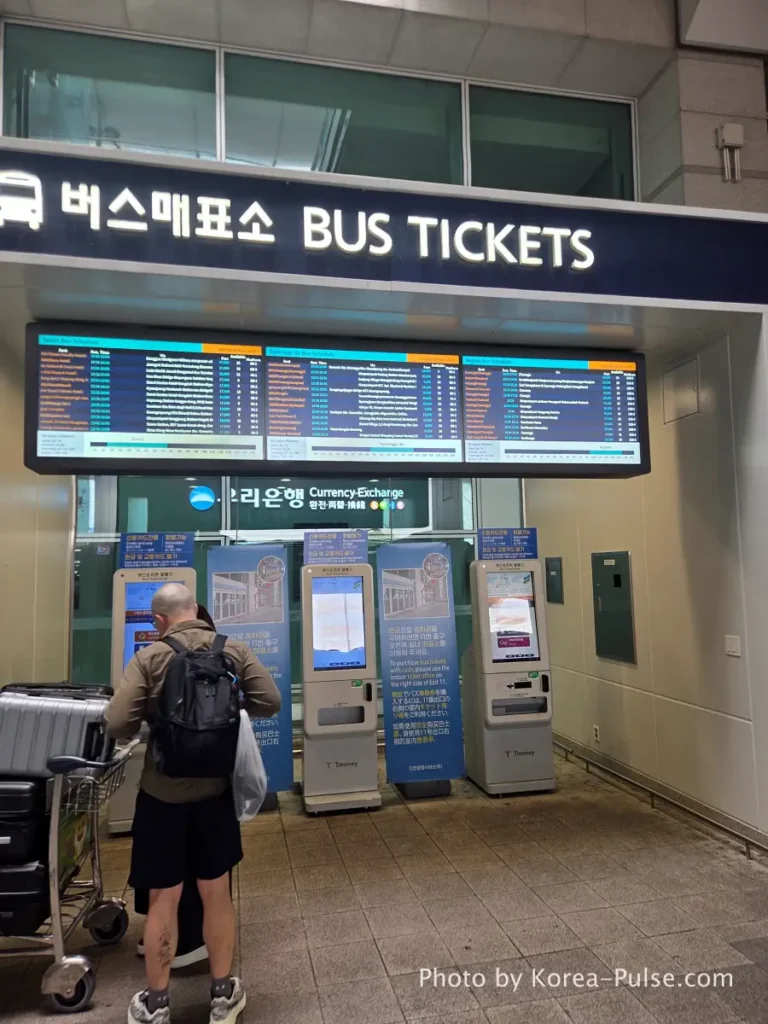
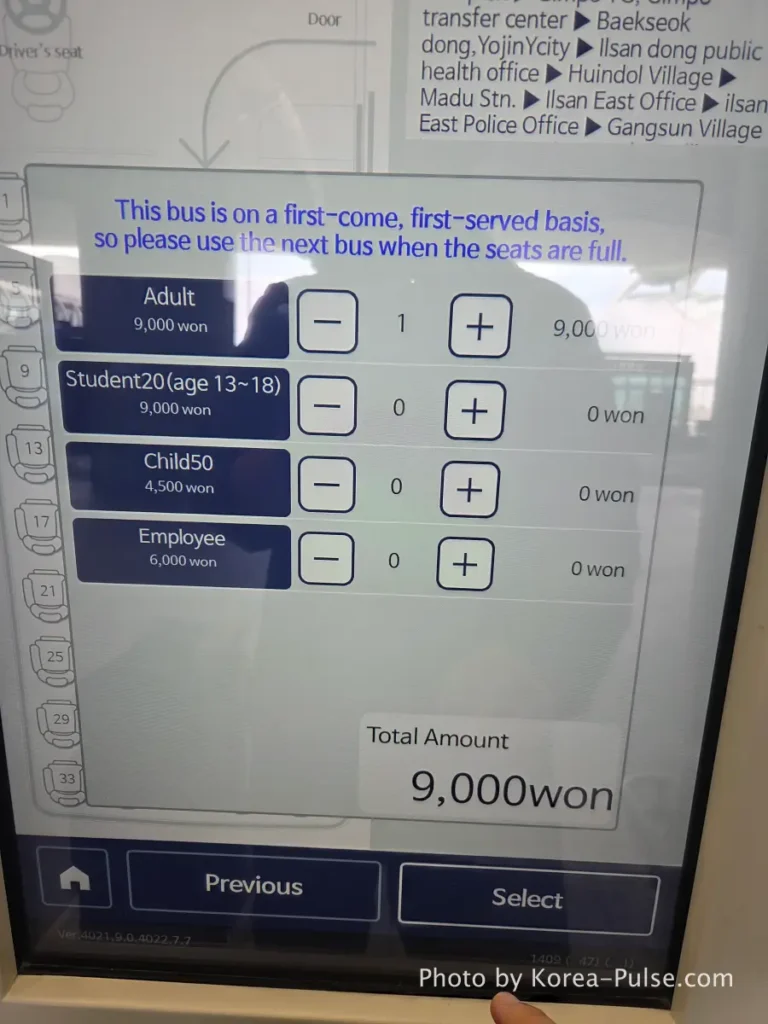
I own a Tmoney transit card. Tapping it on the bus reader would have cost exactly ₩8,500. Instead, I walked up to the kiosk and bought a physical paper ticket — under the extremely legitimate excuse of “documenting the process for my readers.” The price at the kiosk: ₩9,000. I paid a ₩500 blogger tax for you. You’re welcome.
Pick one up before you head outside. Tmoney cards are available at convenience stores inside T1 — look for CU, GS25, or 7-Eleven in the arrivals hall. The card itself costs around ₩3,000, then top up with whatever amount you need. It works on airport buses, city buses, and the subway — you’ll use it constantly in Korea.
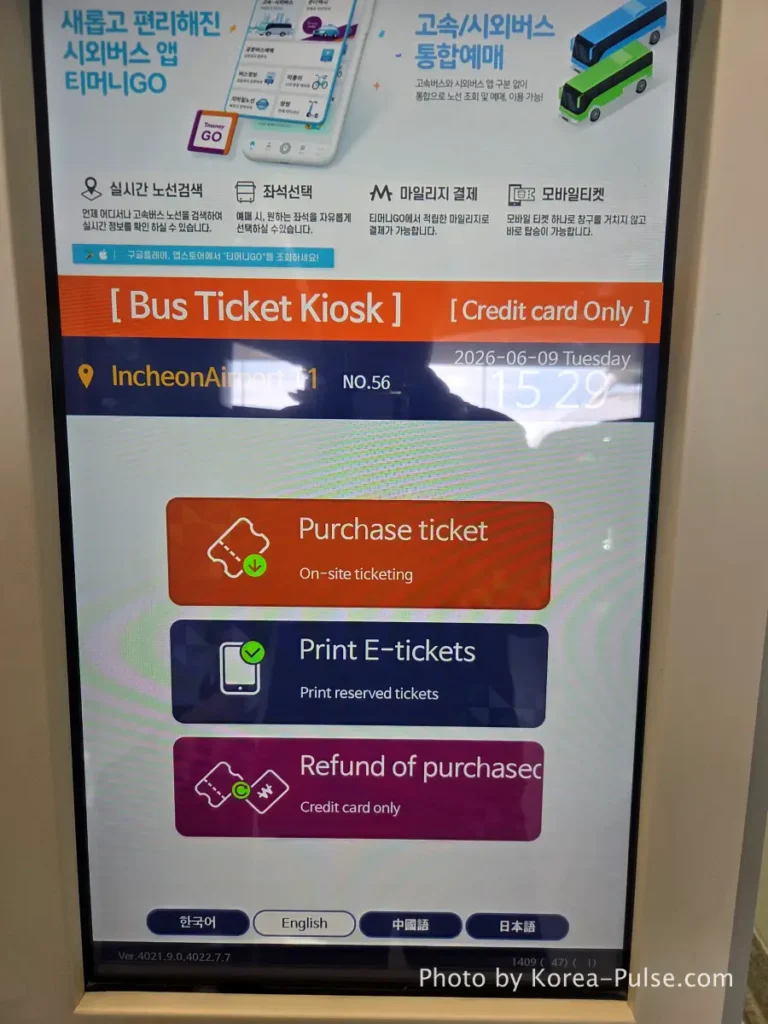
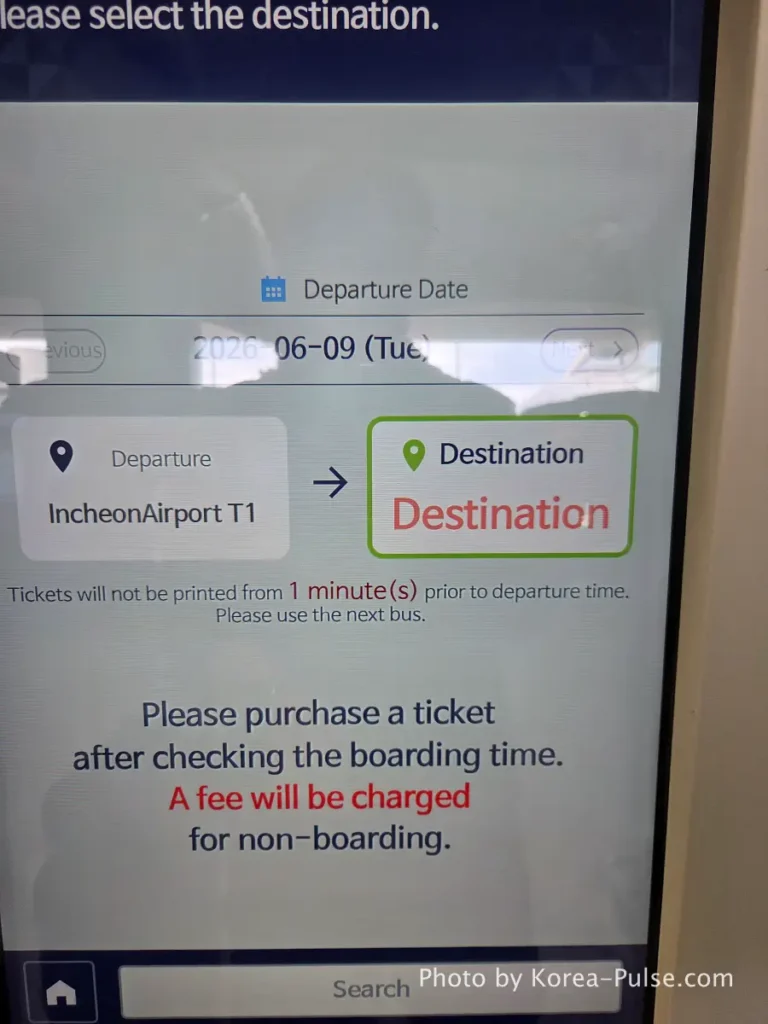
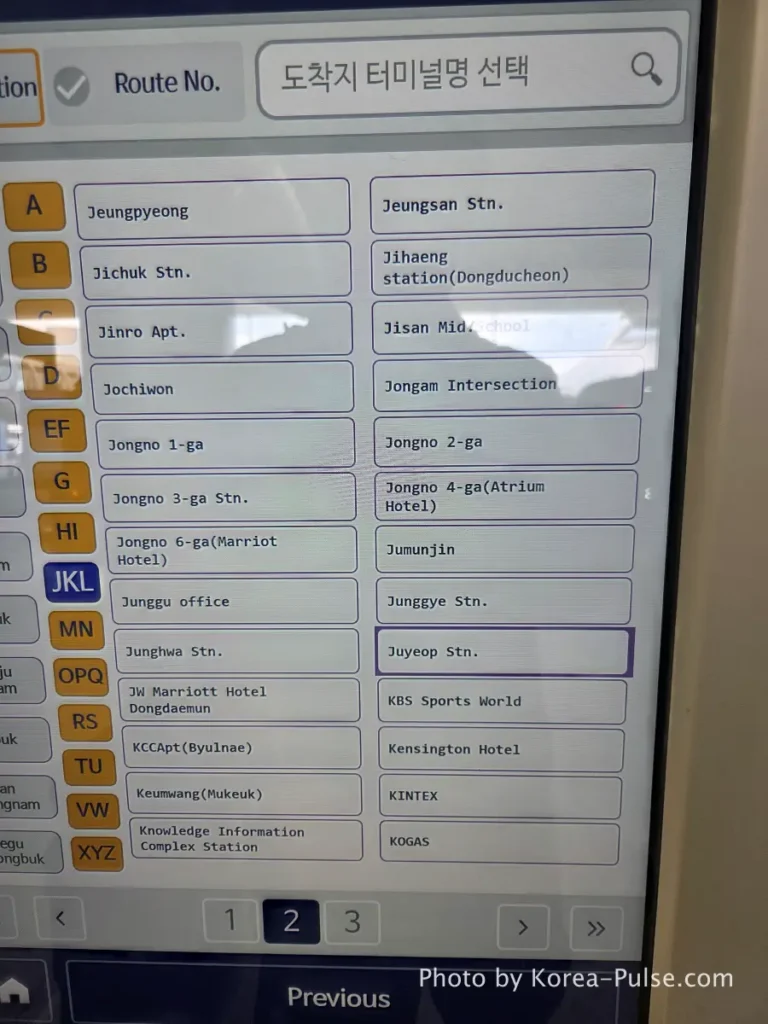
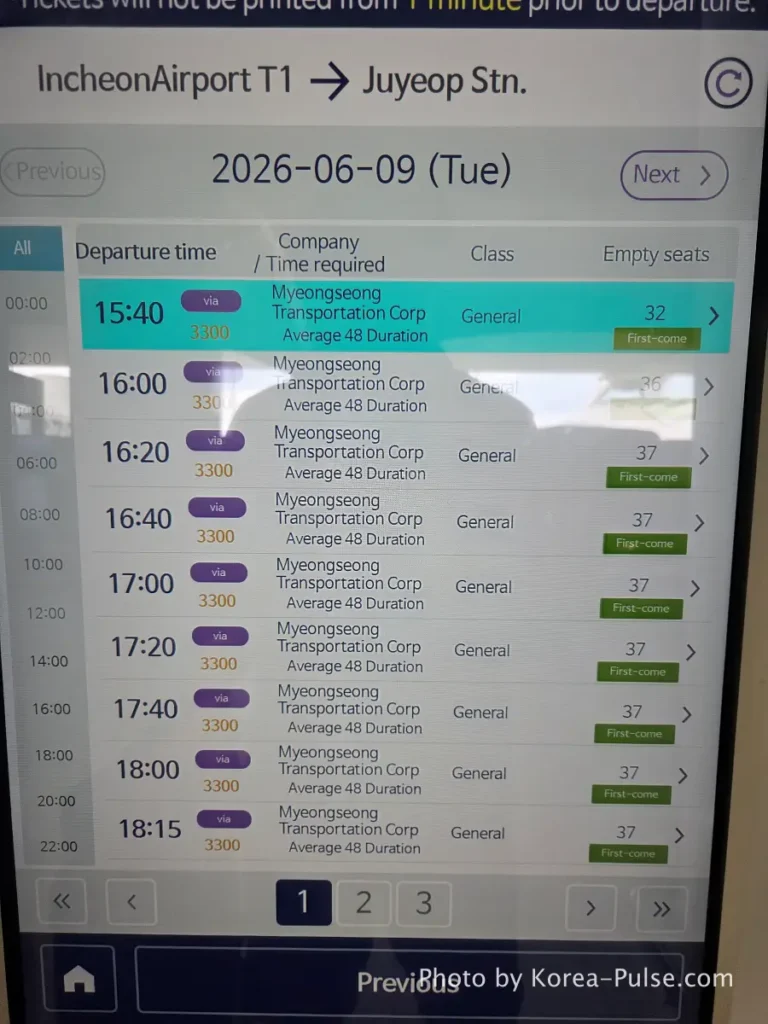
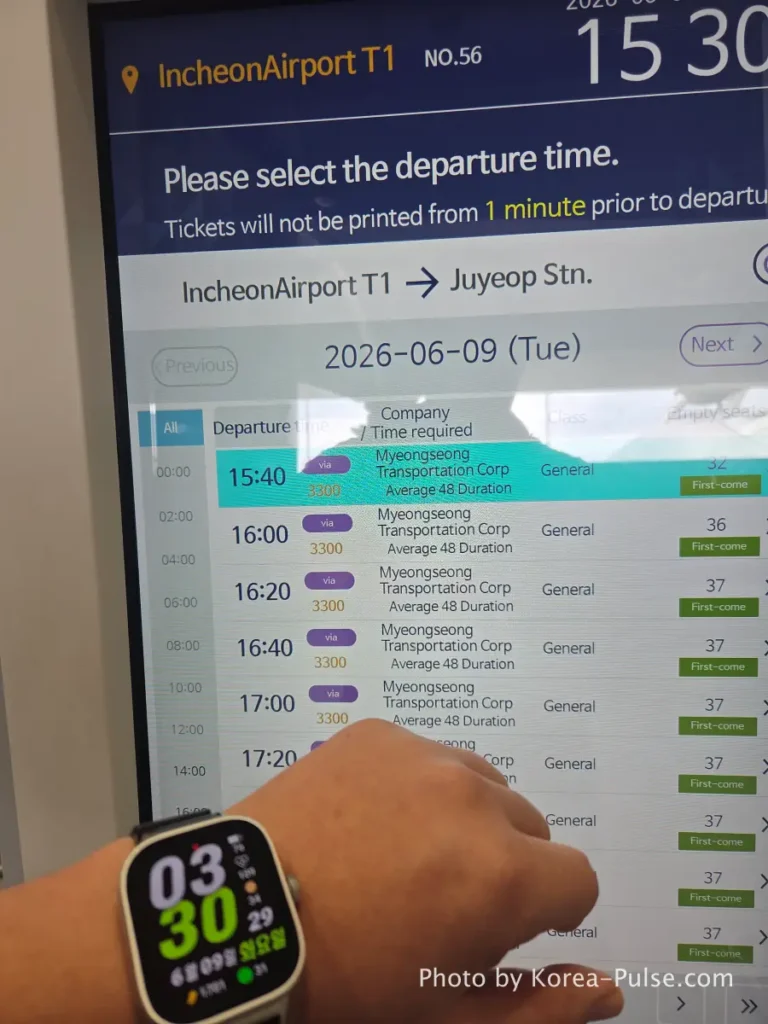
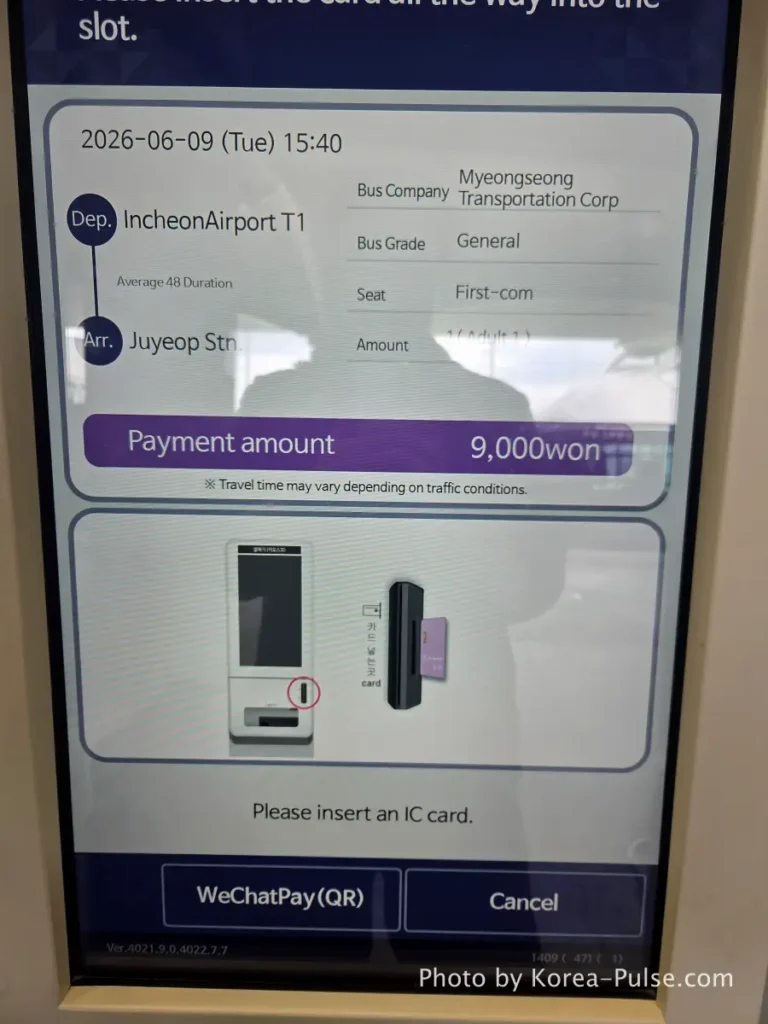
Here’s the full kiosk flow, every screen:
| Payment Method | Adult Fare | Notes |
|---|---|---|
| Kiosk — Credit Card | ₩9,000 | Assigned seat + paper ticket. International Visa/Mastercard accepted. WeChat Pay QR also available. |
| Tmoney Card (tap on bus) | ₩8,500 | Open seating, first-come basis. Cheapest and most flexible option. |
| Tmoney GO App (pre-book) | ₩9,000 | Mobile QR ticket. Assigned seat. Can also print at kiosk. |
| Cash | ₩9,000 | Indoor ticket office only (near Gate 11). Not accepted at outdoor kiosks. |
Payment done. The machine printed my ticket — and here came the plot twist. A line on the receipt read: Seat No. 6. I had no idea the kiosk assigned specific seats. When you tap Tmoney on the bus it’s pure open seating — first on, best seat. But a physical kiosk ticket locks you into an assigned number. Useful to know before you’re running for the bus with two minutes to spare.
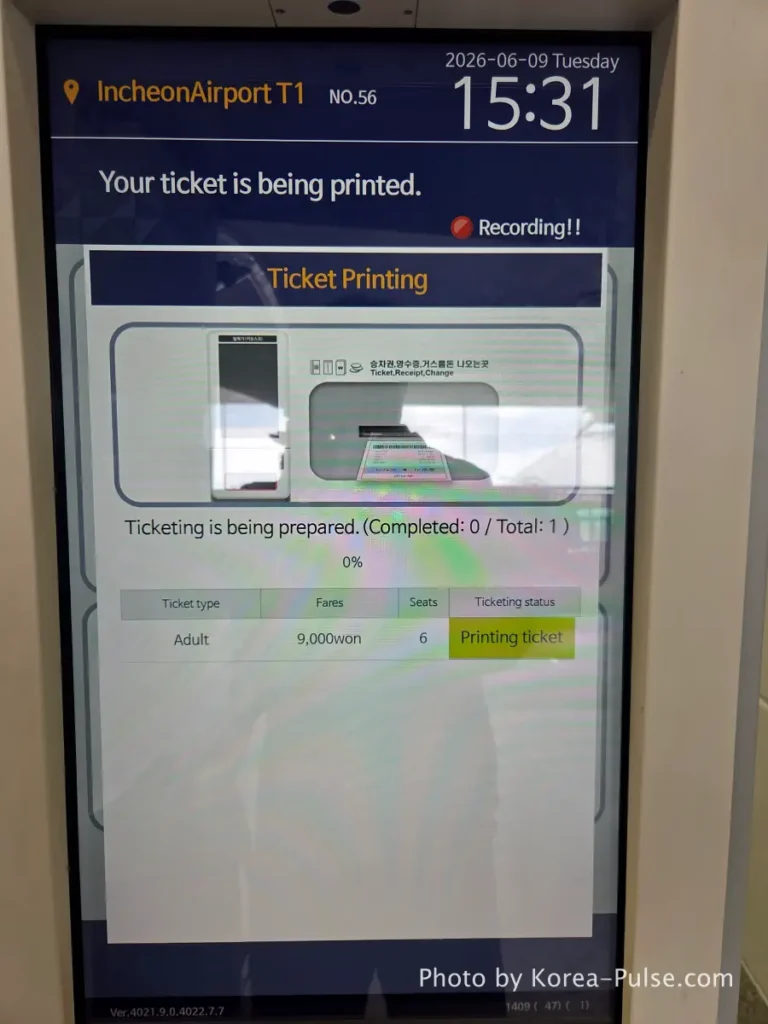
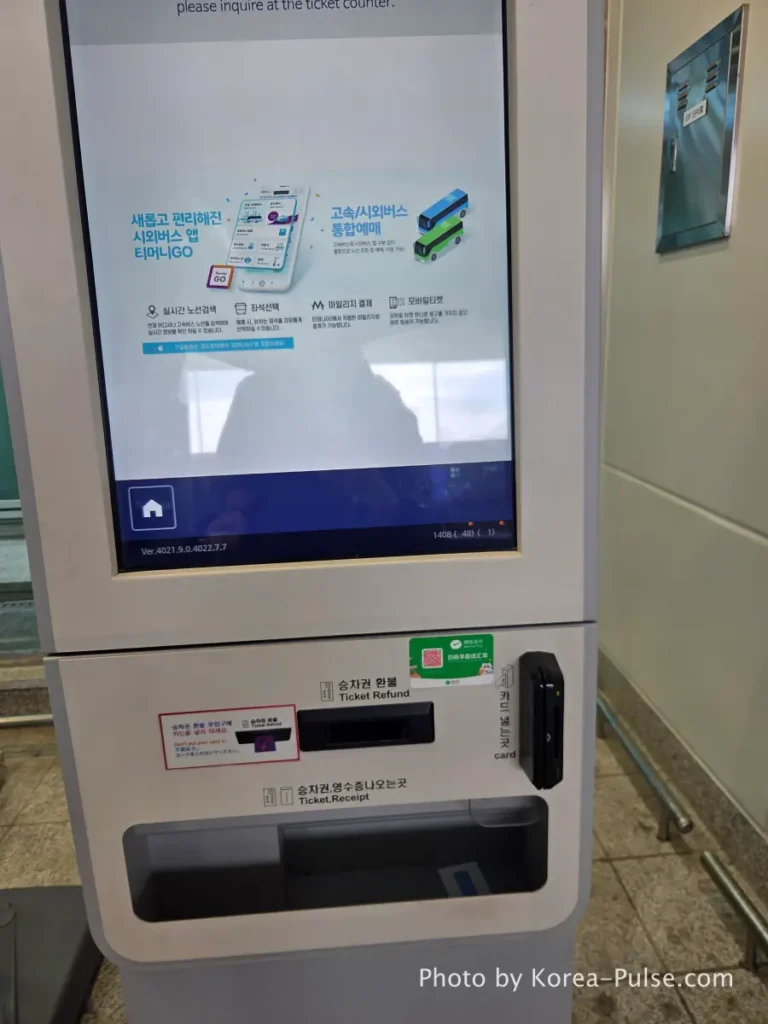
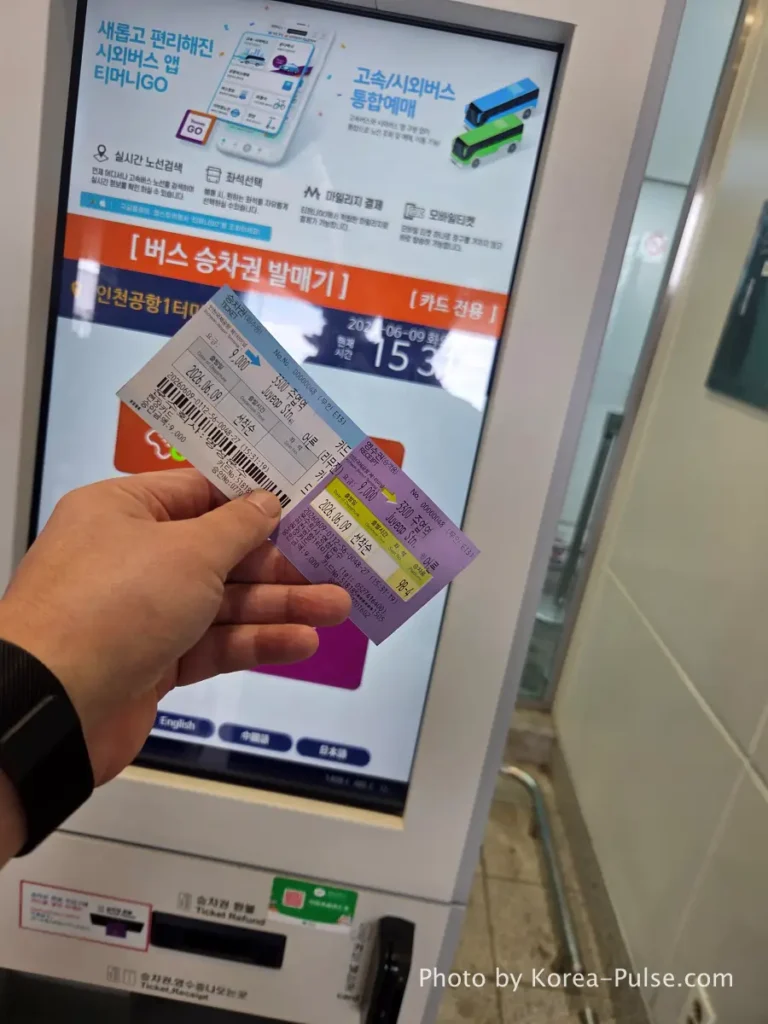
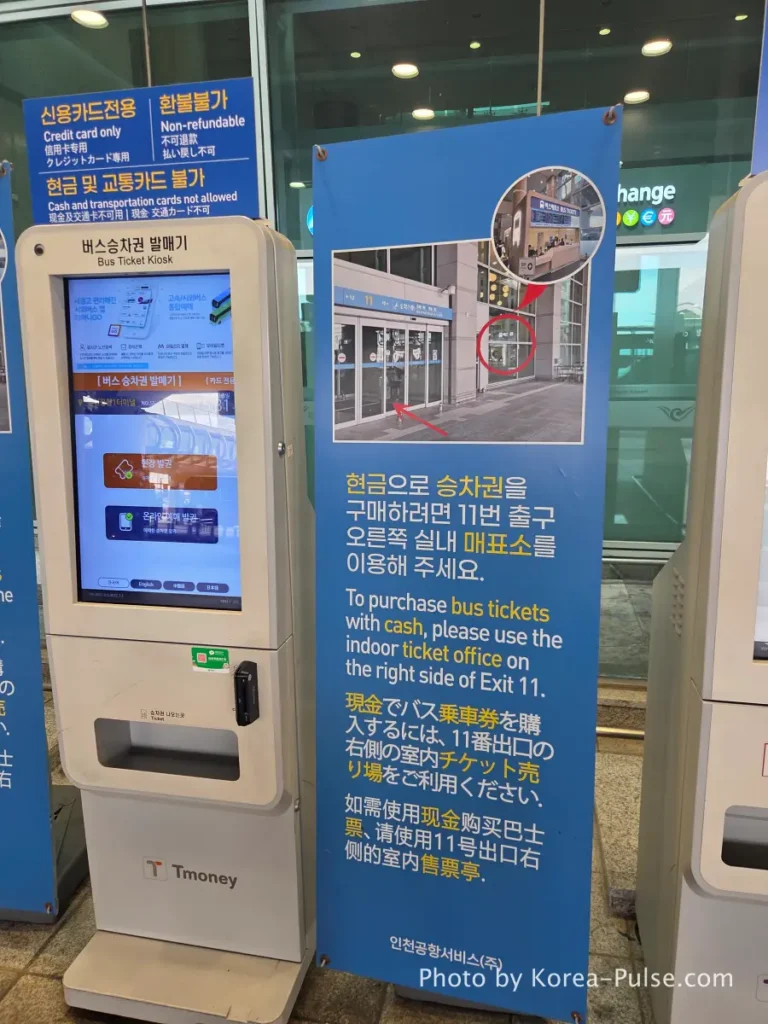
The outdoor kiosks are credit card and QR payment only. No cash, no transit card top-up. If you only have cash, look for the notice near the machine — it directs you to the indoor staffed ticket office near Gate 11. Cash and credit cards both accepted there.
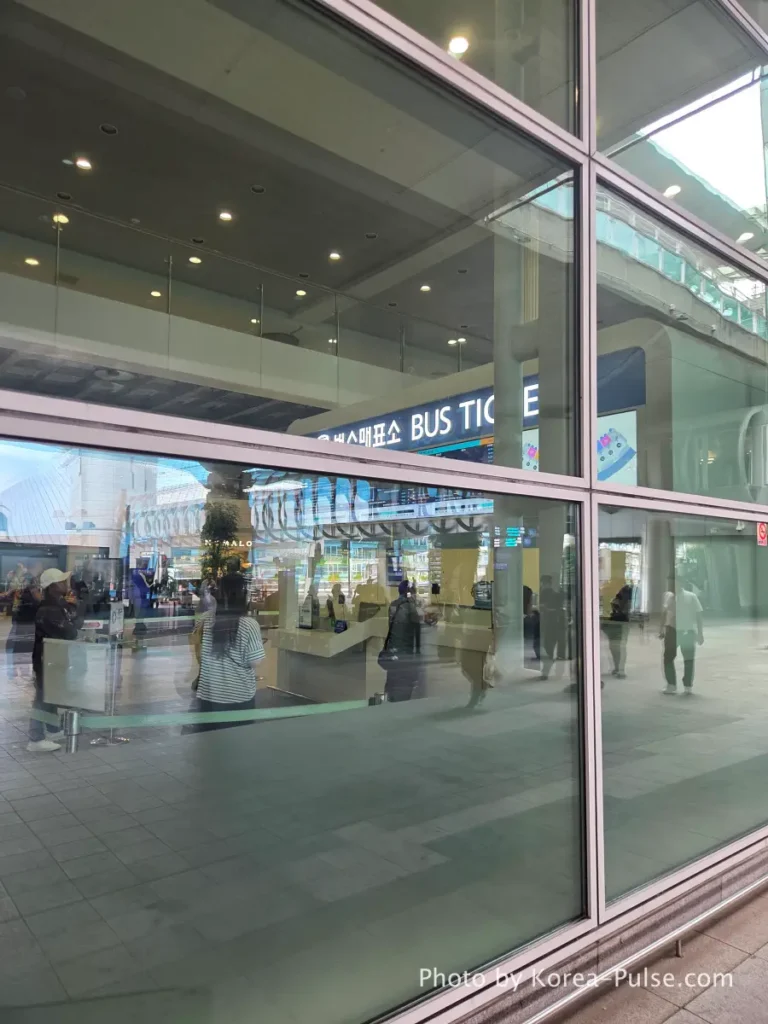
Step 7: Platform to Seat — The Final Sprint
With a few minutes on the clock, I crossed the pedestrian crossing toward the bus platforms. Before heading out, I noticed the AREX walkway off to the side — if you’re taking the airport railroad instead, follow that oval crosswalk path from any gate and it connects straight to the underground Transportation Center. I’ll cover AREX properly in a future post. Today: bus.
Arriving after midnight? Some bus routes reduce frequency significantly in the small hours. For late-night arrivals, AREX (All-stop service) or a taxi may be more reliable than waiting for the next bus. Check the last departure time for your specific route at the kiosk or the indoor ticket office before committing.
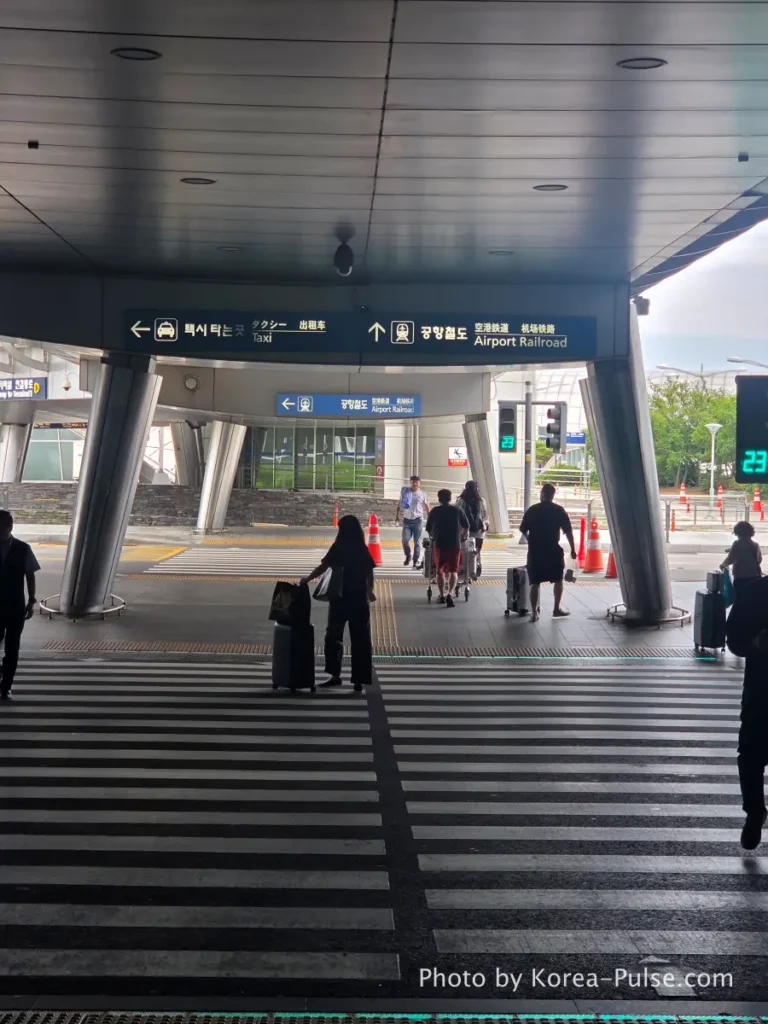
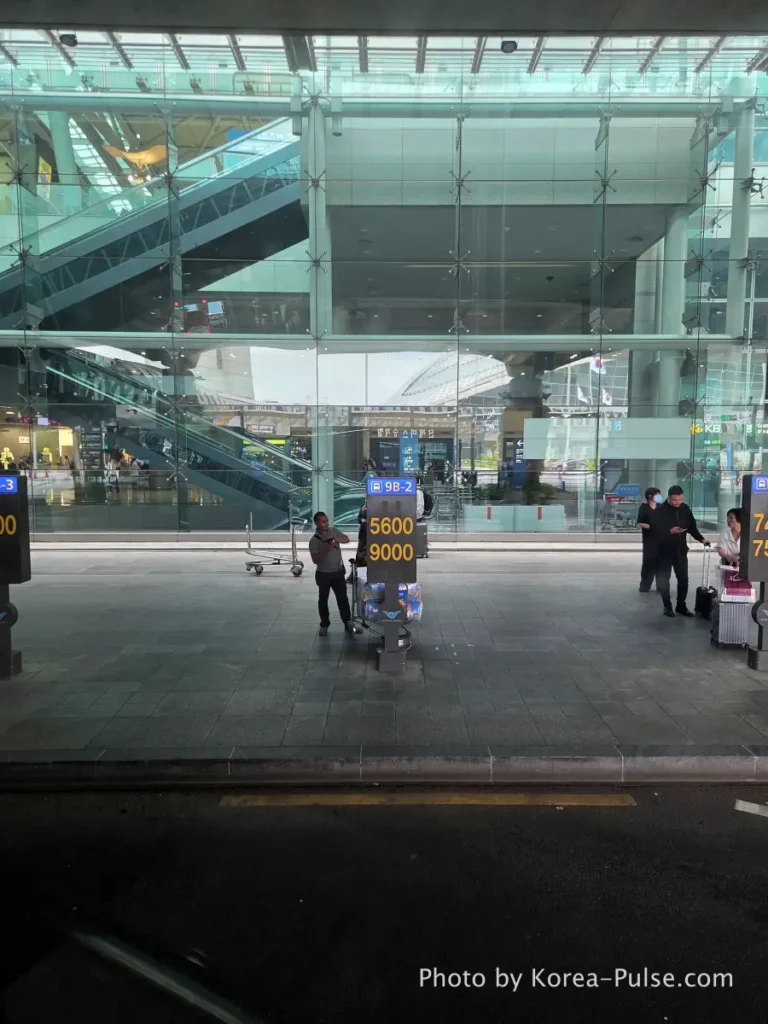
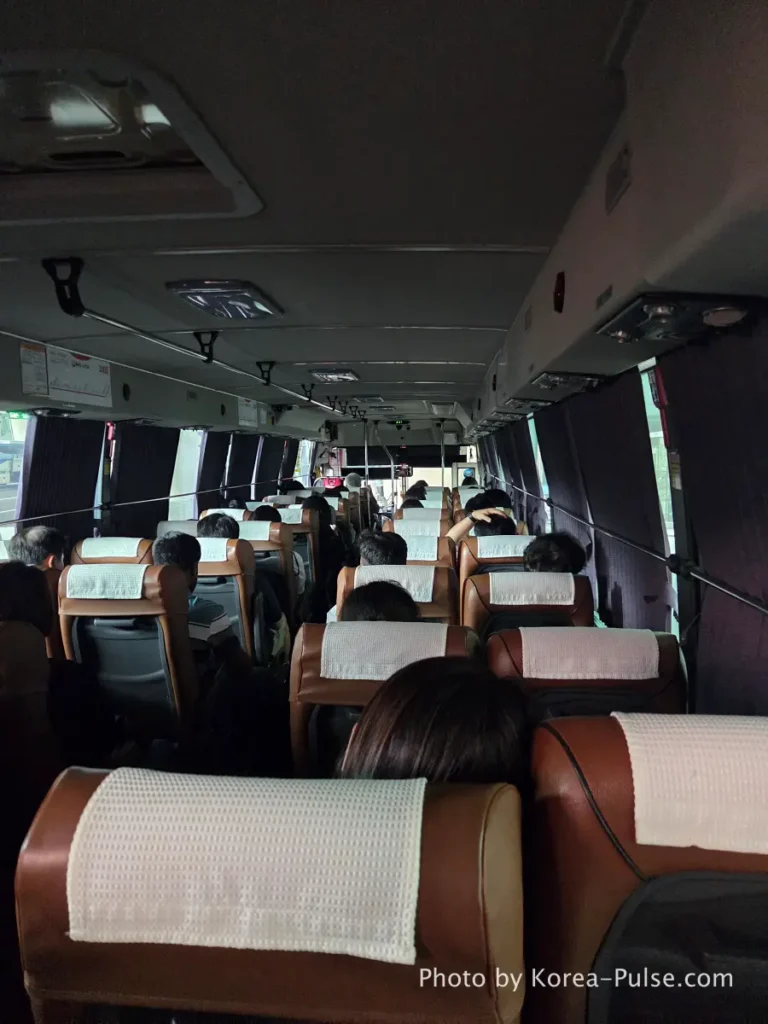
Platform 9B-3 was easy to find — every bay has a large column sign listing the bus numbers. The 3300 was already there, loading. And it was full. My carefully assigned Seat 6 was taken by the time I climbed the steps — the Tmoney-tappers who boarded ahead of me got there first. In practice, seat assignment enforcement may be inconsistent during busy periods. I shuffled quietly to the very back row and settled in. No complaints: the seats are properly comfortable, the AC was running strong, and somewhere between 50 and 70 minutes later I was back in Ilsan.
(kiosk vs Tmoney card)
interval (daytime)
Juyeop, traffic depending
FAQ: Incheon Airport Arrival Guide
The most common questions readers send after using this Incheon Airport arrival guide — answered straight.
No. The outdoor kiosks accept credit cards and QR mobile payments (including WeChat Pay) only. For cash, go inside to the staffed ticket office — it’s near Gate 11 on the right side of the building, and it accepts both cash and credit cards.
Yes. Most outdoor kiosks accept major international Visa and Mastercard. UnionPay QR is also available. If your card is declined (rare but possible), the indoor ticket office accepts the same cards plus cash.
Yes. Tmoney cards can be purchased and topped up at convenience stores inside the T1 arrivals hall — look for CU, GS25, or 7-Eleven. The card itself costs around ₩3,000. It’s the cheapest way to pay for the bus (₩8,500 vs ₩9,000 kiosk price) and works on all city buses and subways in Korea.
Yes — printing a physical ticket gives you an assigned seat number. If you board late and your seat is taken, enforcement may be inconsistent during busy periods — find whatever is available. Tapping a Tmoney card is open seating and ₩500 cheaper — if you have the card, just use it.
Go back to a kiosk or the indoor office to exchange or refund. This is exactly why many regulars skip paper tickets entirely — flight delays and unpredictable baggage claim make advance time-slots risky. A Tmoney card tap on the next available bus is the flexible move.
Carry-on only + Tmoney card: 20–30 minutes is realistic for a smooth run. Add 20–35 minutes if you have checked baggage. Allow extra buffer during peak morning arrival windows when immigration booths are busy.
Seoul-bound buses: Gates 3–7. Gyeonggi-bound buses (Ilsan, Suwon, Bundang etc.): Gates 7–11. Check the transportation information board just inside the arrivals hall — it lists every route and its platform number. Bus 3300 (Ilsan) = Gate 9, Platform 9B-3.
That’s the complete Incheon Airport arrival guide — from the seat on the plane to the seat on the bus, every step documented in real time. Once you’re settled on the 3300, the ride deserves its own story. These coaches are hiding some genuinely impressive tech under the hood.
“Incheon Airport does not waste your time. The whole system — corridor, e-gate, customs, platform — is engineered for the kind of efficiency that feels almost rude compared to most airports worldwide.”
If this is your first arrival in Korea, you’re going to be pleasantly shocked at how fast it all moves. If you’ve been through Lisbon recently, you might actually tear up a little at Gate 12. Either way: follow these steps, bring a Tmoney card, and you’ll be home before the jet lag kicks in.
The exit can be just as smooth as the arrival. Check out the Incheon Airport Smartpass guide — the biometric departure fast lane that has the outbound queue beat before you even reach the gate.